Myrtle Oil Around Cats and Dogs: What Vets Advise
Cats and dogs experience essential oils very differently from us. Here is what poison-control sources say and how we would handle myrtle oil at home.
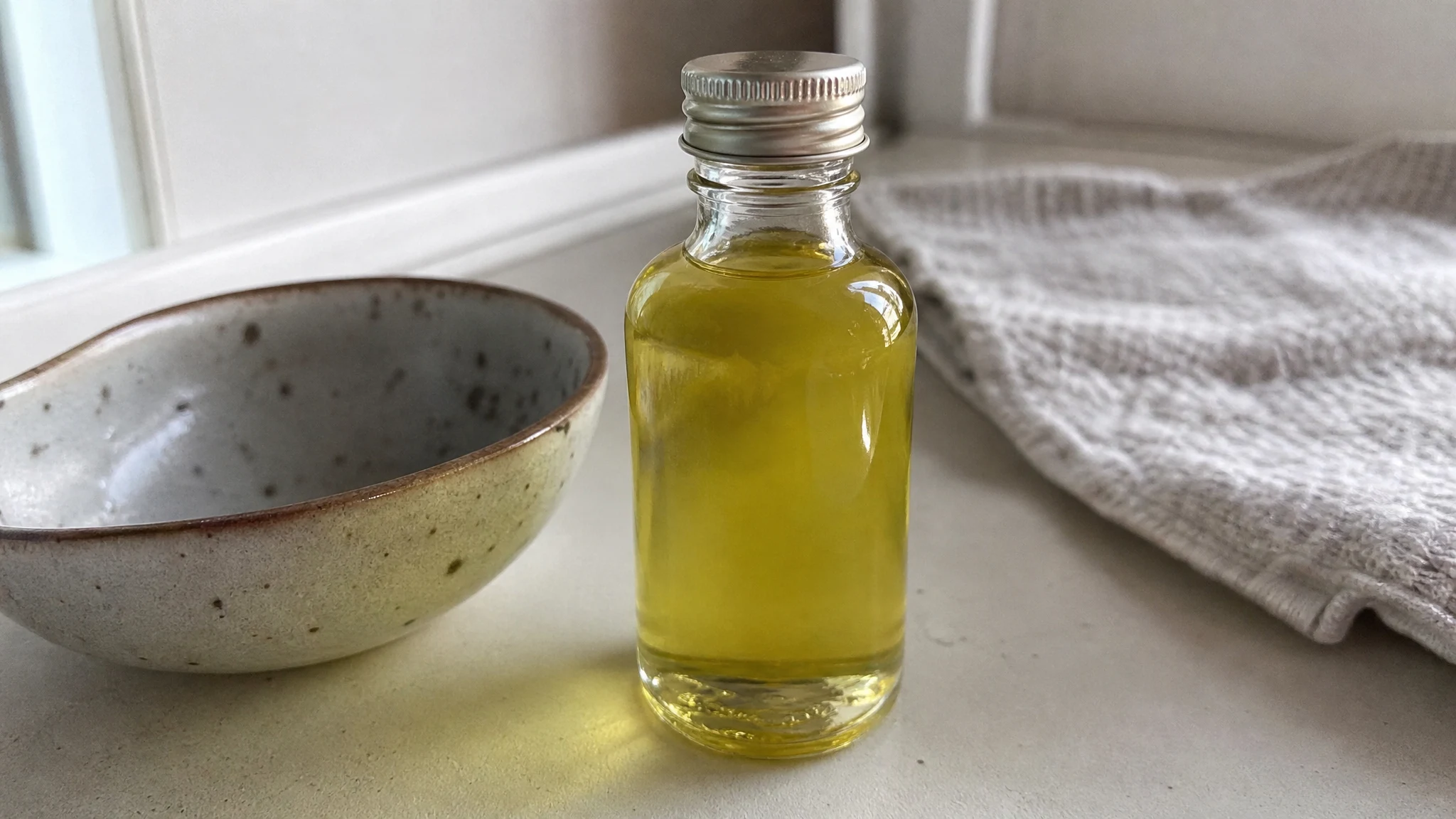
Does Myrtle Oil Go Bad? Signs and Storage
Essential oils rarely rot, but they do change. Here is how oxidation shows up in a bottle of myrtle oil and the habits that slow it down.
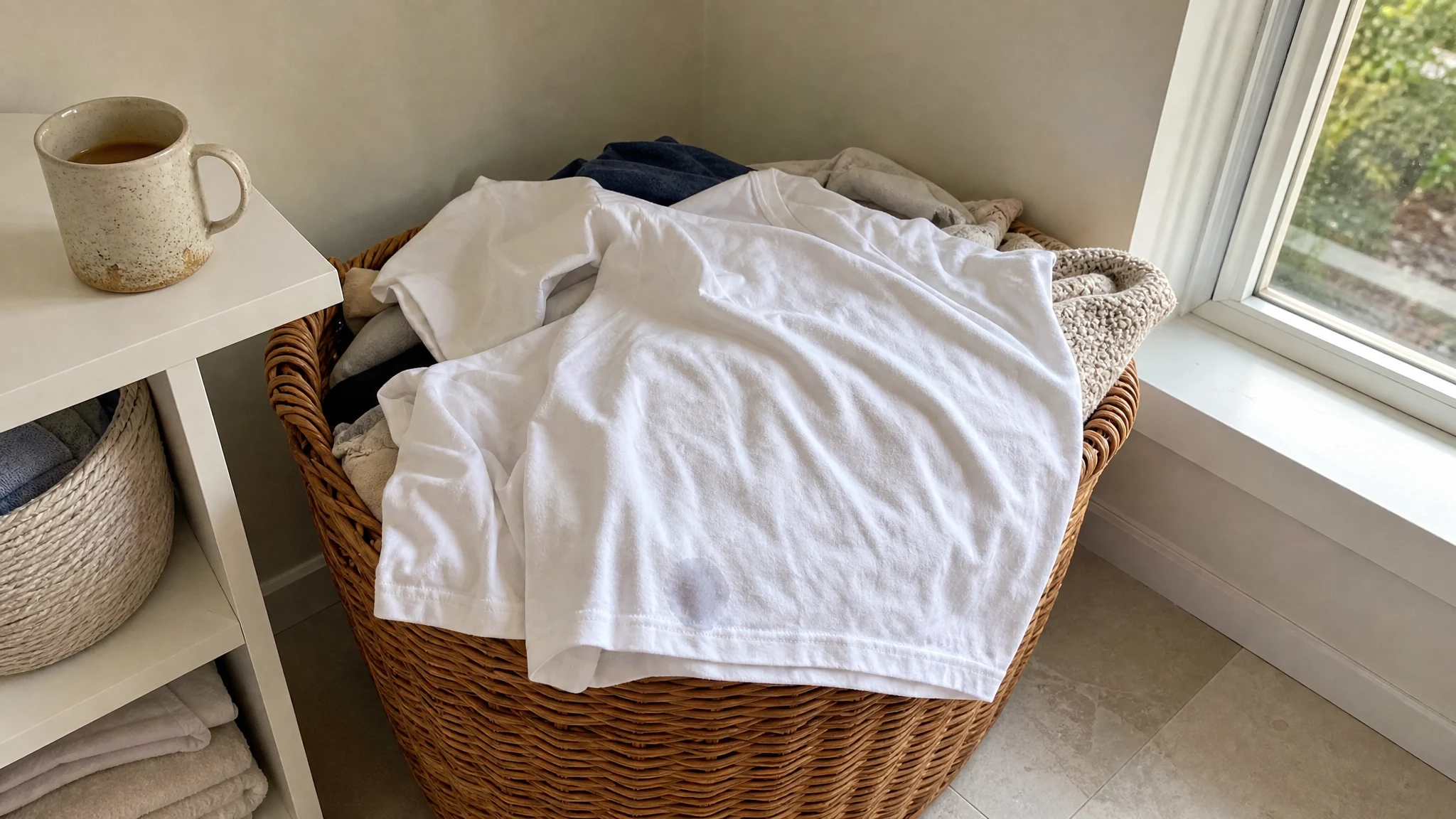
Does Myrtle Oil Stain? Getting It Out of Fabric
Spilled a little myrtle oil on a tee or the sofa? It behaves like any oil, so the fix is blotting and dish detergent. Here is the step-by-step.
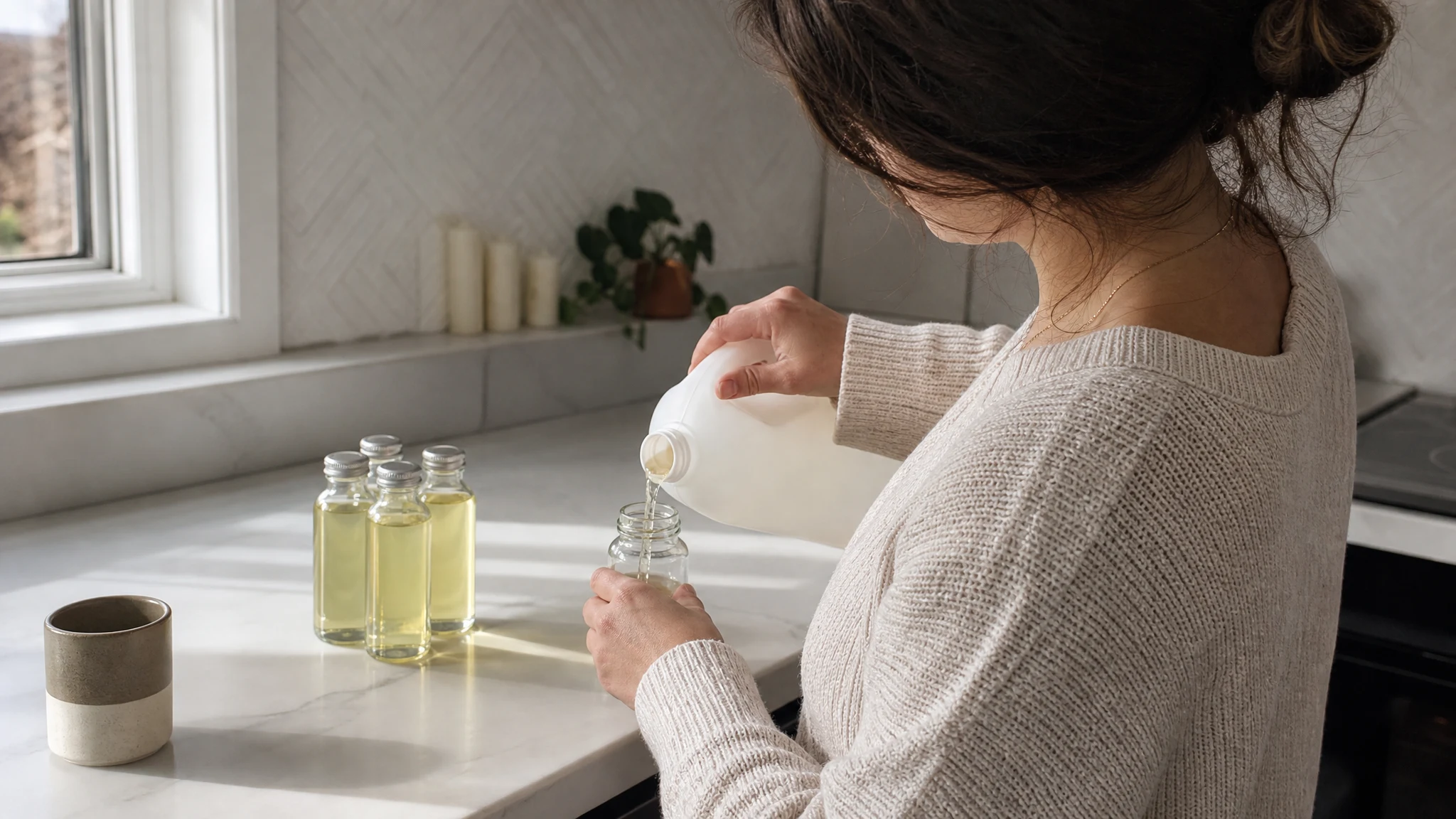
How to Blend Myrtle Oil: Ratios and Dilution Math
Blending is mostly arithmetic. Here are worked drop counts for myrtle oil, why we start at the low end, and where IFRA limits tighten the numbers.

Myrtle Oil During Pregnancy: What to Ask First
Expecting and curious about myrtle oil? Here is what general safety guidance says, what the oil contains, and the questions to take to your clinician.
Can You Swallow Myrtle Oil? What to Know First
Myrtle leaves are food, but our oil is made for the air and diluted skin blends. What poison centers report and the first call to make if swallowed.
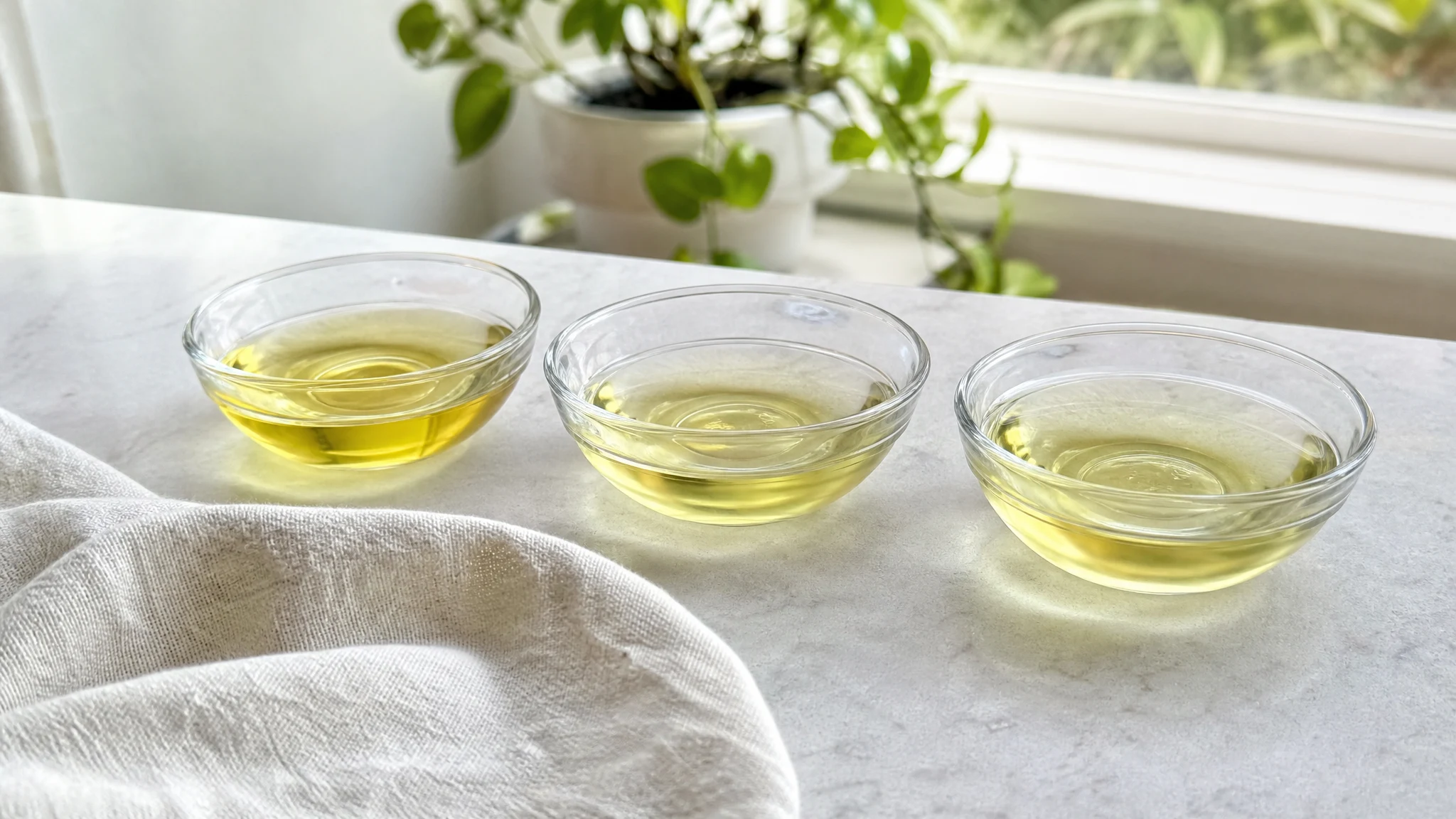
Carrier Oils for Myrtle: Four Common Choices Compared
Four common carriers for a diluted myrtle blend, what sets them apart on freshness and allergens, and how to work out your drops before you pour.

Myrtol vs Myrtle Oil: Why the Names Get Mixed Up
Search myrtle oil and breathing and you meet trials of myrtol, a different product. We sort out the two names and what those studies tested.
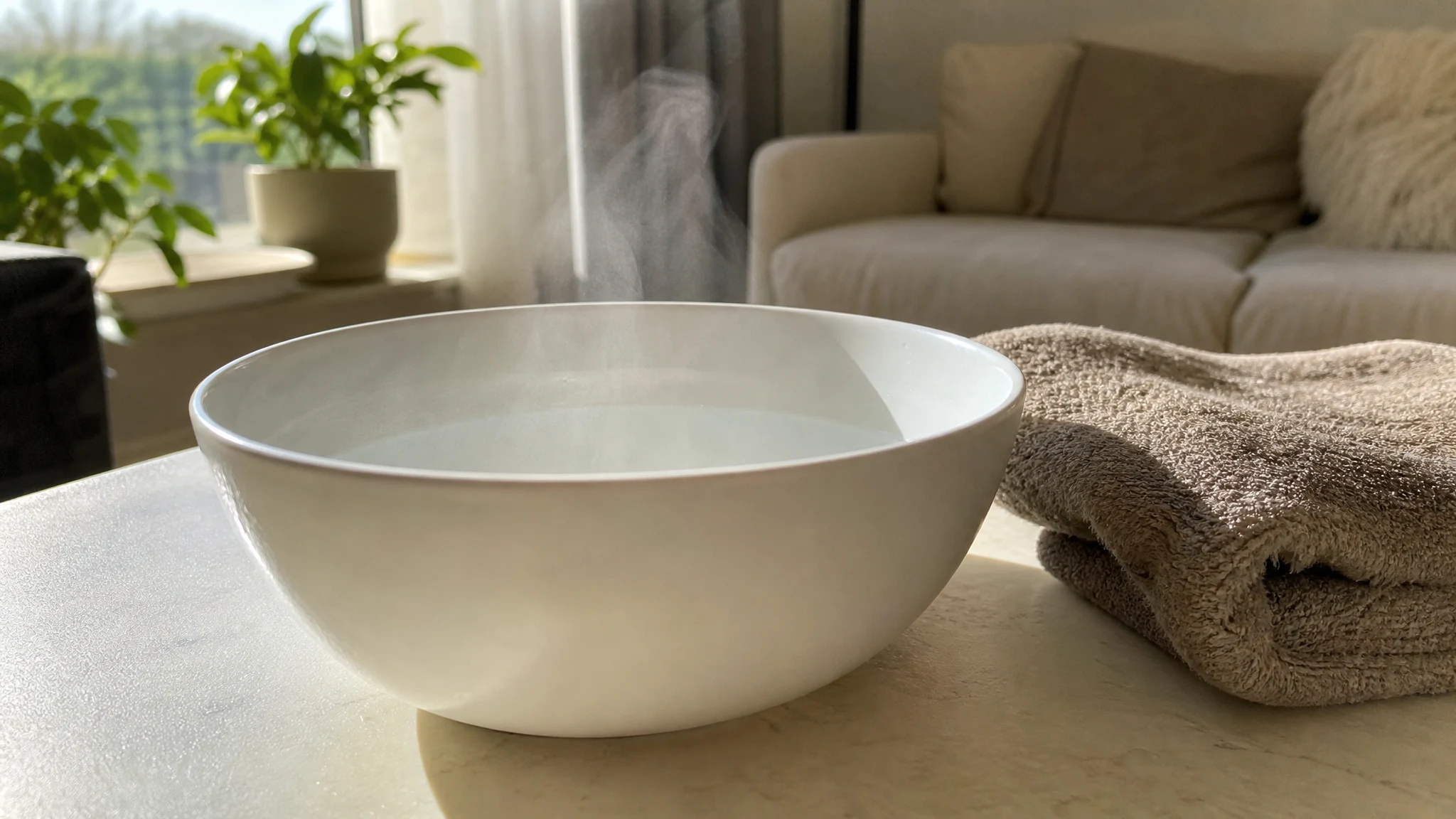
Myrtle Oil in Steam Inhalation: Why We Skip It
A towel, a bowl and a few drops of oil is a familiar scene, but we skip it. Here is why, and how to enjoy myrtle's fresh aroma more safely.
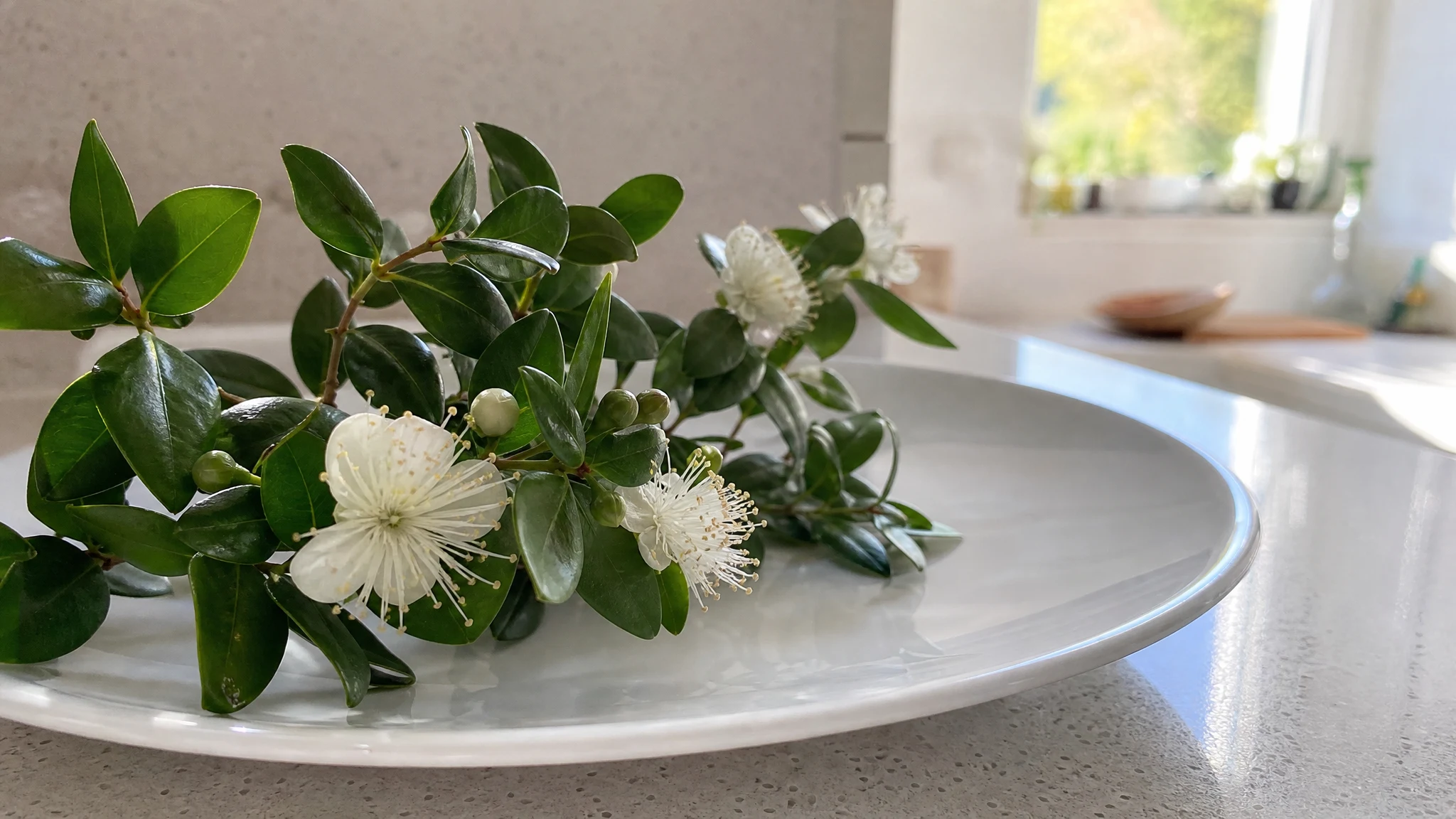
Myrtle Oil Lab Studies: What They Do and Don't Show
One drop in 577 ml sounds impressive. How to read an MIC in myrtle oil studies, and why a lab dish is not a spray bottle or a countertop.
Myrtle Oil on Skin: How Much Is Too Much?
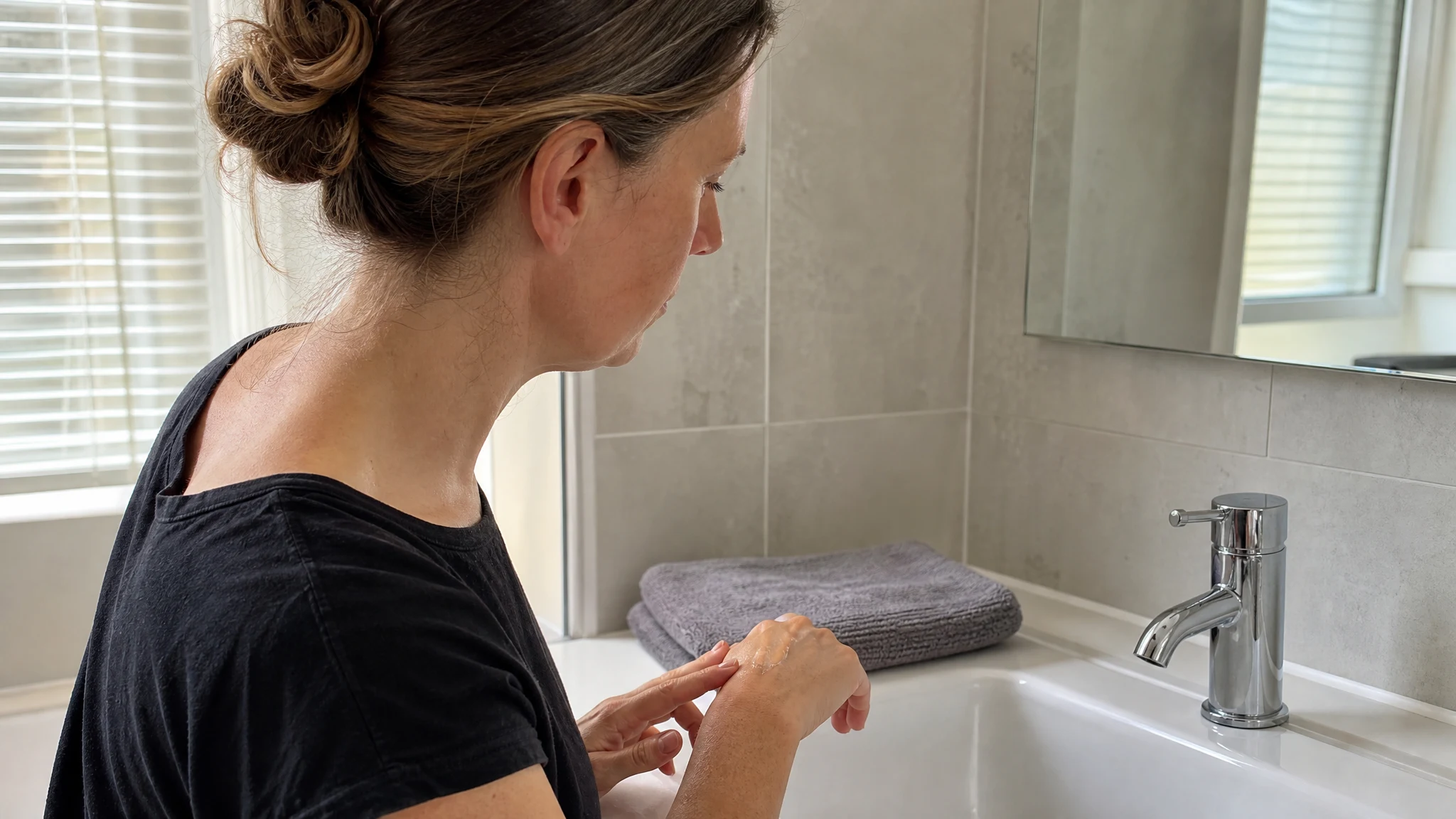
Myrtle smells wonderful on skin, and a few drops go a long way. Here is why we begin at 0.5% and how to build a simple, lightly scented blend.

Myrtle Oil in Hair Oil: How Little You Need
Scenting a hair oil with myrtle? Here is the IFRA arithmetic for a leave-on scalp product and why we suggest only a drop or two per 100 g.

Myrtle Oil and Sleep: What the Research Shows
Myrtle makes a lovely fresh room scent, but no one has studied it for sleep in people. Here is what the wider research covers and what to try first.

Myrtle Oil and Mood: What Scent Can and Can't Do
Scent and memory are tightly linked, which is why we describe myrtle by its fresh green aroma and make no promises about the mood of any reader.

Scenting a Meditation Room With Myrtle Oil: 5 Steps
Five easy steps for a meditation or yoga space scented with myrtle oil: ask who shares the air, keep it fresh, protect pets and kids, and use less.
Myrtle Oil Research: What Studies Actually Cover
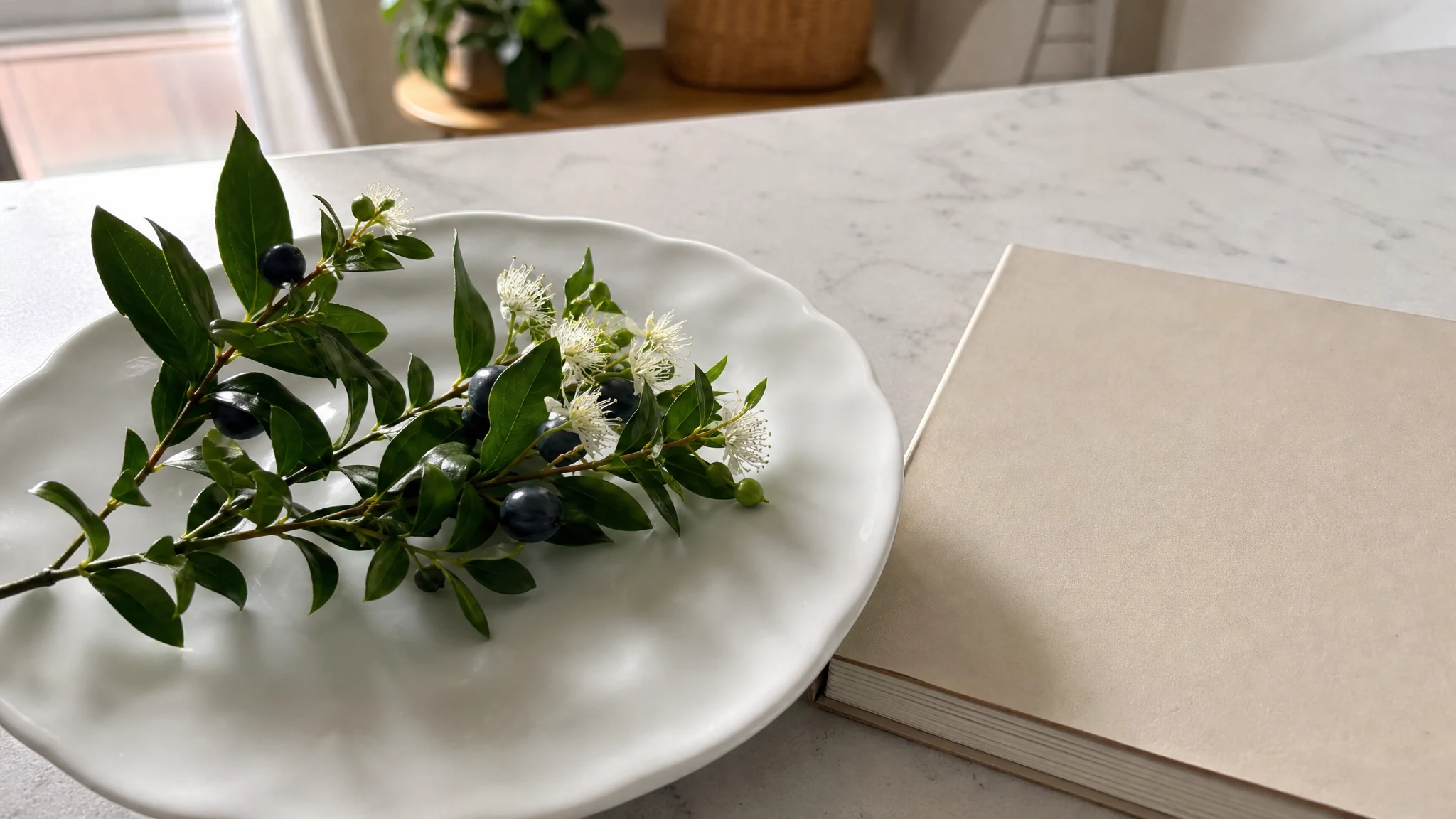
No two myrtle oils are quite alike. See what the research really covers: mostly chemistry, some lab dishes and a few human studies that mention myrtle.
How to Read a Myrtle Oil GC-MS Report
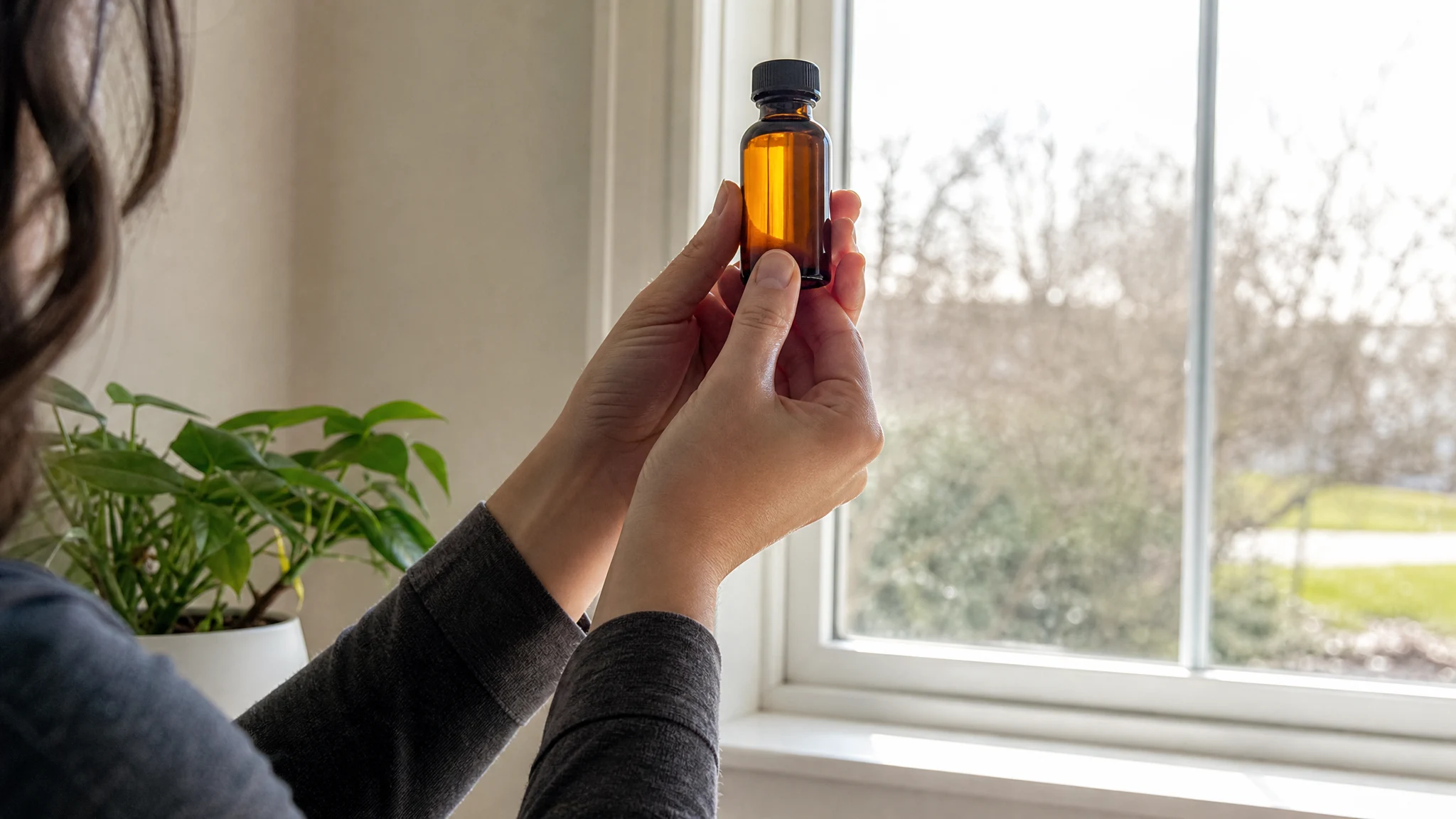
A GC-MS table looks exact, but a few reading habits turn it into real information. What to check on a myrtle report and what to ask a supplier for.
Is Myrtle Oil Like Tea Tree Oil? How They Differ
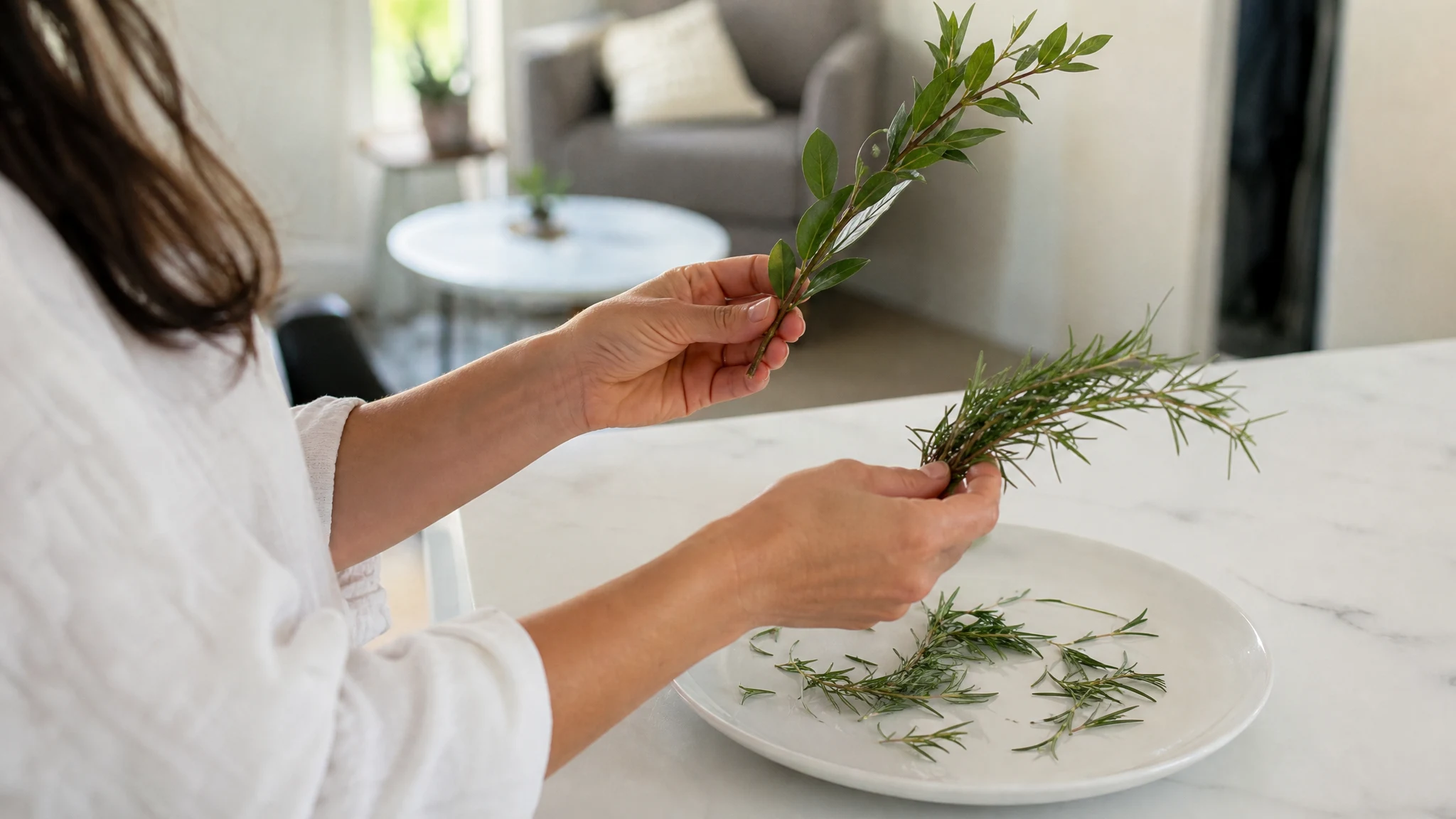
Same plant family, different personalities: tea tree is sharp and medicinal, myrtle green and floral. See how they differ and why both like a cupboard.
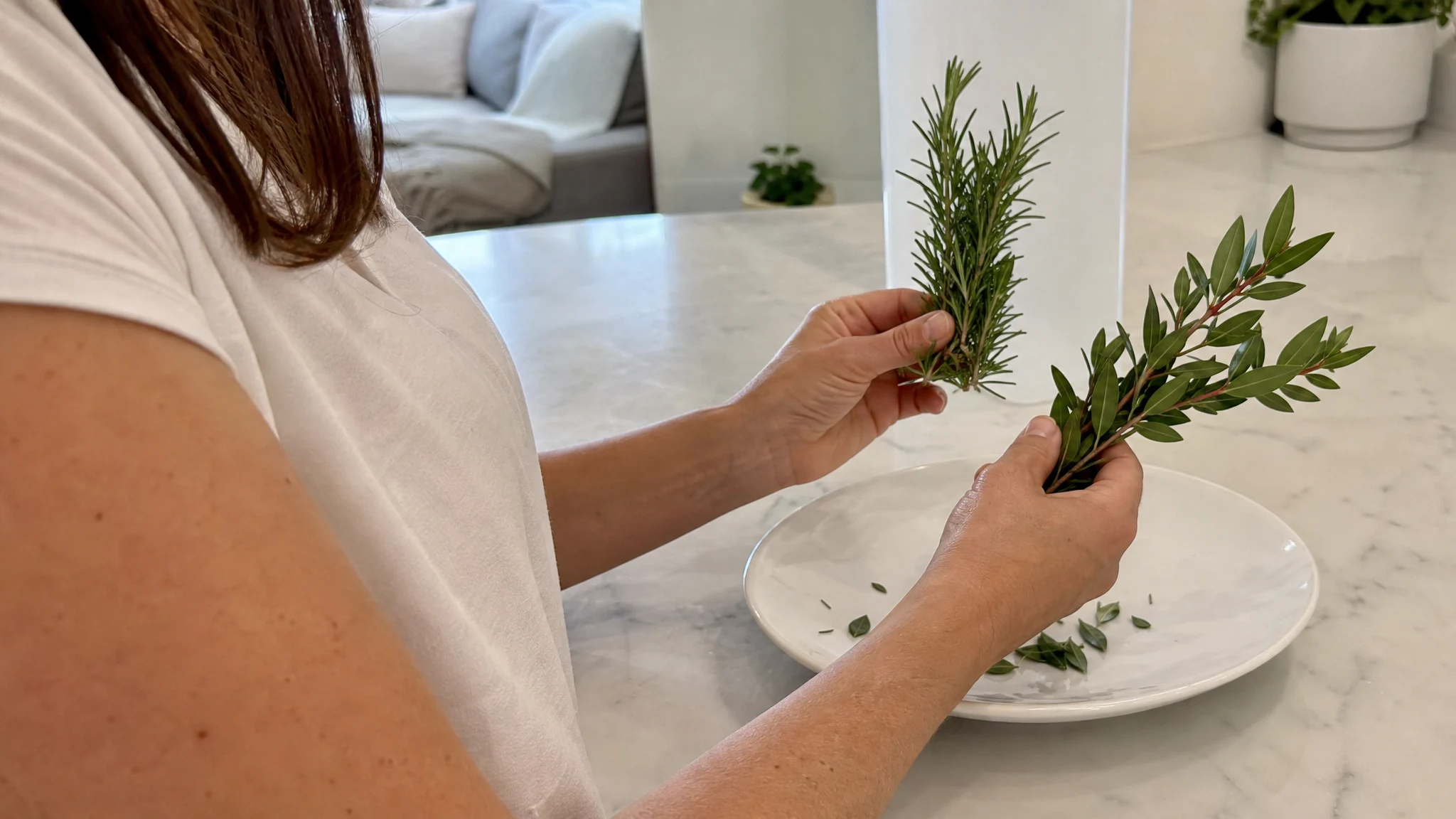
Myrtle or Rosemary Oil? Telling Two Green Scents Apart
Both lean green and herbal, but rosemary brings camphor while myrtle brings a floral, honeyed softness. A plain guide to choosing or blending the two.
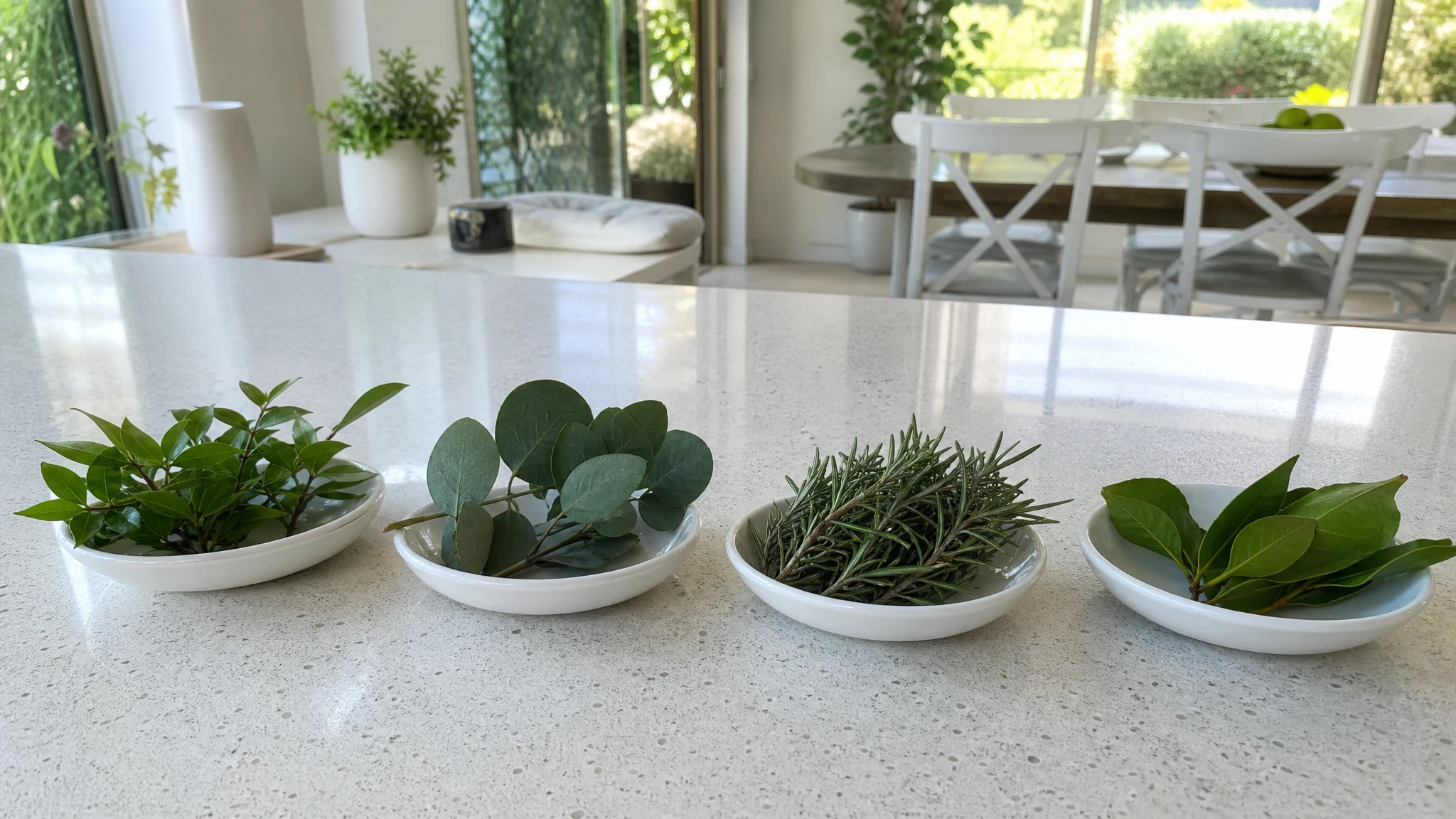
Myrtle Oil Substitutes: What Each One Brings
No oil copies myrtle, but some share its cool, green side. See how eucalyptus, rosemary and the Melaleuca oils compare, and what to check before swapping.
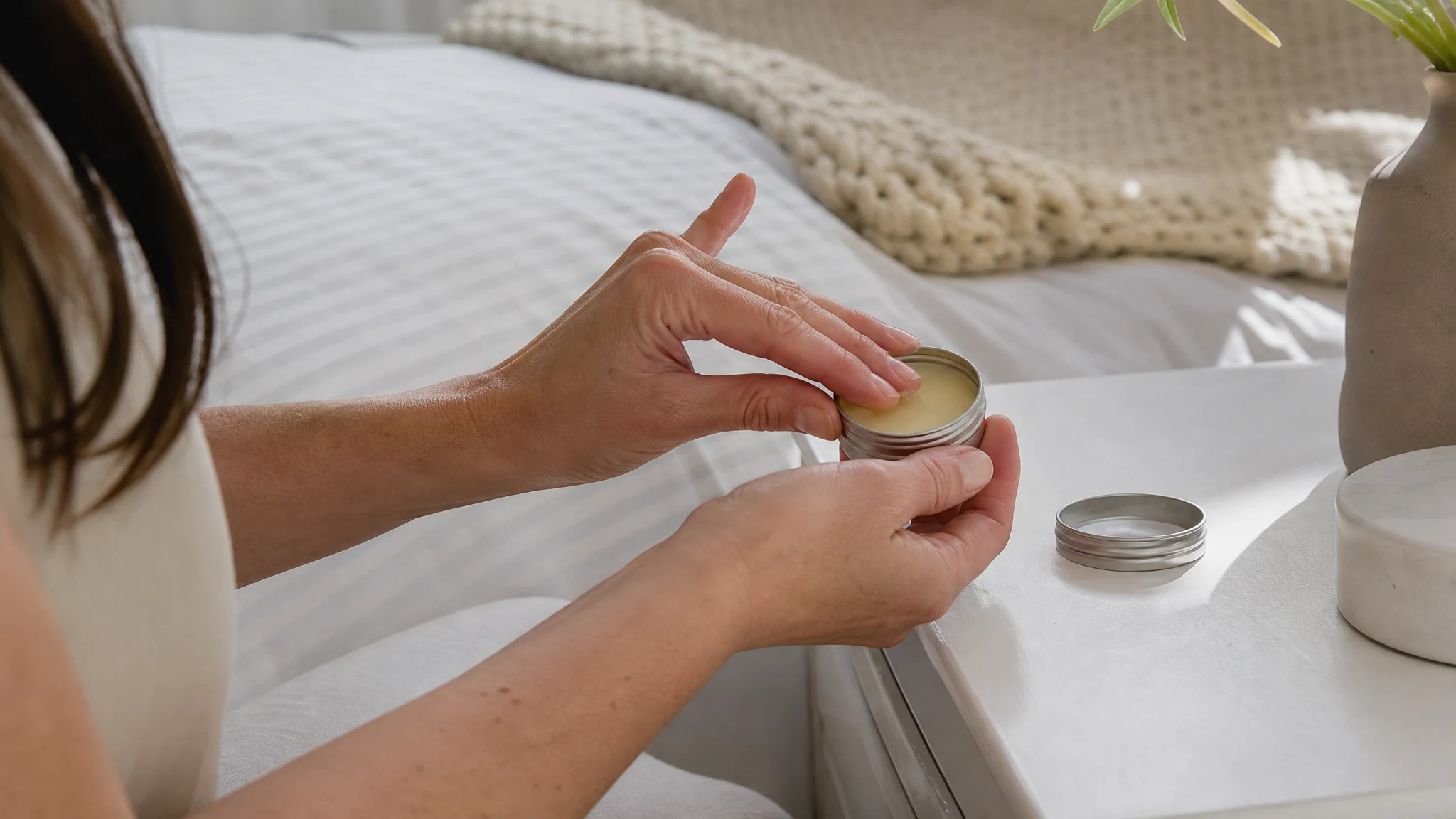
How to Make a Myrtle Scented Balm at Home
A 30 g tin of beeswax, carrier oil and just two drops of myrtle: the gram-by-gram recipe, why the dose is small, and how to patch test before use.
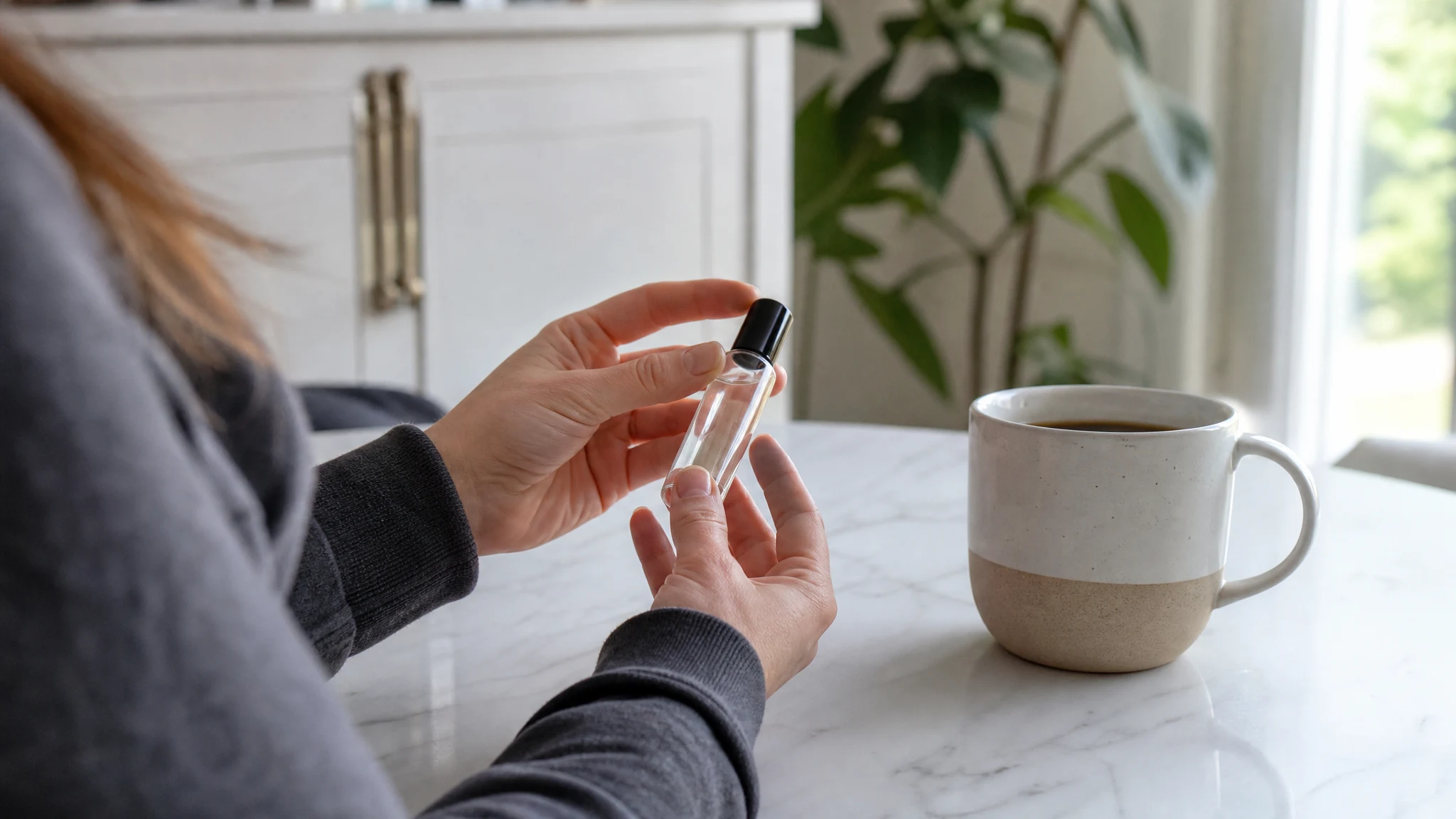
Myrtle Oil Roller Blends: Drop Counts That Work
In a full 10 ml roller, one drop is half a percent. Here is the ceiling we set, a myrtle solo, a lavender pairing and how to patch test.
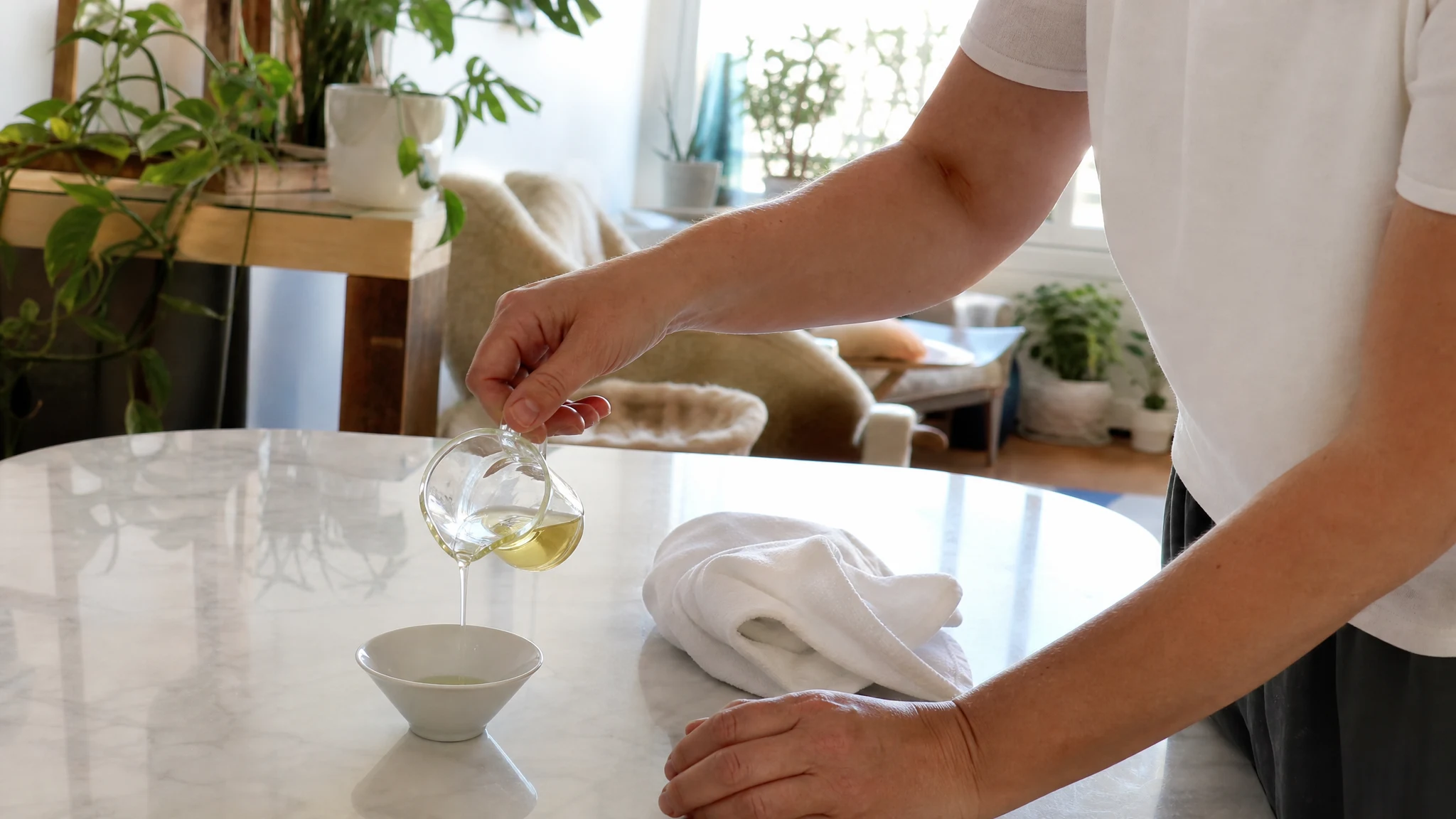
Myrtle Body Oil Recipe: A Drop-by-Drop Guide
Six drops in 100 ml is where we start a myrtle body oil. See the batch sheet, why it sits below our usual range, and how to patch test.
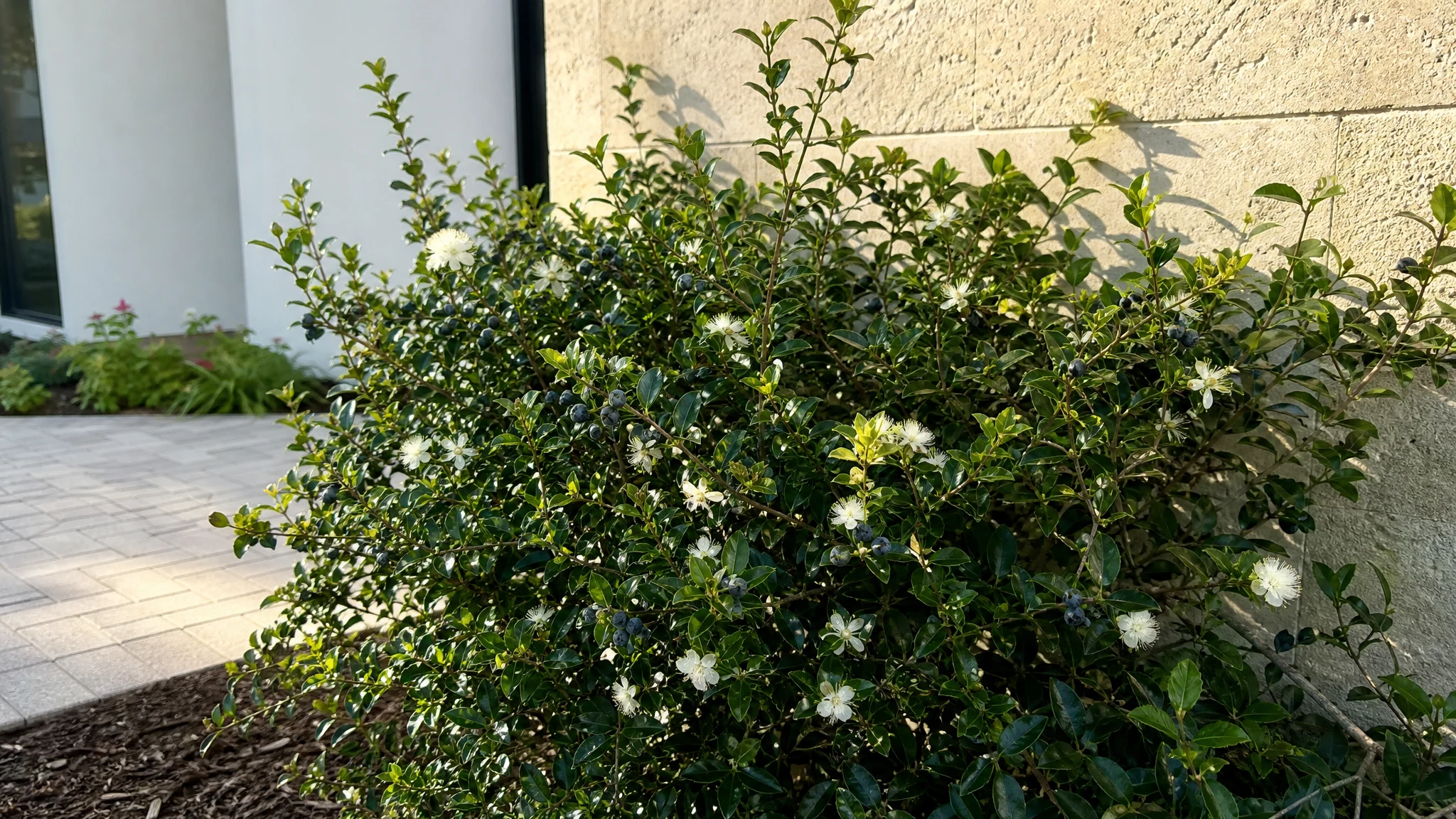
Myrtus communis: Meet the Shrub Behind Myrtle Oil
Crush a leaf of Myrtus communis and you meet myrtle oil's source: how the shrub grows, how much leaf a bottle takes, and which 'myrtles' are not it.
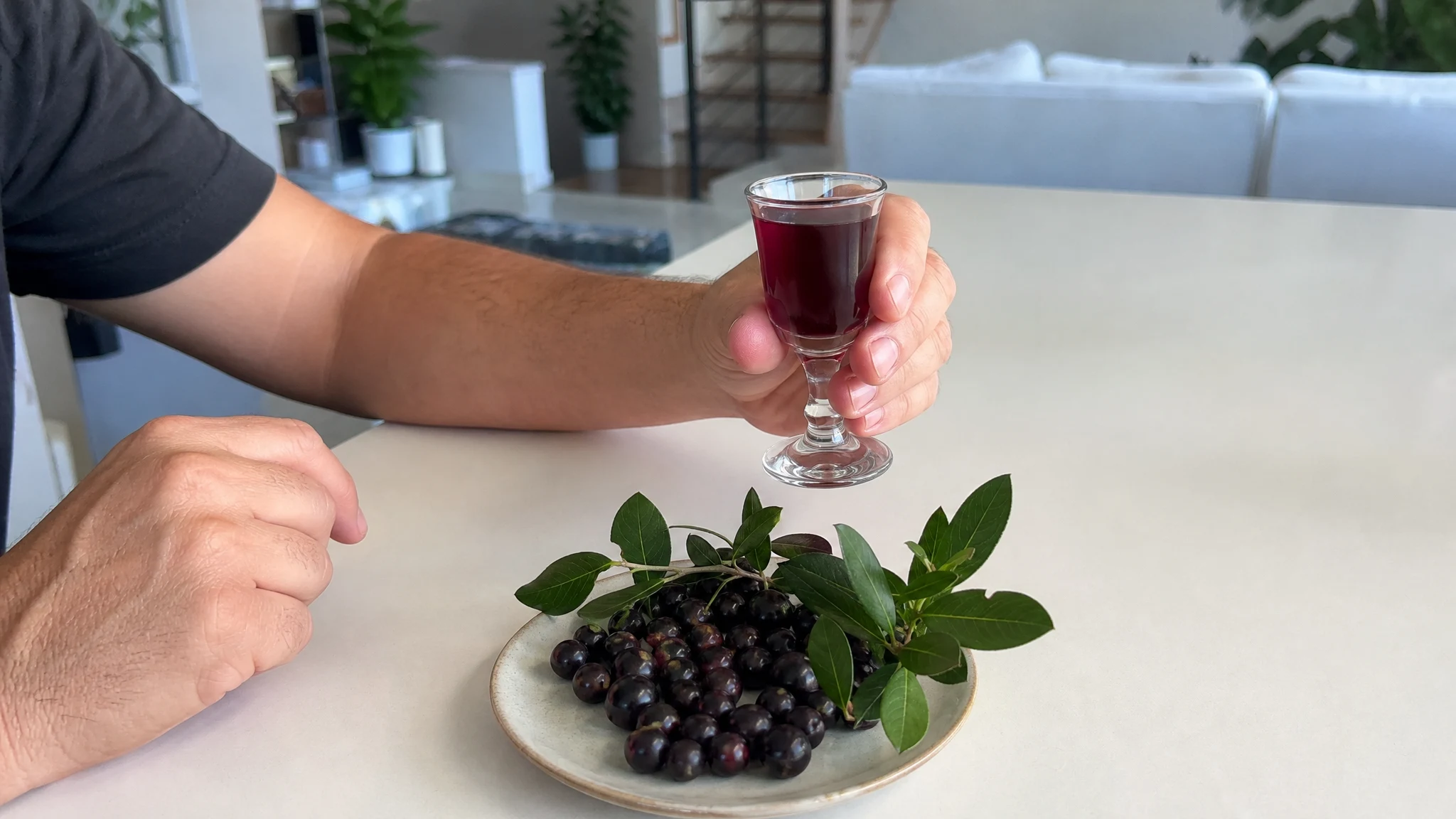
Mirto Liqueur and Myrtle Berries: Not the Same as the Oil
Sardinia's ruby mirto liqueur comes from berries, and sprigs go on the roast. See how it is made and why myrtle essential oil stays out of the kitchen.

Crape Myrtle vs True Myrtle: How to Tell Them Apart
Crape myrtle and true myrtle share a name, not a family. Spot the difference by leaf, flower and berry, and learn which plant our oil comes from.

Wild or Cultivated Myrtle Oil? Questions to Ask
A shrub that regrows deserves a harvest that lets it. Here are the questions worth asking any myrtle oil supplier, and what certifications actually cover.
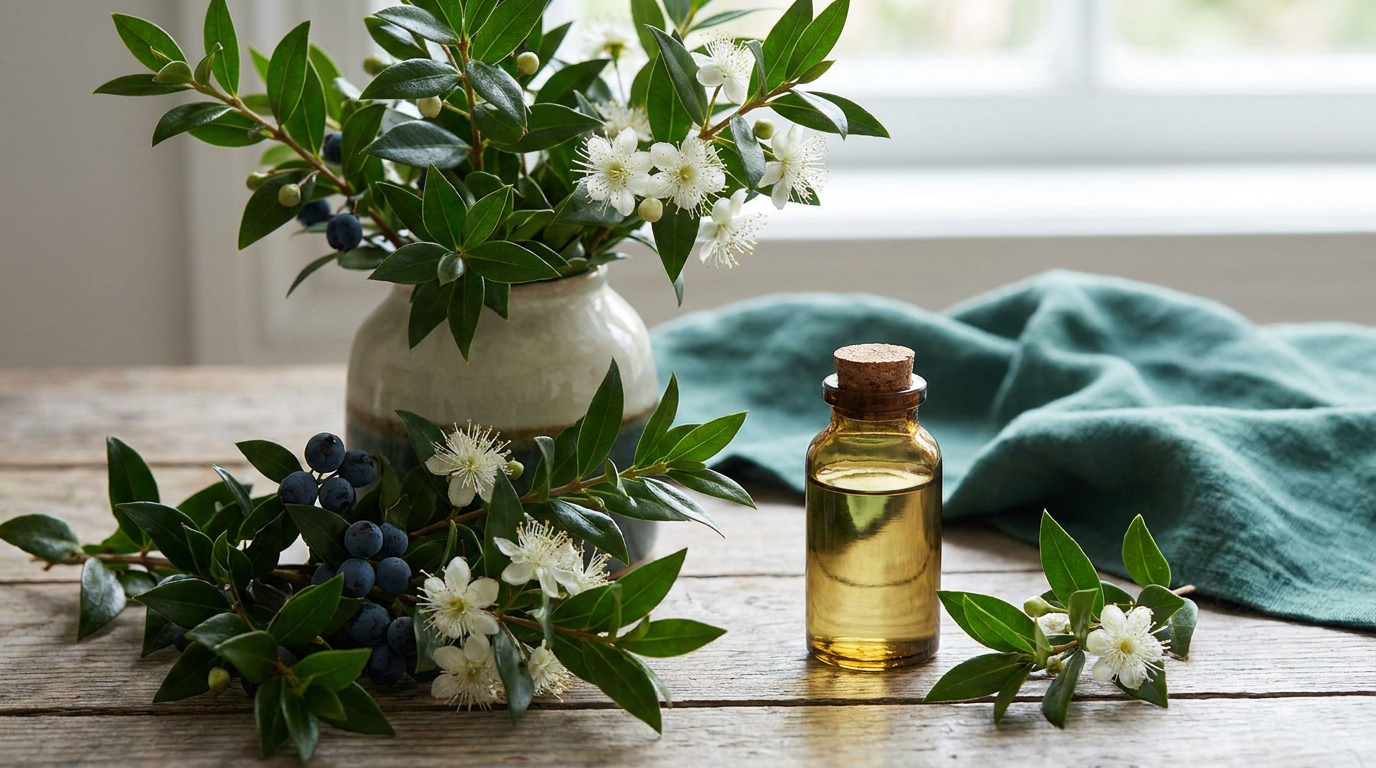
Myrtle Oil in Cold-Process Soap: What to Know
How much myrtle a cold-process soap bar can carry, what the lye side asks of you, and a simple way to run your own scent-fade trial at home.

What Is Myrtle Oil? Plant, Scent and Safe Use
Myrtle oil comes from the leaves of Myrtus communis, and an ounce takes kilos of them. Here is what the oil is, why bottles differ and how we approach it.
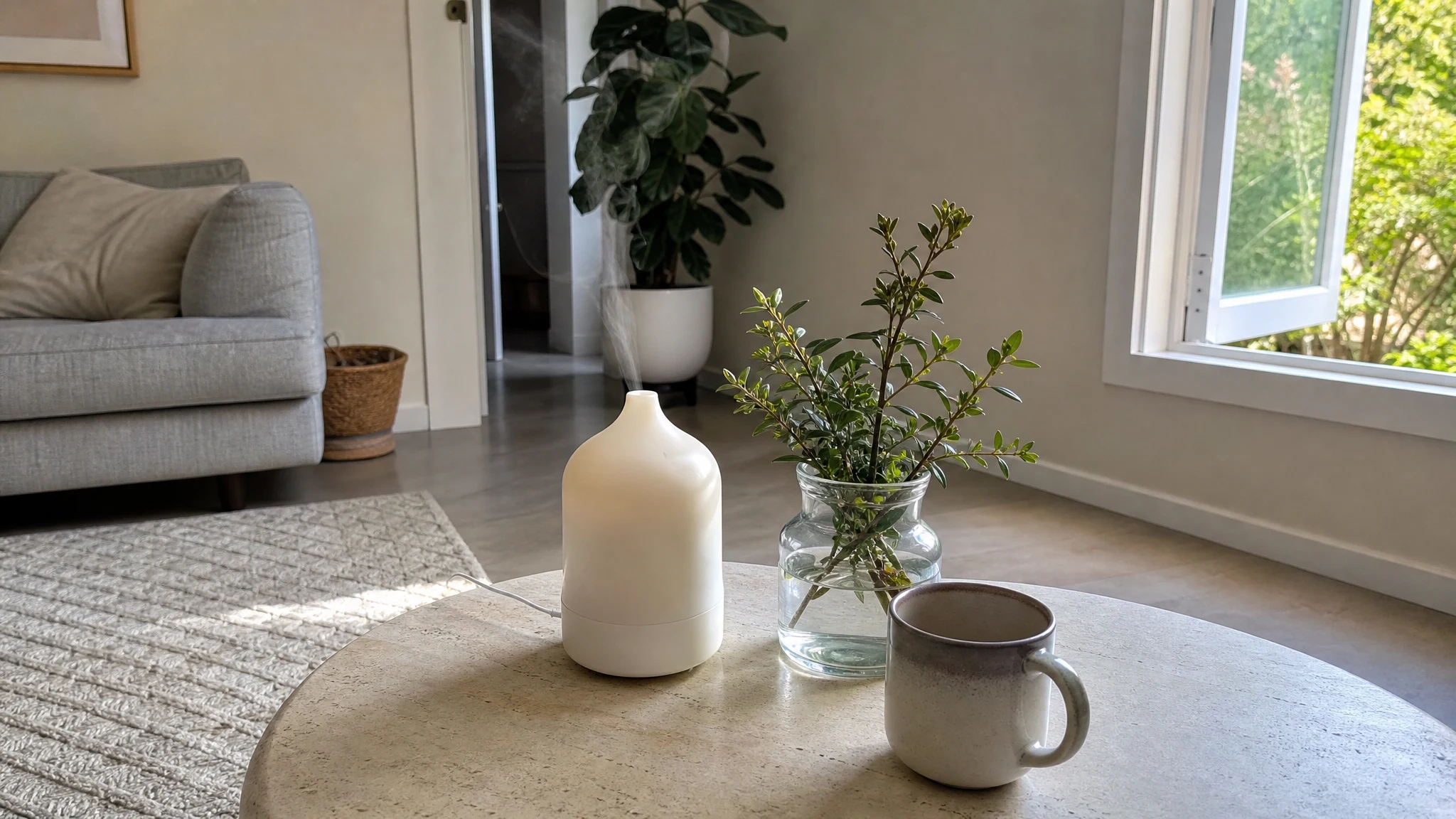
Myrtle Oil at Home: Diffuser Tips for Fresh Rooms
Short sessions, fresh air and a sensible spot for the bottle: a friendly guide to diffusing myrtle oil at home and where the other uses lead.

How to Buy Myrtle Oil: Match the Checks to the Job
Diffuser, cologne, face product or a soap batch? The job decides what to check before you buy myrtle oil. A practical guide to species, smell and sizes.
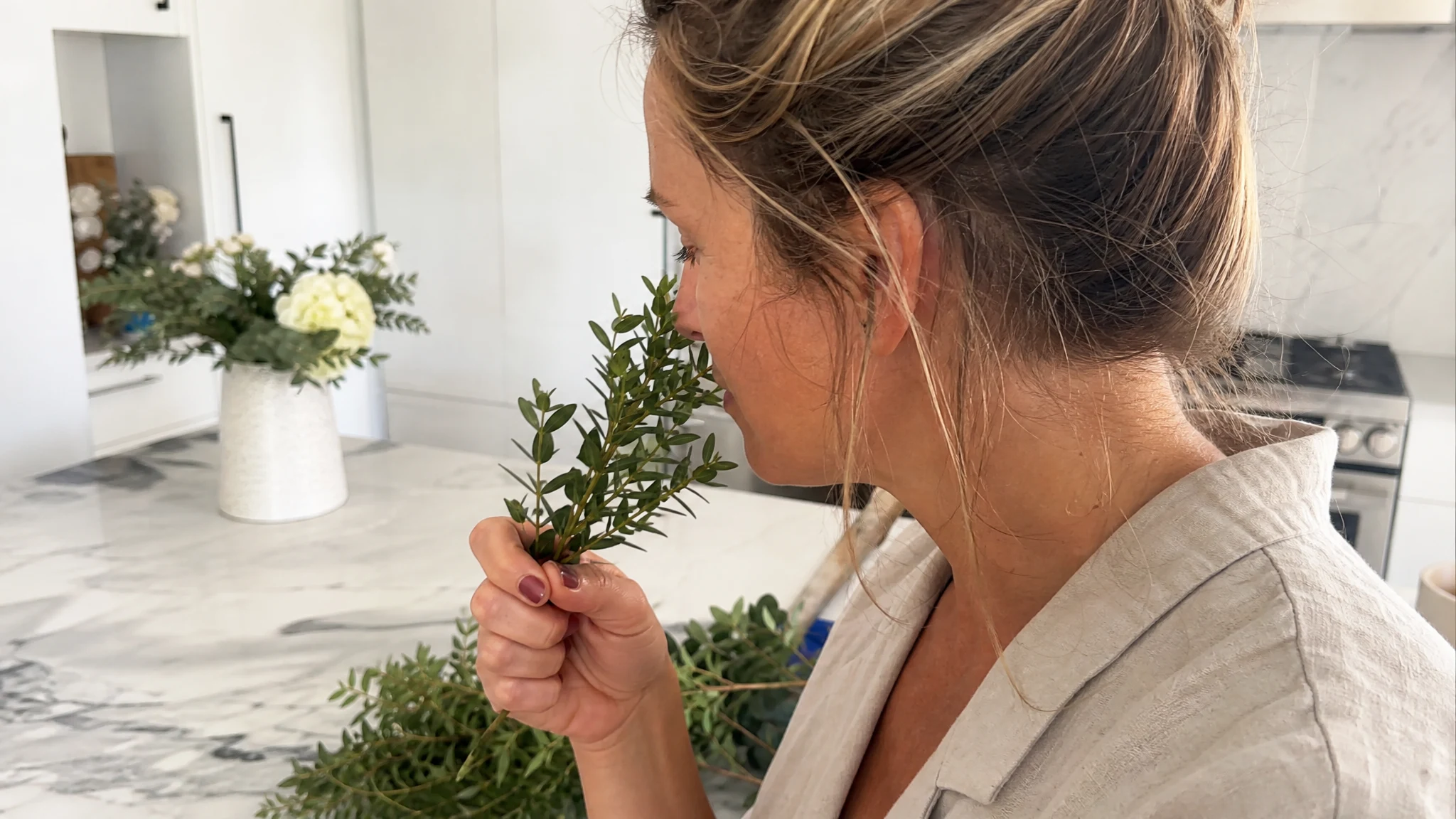
What Does Myrtle Oil Smell Like? Notes and Blends
Fresh and cool at first, then soft, floral and faintly honeyed. What myrtle oil smells like, why bottles differ, and how to give your nose a fair test.
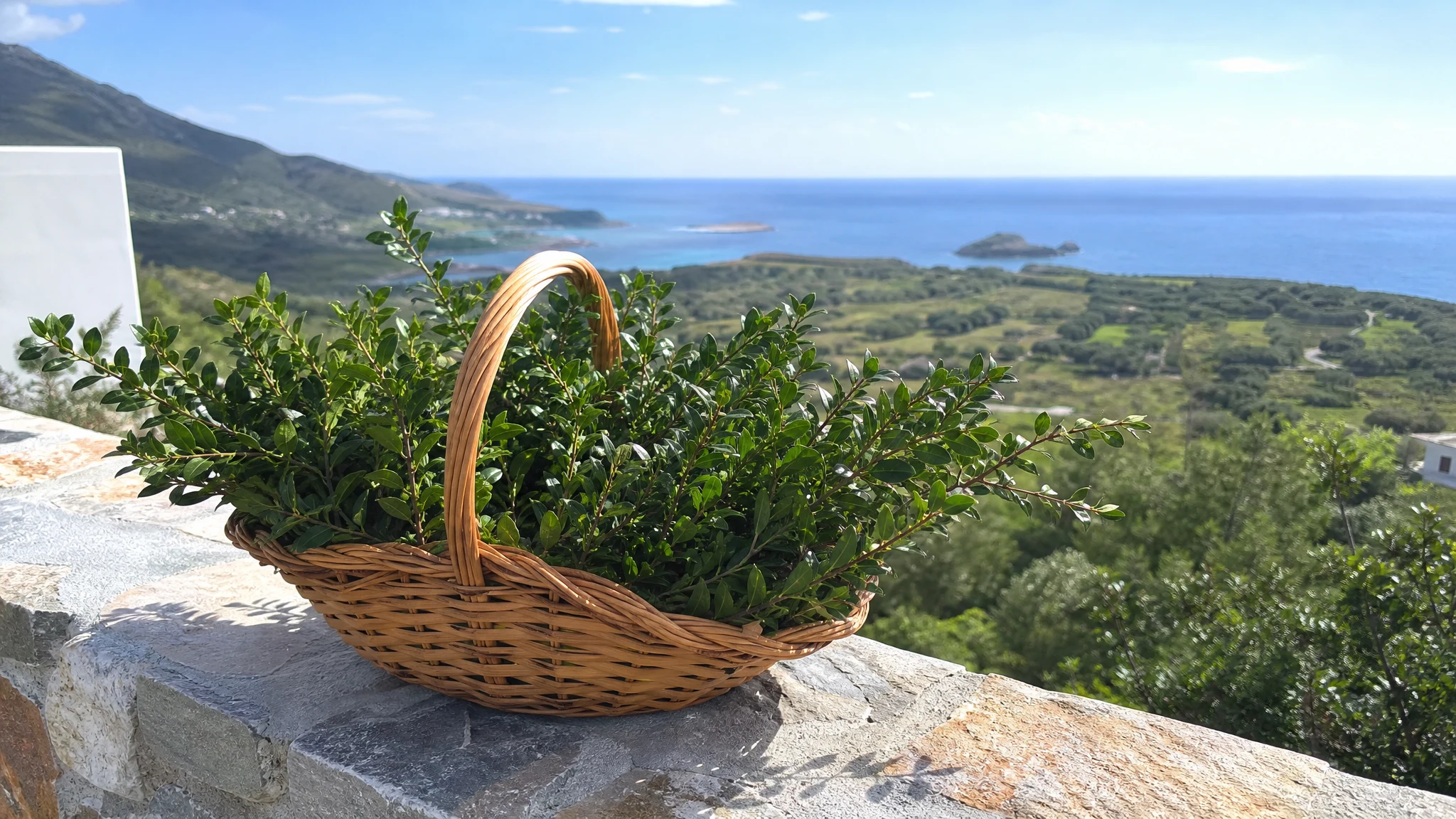
How Myrtle Oil Is Made: From Leaf to Steam Still
Steam, leaves and time: how myrtle oil is distilled, why a short run smells different from a long one, and how many leaves one ounce takes.
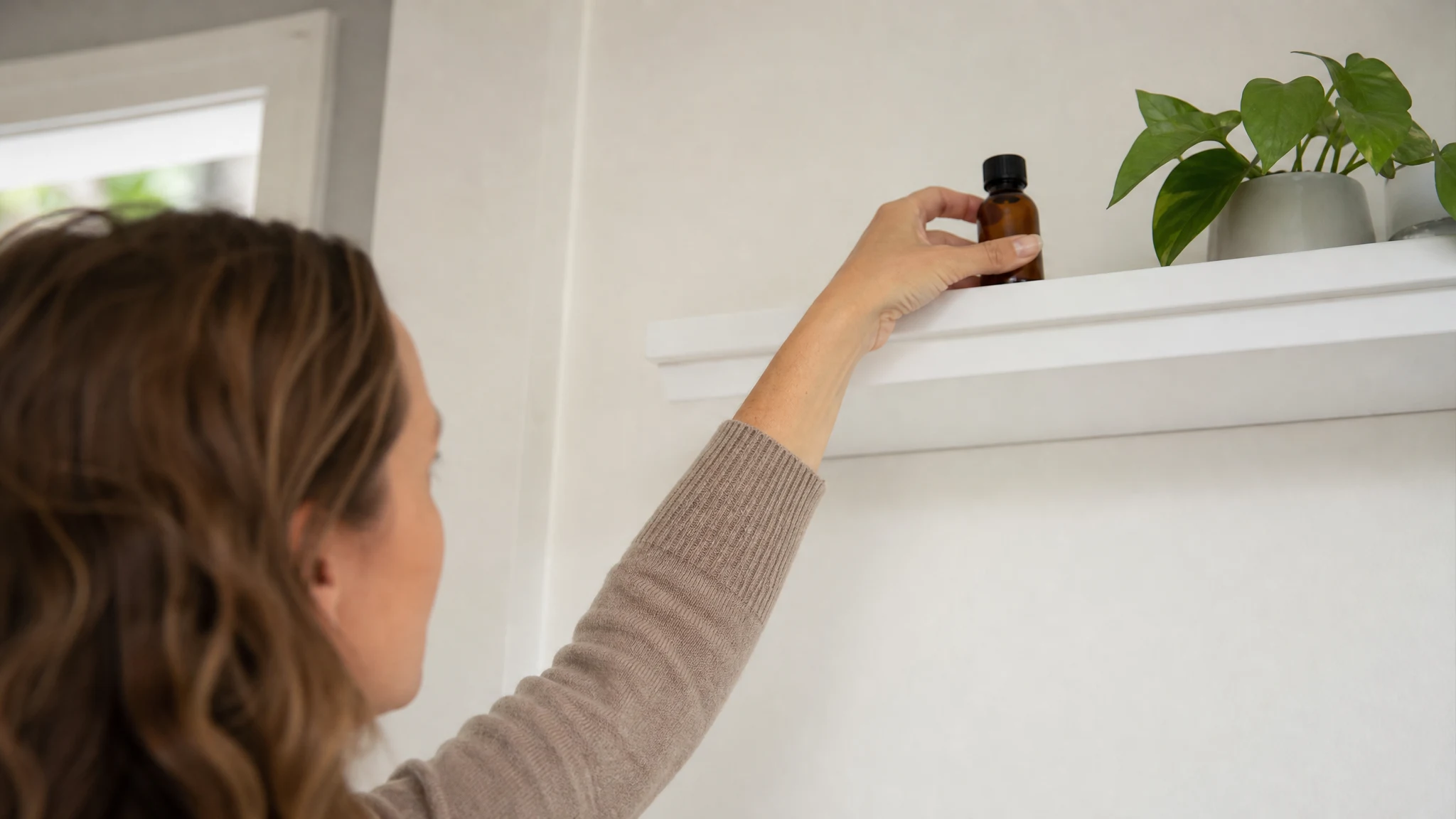
Myrtle Oil Safety: Dilution, Patch Tests, Pets
Start low, patch test, store it well. Our practical rules for using myrtle oil around skin, children and pets, with the numbers behind them.

Green vs Red Myrtle Oil: What the Labels Really Mean
Green and red myrtle are trade shorthand over a wide spectrum. Here is what the published numbers show and what to ask for before you buy.

Myrtle Oil FAQ: Your Common Questions Answered
The questions we hear most about myrtle oil: what it smells like, how to dilute it, how long it keeps and why it is not the same as lemon myrtle.
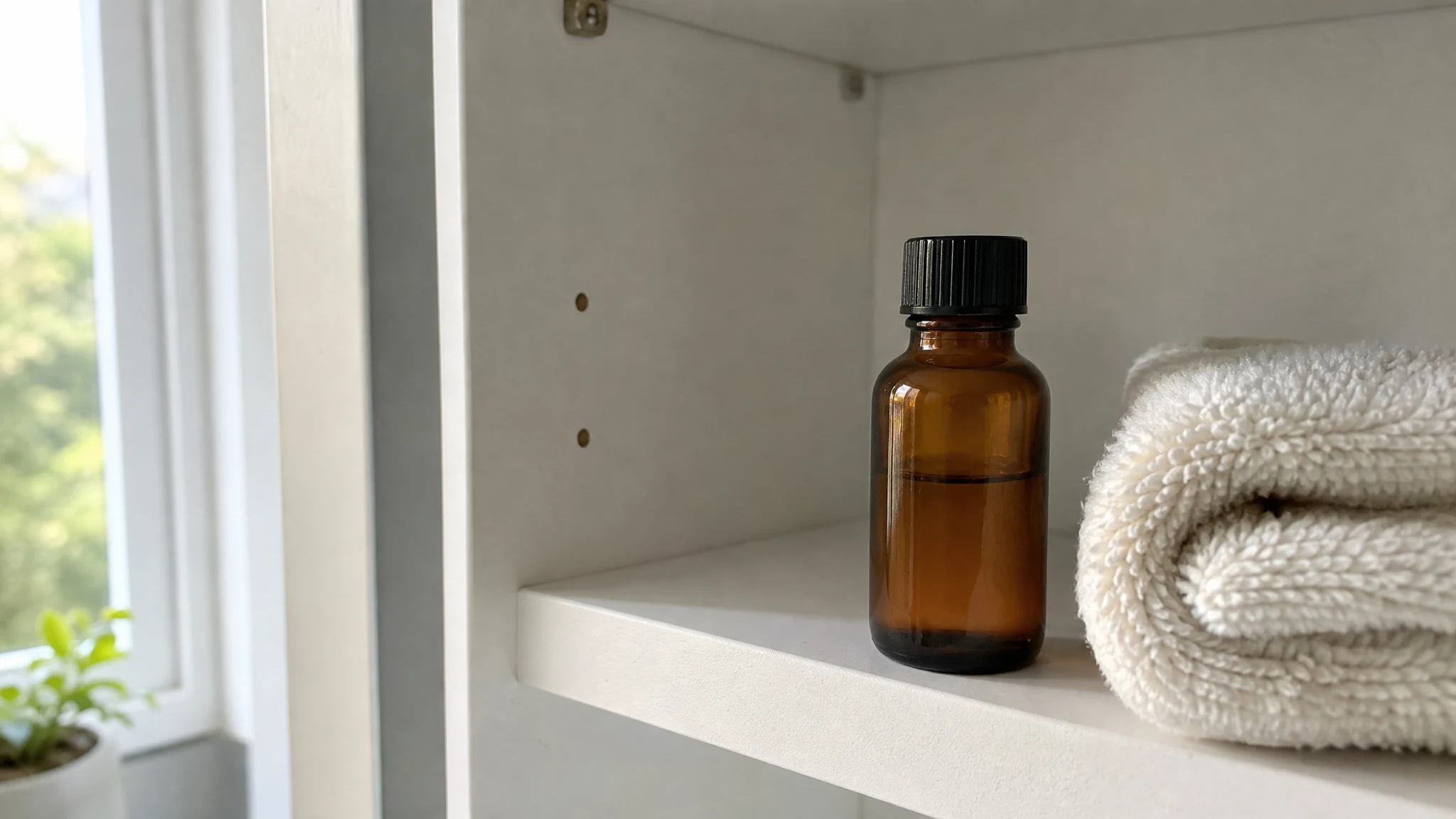
How to Store Myrtle Oil So It Stays Fresh
Cap it, date it, keep it cool and dark. What a six-month storage study found, and why fresher myrtle oil is the better choice for skin.
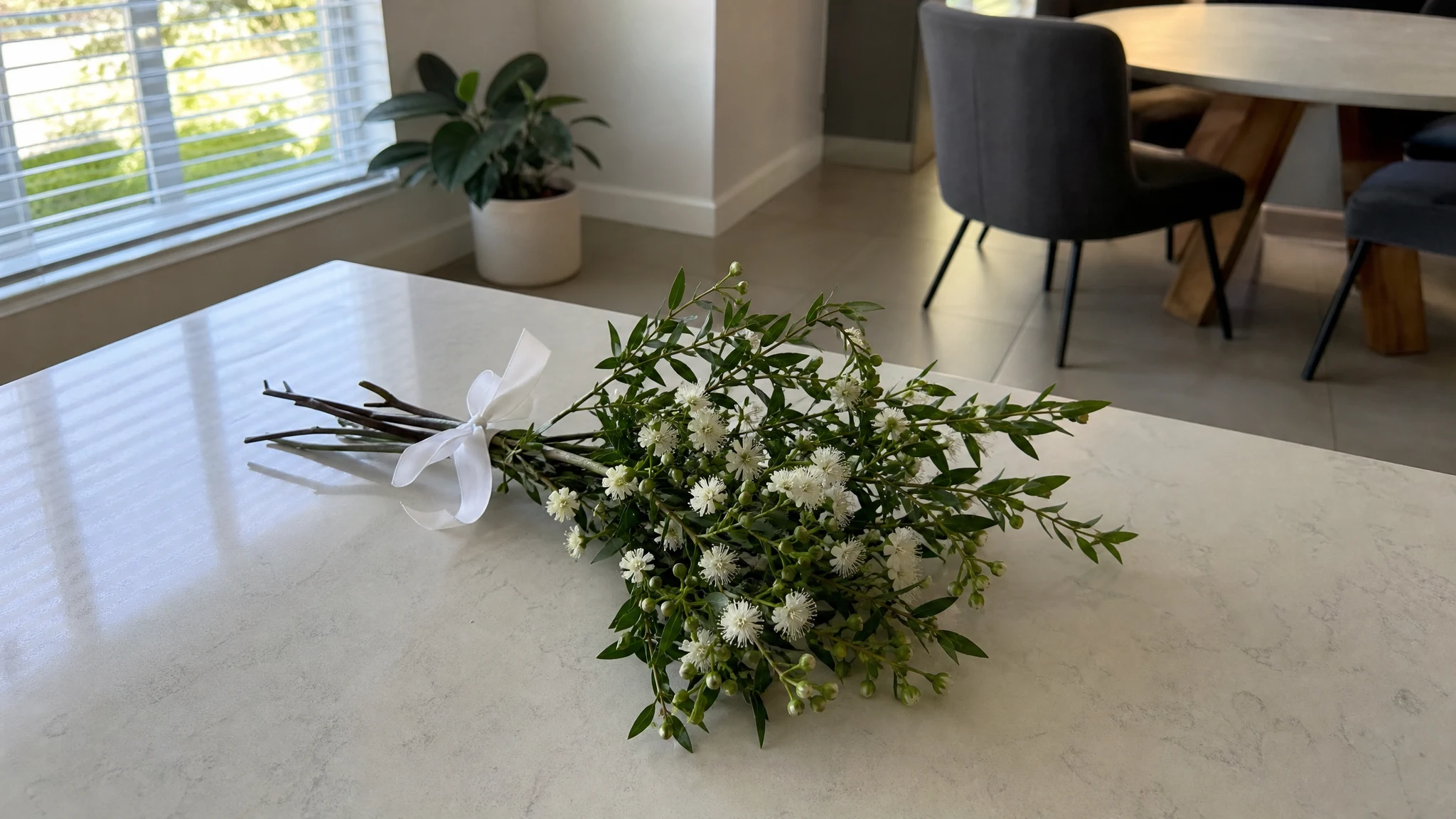
Why Is Myrtle a Wedding Plant? A Short History
A Roman goddess behind a myrtle screen, wreaths on Greek vases and a royal cutting handed bride to bride: the story of myrtle and weddings, and today.
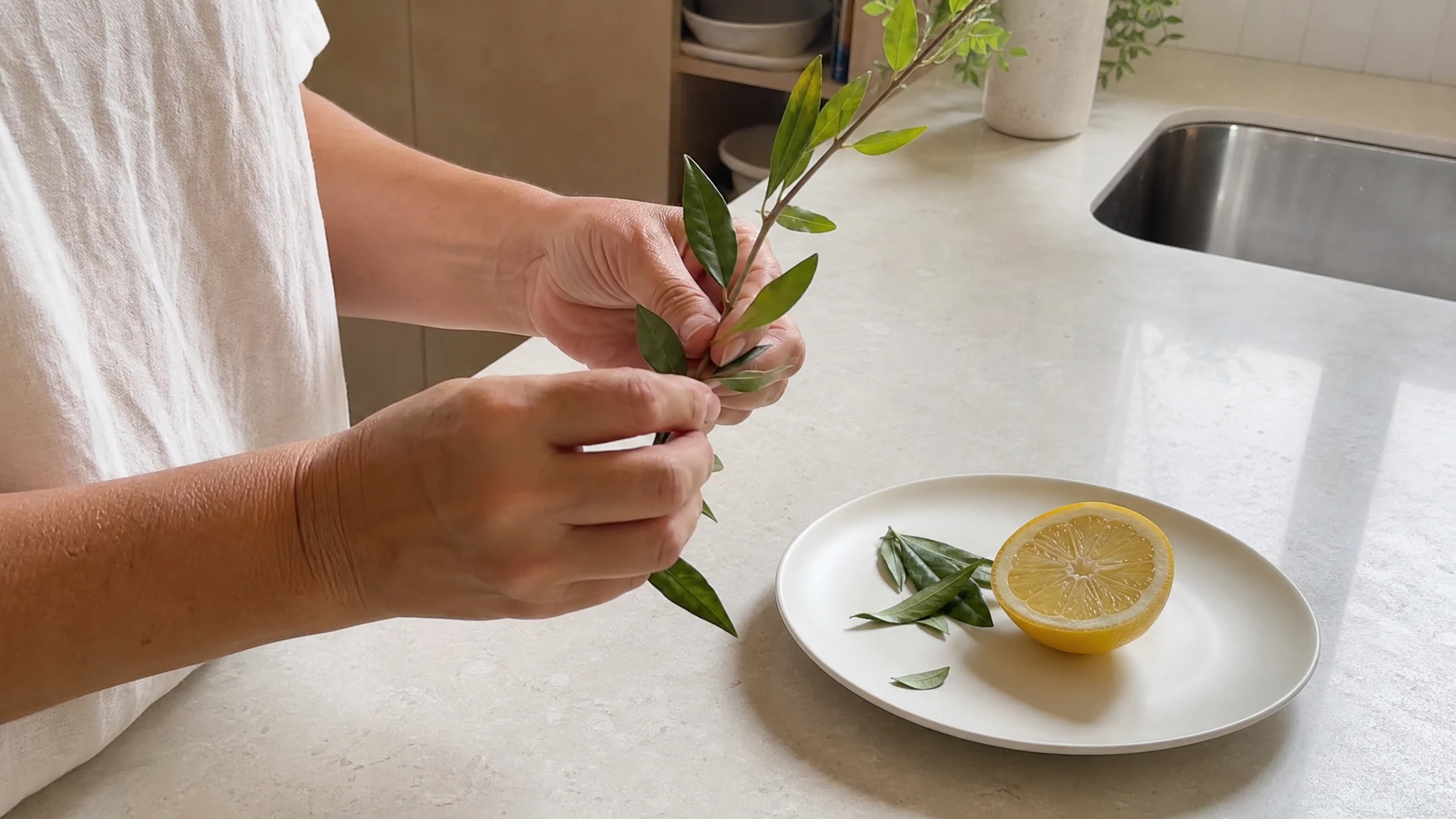
Lemon Myrtle Oil: Why It Isn't True Myrtle Oil
Lemon myrtle smells like fresh-zested lemons, thanks to citral. Here is how it differs from true myrtle oil and what to know before blending it.
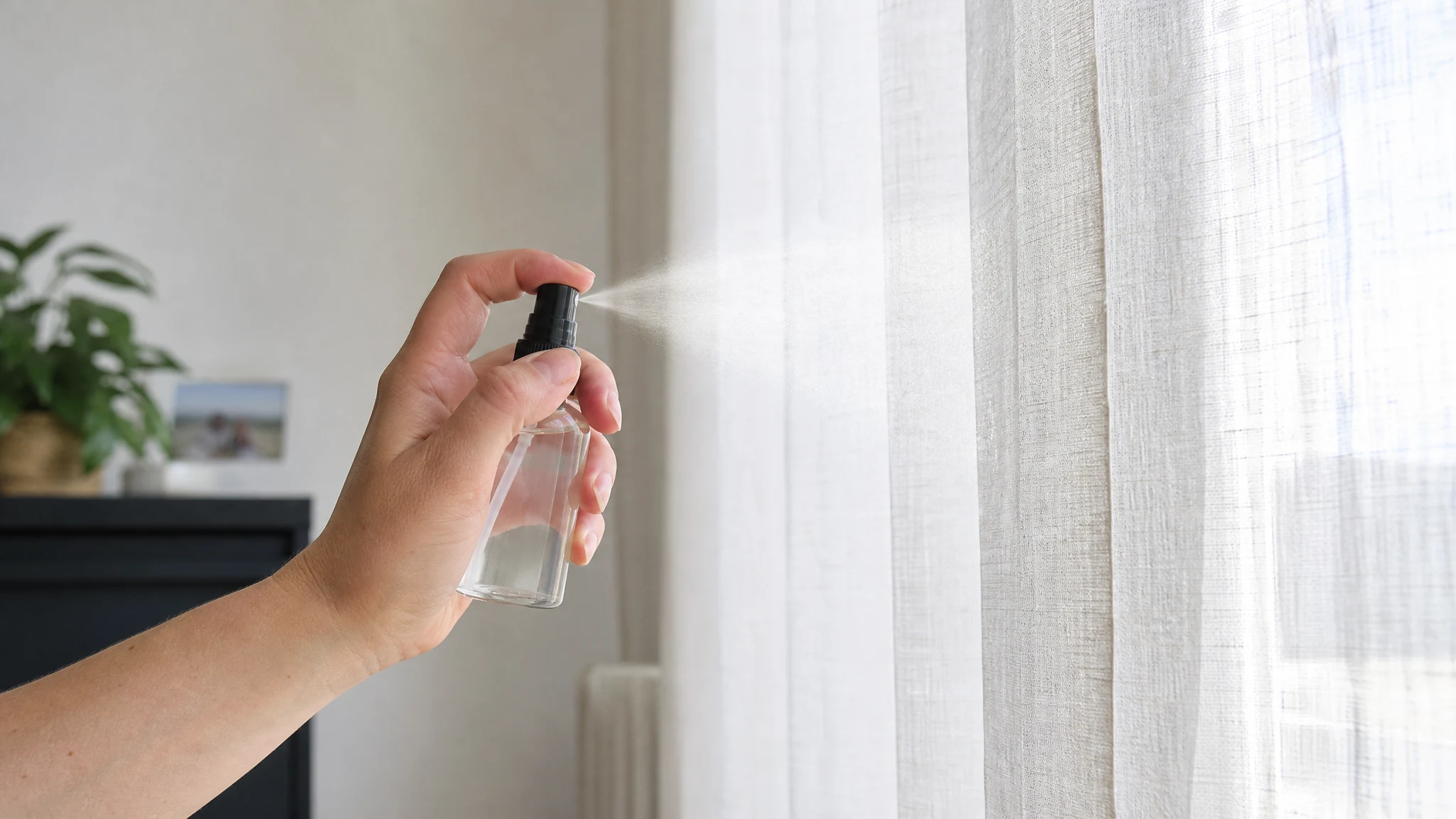
Myrtle Room Spray: A Simple Two-Ingredient Recipe
Three drops of myrtle in a 100 g alcohol spray: the IFRA cap that sets the dose, a simple method, and who should keep the bottle out of the room.

Myrtle Oil and Face Care: Where It Fits, Where It Does Not
Steam and splash rituals are lovely, but the face has the tightest limits for myrtle oil. See the numbers and where the aroma fits in more easily.
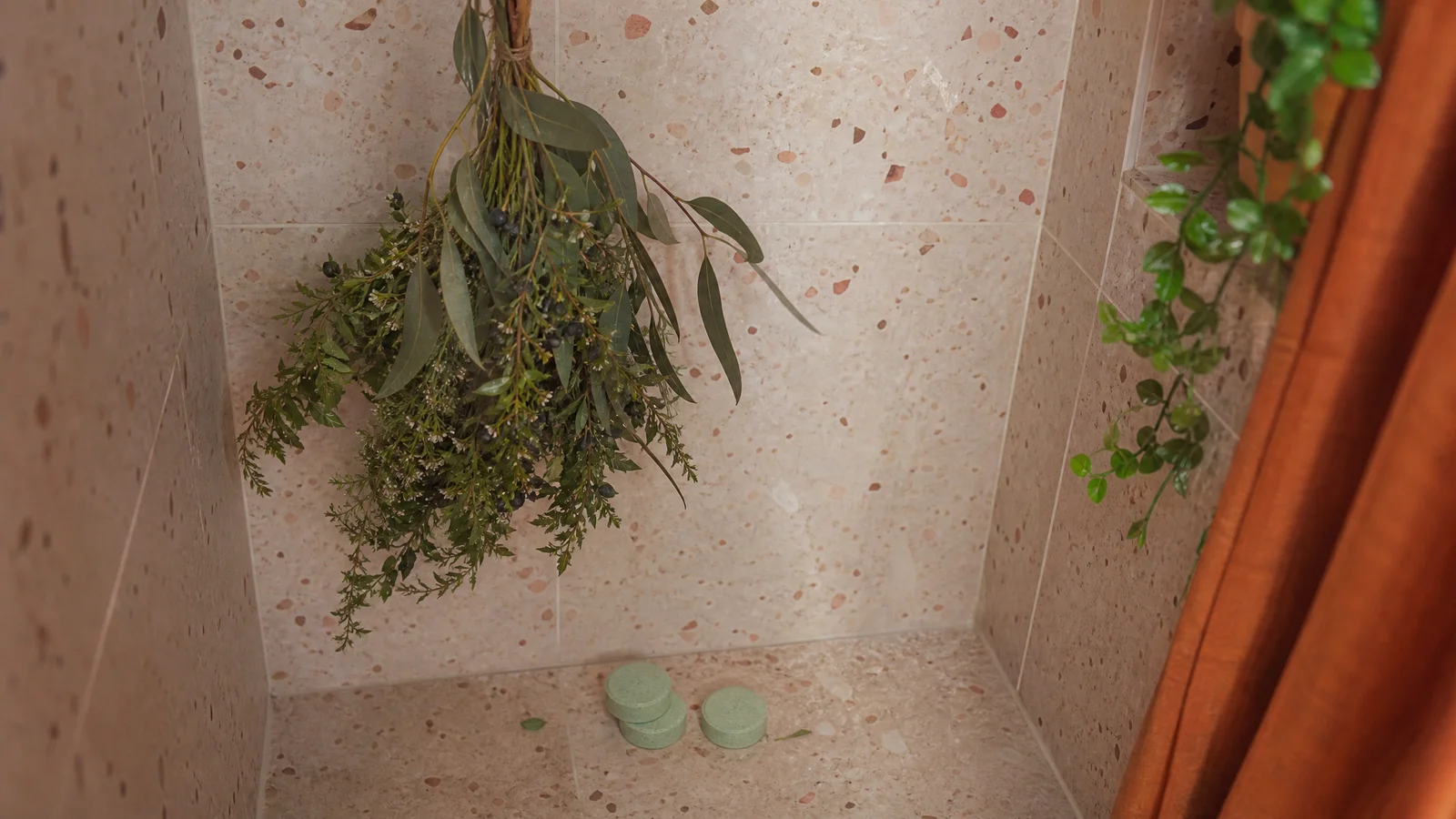
Myrtle Shower Melts: Fizz Ratios and Scent Amounts
The fizz comes from baking soda and citric acid; the scent comes from a few drops of myrtle. Here is the balanced batch and the cap behind the dose.

Myrtle, Lemon and Rosemary: A Fresh Morning Blend
Myrtle, lemon and rosemary make a bright morning blend. Mix it by weight for your diffuser, then see how much goes into a small bottle of cologne.

Myrtle Oil Blends: Which Oils Pair Well and Why
Citrus, florals or cool herbs: how myrtle pairs, how to build a blend by shares, and the limits each product type puts on the myrtle in it.

Myrtle Oil in Summer: Storing and Using It in Heat
Myrtle's fresh green scent suits warm weather. Here is how to store the bottle, diffuse with windows open and keep skin blends light all summer.
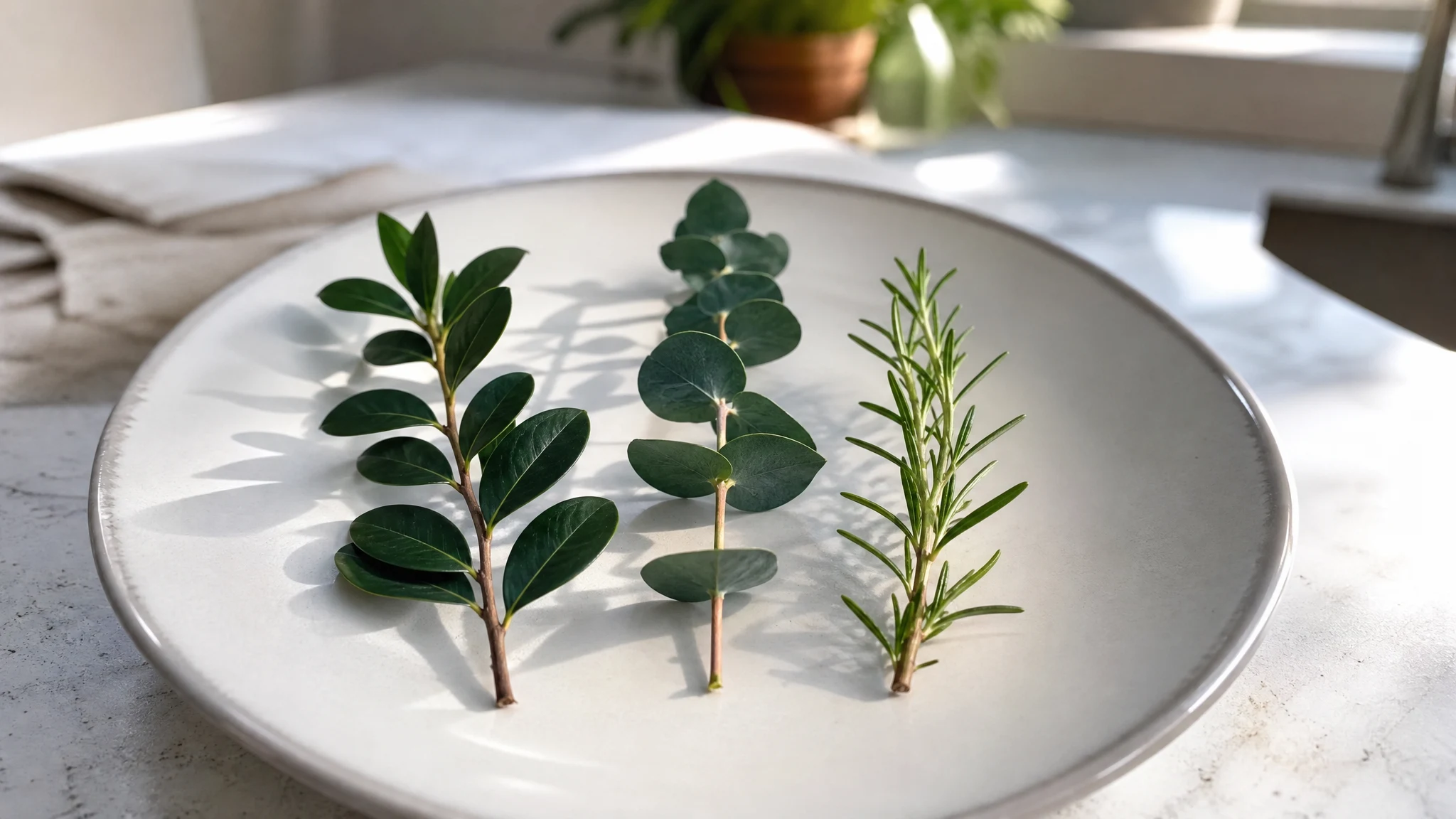
Honey Myrtle vs Myrtle: Who Is in the Myrtle Family?
Three honey myrtles from one garden gave three completely different oils. Why the Myrtaceae family name tells you so little about a bottle.
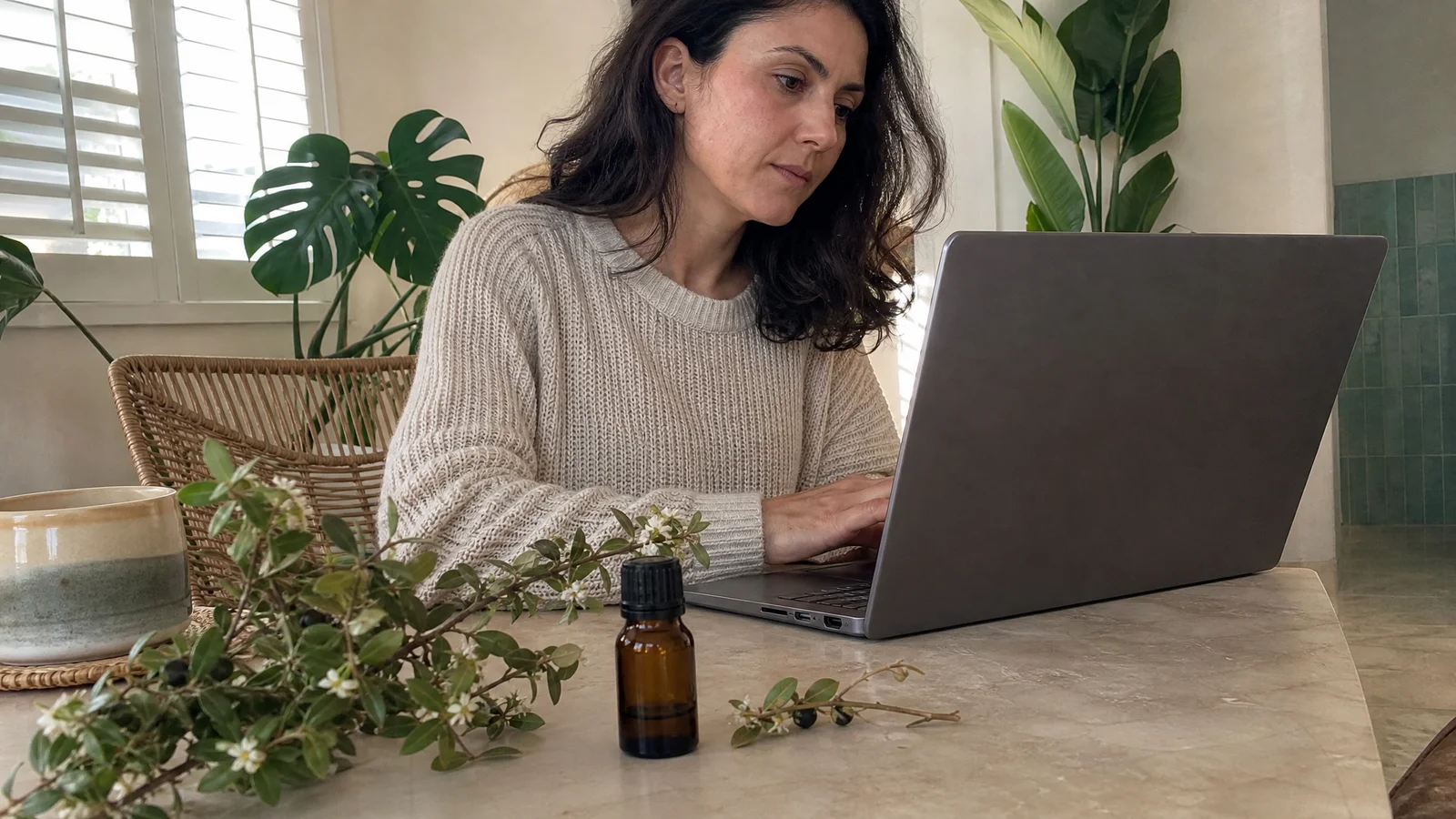
How to Check Myrtle Oil Quality: Read the Paperwork
Smell and price cannot prove what is in a bottle. What a Certificate of Analysis shows, what it leaves out, and the checks worth asking any seller for.
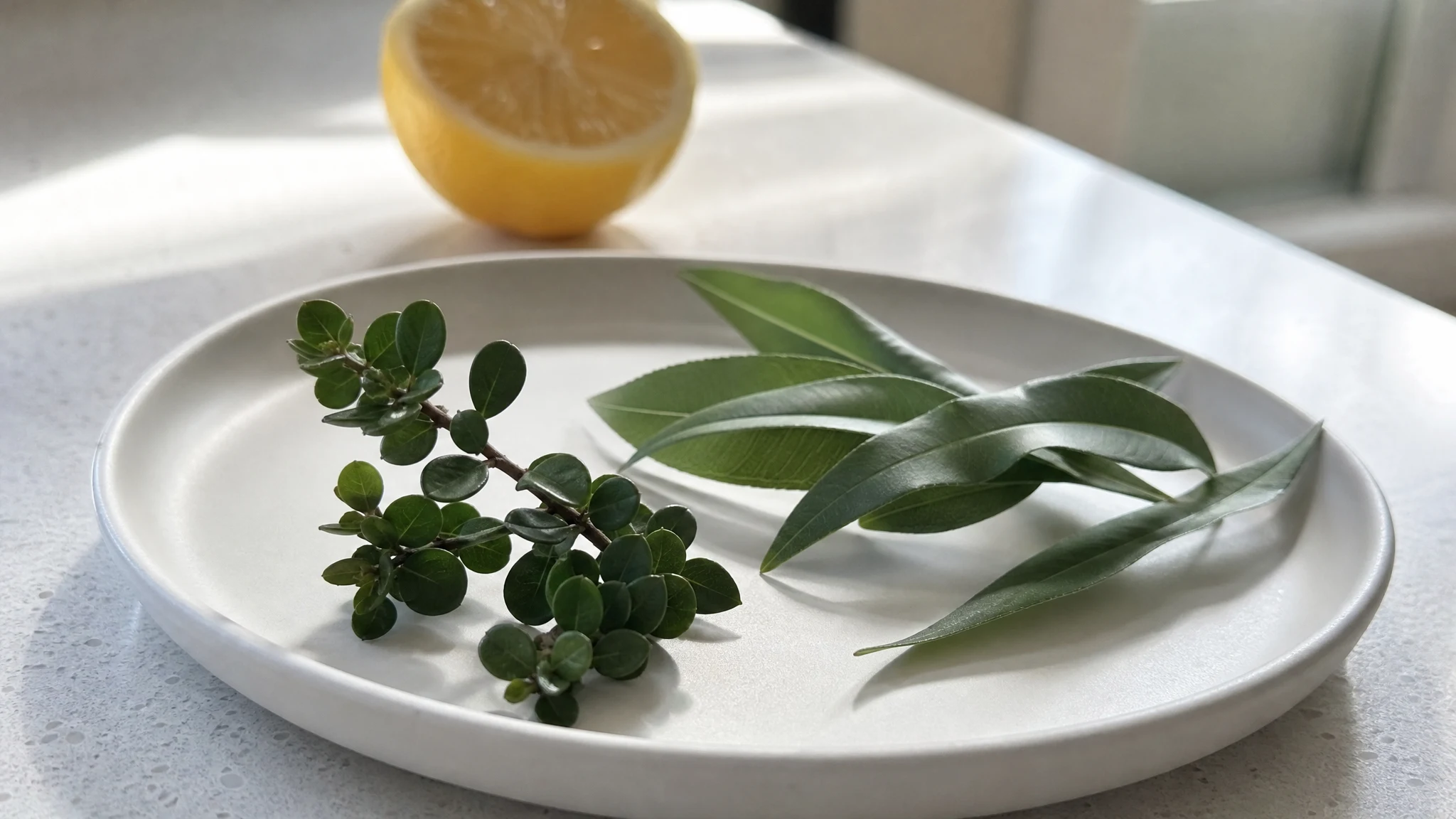
Myrtle Oil vs Lemon Myrtle Oil: Two Different Plants
Myrtle is green, herbal and softly floral; lemon myrtle is a bright citral-rich oil from Australia. Here is how to tell which one is in the bottle.
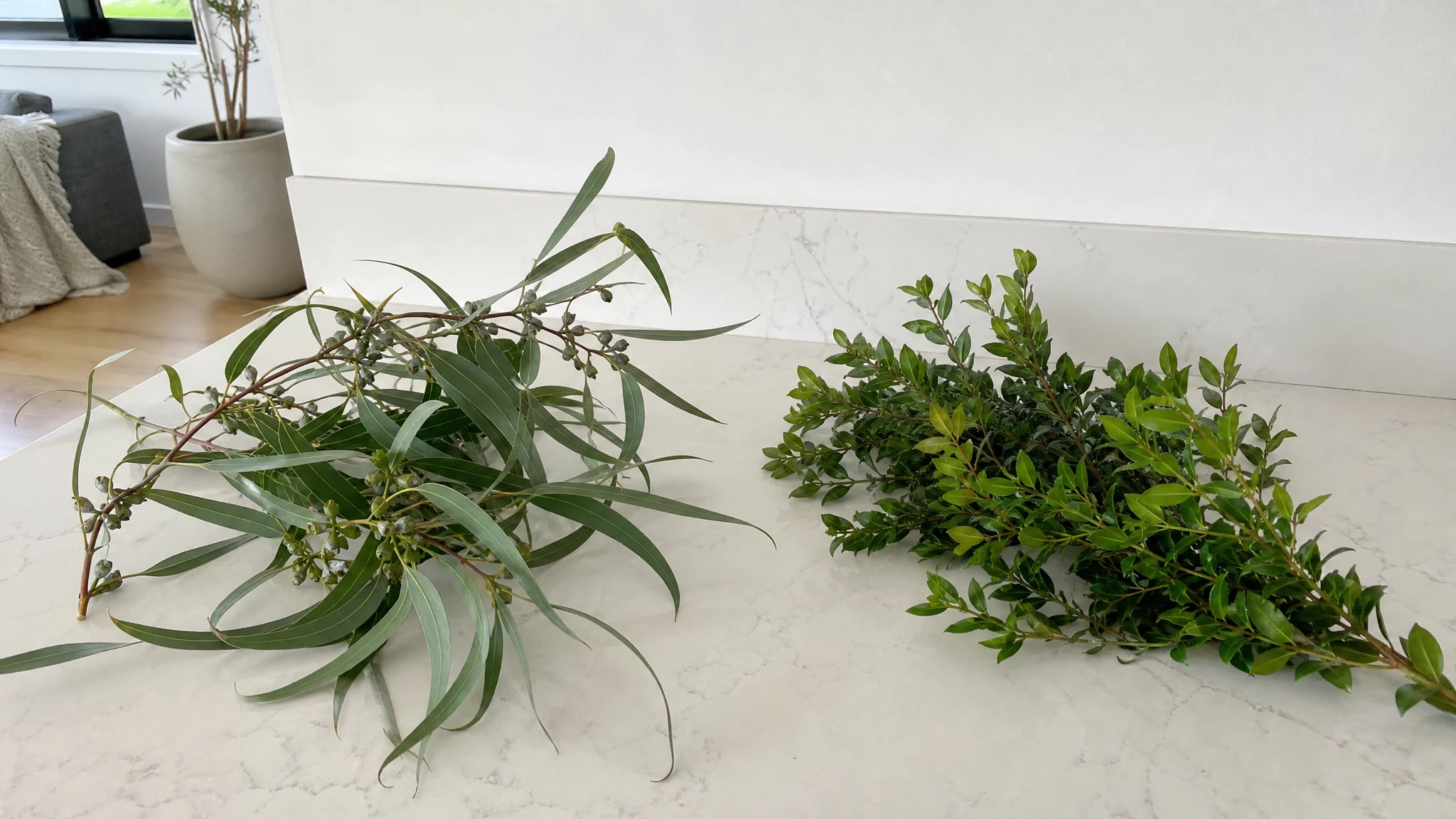
Myrtle vs Eucalyptus Oil: Which Cool Scent Is Yours?
Myrtle and eucalyptus share a cool, clean edge, but eucalyptus is built on one compound and myrtle on a wider palette. Here is how to choose between them.
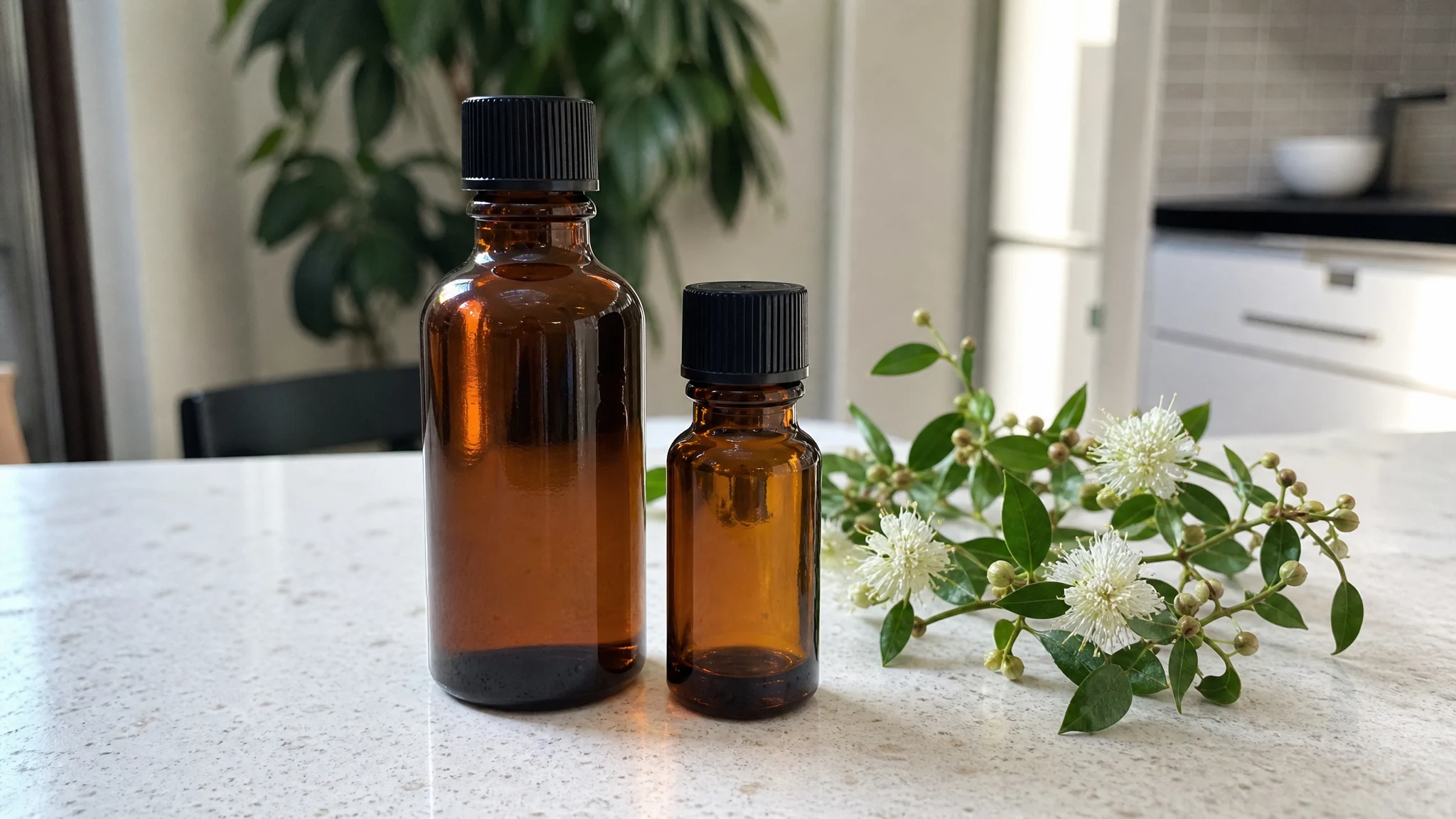
Myrtle Oil Prices: How to Compare Quotes Fairly
Three quotes, three prices. Why leaf yield and composition move the cost of myrtle oil, and a unit-cost method that lets you compare any quote fairly.
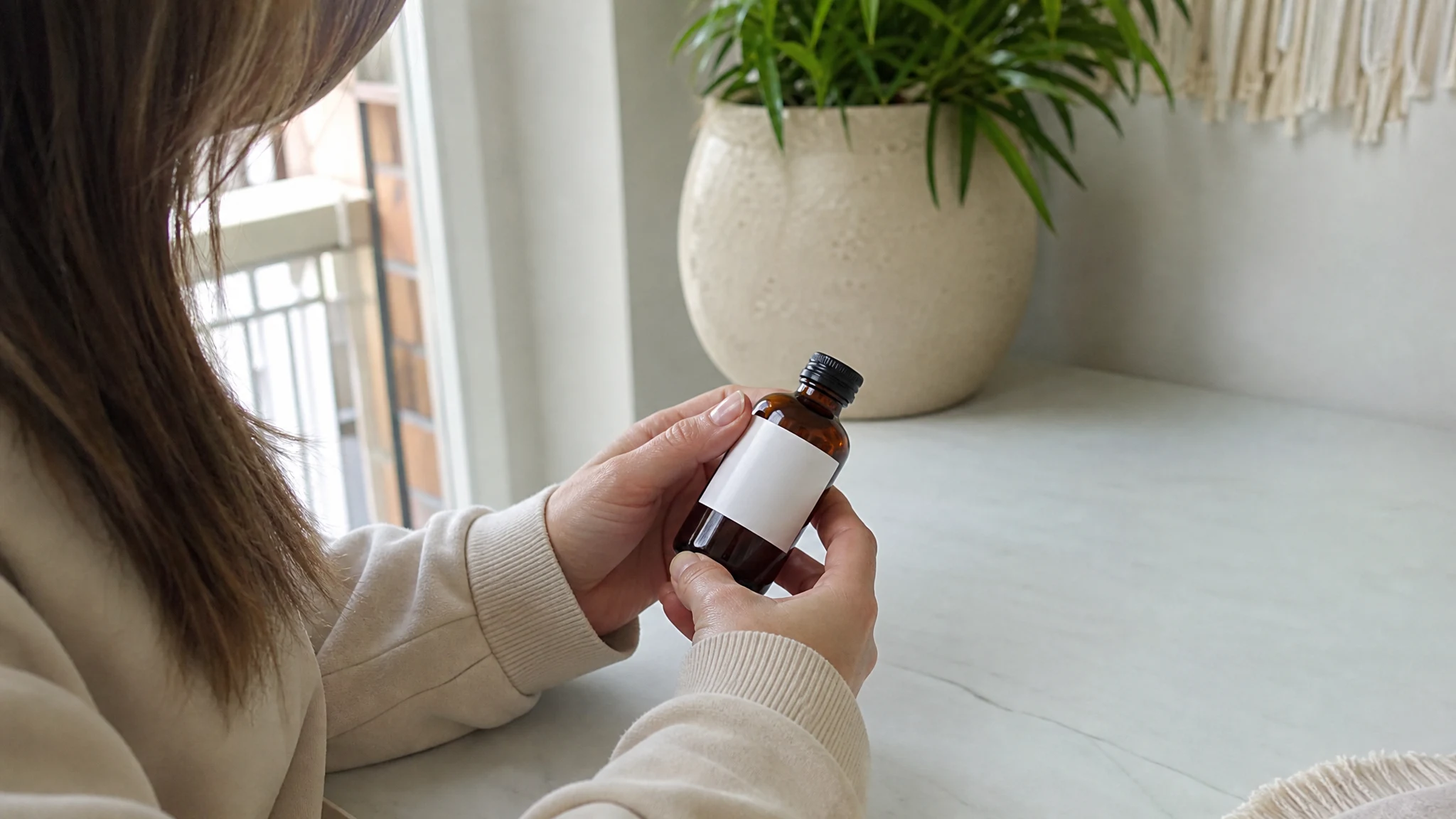
How to Read a Myrtle Oil Label, Line by Line
Latin name and plant part are lines you can hold a seller to. Green, red and place names are looser. Here is how to read every line on a myrtle oil label.

Corsican vs Moroccan Myrtle Oil: Does Origin Matter?
Corsican, Moroccan, Algerian: published analyses show a country name hints at a myrtle oil style but a sample from the same place can differ widely.
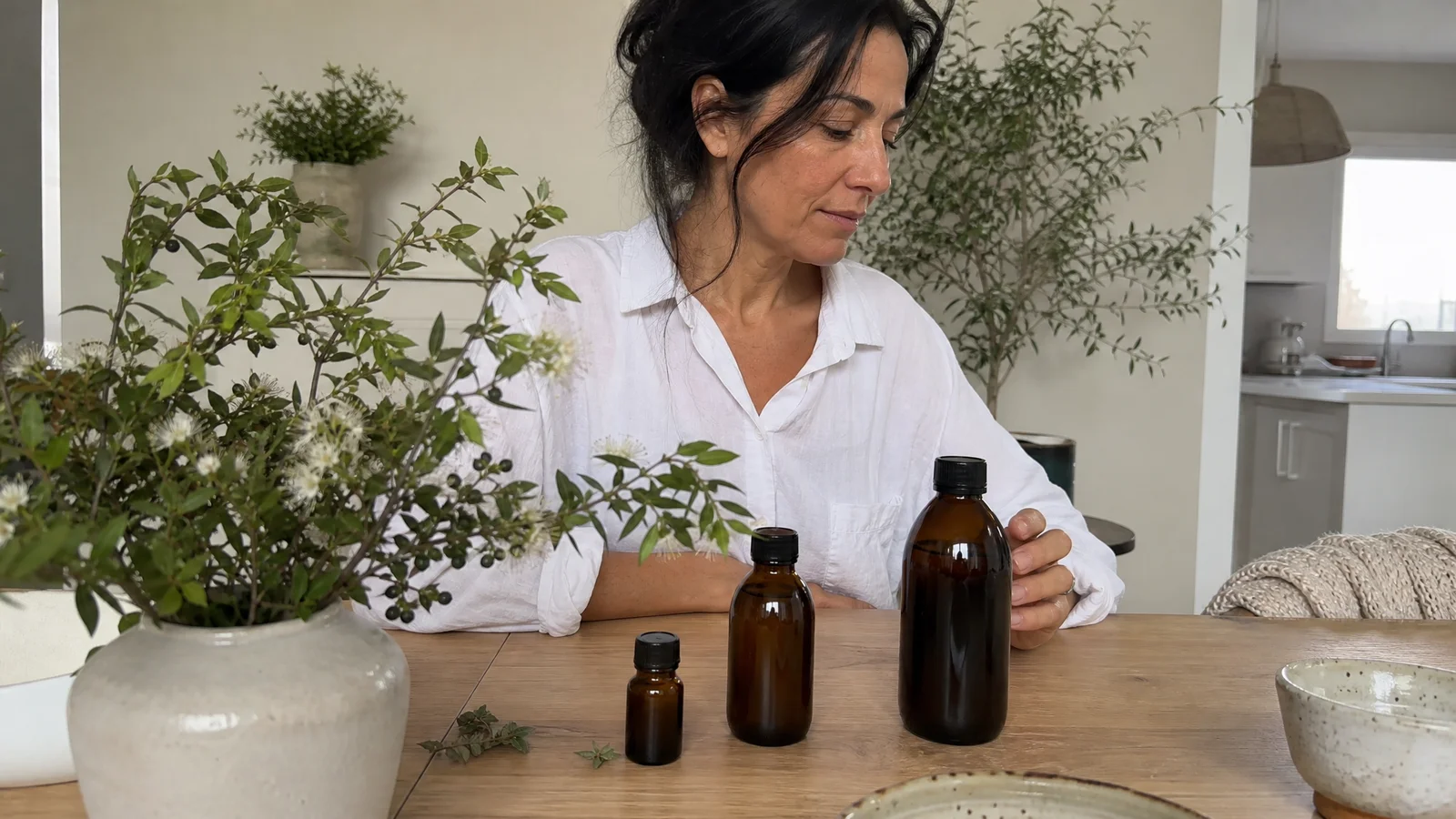
Myrtle Oil Bottle Sizes: Which One Is Right for You?
A half-ounce bottle holds roughly 300 drops and makes about 100 small skin blends. Here is the arithmetic for every size, and why smaller is often smarter.

Where to Buy Myrtle Oil: Four Questions to Ask First
Online or in a shop, the best myrtle oil purchase starts with four questions. What to ask any seller, how to choose by project, and what we can offer.