Myrtle Oil and Face Care: Where It Fits, Where It Does Not
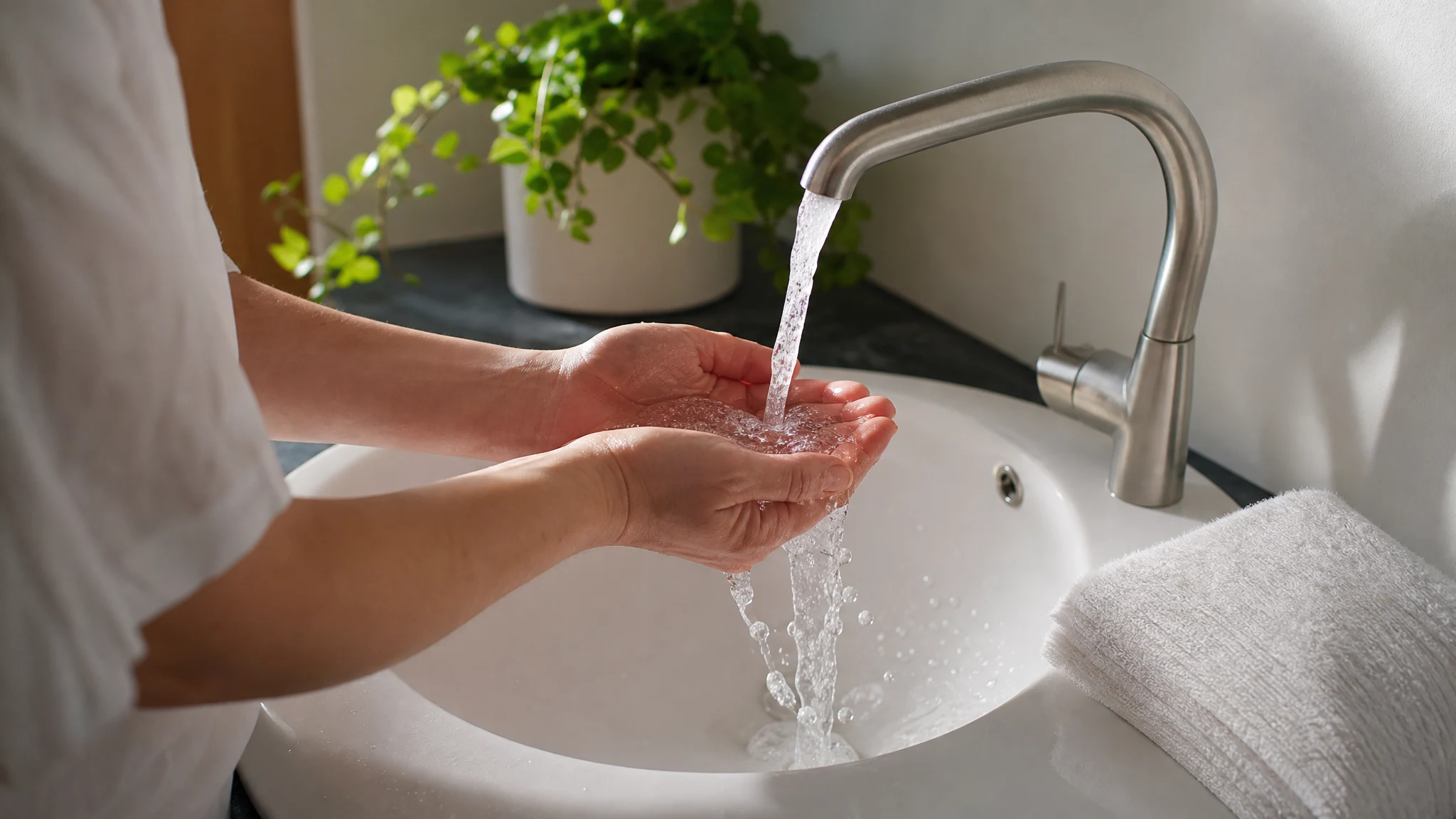
Steaming your face over a warm bowl and finishing with a cool splash is a lovely little ritual, and it is easy to see why you would want myrtle's fresh green aroma in the middle of it. Here is our honest take after running the numbers: the face is the one place where the published limits for this oil are tightest, so we would put myrtle everywhere around the ritual and leave it off the skin of the face itself.
Myrtle Essential Oil
Our own Myrtle Essential Oil, in sizes from 0.5 oz to bulk.
From $16.99
Shop Now →The limit that decides it
IFRA's guidance assigns facial toners and facial moisturizers to Category 5B, products applied to the face by hand and mostly left on. A water-based splash after steaming is a toner, so 5B is the right yardstick. The 51st Amendment caps methyl eugenol, a constituent some myrtle oils carry, at 0.00021% of a 5B product, one of the tightest caps IFRA sets for leave-on skin products. IFRA has no entry for myrtle oil by name, so the cap turns into an oil limit only when you know your bottle's methyl eugenol share: divide 0.00021 by that share.
Published analyses disagree widely on that share. Assuming 100 ml of splash weighs about 100 g and a drop of oil about 0.045 g (droppers vary), the maximum looks like this:
| Methyl eugenol in the oil | Example | Max oil in the splash | Drops in 100 g |
|---|---|---|---|
| 0.2% | A Corsican leaf oil | 0.105% | about 2.3 |
| 0.40% | One supplier's red myrtle lot | 0.0525% | about 1.2 |
| 1.40% | Mean of 19 Algerian localities | 0.015% | about 0.33 |
Even on the most generous row, that is two or three drops in a 100 ml bottle, and on the Algerian average it is a third of a drop. Home makers are not bound by IFRA, which governs fragrance supply to industry, but it is the most specific published guide for a face product, so it is the one we follow. Our skin guidance of 0.5% to 2% in a carrier oil is written for general skin use, and Tisserand and Young's 1.9% maximum for myrtle, as quoted by one supplier, is a general skin figure. Neither was set with a face toner in mind, and 0.5% would be several times the most generous row above. Our certificate of analysis covers one batch and lists no constituents, so we cannot tell you which row our oil resembles. If you would like constituent data for a particular lot, ask us in writing through the contact page.
Why water makes it trickier
Oil and water do not mix, so a drop of myrtle in a bottle of water floats and can land on skin as undiluted droplets. Dispersing it takes a solubilizer, which is another leave-on ingredient to assess. And any product that contains water needs a preservative system designed for it; a homemade bottle of water kept in the fridge has no such protection, so how many days it keeps is anyone's guess. Neither a solubilizer nor a preservative is something we sell or can recommend a recipe for, so we simply leave the splash out.
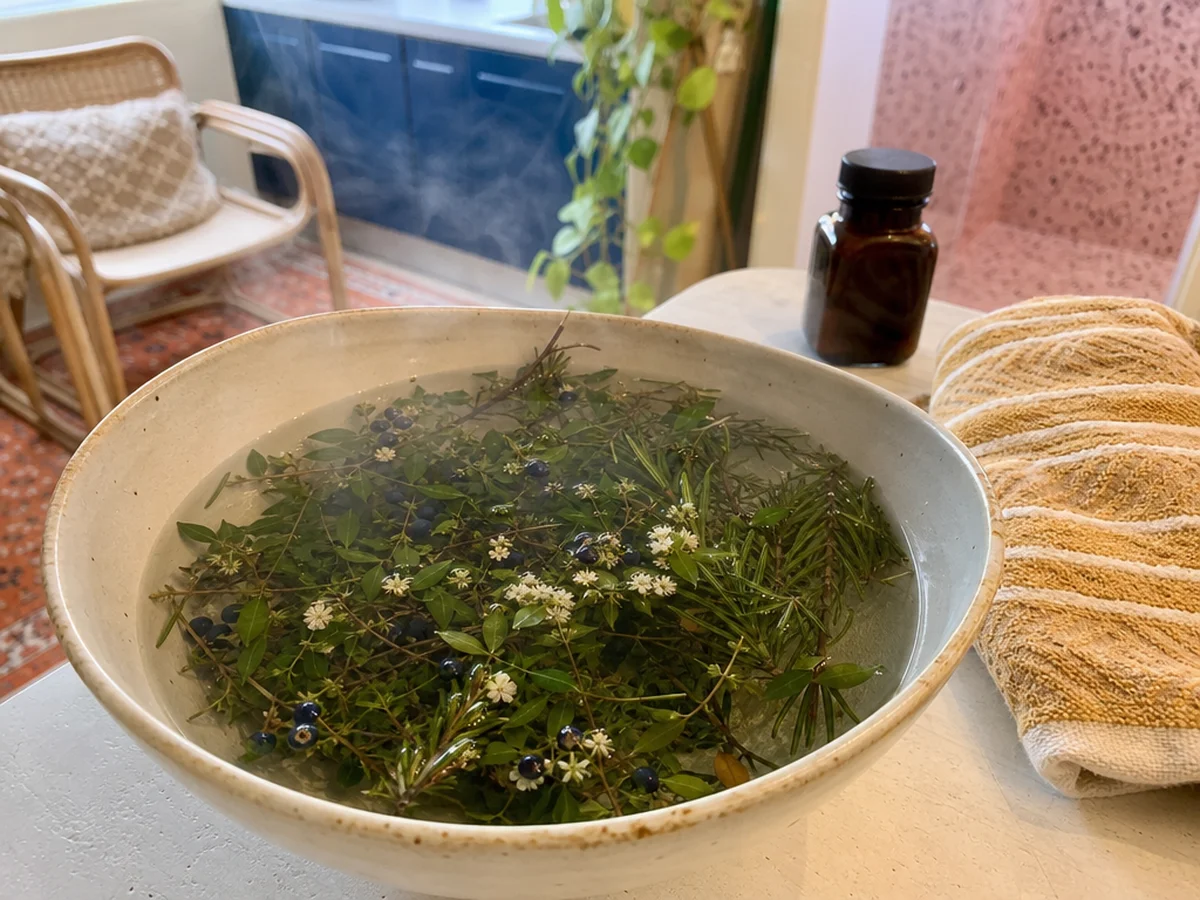
The steam half
A steam session is an inhalation exposure rather than a leave-on product, so Category 5B does not describe it and IFRA gives no figure for it. The Tisserand Institute advises against intense, direct inhalation of essential oils for longer than 15 to 20 minutes, and notes that people with asthma may find certain oils trigger an attack. The bigger practical hazard is the hot water itself, which we cover in our post on myrtle oil and steam. And because steam carries vapor and any floating droplets straight to the eyes and the skin of the face, the 5B numbers above are the sensible reference for how little oil belongs anywhere near it.
We are not aware of any study showing that myrtle oil added to steam does anything for skin, and we do not claim that it does; our piece on what studies cover for skin explains where the evidence stands.
Where myrtle fits instead
If you love the ritual, keep it exactly as it is, with plain warm water, a short session and a soft towel. Then bring the myrtle to the rest of the room. A diffuser run on and off, as in our home-use guide, fills the air with that cool green aroma without any of the face arithmetic. A single sniff from the bottle's cap works too, and so does a drop-counted room spray.
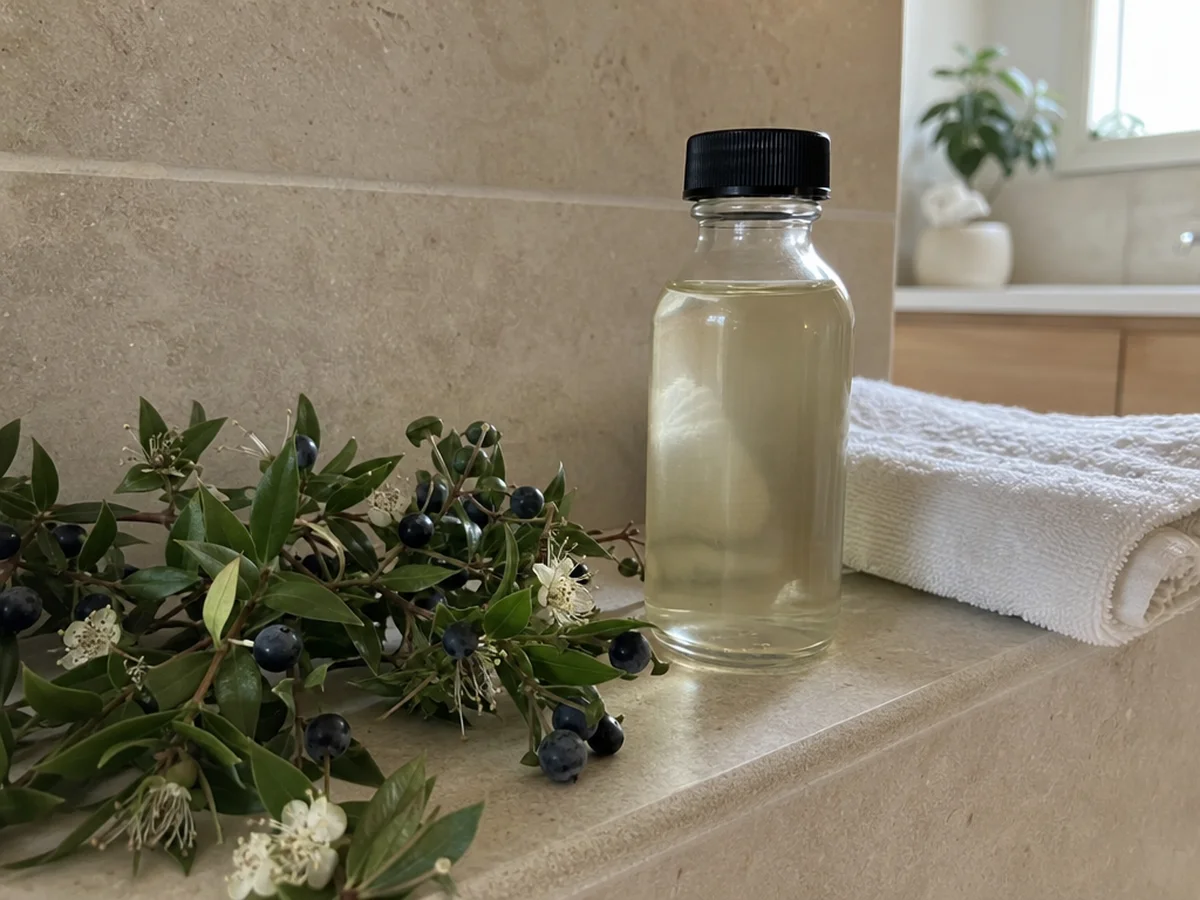
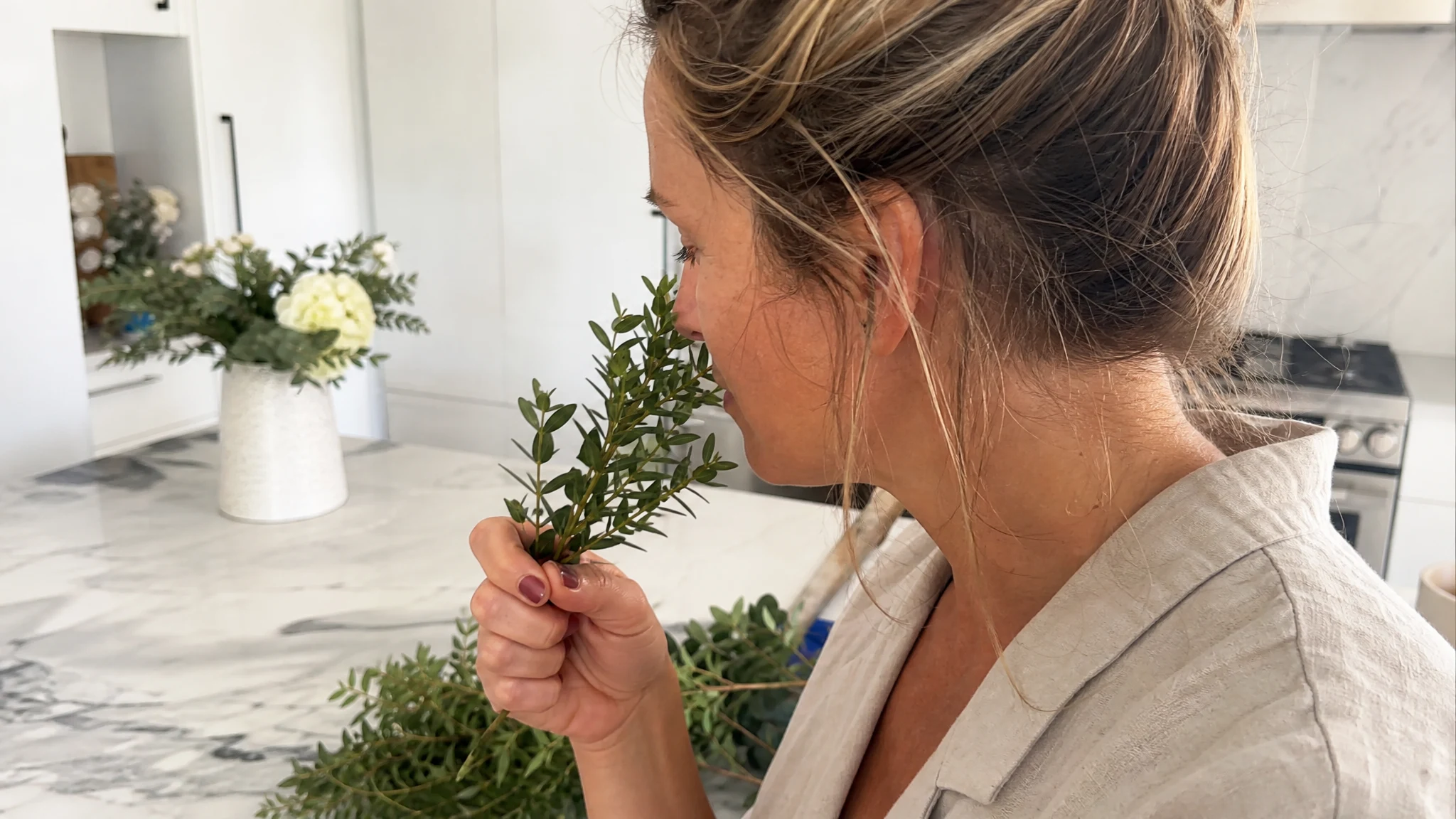
One more small pleasure: simply open the bottle and take a slow sniff while the kettle boils. It costs nothing, nothing touches your skin, and you get the fresh, cool-then-floral character of the oil exactly as it is. Cap it again tightly, and the ritual is done. Wipe the neck of the bottle first so the cap seals well and nothing leaves a ring on the shelf.
If you would like myrtle on your skin, the body is the better home. Our massage oil recipe works the numbers for a larger area, starting well below the top of our usual range, and the carrier oil comparison helps you pick the base.
And if you do decide to make a face product, ask the supplier for the lot's full GC-MS table, check methyl eugenol against the 5B cap, patch test on your inner forearm first, and talk to a dermatologist if you have eczema, rosacea or reactive skin. The ritual is lovely; the myrtle is simply happier in the air.
Myrtle Essential Oil
Myrtle Essential Oil from our own shop, in sizes from 0.5 oz to bulk.
From $16.99
Shop Now →Sources & Further Reading
- Guidance for the use of IFRA Standards, IFRA, June 2023 edition.
- IFRA Standards library, 51st Amendment compilation (methyl eugenol standard), IFRA.
- Safety Guidelines - Tisserand Institute.
- Quorum-Quenching Activity of Myrtus communis Corsican Essential Oil Against the Marine Bacterium Aliivibrio fischeri, Hardy et al., Microorganisms, 2025.
- Myrtle - Hopewell Essential Oils, supplier page with GC/MS for one lot and Tisserand and Young quotation.
- Chemical composition and antimicrobial activity of Myrtus communis essential oils from Algeria, Mohamadi et al., Biodiversitas, 2021.