Myrtle Oil During Pregnancy: What to Ask First
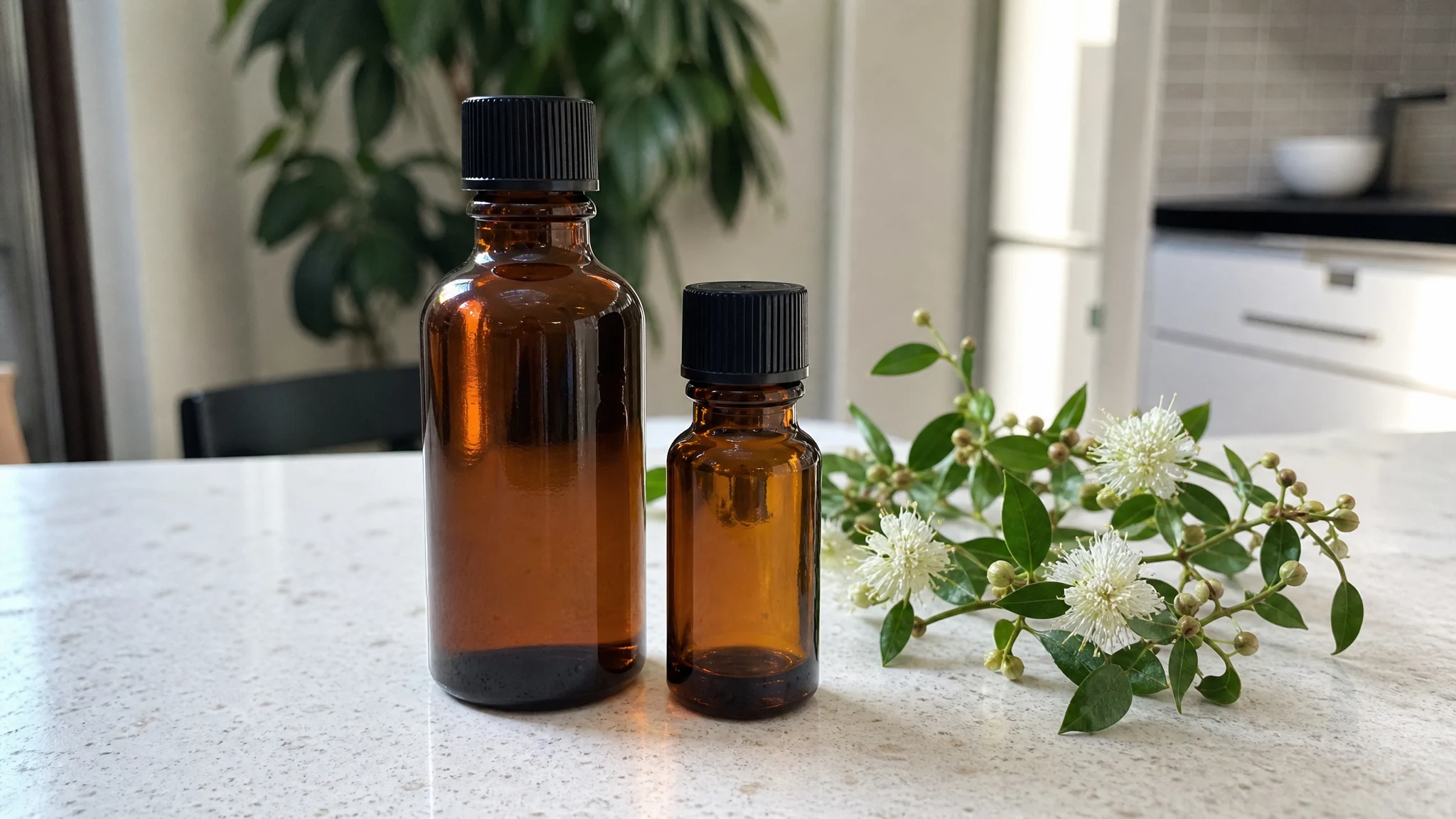
Pregnancy tends to make people read labels more carefully, and that includes the label on an essential oil. If you have a bottle of myrtle oil and a baby on the way, you deserve a clear answer, so here it is: we sell an external cosmetic oil, we do not offer guidance for use in pregnancy, and the person to decide is the clinician who knows your history.
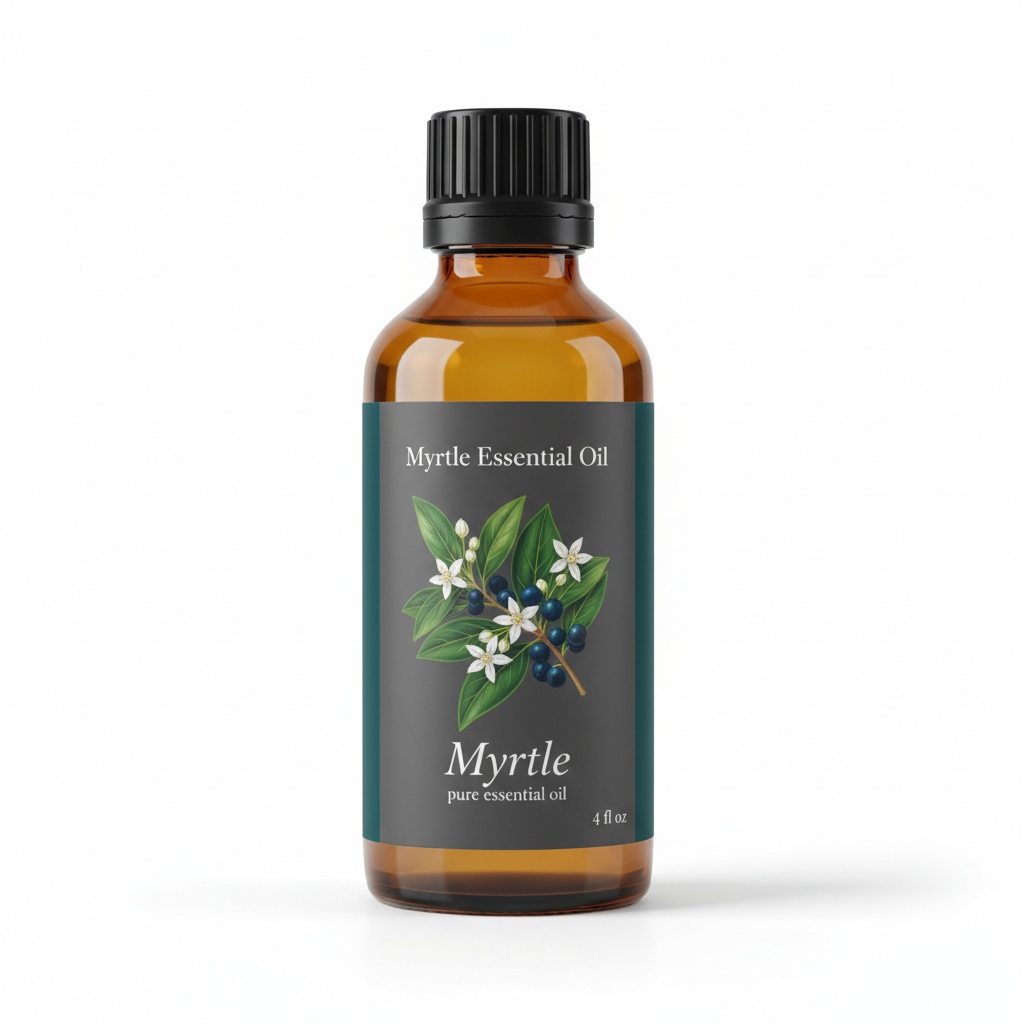
Myrtle Essential Oil
Our own Myrtle Essential Oil, in sizes from 0.5 oz to bulk.
From $16.99
Shop Now →What the general guidance says
The Tisserand Institute, one of the best-known safety educators in aromatherapy, puts it in a single line: if you are pregnant, consult a doctor or suitable practitioner before using essential oils (Safety Guidelines - Tisserand Institute). Our disclaimer says the same for anyone who is pregnant, nursing or managing a medical condition. That advice is not specific to myrtle, and we are not aware of a pregnancy statement for myrtle oil from a regulator or medical body that we can point you to. Retail pages sometimes offer a confident yes or no, but without a source you can check, we would not lean on either.
The same safety page also covers things that apply to everyone, pregnant or not. Skip undiluted oil on skin, keep bottles out of reach of young children, and never swallow essential oils unless a qualified practitioner has advised it. Our myrtle oil is not for internal use at all.
What is worth knowing about the oil itself
Myrtle oil is a mix of many aroma compounds, and the mix changes with the plant. One of the minor ones is methyl eugenol. A Corsican leaf oil analyzed in 2025 had only 0.2% of it (Quorum-Quenching Activity of Myrtus communis Corsican Essential Oil Against the Marine Bacterium Aliivibrio fischeri), while a study of 52 Sardinian myrtle plants grown in one field found values from about 0.5% to just over 5% (Chemotaxonomic Evaluation by Volatolomics Analysis of Fifty-Two Genotypes of Myrtus communis L.). The wide spread tells you something useful: two bottles labelled "myrtle" can differ, so a figure from one source is not a promise about another.
Methyl eugenol matters because the fragrance industry limits it. IFRA, its standards body, caps it at 0.0015% of a finished body lotion or body oil (Category 5A) and at 0.00021% of a facial moisturizer or toner (Category 5B) (IFRA Standards, up to and including the 51st Amendment (January 2024)). Those limits are written for products made for sale, not for home blending, and they apply to everyone, not only to pregnancy. We use them for scale. Divide the body-product cap by a 0.2% share and you get a ceiling of about 0.75% oil; divide it by a 5% share and you get about 0.03%. In a one-ounce bottle of carrier, which holds roughly 590 drops, that is anywhere from under one drop to a few drops. This is our arithmetic, not a recommendation, and it is one reason we suggest starting at the low end of our 0.5% to 2% range even for people who are not expecting.
It is natural to want a quick answer, and we wish we could give you one. The honest position is that the person who knows your history is better placed to help than any article, ours included.
Scent in the room is a different question
Diffusing involves a different exposure from skin use, and the Tisserand Institute suggests running a diffuser intermittently, 30 to 60 minutes on and then 30 to 60 minutes off, with some fresh air in the room. Whether any oil belongs in your home during pregnancy is a question to put to your midwife or doctor, who can weigh it against your own circumstances. If you do bring it up, a few specifics help the conversation:
- The botanical name on the bottle (ours is Myrtus communis).
- Whether you plan to use it in the air, on skin or not at all.
- If on skin, the percentage you would use and how often.
- Whether you have asthma, skin sensitivity or allergies.
You are allowed to change your mind
Some people notice their sense of smell shifts during pregnancy, and an aroma they loved can feel like too much overnight. If that happens, it is a perfectly good reason to put the bottle away. Nobody needs to defend a preference about smell. Keeping the cap on and the bottle on a high shelf costs you nothing, and it will be there when you want it again.
Sharing the house
If someone in your household is expecting, think about the shared rooms too. A diffuser running in the kitchen or living room reaches everyone in them. Ask first, keep any session short, open a window afterwards, and let the person who is expecting have the final say about whether a scent is welcome. It is a small courtesy that matters.
If you would rather wait
Waiting is a perfectly reasonable choice, and there is no hurry. Myrtle oil keeps well when it is capped tightly and stored in a cool, dark place, with a typical shelf life we describe as 2 to 3 years, so a bottle bought now will still be there later. Our storage guide explains how to look after it, and our safety basics post covers patch tests and household habits, including pets and children. If oil is ever swallowed by accident, our post on ingestion points to the right next step.
However you decide, you are asking the right questions, and your clinician is the best place to take them.
Myrtle Essential Oil
Myrtle Essential Oil from our own shop, in sizes from 0.5 oz to bulk.
From $16.99
Shop Now →Sources & Further Reading
- Safety Guidelines - Tisserand Institute
- Quorum-Quenching Activity of Myrtus communis Corsican Essential Oil Against the Marine Bacterium Aliivibrio fischeri
- Chemotaxonomic Evaluation by Volatolomics Analysis of Fifty-Two Genotypes of Myrtus communis L.
- IFRA Standards, up to and including the 51st Amendment (January 2024)