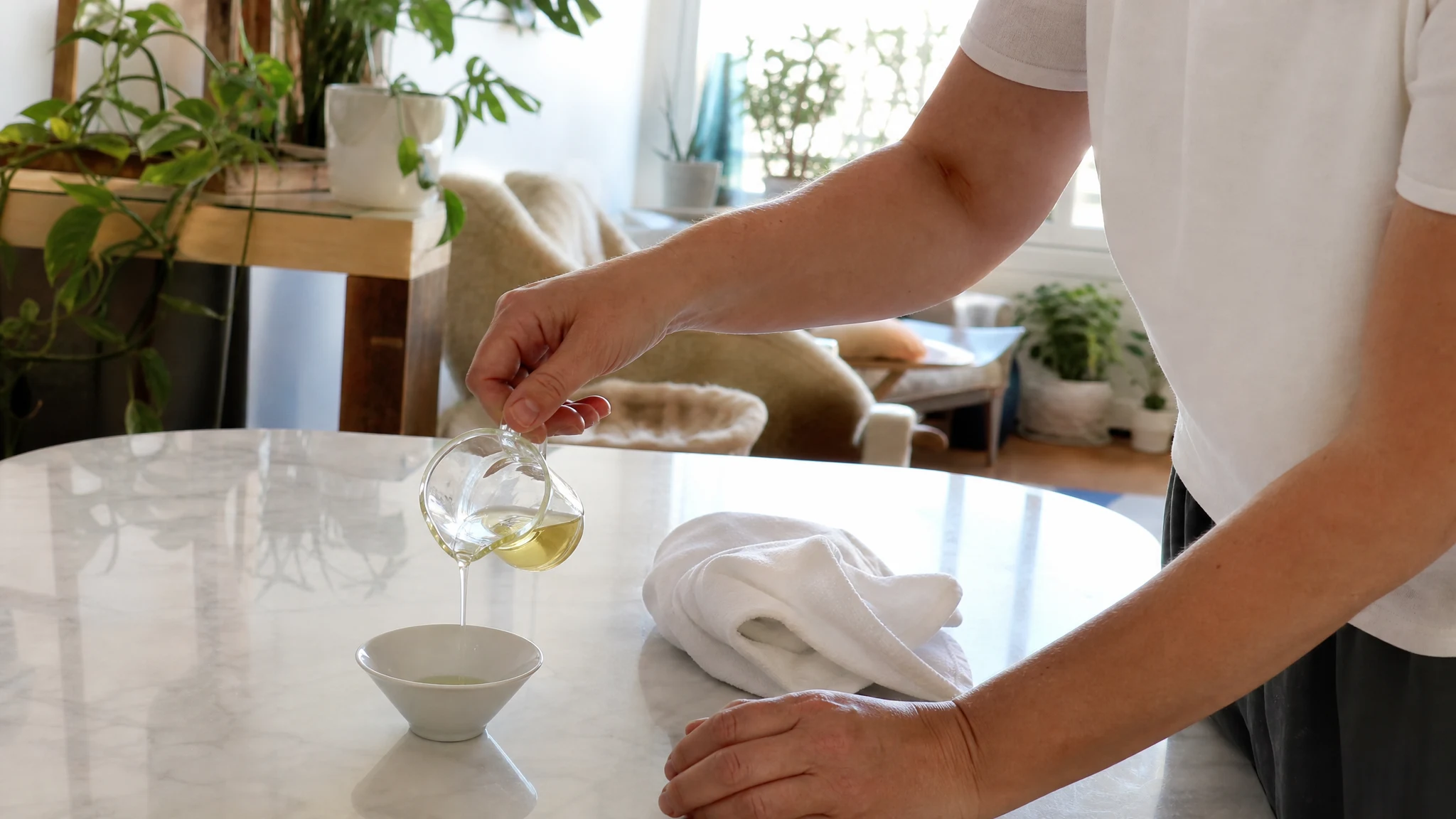
Myrtle Body Oil Recipe: A Drop-by-Drop Guide
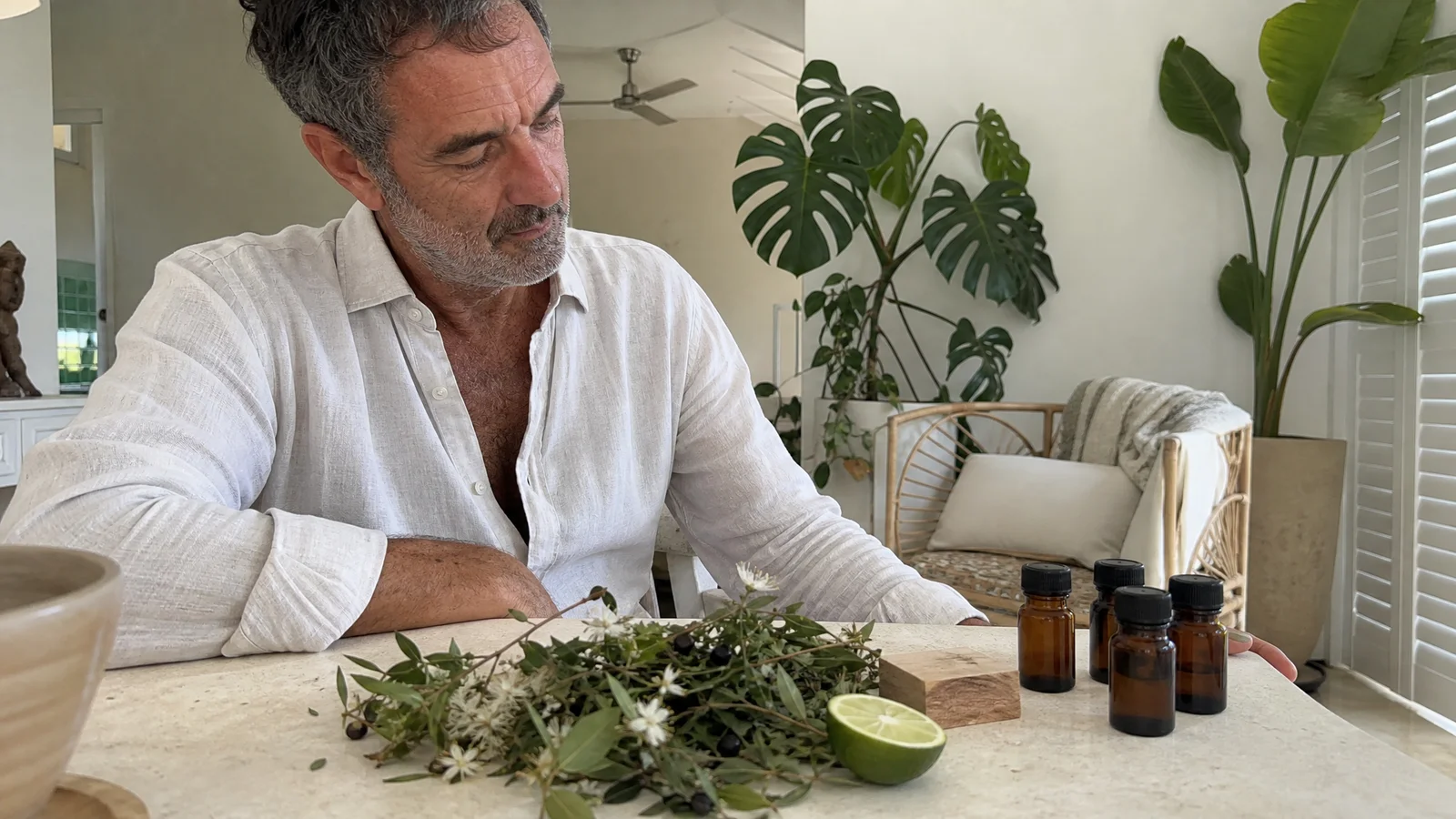
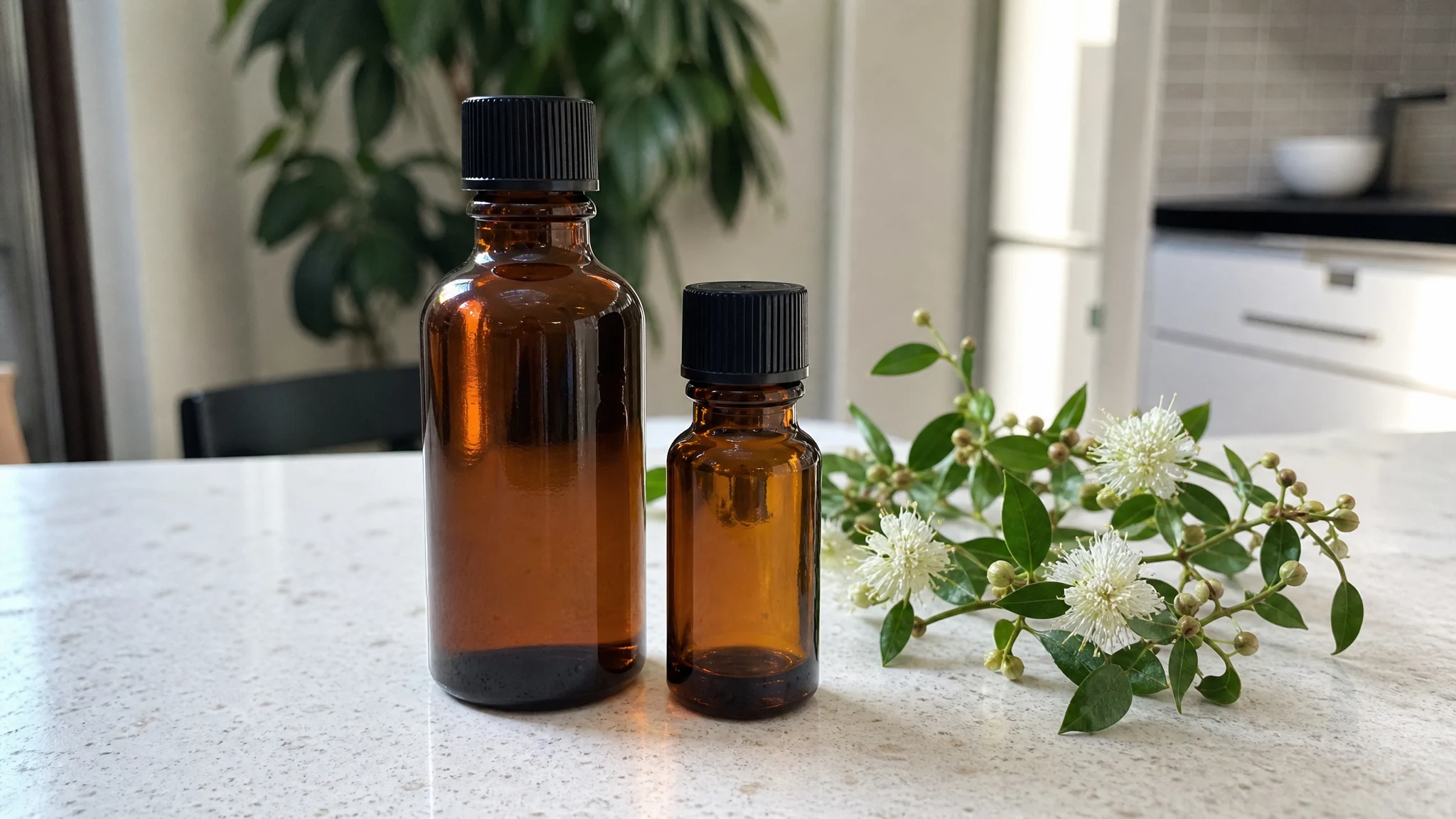
For a 100 ml bottle of body oil, the number we would start with is 6 drops of myrtle oil. That is 0.3%, and it is lower than the floor of our own 0.5% to 2% skin guidance. If that sounds oddly cautious, stay with us, because the reasoning is the most useful part of the recipe, and it leaves you with a bottle that smells lovely and does the math for you.
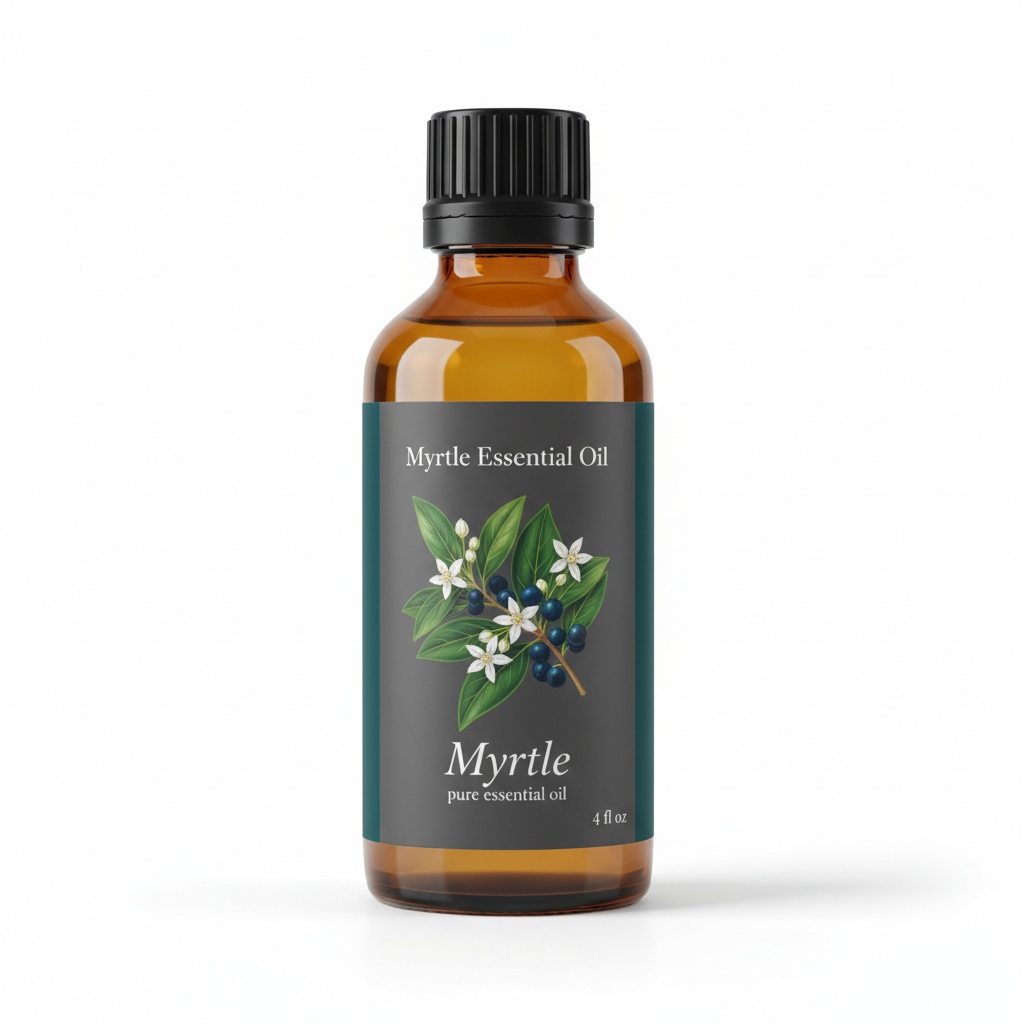
Myrtle Essential Oil
Our own Myrtle Essential Oil, in sizes from 0.5 oz to bulk.
From $16.99
Shop Now →Why we start below the range
Our dilution guidance for myrtle oil is 0.5% to 2% in a carrier, with a patch test first, which is roughly 3 to 12 drops per ounce. Two outside sources point lower at the top end, and both are worth knowing.
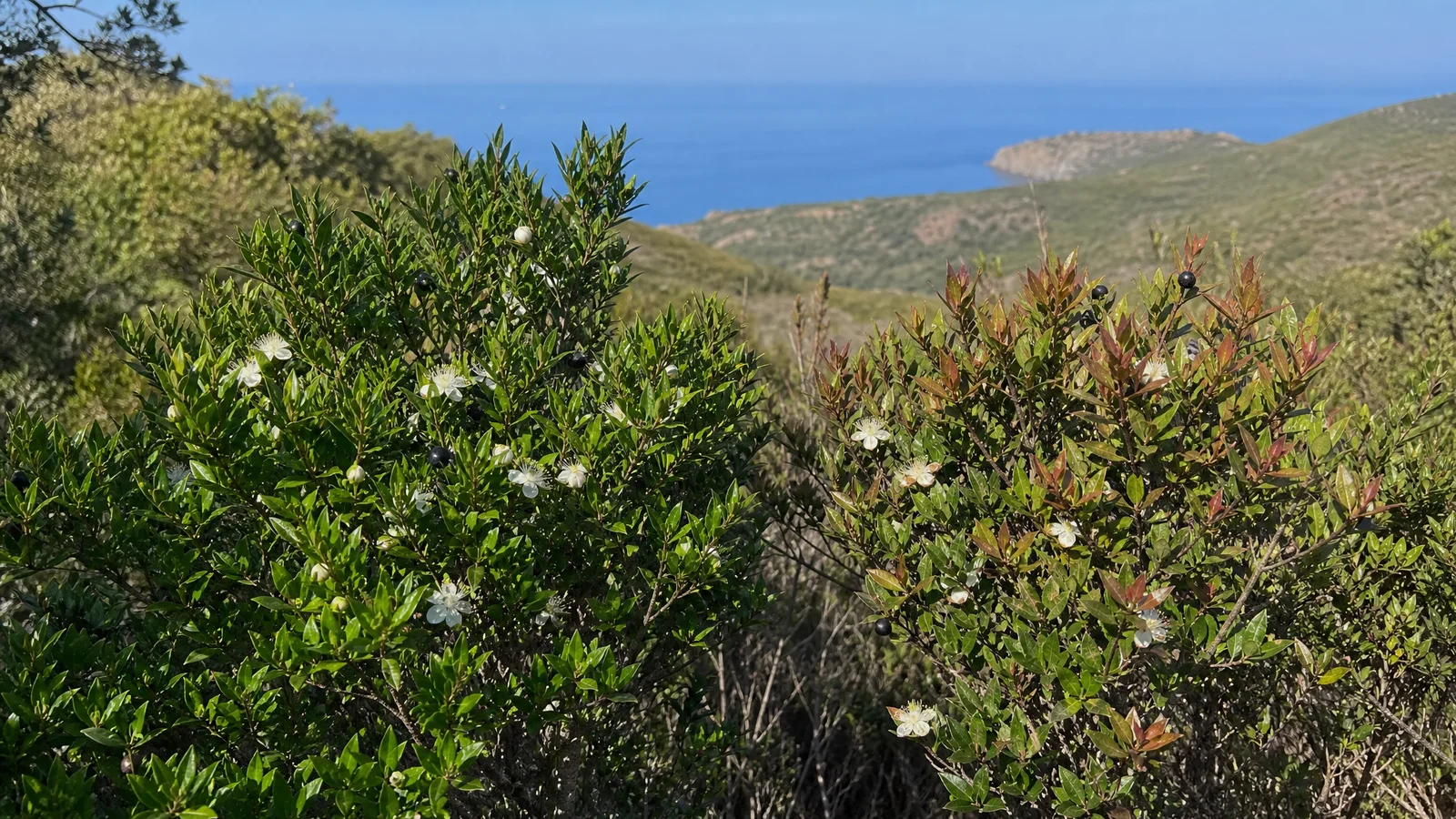
Tisserand and Young's Essential Oil Safety, as quoted by one supplier, gives a maximum dermal level of 1.9% for myrtle oil. IFRA, the fragrance industry's standards body, has no standard for myrtle oil by name but does cap methyl eugenol, a constituent some myrtle oils carry, at 0.0015% of Category 5A products (body lotions and oils). That is a limit on a component, so it only becomes a limit on the oil when you know the component's share. Take one supplier's red myrtle lot with 0.40% methyl eugenol: 0.0015 divided by 0.40 is 0.375% oil, or about 7 drops in 100 ml. That lot is not ours, and the certificate of analysis we publish for one batch lists no constituents, so we cannot tell you where our oil falls. Published myrtle oils vary a great deal: in one study, 52 Sardinian genotypes grown in a single field ranged from about 0.5% to 5% methyl eugenol.
Without data for the bottle in your hand, we pick 0.3%, just under that hypothetical 0.375%. Home makers are not bound by IFRA, but it is the best yardstick available, and you can always add a drop on the next batch.
The batch sheet
With about 20 drops to the ml, 100 ml of carrier is roughly 2,000 drop-equivalents, so each drop is 0.05%. Myrtle weighs about 0.9 g/ml (our certificate states a range of 0.890 to 0.922 and no measured value), so a milliliter is about 0.9 g.
| Myrtle in 100 ml | Drops | Grams | Where it sits |
|---|---|---|---|
| 0.3% | 6 | 0.27 g | Our suggested first batch |
| 0.5% | 10 | 0.45 g | The floor of our range |
| 1.0% | 20 | 0.90 g | Mid range, better for small areas |
| 2.0% | 40 | 1.80 g | The top of our range, above the 1.9% figure |
A 0.5 oz bottle holds about 296 drops, so at 6 drops a batch it covers around 49 batches.
Choosing the carrier
We sell myrtle oil only, so the carrier comes from a craft or supply shop. Jojoba is a popular choice and has a specific gravity of 0.86 to 0.870, so 100 ml is about 86 to 87 g, and 6 drops in 86.5 g is 0.31% by weight. For any other carrier, read its density off the specification sheet. If you choose sweet almond oil, note that almonds are a tree nut, and anyone with a nut allergy should pick something else. Date your batch and make 100 ml at a time, since a blend is only as stable as its carrier.
Making it
- Pour 100 ml of carrier into a clean amber or dark glass bottle, leaving a little headspace.
- Add 6 drops of myrtle oil, cap, and turn the bottle end over end for a minute.
- Label it with the date, "myrtle 0.3%, 6 drops per 100 ml" and "adults only, keep from children and pets, not for internal use."
- Store it capped, cool and dark, and use it within a few months; a homemade blend has no stability data.
Using it
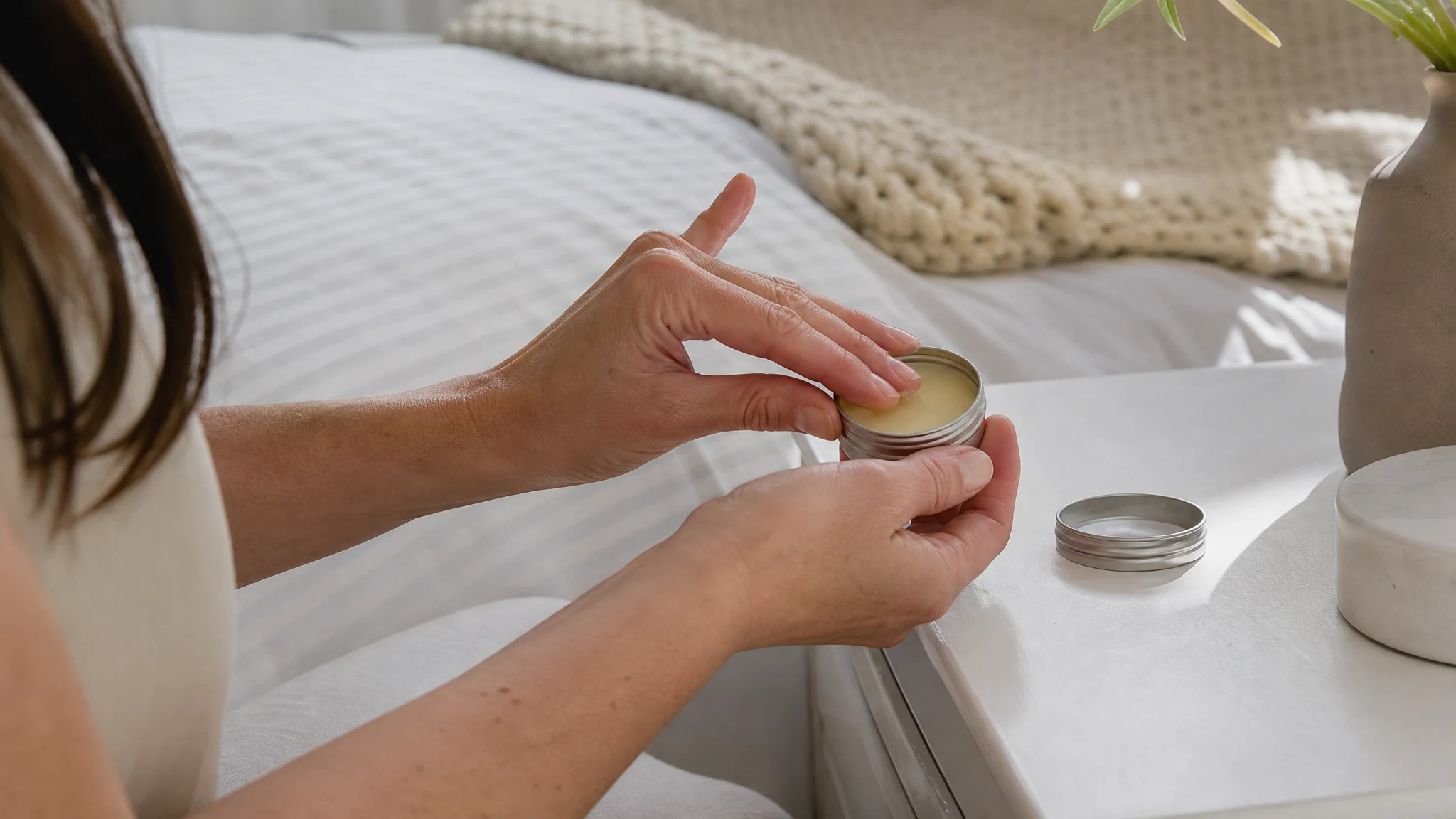
A little goes a long way. Put a small amount in your palm, rub your hands together and smooth it over arms or legs. Skip the face and eyes. The first thing you will notice is the cool, fresh edge of the scent, followed by something softer and sweeter as it settles. Keep the bottle capped and upright, and wipe the neck clean before you put it away so it does not leave a sticky ring on the shelf.
Patch test, and who should wait
The American Academy of Dermatology describes testing a new product on a quarter-sized spot, such as the inner arm, twice a day for seven to 10 days before wider use. Take that literally, since a single day is not enough. If redness, itching or swelling appears, wash the oil off and stop. A partner needs their own test, since your arm says nothing about theirs. Keep the oil off the face, eyes and broken skin.
Our guidance is to keep the oil away from children, so this bottle is for adults. In pregnancy the NHS says not all natural remedies or complementary therapies are safe and to tell your midwife, doctor or pharmacist if you use aromatherapy remedies; our pregnancy post goes through what the sources say. Pet Poison Helpline notes that essential oils can affect all species, with cats and birds at greatest risk, so keep pets from freshly oiled skin and towels. A body oil with this oil in it is a fragrance product, so we make no claims about muscles or comfort; the FDA says intended use, shown on labels and online, decides whether a product is a cosmetic or a drug. For a smaller scented product, see our roller blends, and for the carrier decision, our carrier oil comparison. The safety basics cover the household rules.
A small bottle, a few drops and a free afternoon: it is hard to find a more pleasant way to meet this oil on skin.
Myrtle Essential Oil
Myrtle Essential Oil from our own shop, in sizes from 0.5 oz to bulk.
From $16.99
Shop Now →Sources & Further Reading
- Myrtle - Hopewell Essential Oils, supplier page quoting Tisserand and Young, with GC/MS for one lot.
- IFRA Standards library, 51st Amendment compilation (methyl eugenol standard), IFRA.
- Guidance for the use of IFRA Standards, IFRA, June 2023 edition.
- Chemotaxonomic Evaluation by Volatolomics Analysis of Fifty-Two Genotypes of Myrtus communis L, Usai et al., Plants, 2020.
- Quality Standards - IJEC, International Jojoba Export Council.
- How to test skin care products, American Academy of Dermatology.
- Medicines in pregnancy - NHS.
- Essential Oils | Pet Poison Helpline.
- Is It a Cosmetic, a Drug, or Both? (Or Is It Soap?) | FDA.