Myrtle Oil Prices: How to Compare Quotes Fairly
Suppose you collect three quotes for myrtle oil and they are nowhere near each other. The usual advice is to skip the cheapest and the dearest and take the middle one, which is a guess dressed up as a method. A better habit is to understand what moves the price, then compare every quote on the same footing, ours included. (Current prices for each of our sizes are on the shop page.)
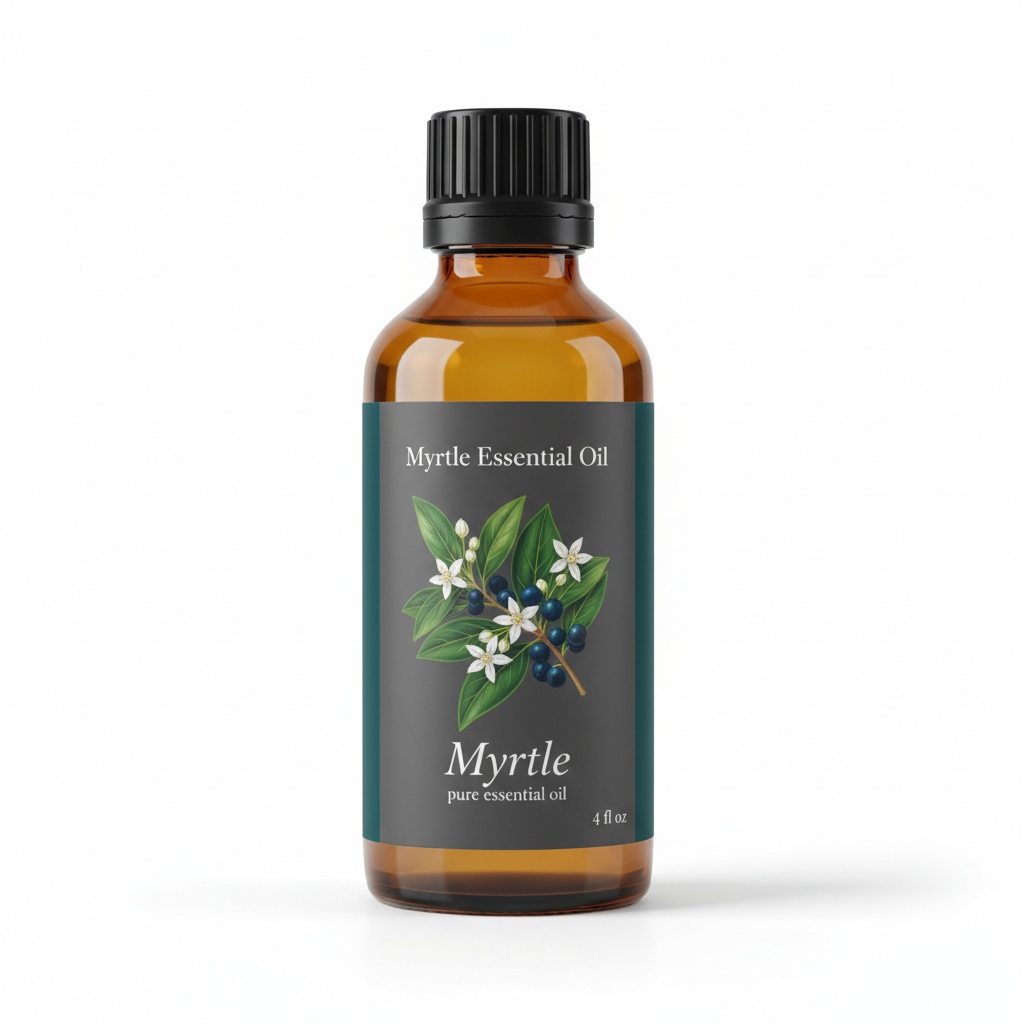
Myrtle Essential Oil
Our own Myrtle Essential Oil, in sizes from 0.5 oz to bulk.
From $16.99
Shop Now →It starts with the leaf
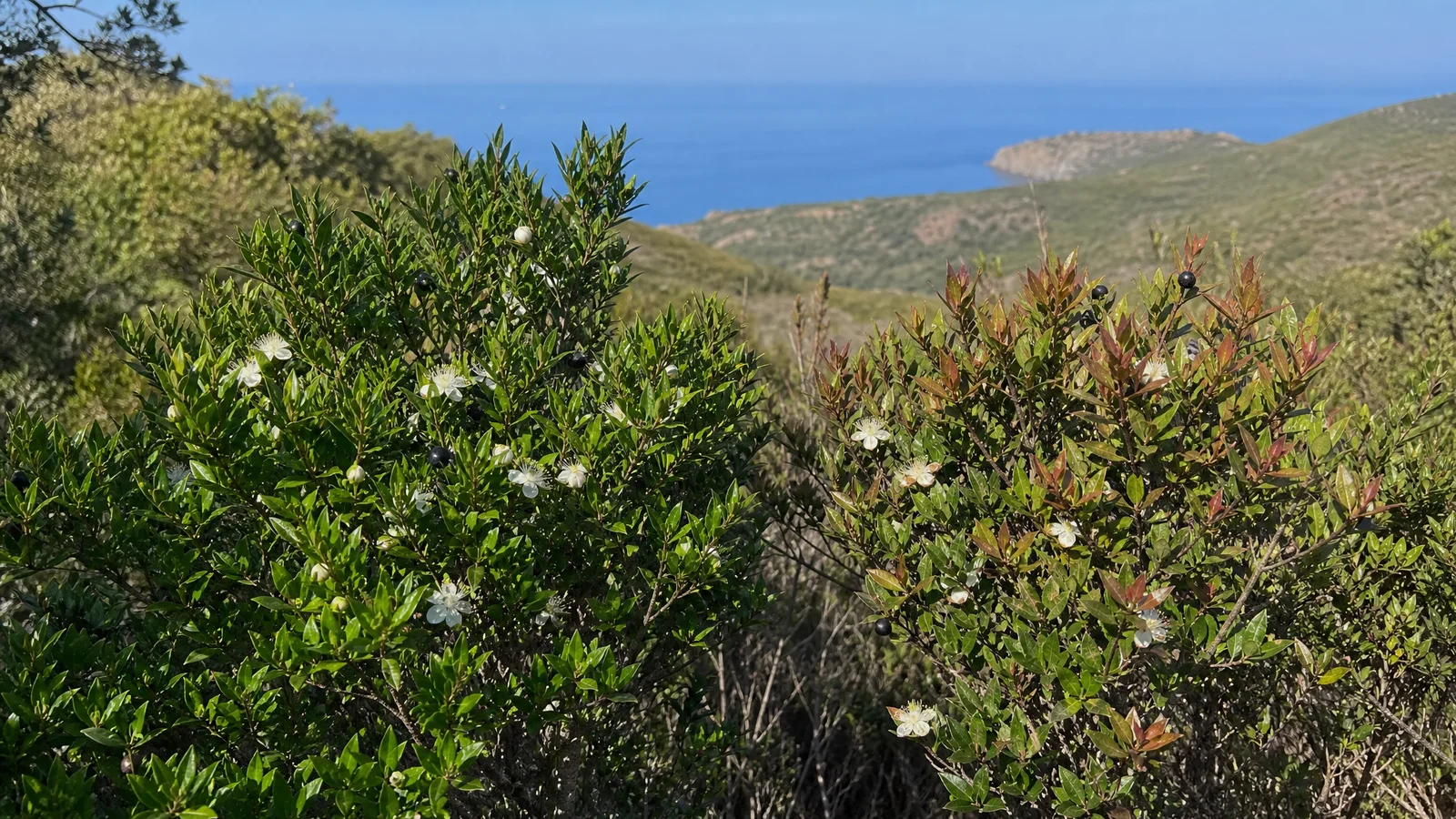
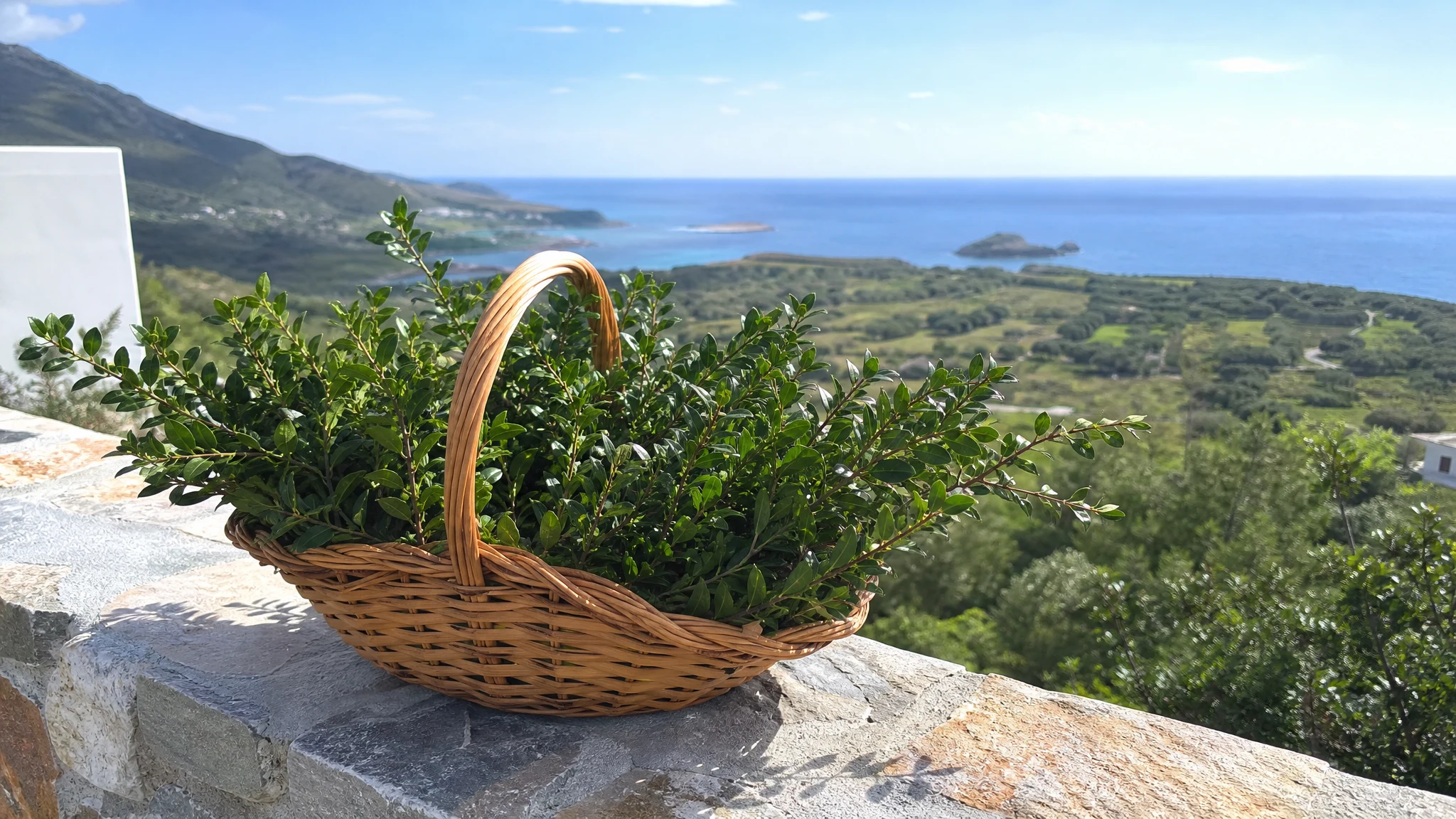
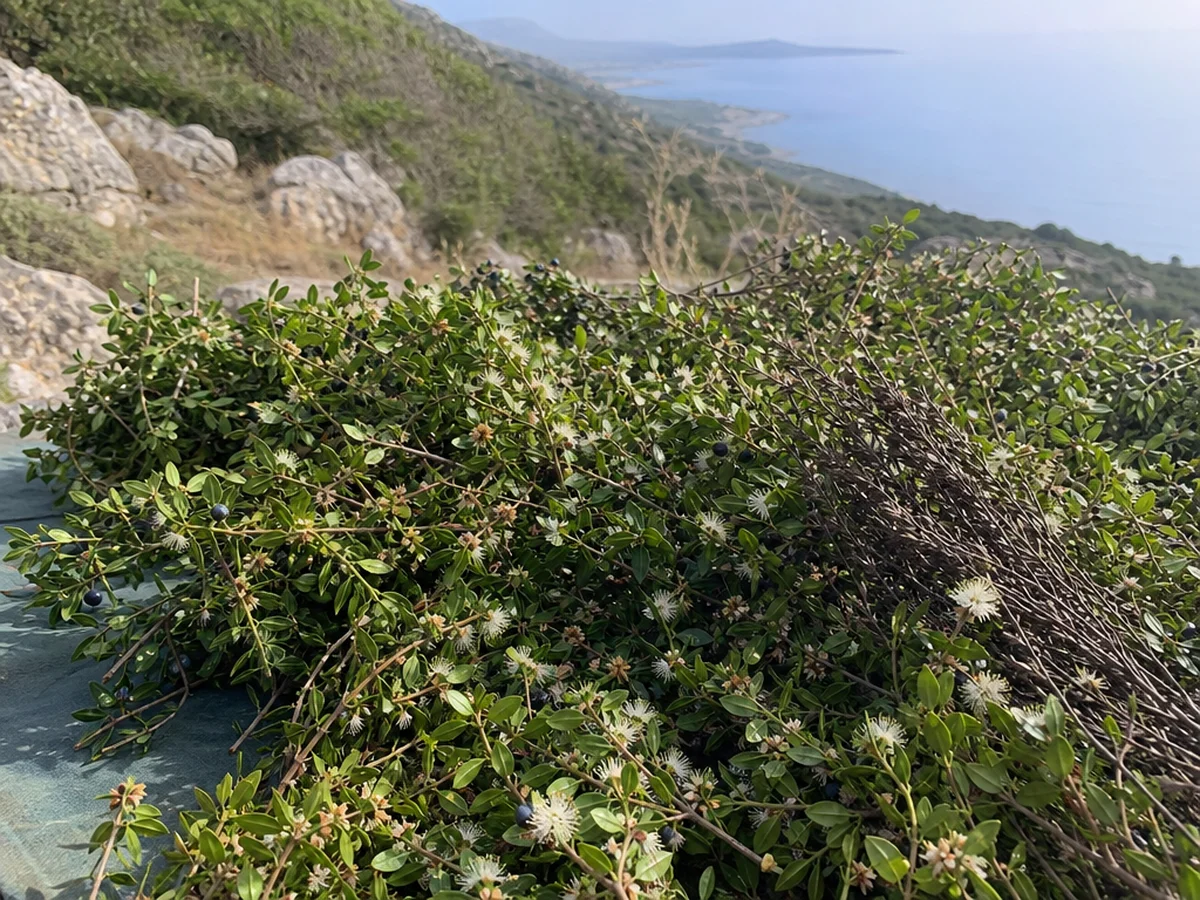
Essential oil is a small fraction of the plant, and published myrtle yields differ a great deal. One review reports leaf oil yields of 1.3% for ripe-stage and 2.61% for flowering-stage Iranian leaves. Fourteen Iranian accessions grown together ranged from 0.42% to 2.6% of dry matter, Moroccan mountain leaves averaged 0.9%, and nineteen Algerian coastal localities averaged 0.68%. The bases differ (fresh versus dry, leaves versus aerial parts), so the numbers are not interchangeable, but the shape of the answer is clear. A pound of oil from a 2.6% harvest takes about 17 kilos of dry material, and from a 0.42% harvest about 108 kilos. That is a six-fold spread before anyone has paid for harvest, distillation, bottling or shipping, and it is a better explanation for price differences than any adjective on a label.
Composition changes what a drop can do
Price per milliliter assumes every milliliter can be used the same way, and on skin that is not quite true. IFRA restricts methyl eugenol in finished products, and the methyl eugenol share of published myrtle oils runs from 0.2% in a Corsican leaf oil to 18.7% in oil from one Moroccan region. Our reasoning, and it is arithmetic and not an IFRA rule for home blends: because the limit applies to the methyl eugenol in the finished product, an oil with 18.7% can go into a product at roughly one ninety-fifth the amount of an oil with 0.2%. A bottle that looks like a bargain per milliliter may therefore support far less of a leave-on blend. Only a constituent table for the lot can settle that, and it is a fair thing to ask any seller for.
For our oil, our dilution guidance is 0.5% to 2% in a carrier, starting at the lower end because one supplier page quoting Tisserand and Young lists a 1.9% maximum for myrtle. We can talk through what documentation we can offer if you ask in writing through the contact page.
What a very low price can mean
Economics matter. The authors of a 2024 authentication study of fennel, star anise and anise oils note that, given production costs, such oils are commonly adulterated with cheaper materials, and they found 27% of 30 commercial samples adulterated. That is a different oil and not a myrtle rate. The fair reading is modest: an unusually low quote is a reason to ask for a lot document, and an unusually high one proves nothing either. Our quality checks article lists what to ask.
A unit-cost method you can reuse
- Same plant. Confirm Myrtus communis on every quote. Lemon myrtle (Backhousia citriodora) is another plant at its own prices, so do not compare them.
- Same unit. Convert each quote to cost per milliliter. One fluid ounce is 29.57 ml; for pound sizes use weight, with a density of about 0.9 g/ml (the standard range on our Certificate of Analysis is 0.890 to 0.922, with no measured value printed).
- Add shipping and minimums. We ship orders within one to two business days; ask every seller for the delivered cost.
- Price the use, not the bottle. A 0.5% blend in an ounce of carrier uses about 3 drops of the roughly 590 in a 1 oz bottle, so a blend costs a small fraction of the bottle. The bottle you finish while the oil is fresh is usually the better buy, as the bottle size guide shows.
- Ask for documents in writing and keep them with the quote.
Keep a simple comparison sheet
Put the quotes side by side on one page. For each seller, write the botanical name, the size, the delivered cost, the paperwork you were promised and how long they took to answer your questions. That last column matters more than it looks. If we were choosing a supplier ourselves, we would value a clear, quick answer to a plain question almost as much as the number on the quote.
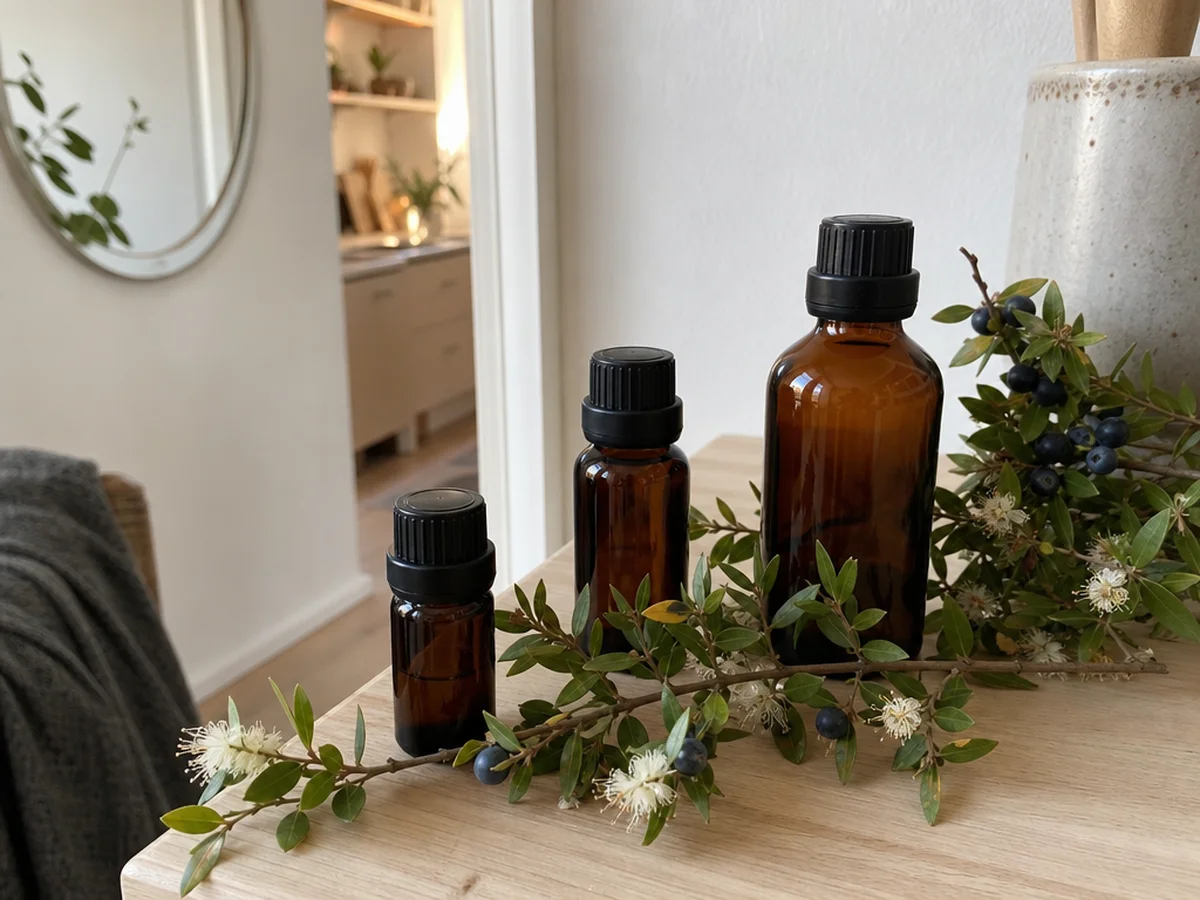
Then do the one thing a spreadsheet cannot do, which is smell each oil. Open the samples one at a time, hold a strip of paper dipped in each, and ask whether it smells the way the listing says it should. Our own description is fresh, clear and gently floral, with a soft eucalyptus-like coolness and faintly honeyed facets. Whatever a seller promises, the bottle in your hand has the final word.
For production quantities, we offer sample bottles, volume sizes of 5, 25, 100 and 400 lb with larger quantities on request, and a consultation form on the wholesale page.
Done this way, the cheapest quote and the best one can finally be told apart, because you are comparing what each bottle can actually do for you.
Myrtle Essential Oil
Myrtle Essential Oil from our own shop, in sizes from 0.5 oz to bulk.
From $16.99
Shop Now →Sources & Further Reading
- The therapeutic value of Myrtus communis L.: an updated review (Naunyn-Schmiedeberg's Archives of Pharmacology, 2024)
- Essential Oil Variability of Superior Myrtle (Myrtus communis L.) Accessions Grown under the Same Conditions (Plants, 2022)
- Bioactive Profiling, Antibacterial Efficacy and Computational Modelling of Myrtus Communis Essential Oil (Morocco) (Chemistry and Biodiversity, 2024)
- Chemical composition and antimicrobial activity of Myrtus communis essential oils from Algeria (Biodiversitas, 2021)
- Phytochemical analysis, cytotoxic and antioxidant activities of Myrtus communis essential oil from Morocco (Journal of Complementary and Integrative Medicine, 2019)
- Quorum-Quenching Activity of Myrtus communis Corsican Essential Oil Against the Marine Bacterium Aliivibrio fischeri (Microorganisms, 2025)
- Authentication of Fennel, Star Anise, and Anise Essential Oils by Gas Chromatography (GC/MS) and Stable Isotope Ratio (GC/IRMS) Analyses (Plants, 2024)
- Myrtle - Hopewell Essential Oils