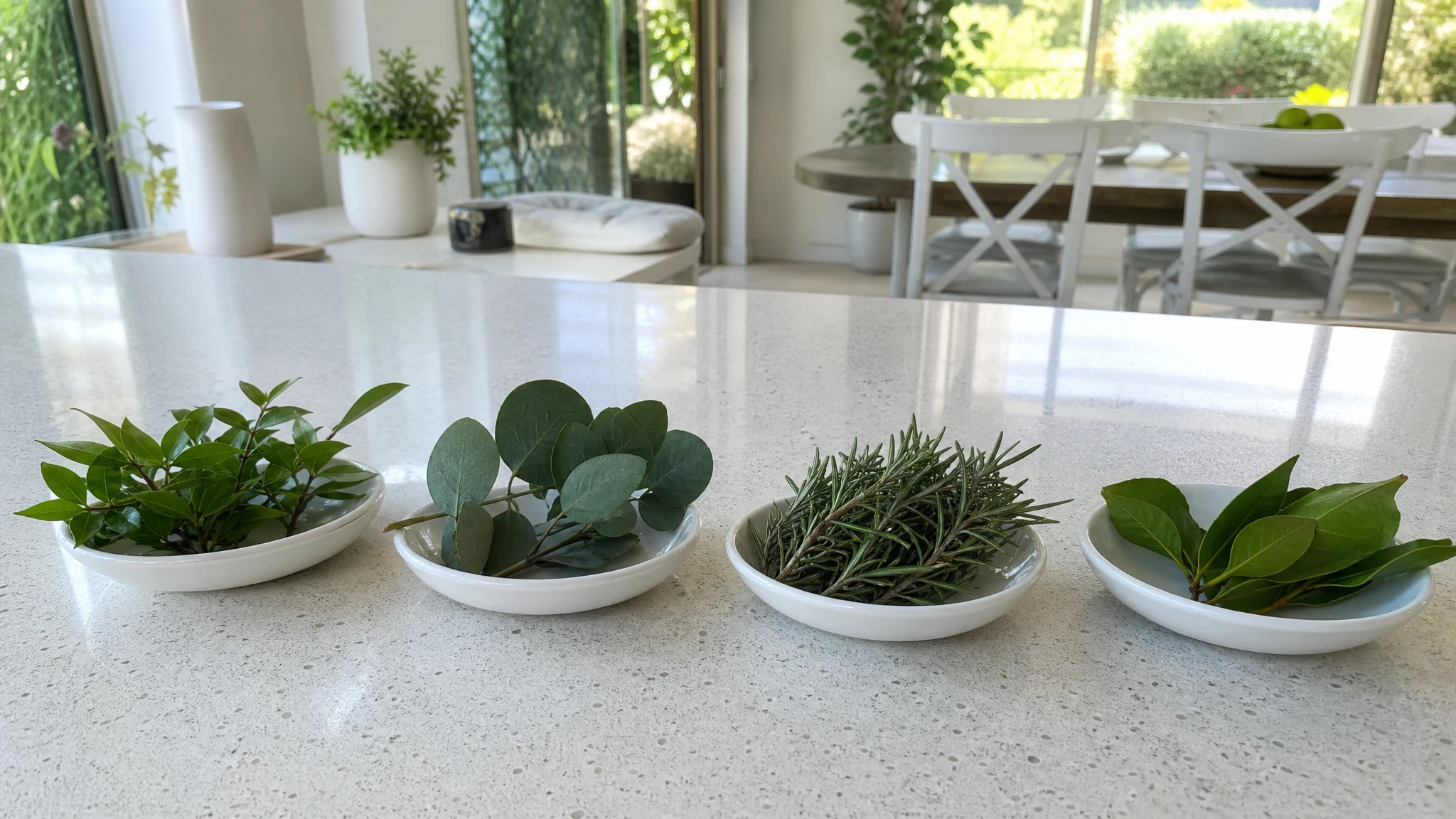
Myrtle Oil Substitutes: What Each One Brings
The honest answer to "what can I use instead of myrtle oil?" is that it depends which half of myrtle you are missing. Our myrtle is fresh and clear with a cool edge, and then soft, floral and faintly honeyed underneath. Plenty of oils can echo the cool half. The sweet, floral half is harder to borrow, and that is a good reason to keep a little myrtle around.
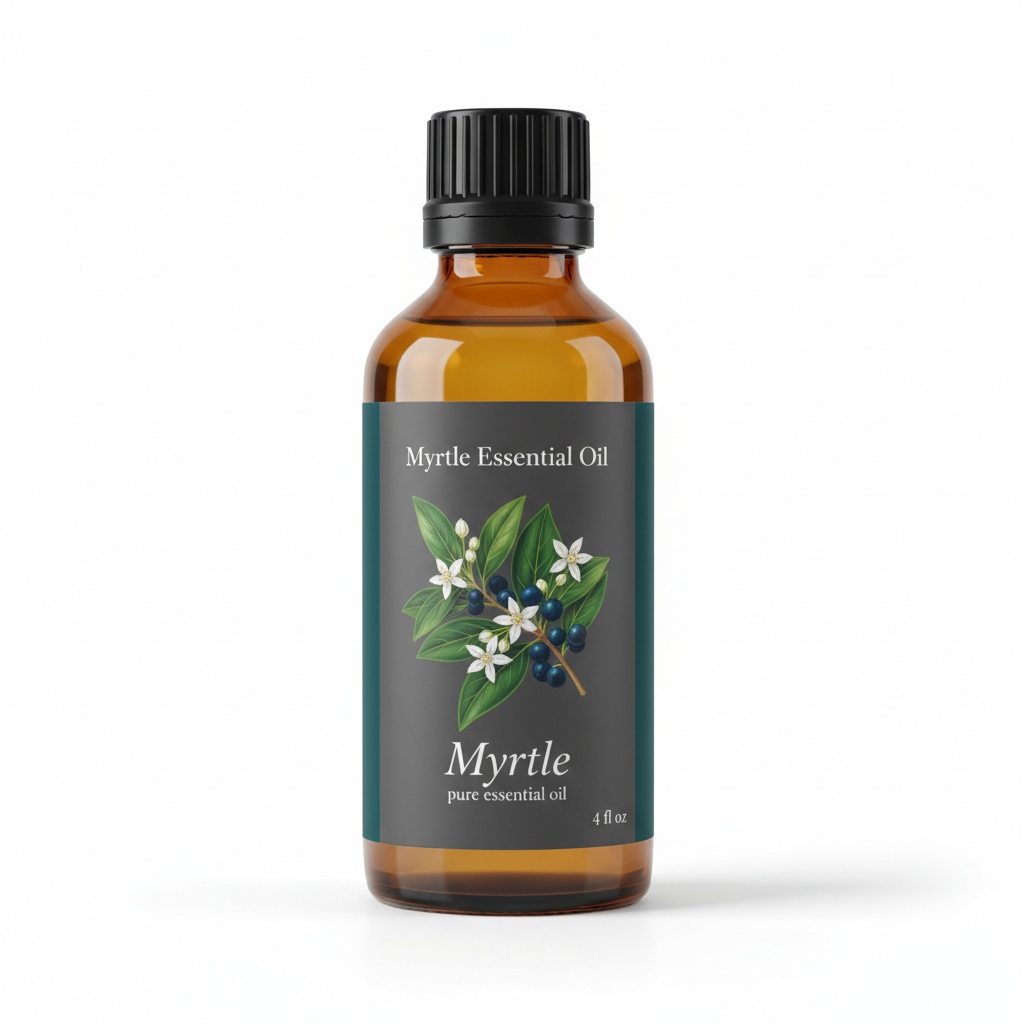
Myrtle Essential Oil
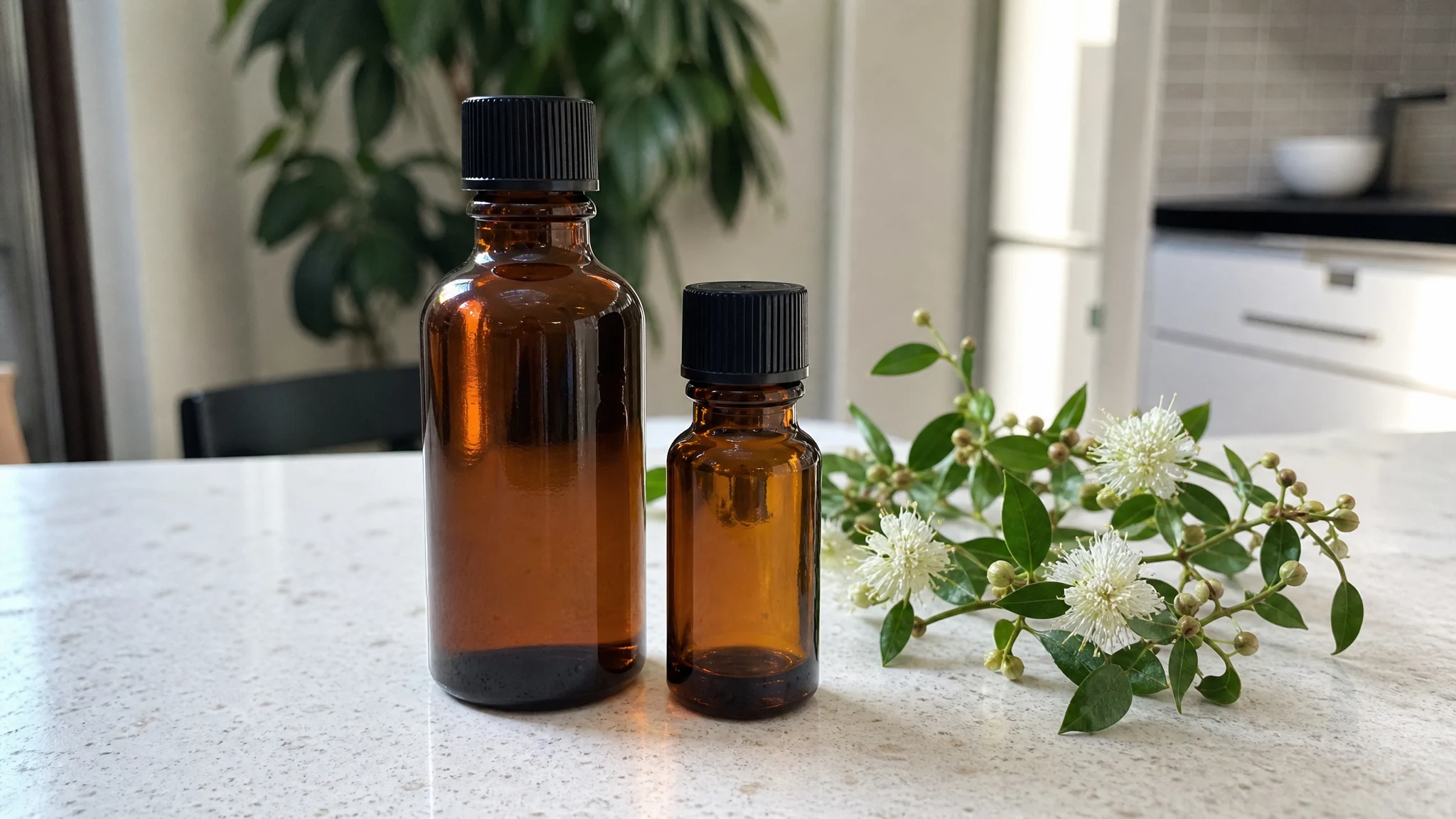
Our own Myrtle Essential Oil, in sizes from 0.5 oz to bulk.
From $16.99
Shop Now →Start with the job
For a room scent, you may want the eucalyptus-like coolness. For a blend, you may want a leafy green note that sits between citrus and herb. For skin work, scent matters least of all: every oil has its own dilution guidance, so never carry a dilution from myrtle to another oil. Look up the new oil's own. We sell myrtle only, so everything below comes from other suppliers.
The cool, camphor-like cousins
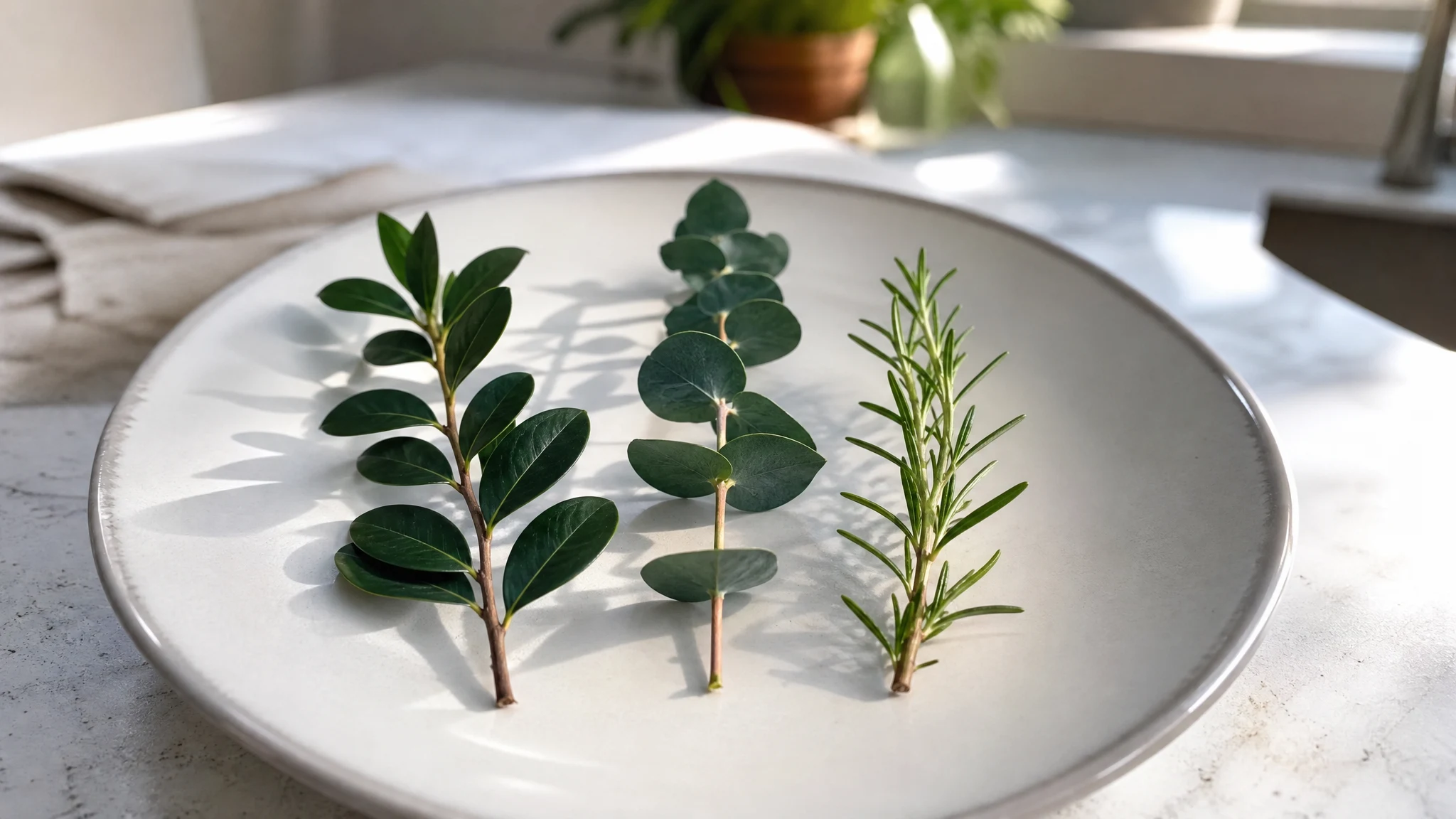
Eucalyptus. This is the nearest neighbor on the cool side. One analysis of Eucalyptus globulus leaf oil found 1,8-cineole at 63.1%, far more than the roughly 22% to 29% reported for several myrtle oils. That is why eucalyptus smells sharper and bolder and why it can overpower the floral side we love. Our comparison of myrtle and eucalyptus goes further. Because cineole-rich oils are strong, keep any of them away from children and pets, as we do with our own.
Rosemary. Cineole-type rosemary shares alpha-pinene and cineole with myrtle and adds camphor, giving a herbal, penetrating freshness. Rosemary also comes in several chemotypes, so the name on the bottle does not settle the profile. See myrtle versus rosemary.
Cajeput and niaouli. Both are Melaleuca cousins in the myrtle family. In one published comparison, a cajeput oil carried 64.63% cineole, while niaouli appeared in two forms, one cineole-led (52.20%) and another led by nerolidol and linalool. The same name can therefore mean a cineole-led oil or a linalool-rich one, so ask which type you are buying. Both are worth knowing if you like myrtle, since myrtle itself carries cineole and linalool in varying proportions.
Tea tree. It belongs to the same family but is defined by a different compound, terpinen-4-ol, and is chemically quite different from myrtle, so we would not expect it to stand in for myrtle's softer, floral side. Our post on myrtle and tea tree sets them side by side.
The sweet half
If you miss the floral, honeyed side, a linalool-rich oil is the logical stand-in, since linalool is one of myrtle's own floral components (3.8% in a Corsican oil, around 5% in a supplier lot, and between 0.87% and 24% in Sardinian genotypes). We suggest pairing myrtle with lavender, neroli, clary sage, lemon or rosemary rather than replacing it, and the pairing guide shows how. For a quick cool, leafy lift without any myrtle at all, a small amount of eucalyptus with a floral note is a reasonable improvisation, as long as you treat the result as its own scent and not a copy.
How to try a substitute fairly
If you are testing an alternative, give it a fair hearing. Put a drop of myrtle on one paper strip and a drop of the other oil on a second, then smell them a minute apart, and again after ten. Write down what you notice in plain words: cooler, sharper, sweeter, flatter. Pay attention to what is missing as much as what is there. Most people find that the first sniff of a substitute is impressive and the second, ten minutes later, tells the real story.
A good habit is to try the swap in the smallest possible batch first. If it is for a diffuser, one session will tell you. If it is a blend, make a tiny trial and let it rest overnight before you decide.
Do not swap by name alone
Names hide a lot. In the literature a single eucalyptus species appears as a cineole oil in one study and as a linalool oil in another, and a niaouli can be one of two chemotypes. Ask for the botanical name, the plant part and the chemotype, and ask for a constituent table if you plan to use the oil on skin. Lemon myrtle, with its strong lemony citral aroma, is a different plant again; the two are not interchangeable.
When we would simply wait for myrtle
Our honest recommendation is that if the fresh-then-floral shift is the whole point of your project, an alternative will only get you part of the way there. A substitute is a fine plan for a quick room scent or a first experiment. For a signature blend, a cologne or anything you will repeat, it is worth keeping a small bottle of the real thing on hand, so the project does not drift every time a different oil is swapped in. Keep the notes from your trials, too, so you know exactly which swap you made and why.
When you want that fresh-then-floral shift, give myrtle a turn. When you only need cool and bold, one of its cousins will do the job.
Myrtle Essential Oil
Myrtle Essential Oil from our own shop, in sizes from 0.5 oz to bulk.
From $16.99
Shop Now →Sources & Further Reading
- Chemical Composition and Biological Activities of Eucalyptus globulus Essential Oil (Plants, 2023)
- Chemical characterization of Eucalyptus (Eucalyptus globulus) leaf essential oil and evaluation of its antifungal, antibacterial and antioxidant activities (Cellular and Molecular Biology, 2025)
- Chemotypic Characterization and Biological Activity of Rosmarinus officinalis (Foods, 2017)
- HPTLC Analysis and Chemical Composition of Selected Melaleuca Essential Oils (Molecules, 2023)
- Chemotaxonomic Evaluation by Volatolomics Analysis of Fifty-Two Genotypes of Myrtus communis L. (Plants, 2020)
- Quorum-Quenching Activity of Myrtus communis Corsican Essential Oil Against the Marine Bacterium Aliivibrio fischeri (Microorganisms, 2025)
- Myrtle - Hopewell Essential Oils