How to Store Myrtle Oil So It Stays Fresh
A bottle of essential oil does not spoil the way milk does, but it does change. Air, light and warmth slowly rearrange its aroma molecules, and a bottle opened last year is not quite the bottle you bought. A few easy habits keep a myrtle oil smelling the way it did on day one.
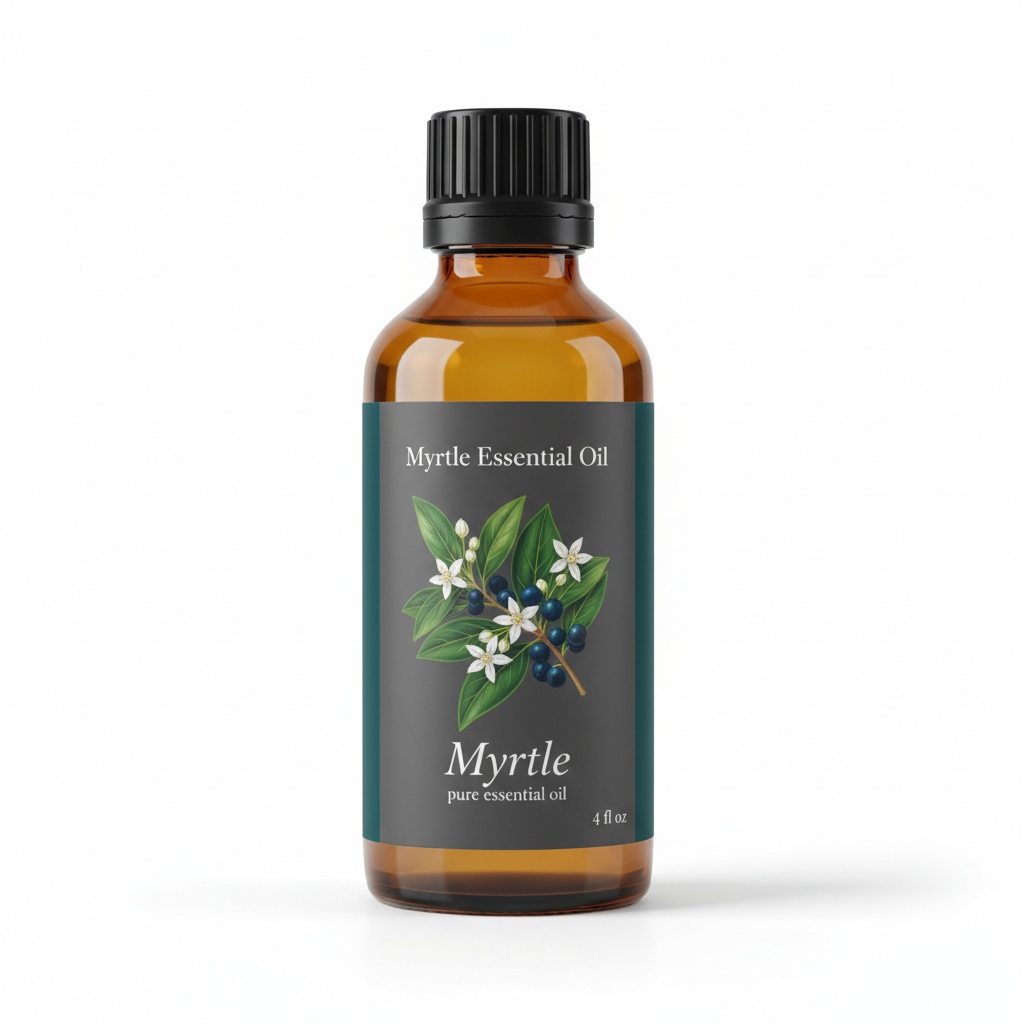
Myrtle Essential Oil
Our own Myrtle Essential Oil, in sizes from 0.5 oz to bulk.
From $16.99
Shop Now →The basics we recommend
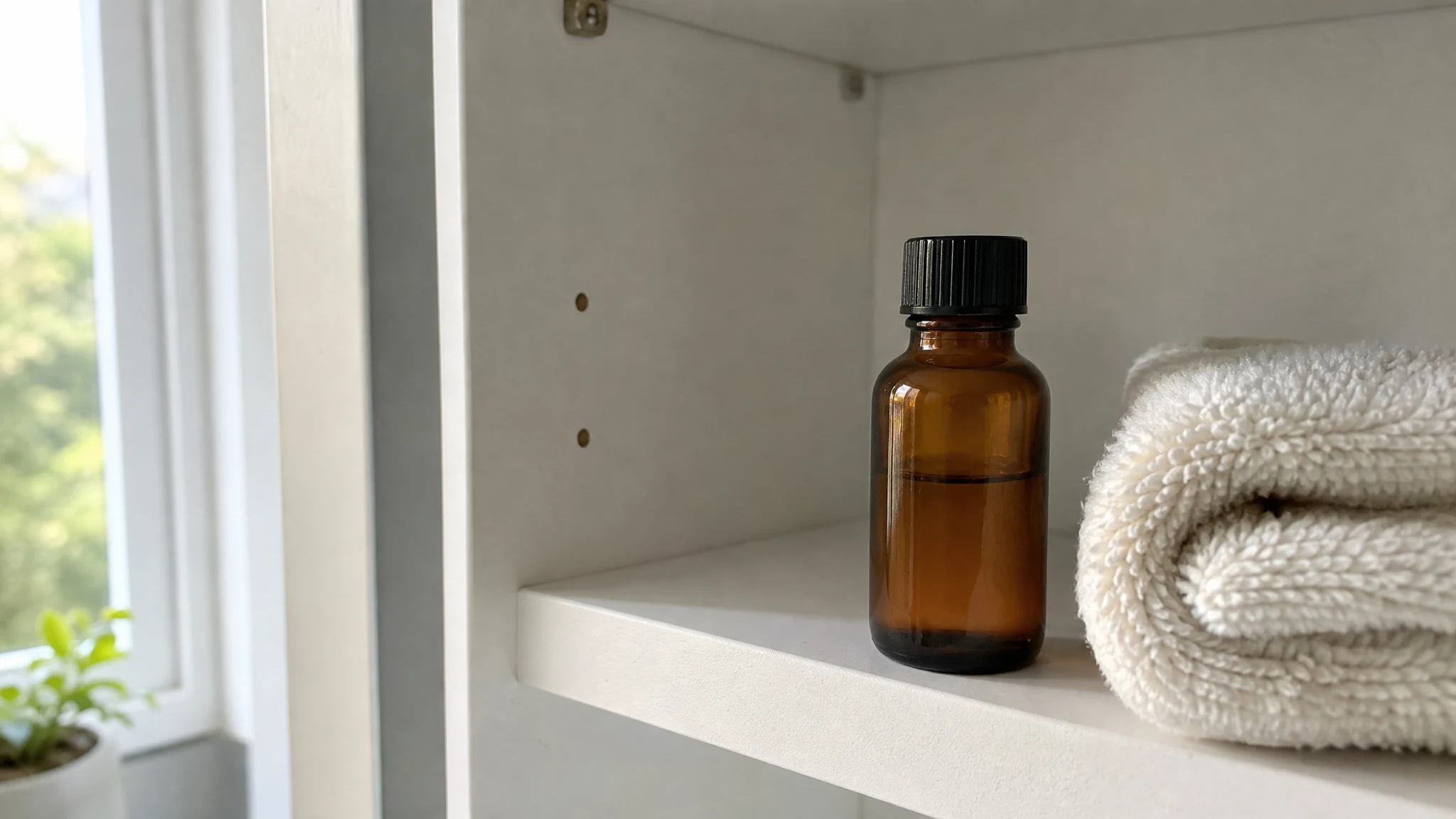
Our guidance is simple: keep the bottle tightly capped in a cool, dark place away from heat and light. We describe the shelf life as typically 2 to 3 years, and for bulk sizes that applies to unopened containers kept tightly capped. That figure is typical rather than a guarantee, since every household's cupboard is different.
A few practical additions follow from how oils age:
- Date the bottle. Write the day you opened it on the label. Opening starts the clock on air exposure, and a date is the only record you will have.
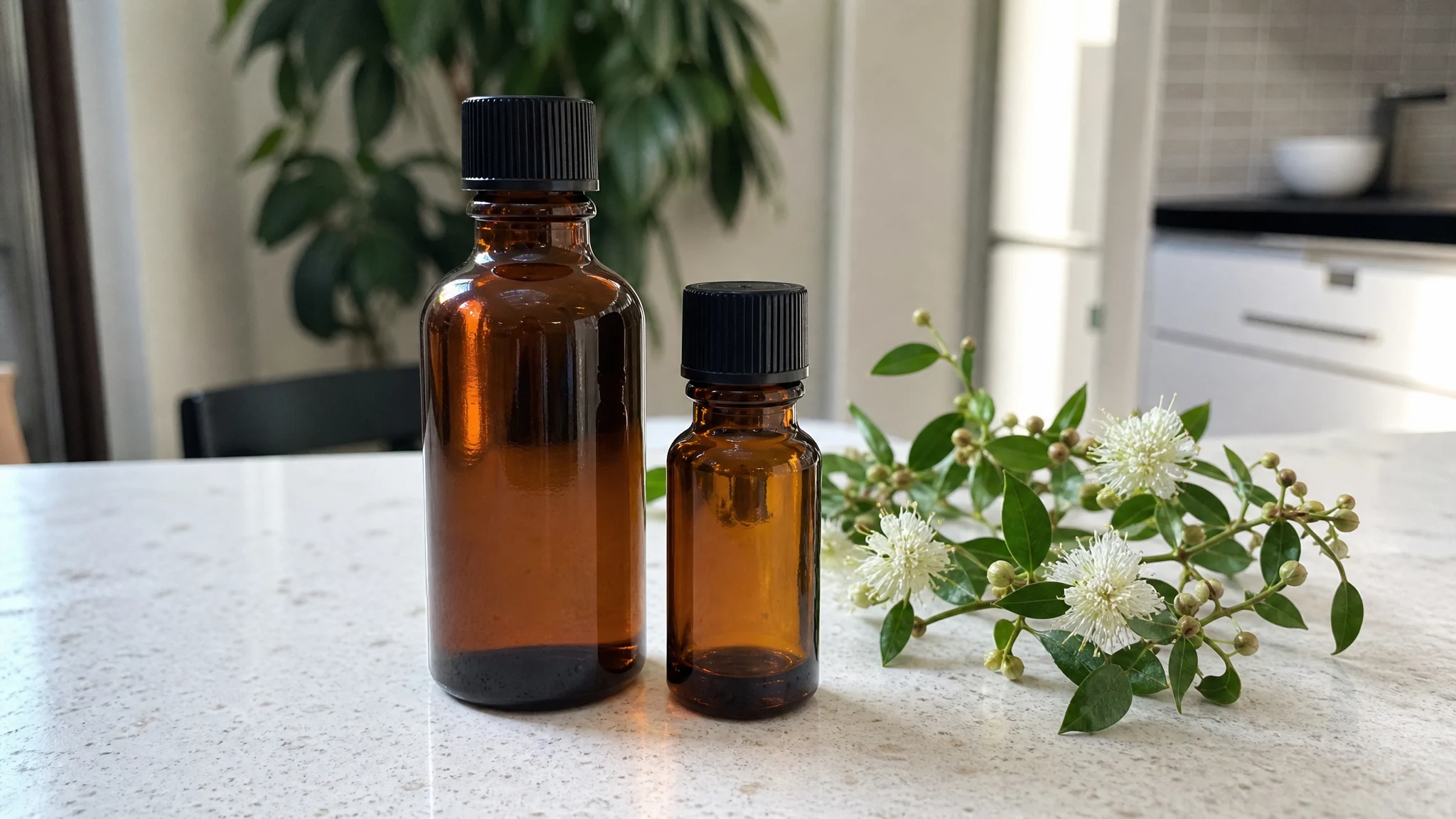
- Choose a snug size. A bottle that is nearly empty is mostly air. If you work from a larger container, decant working amounts into smaller airtight bottles, as our bulk page suggests, and keep the main stock sealed. Choose bottles with child-resistant caps.
- Think cupboard, not windowsill. A shelf away from the stove, radiator and sun does more than any gadget.
A shelf that works
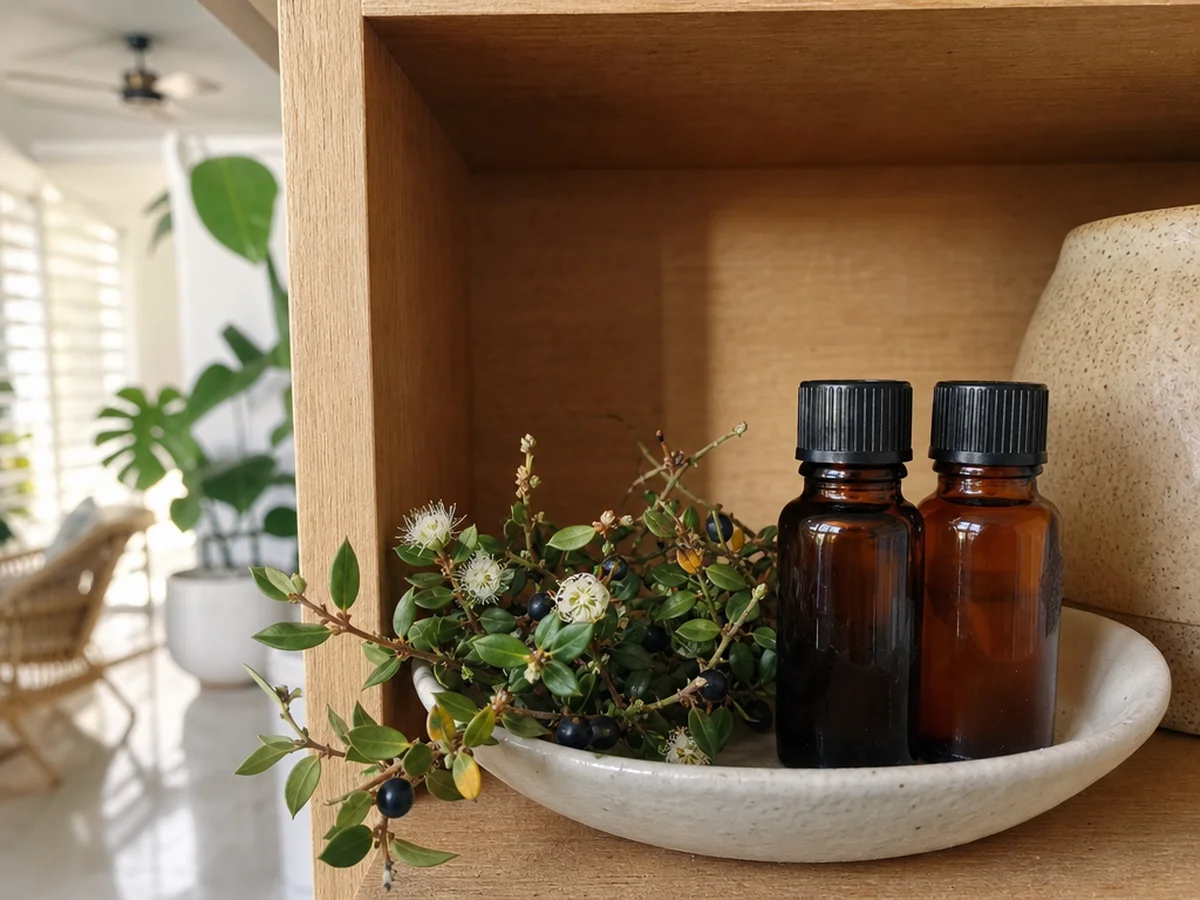
A small lidded box, a drawer in a room you do not heat much, or a spot inside a closet all work well. You want somewhere you will remember, because the best storage is the kind that actually gets used. Keep the oil away from the cooker, the shelf above the shower and the sunny kitchen windowsill, where the temperature swings the most.
What a six-month experiment tells us
Research on how myrtle oil ages is sparse, but one 2025 study is worth knowing (Optimizing postharvest quality of myrtle (Myrtus communis L.) essential oil extracts: effects of temperature and storage duration). Researchers distilled Iranian myrtle, sealed the oil in brown glass vials and kept samples at room temperature (25 C), in a fridge (4 C) and in a freezer (about -20 C) for six months, analyzing them every month.
The headline is calm. The two big players, alpha-pinene and 1,8-cineole, barely moved even at room temperature, which the authors describe as relatively stable. Some of the smaller esters did drift, and linalyl acetate fell most at room temperature. One minor ester, alpha-terpinyl acetate, dropped from about 1.2% to almost nothing at every temperature, freezer included, so temperature is not the whole story. The authors are careful not to claim a mechanism, and they would like longer studies of a year or more.
In practice, that supports what we already suggest: a cool cupboard is plenty. A freezer is not necessary, and moving a cold bottle into warm, humid air invites condensation each time you open it, which is our reasoning rather than a finding from the study.
There is also a simple pleasure in a well-kept bottle. Open it after a few weeks on a cool shelf and the scent should still be the one you remember: fresh, clear and lightly floral. A tidy cupboard and a dated label are a small way of respecting an oil that took a lot of leaves to make.
Why freshness matters most for skin
For a diffuser, an older oil is mostly a question of aroma. For skin, there is one more reason to care. Myrtle oil contains limonene and linalool, which Sardinian plants showed in amounts from about 2% to 45% and 1% to 24% respectively (Chemotaxonomic Evaluation by Volatolomics Analysis of Fifty-Two Genotypes of Myrtus communis L.). When those two react with oxygen they form hydroperoxides, and a review of fragrance contact allergy identifies those oxidized forms as the major allergens among these compounds, with patch tests showing oxidized material sensitizes more often than fresh (Contact allergy to fragrances: current clinical and regulatory trends).
A well-known parallel comes from tea tree oil. Researchers exposed it to light, warmth and air and found that the degraded oil was a stronger sensitizer than fresh oil (Degradation products of monoterpenes are the sensitizing agents in tea tree oil). That is a different oil, so we cite it as an illustration of the mechanism rather than a measurement of myrtle. It does suggest a sensible rule, which is our own: let fresher oil go on skin and keep older oil for room scenting. We do not know of a reliable at-home smell test for oxidation, so the date on the bottle does the work that your nose cannot.
Checking in on an older bottle
Once in a while, take the bottle off the shelf, make sure the cap is snug, read the date you wrote on the label and enjoy a sniff. As noted above, a sniff will not tell you how fresh the oil is, so lean on the date. Then put the cap back on straight away, snug but not forced.
Keeping it safe at home
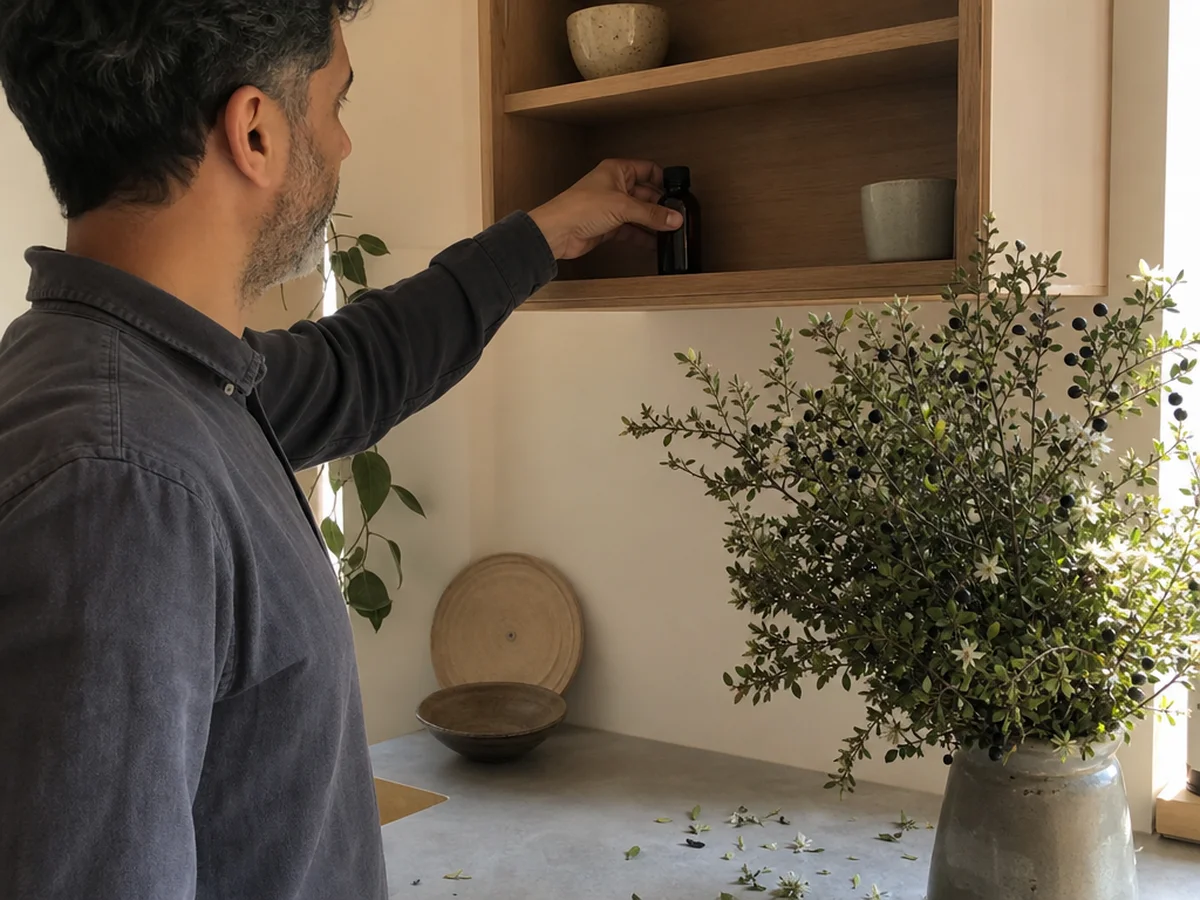
The Tisserand Institute advises storing essential oils where young children cannot reach them, never letting children handle the bottles, and choosing child-proof caps, though it notes caps do not always prevent accidents (Safety Guidelines - Tisserand Institute). Our own guidance matches: keep the oil away from children and pets.
If you are curious about how we dilute and use the oil, our guides on using myrtle oil at home and myrtle oil safety basics go further, and choosing a bottle size helps you match a bottle to how fast you will use it.
A tidy shelf, a dated label and a snug cap are really all it takes.
Myrtle Essential Oil
Myrtle Essential Oil from our own shop, in sizes from 0.5 oz to bulk.
From $16.99
Shop Now →Sources & Further Reading
- Optimizing postharvest quality of myrtle (Myrtus communis L.) essential oil extracts: effects of temperature and storage duration
- Chemotaxonomic Evaluation by Volatolomics Analysis of Fifty-Two Genotypes of Myrtus communis L.
- Contact allergy to fragrances: current clinical and regulatory trends
- Degradation products of monoterpenes are the sensitizing agents in tea tree oil
- Safety Guidelines - Tisserand Institute