Myrtle Oil Roller Blends: Drop Counts That Work
In a 10 ml roller bottle filled to the top, every drop of essential oil is about half a percent. So a recipe that calls for six drops of this and four drops of that is already past 5% before you have finished reading it. That one piece of arithmetic is why we build roller blends around the ceiling first and the scent second, and it is also what makes them easy to get right.
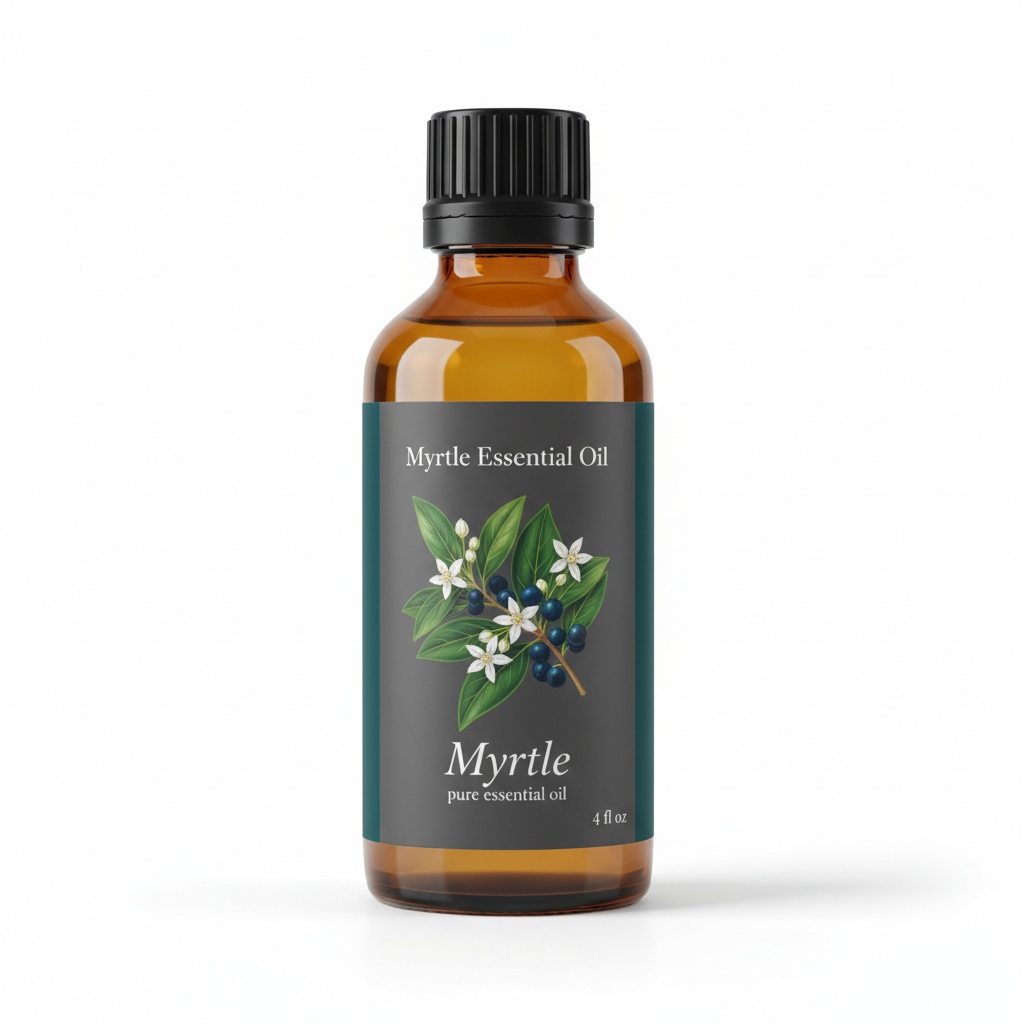
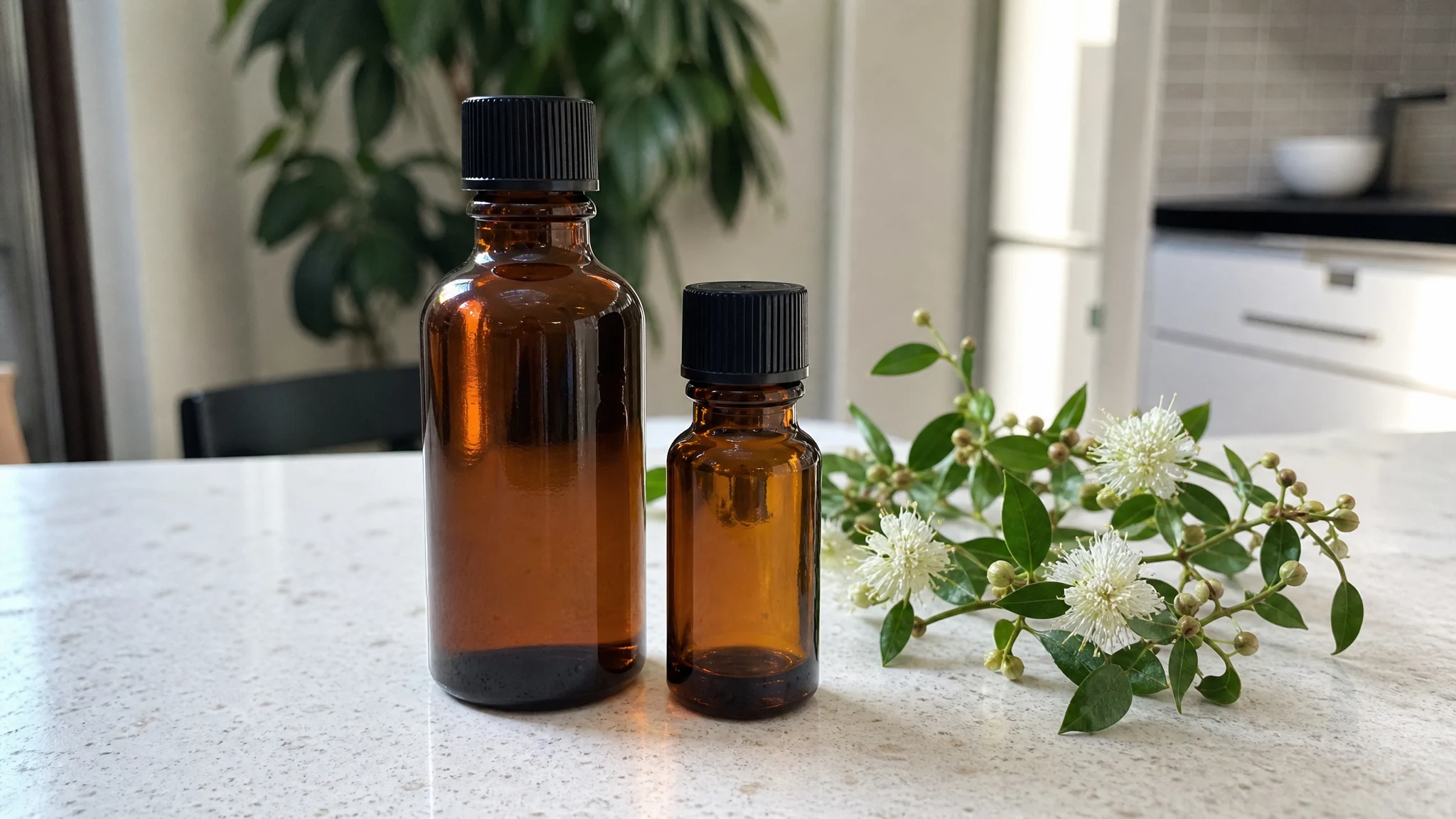
Myrtle Essential Oil
Our own Myrtle Essential Oil, in sizes from 0.5 oz to bulk.
From $16.99
Shop Now →One drop is half a percent
A roller holds about 10 ml, a third of an ounce. At roughly 20 drops to the ml (droppers vary), a full bottle holds about 200 drops, so one drop is 1 divided by 200, or 0.5%. If you only fill to 9 ml, each drop is about 0.56%; at 8 ml, 0.625%.
Where we set the ceiling
Our skin guidance for myrtle is 0.5% to 2% in a carrier with a patch test first, which on a roller is 1 to 4 drops. Tisserand and Young's Essential Oil Safety, as quoted by one supplier, gives a maximum dermal level of 1.9% for myrtle oil, and four drops in a full roller is 2.0%. So we cap the total essential oil in these rollers at 3 drops in a bottle holding at least 8 ml, which is 1.5% at 10 ml and 1.875% at 8 ml.
| Drops | 10 ml fill | 9 ml fill | 8 ml fill |
|---|---|---|---|
| 1 | 0.50% | 0.56% | 0.63% |
| 2 | 1.00% | 1.11% | 1.25% |
| 3 | 1.50% | 1.67% | 1.88% |
| 4 | 2.00% | 2.22% | 2.50% |
IFRA offers a second yardstick. It has no standard for myrtle oil by name, but it caps methyl eugenol, a constituent some myrtle oils carry, at 0.011% of Category 4 products (fine fragrance) and 0.0015% of Category 5A (body lotions and oils). A wrist or neck roller is fine-fragrance-type use, which is our reading of IFRA's guidance. Using one supplier's red myrtle lot with 0.40% methyl eugenol as an example, the Category 4 ceiling is 0.011 divided by 0.40, or 2.75% oil, which comfortably holds a 1.5% roller. The same lot would exceed the Category 5A figure of 0.375% in a body oil, which is why our body oil recipe uses lower numbers. That lot is not ours; the certificate of analysis we publish for one batch lists no constituents, so ask us in writing through the contact page if you need them.
Two structures that fit
Each uses an 8 to 10 ml fill of carrier and oil in a glass roller bottle. We do not sell carriers or roller bottles, so a craft or supply shop is the place. If you choose sweet almond oil, note that almonds are a tree nut, so anyone with a nut allergy should pick another carrier; our carrier oil comparison covers the choice.
Myrtle on its own
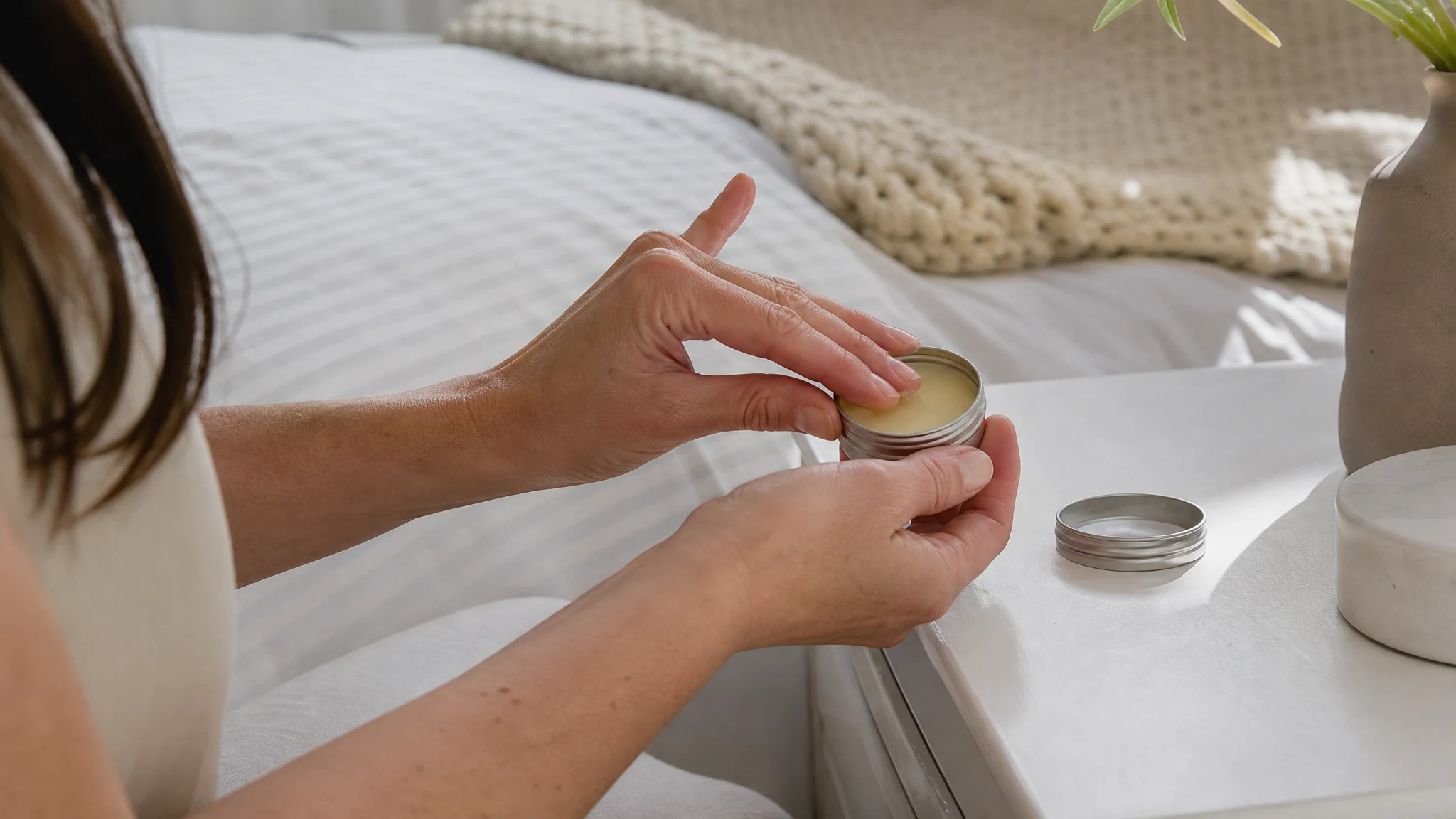
Myrtle oil, 2 drops (about 1.0% at 10 ml), carrier to the 10 ml mark. This is the one that tells you what myrtle smells like on your own skin before anything else muddies it. We describe the aroma as fresh, clear and gently floral, with a soft eucalyptus-like coolness and faintly honeyed facets, but how it dries down is for your patch test to answer. The ceiling leaves room for a third drop, and we would only add it after a week on the inner arm without a reaction.
Myrtle with lavender
Myrtle, 2 drops (1.0%); lavender, 1 drop (0.5%); total 3 drops (1.5%); carrier to 10 ml. Lavender is among the oils we suggest pairing with myrtle (so are lemon, rosemary and neroli), and it makes a soft floral frame around myrtle's cooler green. We do not sell lavender, so you will find it at a supply shop; ask that supplier for its safety data sheet and any IFRA certificate, because each added oil brings its own limits. Our pairing guide goes deeper on scent.
A word on citrus. Cold-pressed citrus oils carry sun-exposure limits of their own; the Tisserand Institute notes that IFRA caps expressed bergamot at 0.4% in leave-on products for skin exposed to sun, so even one drop in a full roller (0.5%) would be over it. Distilled citrus oils contain virtually none of the compounds behind that rule. Either way, we would leave citrus out of a roller and pair myrtle with a floral or herbal partner instead.
Choosing the bottle
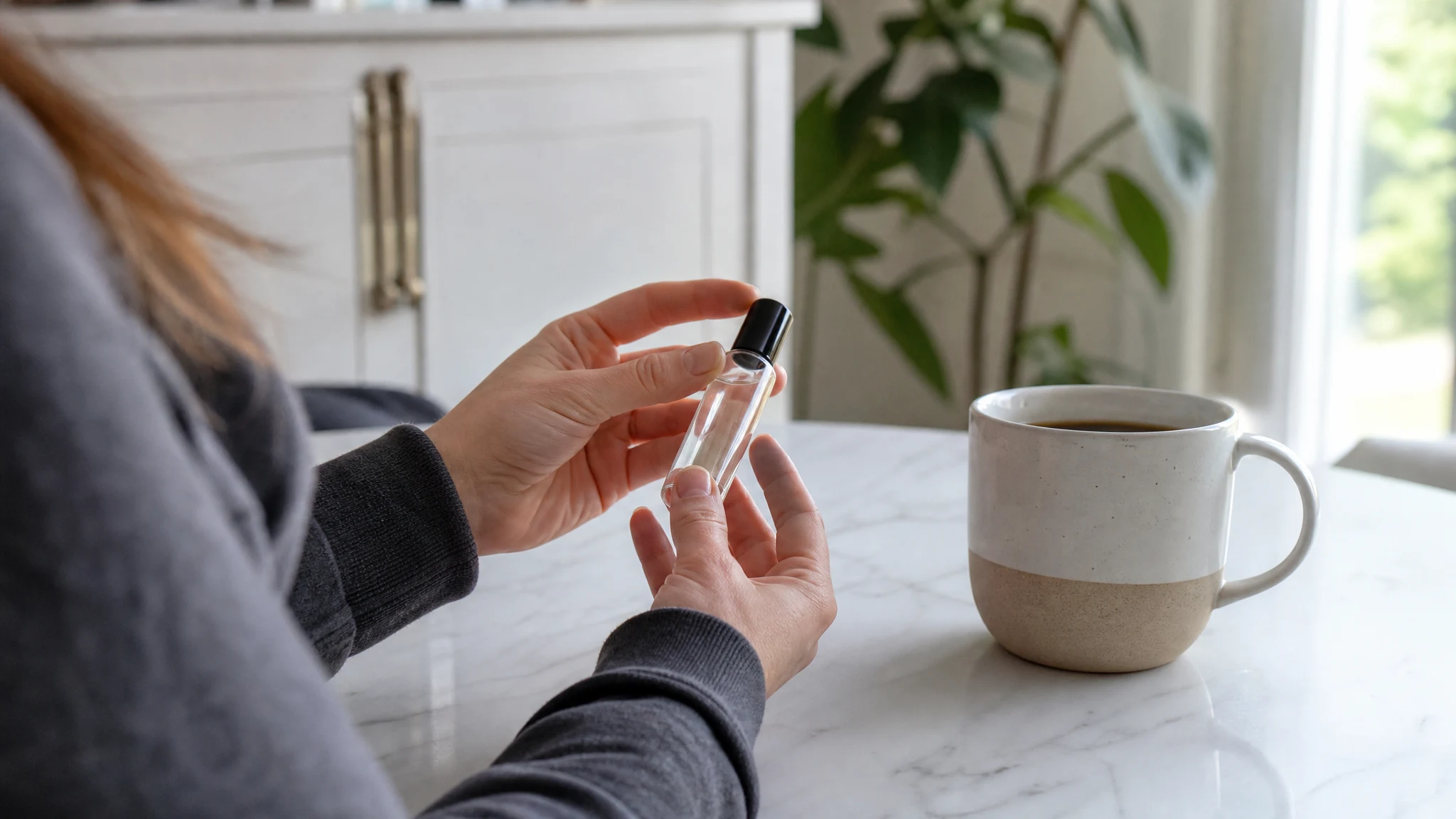
A glass roller bottle with a steel or glass ball feels nicer in the hand than most plastic ones, and it is easier to keep clean. Amber or cobalt glass is a good choice if the bottle will sit on a desk or in a bag, since light is not kind to oils. Pick a size you will finish within a few months. A blend this light is a small pleasure, and it is best made small.
Making a roller
- Drop the essential oils into the empty bottle first, then top up with carrier. Adding drops to a full bottle is how spills and miscounts happen.
- Fit the roller ball, cap, tilt back and forth for a minute, and label with the date and total drop count.
- Patch test: the American Academy of Dermatology describes a quarter-sized spot on the inner arm, twice a day for seven to 10 days. If redness, itching or swelling appears, wash it off and stop.
- Apply to the wrists or the side of the neck, adults only, away from eyes and the skin around the nose.
Counting drops into a half-full bottle and topping up afterward can land you at 6 drops in 8 ml (3.75%), and a reducer cap can deliver noticeably more or fewer than 20 drops per ml. For certainty, weigh 0.09 g on a scale that reads to 0.01 g. We say keep our oil away from children and pets, and we would not make a roller for a child's skin. For storage, see how to store myrtle oil.
A 0.5 oz bottle holds about 296 drops, enough for roughly 98 rollers at three drops each.
Give the finished roller a day before you judge the scent. Then roll a little onto the back of your hand, wait a minute, and pay attention to how the cool green opening settles into something softer and more floral.
Myrtle Essential Oil
Myrtle Essential Oil from our own shop, in sizes from 0.5 oz to bulk.
From $16.99
Shop Now →Sources & Further Reading
- Myrtle - Hopewell Essential Oils, supplier page quoting Tisserand and Young, with GC/MS for one lot.
- IFRA Standards library, 51st Amendment compilation (methyl eugenol standard), IFRA.
- Guidance for the use of IFRA Standards, IFRA, June 2023 edition.
- Phototoxicity: essential oils, sun and safety - Tisserand Institute.
- How to test skin care products, American Academy of Dermatology.