Myrtle Oil Lab Studies: What They Do and Don't Show
The lowest figure in one 2014 myrtle study is a minimum inhibitory concentration of 0.078 mg/ml against bacteria in a lab dish. One drop of myrtle oil weighs about 45 mg (0.05 ml at about 0.9 g/ml), so that number equals one drop mixed through roughly 577 ml of liquid. It sounds dramatic. This post is about why that sentence says very little about a spray bottle, a countertop or skin, and how to read the next one you meet.
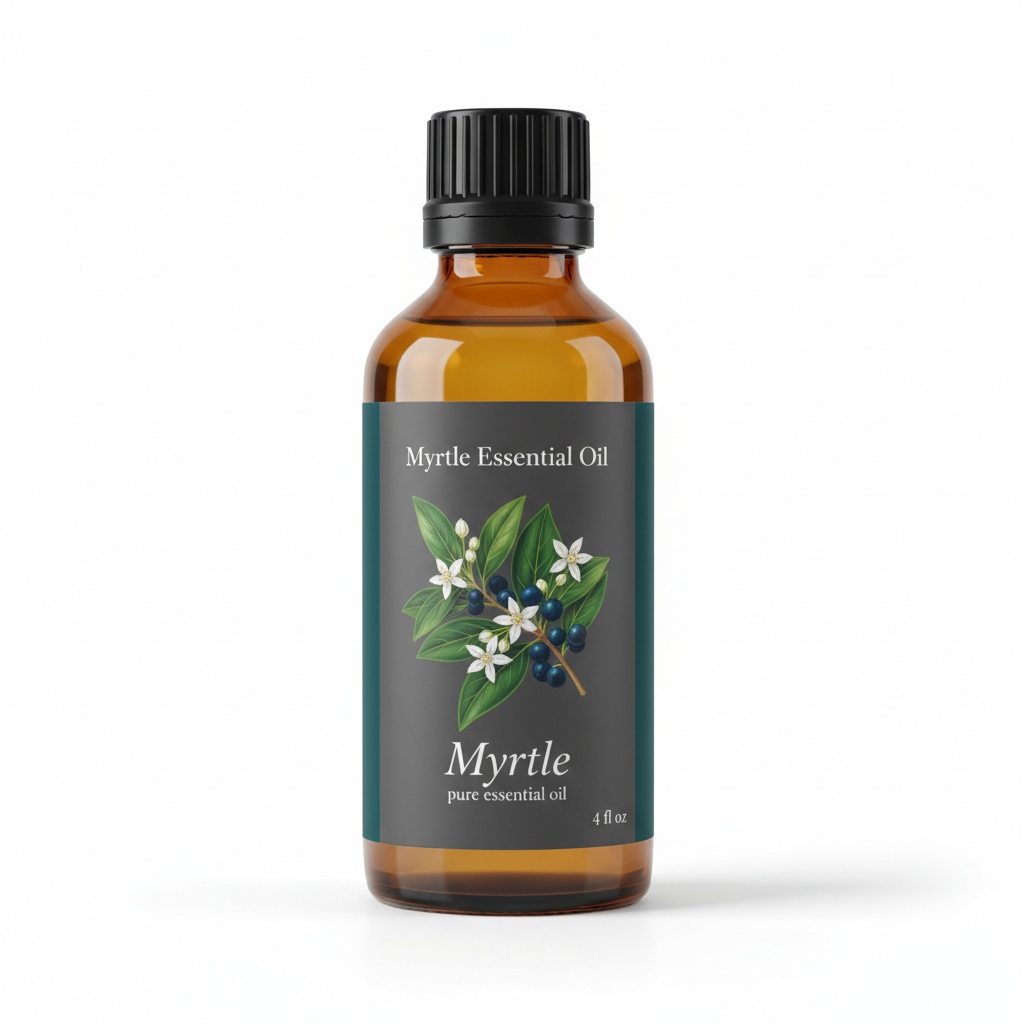
Myrtle Essential Oil
Our own Myrtle Essential Oil, in sizes from 0.5 oz to bulk.
From $16.99
Shop Now →What an MIC is
A minimum inhibitory concentration is the lowest concentration of a substance that stops visible growth of a microorganism after overnight incubation. A separate test, the minimum bactericidal concentration, asks about killing, meaning the lowest concentration that prevents regrowth when the organism is moved to fresh medium. Many myrtle papers report only the first. So "MIC" describes a pause in growth under laboratory conditions, not a germ-killing power in the wild.
One species, very different oils
Published myrtle oils differ widely in what they contain, and each study tests its own oil:
- One oil led by myrtenyl acetate (20.75%), with 1,8-cineole at 16.55% and alpha-pinene at 15.59%, had MICs of 0.078 to 2.5 mg/ml across bacterial strains and a time-kill result against Listeria monocytogenes from a food isolate (Ben Hsouna et al., 2014).
- A Moroccan mountain oil led by myrcene (27.38%) and limonene (16.51%) gave 0.7 microliters per ml against E. coli (Hayani et al., 2024).
- An oil led by 1,8-cineole (28.62%), alpha-pinene and linalool was tested against organisms involved in persistent root-canal infection (Nabavizadeh et al., 2014).
Three oils, three different chemistries, three methods, three sets of organisms. A comparison of 52 plant oils by Hammer, Carson and Riley noted that few investigations had compared oils by directly comparable methods, and the same caution applies here: a figure belongs to the oil, strain, medium and method together. The batch on our published Certificate of Analysis lists steam distillation and physical checks, with no composition, so none of these results can be mapped onto it.
From a dish to a room
Take 0.078 mg/ml and a 250 ml spray bottle. One 45 mg drop gives 0.18 mg/ml, above that figure, if the oil were spread evenly. It will not be, because oil floats on water, and the lab sets up its dilutions with that in mind. A plate also holds a controlled organism in a nutrient broth overnight with nothing else in the way, while a wiped surface is wet for seconds and skin has its own chemistry. That is reasoning from how the tests work, not a finding, and it is why the most careful reading of an MIC is that it is a starting point for more research.
Studies of myrtle oil combined with antibiotics fit the same pattern. A Serbian paper tested three myrtle oils with polymyxin B and ciprofloxacin against drug-resistant Acinetobacter baumannii wound isolates and reported synergy in the dish. That describes isolates in a laboratory. It is not a statement about wounds or about using an essential oil on one.
What regulators say about germ claims
The EPA says products sold under its minimum-risk pesticide exemption cannot make sterilizing, disinfecting, sanitizing or germ claims, or claims about preventing infection. For cosmetics and aroma products, FDA's page on aromatherapy explains that intended use decides the category and that therapeutic claims make a product a drug. We follow that line: we make no antimicrobial claim for our myrtle oil, and we sell it as an aromatic oil. If a surface needs disinfecting, use a product registered for that purpose and follow its label. If you think you have an infection, a clinician is the right person to ask.
What we would rather you do with your bottle
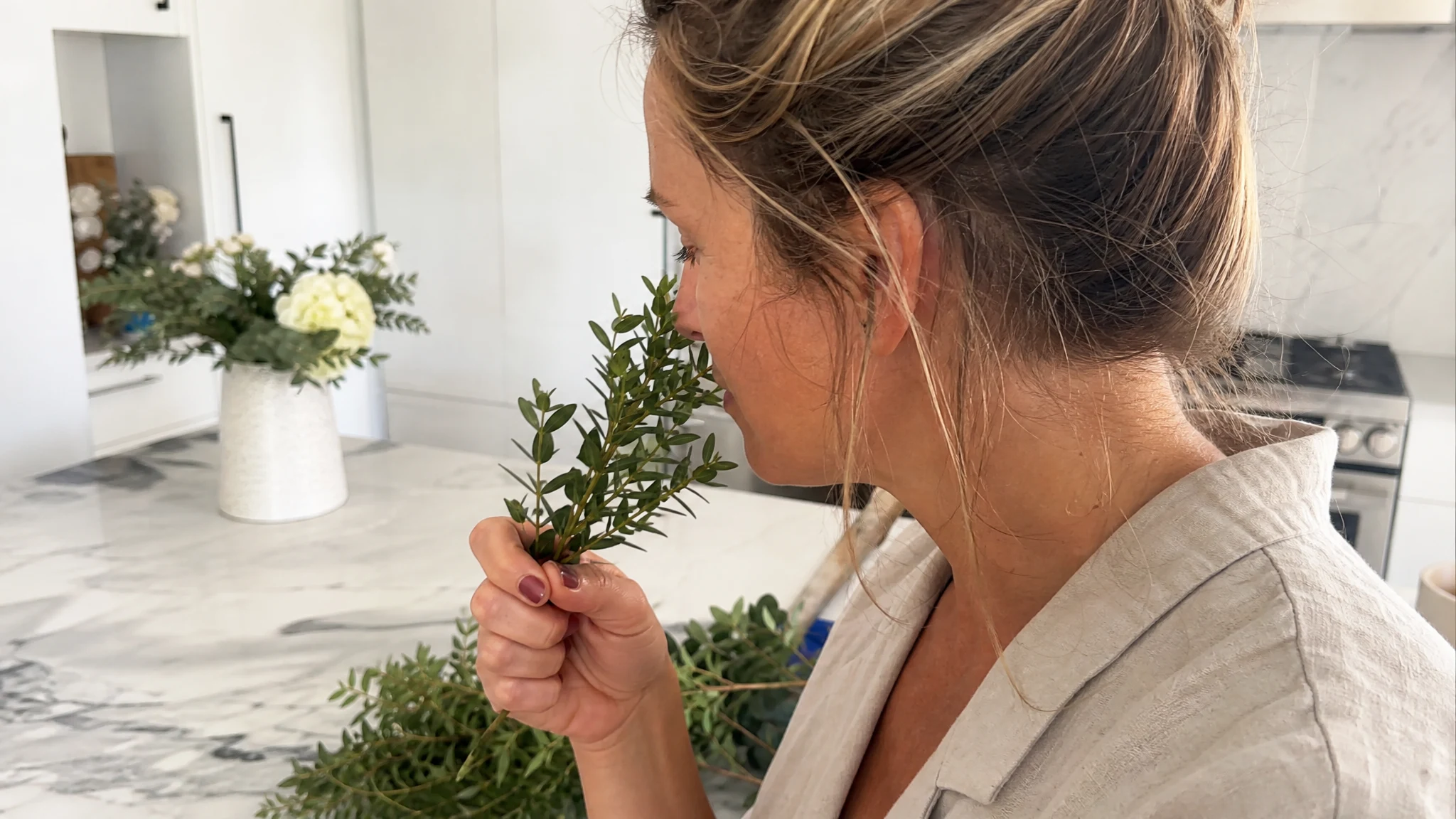
We would rather you enjoy the oil for what it is: an aromatic. Open the bottle and smell it. Put a short session in a diffuser. Layer it into a home fragrance or a diluted cologne, with the dilution guidance in mind. For a counter or a cutting board, a cleaner made for that job will do the work, and a bottle of essential oil will not stand in for it. Keeping those jobs separate makes both easier, and it keeps the scent doing what it does best.
When you next see a headline about an oil and a lab dish, take a breath before you share it. Ask which oil it was, how it was tested and what the researchers themselves said it meant. Most careful papers are modest about what they found, and it is usually the headline that gets carried away. Reading with that in mind makes the next story a lot more interesting and a lot less alarming.
What to take from the numbers
Myrtle is an interesting plant, and these papers show why researchers keep looking at its oil. The practical takeaway is a set of questions for any MIC you see. Which oil, and what was in it? In what units, by what method? Was it growth or kill? What would have to be true for the dish to resemble your kitchen? For more, see our research roundup, our room spray guide, which treats a spray as a scent, and the skin post.
Our oil is sold neat. For skin we recommend 0.5% to 2% in a carrier with a patch test first, keep it away from eyes, children and pets, and it is not for internal use.
Myrtle Essential Oil
Myrtle Essential Oil from our own shop, in sizes from 0.5 oz to bulk.
From $16.99
Shop Now →Sources & Further Reading
- Ben Hsouna et al., Myrtus communis essential oil: chemical composition and antimicrobial activities against food spoilage pathogens, 2014. PubMed 24706627
- Hayani et al., Bioactive Profiling, Antibacterial Efficacy and Computational Modelling of Myrtus Communis Essential Oil (Morocco), 2024. PubMed 38686775
- Nabavizadeh et al., Chemical constituent and antimicrobial effect of essential oil from Myrtus communis leaves on microorganisms involved in persistent endodontic infection compared to two common endodontic irrigants: An in vitro study, Journal of Conservative Dentistry, 2014. PubMed 25298646
- Aleksic et al., Synergistic effect of Myrtus communis L. essential oils and conventional antibiotics against multi-drug resistant Acinetobacter baumannii wound isolates, 2014. PubMed 25442275
- Hammer, Carson and Riley, Antimicrobial activity of essential oils and other plant extracts, Journal of Applied Microbiology, 1999. PubMed 10438227
- Andrews, Determination of minimum inhibitory concentrations, Journal of Antimicrobial Chemotherapy, 2001. PubMed 11420333
- EPA, Conditions for Minimum Risk Pesticides. epa.gov/minimum-risk-pesticides/conditions-minimum-risk-pesticides
- FDA, Aromatherapy. fda.gov/cosmetics/cosmetic-products/aromatherapy