Myrtle, Lemon and Rosemary: A Fresh Morning Blend
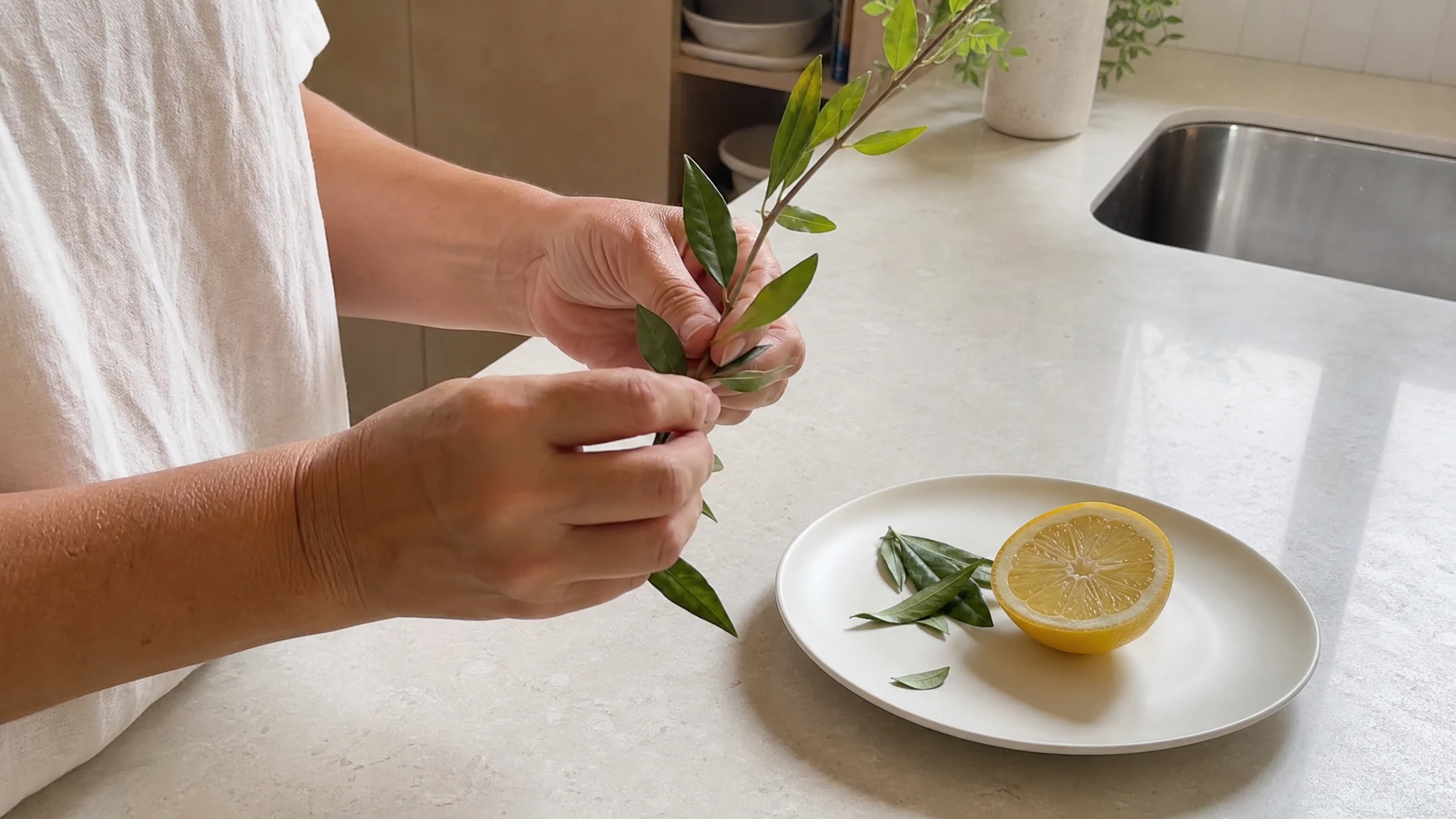
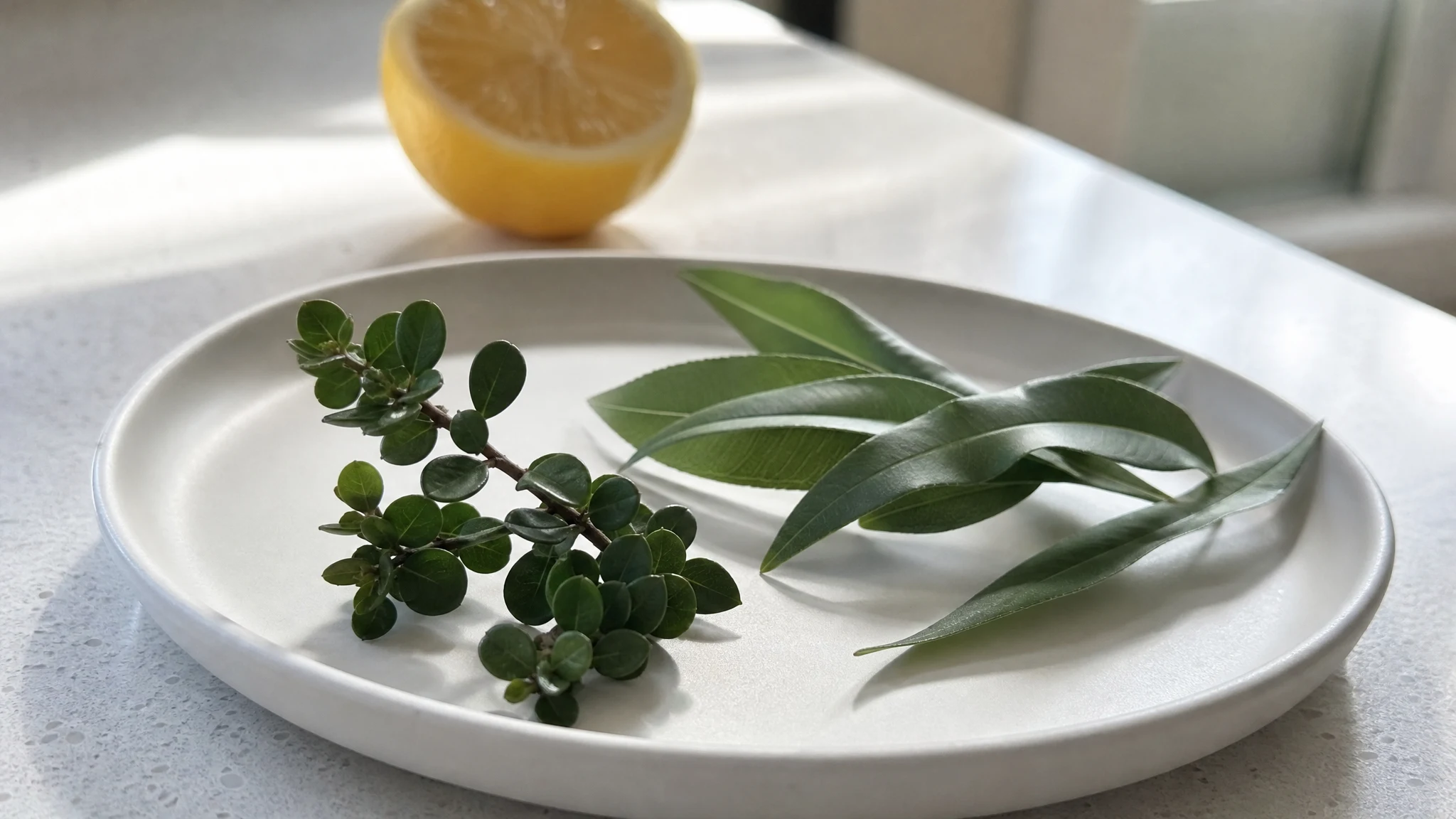
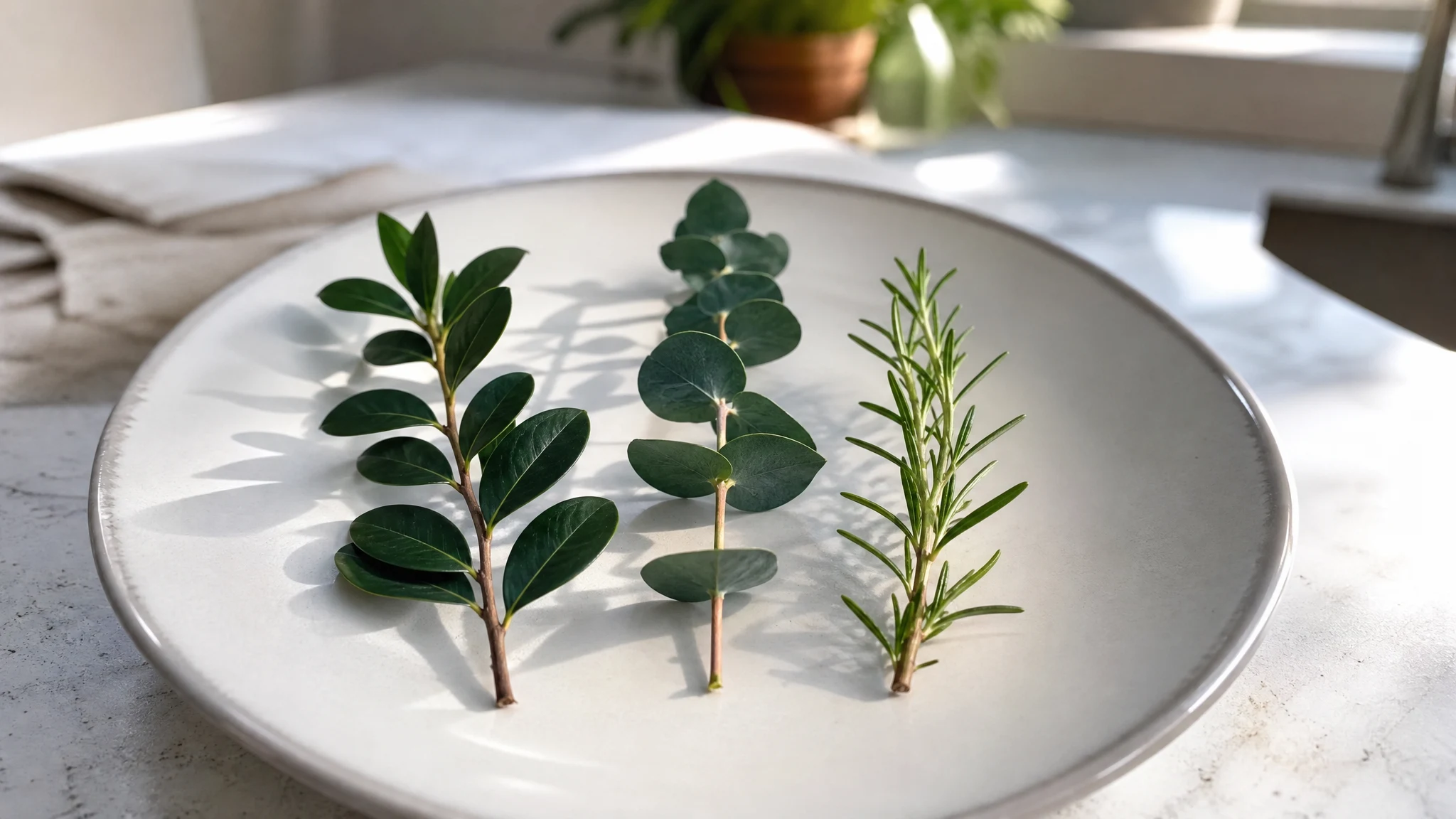
Picture the first window you open on a warm morning: something green and clean, a little citrus, a little herb. That is the idea behind blending myrtle with lemon and rosemary. Myrtle is a top-to-middle note with a fresh, clear, gently floral scent and a soft eucalyptus-like coolness, and lemon and rosemary are two of the partners we suggest for it. Here is how we would put the three together, and how to size the blend for different uses.
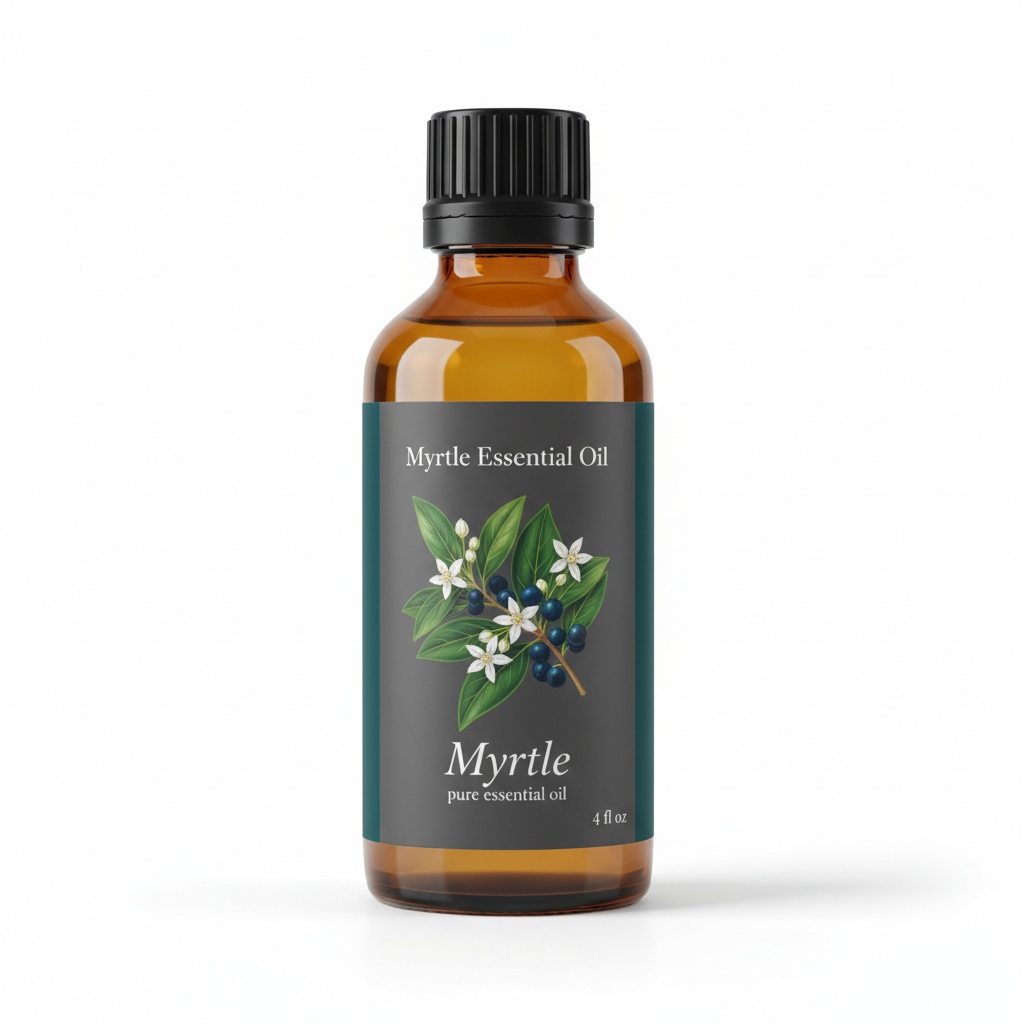
Myrtle Essential Oil
Our own Myrtle Essential Oil, in sizes from 0.5 oz to bulk.
From $16.99
Shop Now →Why these three work
Myrtle carries the middle of the blend. Lemon adds brightness on top, and rosemary adds a herbal edge that sits happily next to myrtle's cool, leafy character. Since all three are on the fresh side, the blend smells clean and awake rather than heavy. We sell only the myrtle, so lemon and rosemary come from a supplier you like. This is a formulation built from the cited guidance and arithmetic, not a house product of ours.

The stock blend
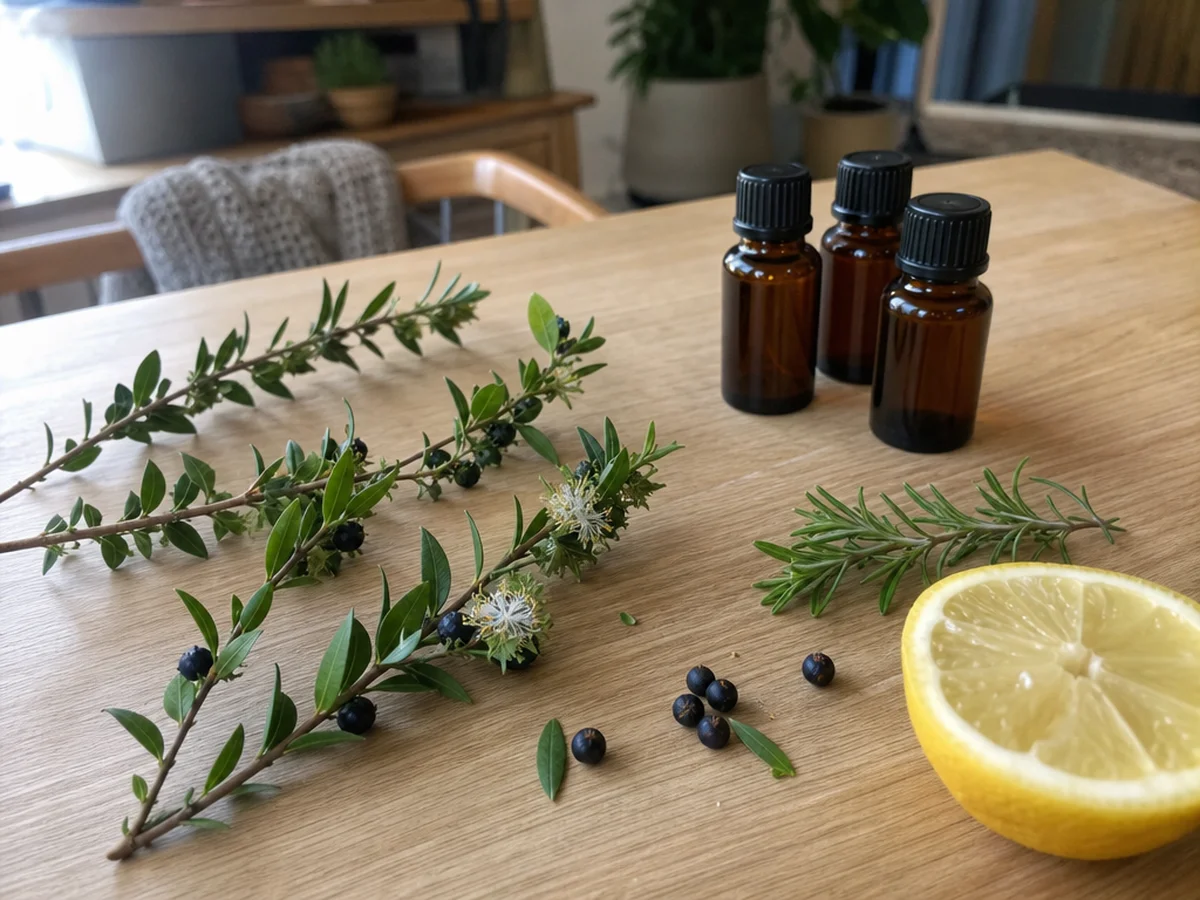
We like to mix by weight rather than by drops, because oils differ in thickness and droppers differ in size. As a starting suggestion, for 10 g of stock blend use 5.0 g myrtle (50%), 3.0 g lemon (30%) and 2.0 g rosemary (20%). Weigh them into a small dark glass bottle on a scale that reads to 0.01 g, cap it and label it with the date and the percentages. Store it as you would the myrtle itself: tightly capped, cool and dark.
For a diffuser, the stock can be used straight, following your diffuser maker's dose. The Tisserand Institute suggests 30 to 60 minutes on and 30 to 60 minutes off, with some fresh air. If birds live in the house, or a pet has breathing difficulties, the ASPCA advises skipping the diffuser. More on that side of things is in our home-use guide.
Smelling your way to the ratio
Treat the 50/30/20 split as a starting point rather than a rule. Make a tiny test with a few drops of each, dip a paper strip, and smell it. If you want it brighter, nudge the lemon up; if it feels too herbal, ease the rosemary back. Change one thing at a time and write down what you did. Then let the stock bottle rest overnight and smell it again the next day, because oils settle together once they have had time to meet. Small adjustments beat big ones.
It also helps to decide the mood of the blend before you start. For a brighter, sunnier version, lean a little more toward lemon. For something greener and more herbal, give rosemary a bit more room. Myrtle sits in the middle either way, which is what makes it such a friendly oil to build around.
A small bottle of cologne
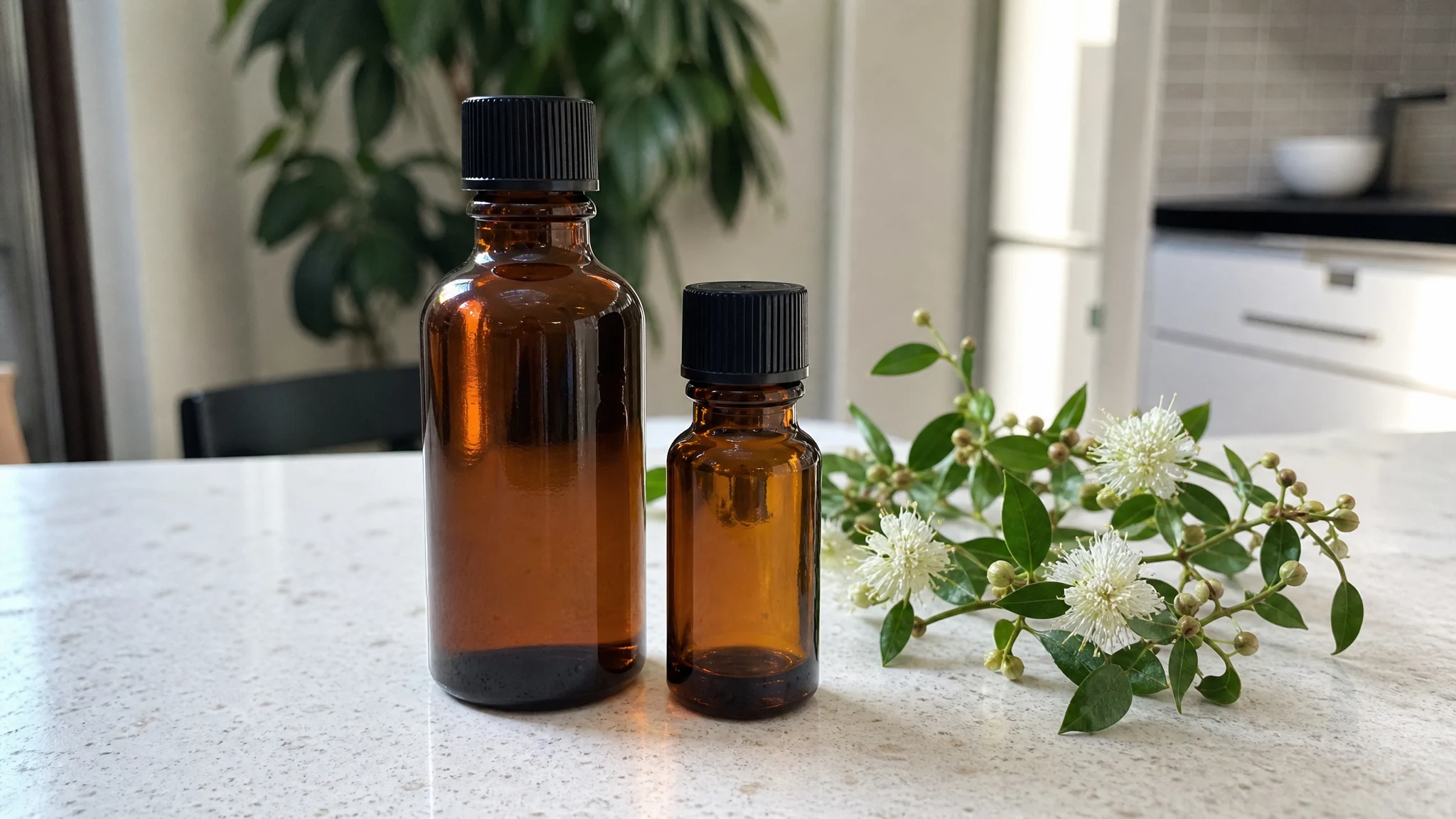
For skin, the limits come from the product, not the blend. The fragrance industry caps methyl eugenol, which myrtle oil can contain, at 0.011% of a finished cologne or aftershave (IFRA category 4). Published lots vary: 0.40% of one supplier's myrtle and a mean of 1.40% across 19 Algerian sites. Dividing the cap by those shares gives a ceiling for myrtle in the finished cologne of about 2.75% in the first case and 0.79% in the second.
Because myrtle is half the stock, the stock blend can run at about twice those figures, so 1.58% of the finished cologne in the stricter case. A worked example from that arithmetic, for 30 g of cologne, is:
- Stock blend: 1% of 30 g is 0.30 g, which puts myrtle at 0.5% of the bottle, comfortably under the stricter ceiling. At roughly 0.9 g per ml and about 20 drops per ml, both rough conventions, 0.30 g is only six or seven drops, so weighing is more reliable.
- Ethanol: top up to 30 g with ethanol of 90% or stronger, from a craft or chemical supplier.
- Rest and test: let it stand for a day, then patch-test a small area before wearing it.
Ethanol is flammable, so keep the finished cologne away from candles and flames. We would keep this particular blend to the diffuser and to cologne. For body oils, the cap is about seven times lower (0.0015%), which leaves very little room for a half-myrtle stock. Our roller blend post works through a finished skin format.
Two partner oils with their own notes
Lemon comes in two forms. Expressed citrus oils are the ones the Tisserand Institute flags for sun sensitivity, while distilled citrus oils carry far less of the compounds responsible (in the study it cites, distilled lemon had 22 times less bergapten than expressed). So ask your supplier which you have, and keep expressed lemon off skin that will meet strong sun.
Rosemary has a point of its own. A 2019 systematic review of essential oils and seizures listed rosemary among oils whose internal use can trigger seizures, and the authors said the mechanisms need more research. That concerns swallowing, not scenting a room, but if you or someone in the house has epilepsy, ask a physician before using rosemary in any form. Our rosemary comparison sets the two oils side by side. If you are pregnant or nursing, or the blend is for a child, ask a doctor or pharmacist first, and our safety basics post covers general handling.
However you use it, write down the grams, the date and each supplier's lot number, so a surprise can be traced back to one bottle. If you would like a constituent report for your own scaling, ask us in writing through the contact page.
Myrtle Essential Oil
Myrtle Essential Oil from our own shop, in sizes from 0.5 oz to bulk.
From $16.99
Shop Now →Sources & Further Reading
- IFRA, The complete IFRA Standards, up to and including the 51st Amendment, methyl eugenol standard
- IFRA, Guidance for the Use of IFRA Standards, June 30, 2023
- Hopewell Essential Oils, Myrtle
- Mohamadi et al., Chemical composition and antimicrobial activity of Myrtus communis essential oils from Algeria. Biodiversitas, 2021
- Tisserand Institute, Phototoxicity: essential oils, sun and safety
- Tisserand Institute, How to Use Essential Oils Safely
- ASPCA, The Essentials of Essential Oils Around Pets
- Bahr et al., The Effects of Various Essential Oils on Epilepsy and Acute Seizure: A Systematic Review. Evidence-Based Complementary and Alternative Medicine, 2019