Carrier Oils for Myrtle: Four Common Choices Compared
A diluted myrtle blend is mostly carrier oil, so the carrier decides a lot about how the finished bottle feels and how long it stays pleasant to use. Myrtle brings a fresh, clear, gently floral aroma with a soft eucalyptus-like coolness; the carrier is the quiet partner that should let that aroma come through. Here is how we would choose one.
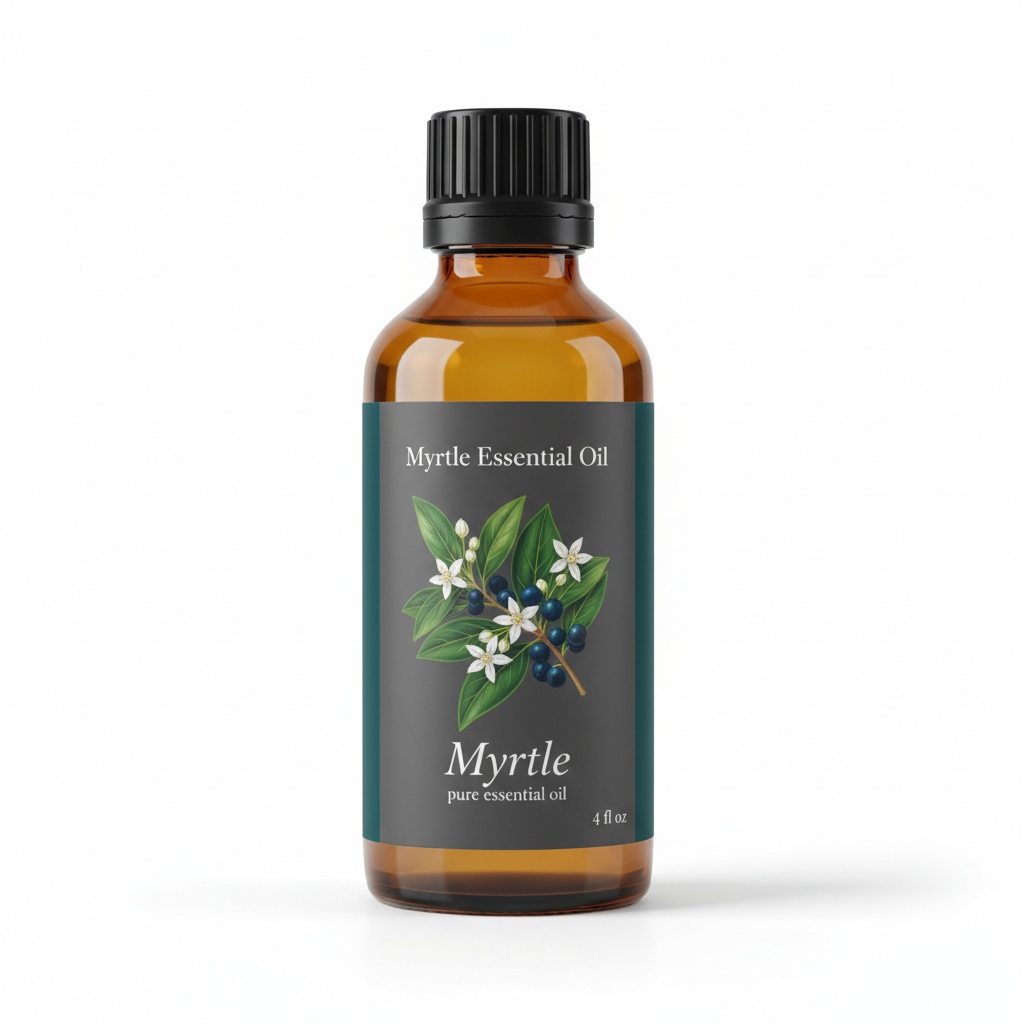
Myrtle Essential Oil
Our own Myrtle Essential Oil, in sizes from 0.5 oz to bulk.
From $16.99
Shop Now →Start with the dose, then the carrier
Our dilution guidance for skin is 0.5% to 2% in a carrier oil, with a patch test on a small area first. One outside figure is worth knowing: a supplier page quotes Tisserand and Young's maximum dermal level for myrtle as 1.9% (Myrtle - Hopewell Essential Oils). We recommend staying under that figure, and starting at 0.5% for a first blend, which is the lowest step on our own scale.
The arithmetic is simple. One ounce is 29.57 ml. At the usual convention of about 20 drops to the ml, that is roughly 590 drops of liquid, so 0.5% works out to about 3 drops of myrtle in an ounce, 1% to about 6, and 2% to about 12. Droppers vary, so treat those counts as a guide and weigh the oil if you want precision. In a small roller bottle the numbers shrink to a single drop, which is why a one-ounce batch is a friendlier size to get right.
What separates the common carriers
All four carriers below are sold at craft shops, groceries and pharmacies, and we do not sell any of them. What differs most is how much of each is made of fats with double bonds in them. A review of botanical skin oils notes that the double bonds in unsaturated oils are prone to oxidative deterioration, and it tabulates the fatty acid balance of many oils (Moore, Wagner and Komarnytsky, 2020). Reading its table, coconut oil is about 93% saturated fat, sweet almond is mostly oleic acid, and grape seed is the most polyunsaturated of the group, at roughly two thirds. It is reasonable to conclude from this that a more saturated carrier tends to keep longer on the shelf, though that is our inference and not a test of these exact bottles.
- Fractionated coconut oil. Liquid, light and nearly colorless, and the most saturated of the four, so it is the one we would reach for if a blend will sit in a drawer for months.
- Jojoba. Technically a liquid wax rather than a triglyceride oil. The review lists it as almost entirely monounsaturated, with a long-chain fatty acid profile unlike the others.
- Sweet almond. A familiar, soft-feeling carrier with an oleic-rich profile. It needs one extra thought, covered below.
- Grapeseed. Very light in feel, and the most perishable of the four given its high polyunsaturated share. Make small batches and use it up.
The almond question
FDA lists tree nuts among the major food allergens and names almonds as an example (Food Allergies | FDA). That page is about food labeling, so it does not say how a refined almond oil behaves on skin, but it is a good reason to pick a different carrier when you do not know who will use the blend. If you are giving a bottle to someone else, tell them which carrier is in it. The same review also mentions that the literature raises possible sensitization to food proteins through newborn skin with almond oil, another nudge toward a nut-free carrier whenever you are unsure.
Feel it before you commit
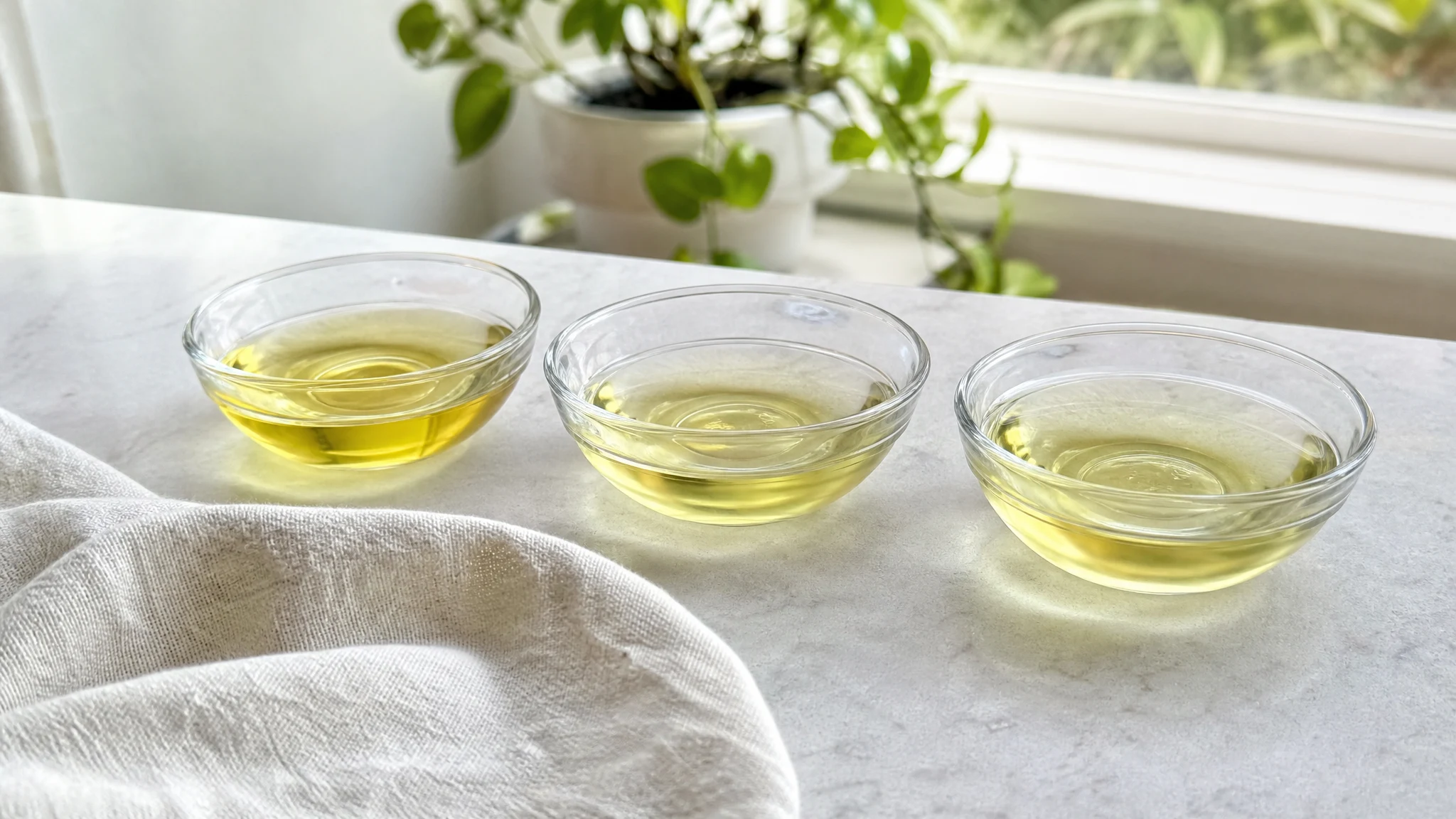
Before you fill a whole bottle, put a single drop of each carrier you are considering on the back of your hand and rub it in. You will notice quickly how each one slips, how light or rich it feels, and how long it leaves a sheen. A carrier you enjoy touching is one you will actually use, and a body oil that sits unused in a drawer is no fun for anyone. Make a note of the one you liked, then choose accordingly.
Freshness is a two-clock problem
A blend is only as fresh as its most perishable ingredient. Our guidance on myrtle oil itself is to keep it tightly capped in a cool, dark place, and we describe its shelf life as typically 2 to 3 years. Your carrier may run on a shorter clock, so write the date on the bottle, keep the blend away from heat and sunlight, and start a fresh blend if the oil begins to smell flat. More on this in our post on storing myrtle oil.
A simple first formulation
Here is a formulation worked out from the arithmetic above, built for an adult body oil. Pour about 29 ml (an ounce) of fractionated coconut oil or jojoba into a clean amber bottle, add 3 drops of myrtle oil for roughly 0.5%, cap and tilt gently to mix. Label it with the date, patch test a small area, keep it away from eyes, and keep it out of reach of children and pets. Once you have a feel for the aroma, you can work upward in small steps and stay under the 1.9% figure above.
For the full recipes that use this base, see our massage oil and roller blend posts, and the safety basics before you start. A well-chosen carrier makes a modest amount of myrtle go a long way, and that is the nicest way to enjoy it.
Myrtle Essential Oil
Myrtle Essential Oil from our own shop, in sizes from 0.5 oz to bulk.
From $16.99
Shop Now →Sources & Further Reading
- Moore EM, Wagner C, Komarnytsky S, 2020. The Enigma of Bioactivity and Toxicity of Botanical Oils for Skin Care. Frontiers in Pharmacology. PMC7272663
- U.S. Food and Drug Administration. Food Allergies | FDA. fda.gov
- Hopewell Essential Oils. Myrtle - Hopewell Essential Oils. hopewelloils.com