Myrtle Oil vs Lemon Myrtle Oil: Two Different Plants
Search for myrtle oil and you may land on lemon myrtle, or the other way round, and the two names look like cousins. They are not close. One is a Mediterranean shrub with a fresh, green, gently floral oil; the other is an Australian plant whose oil smells like a lemon drop. Knowing which you want takes about ten seconds, and it saves a disappointing parcel.
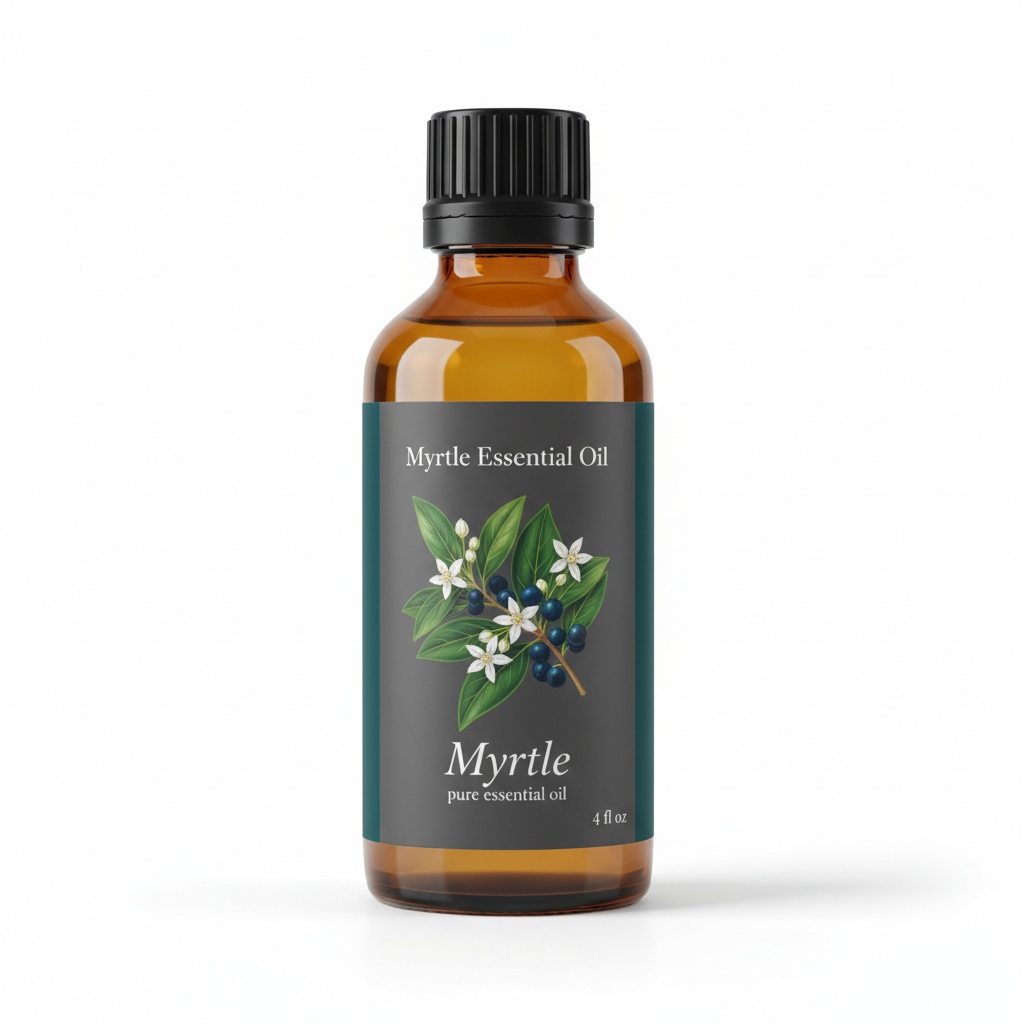
Myrtle Essential Oil
Our own Myrtle Essential Oil, in sizes from 0.5 oz to bulk.
From $16.99
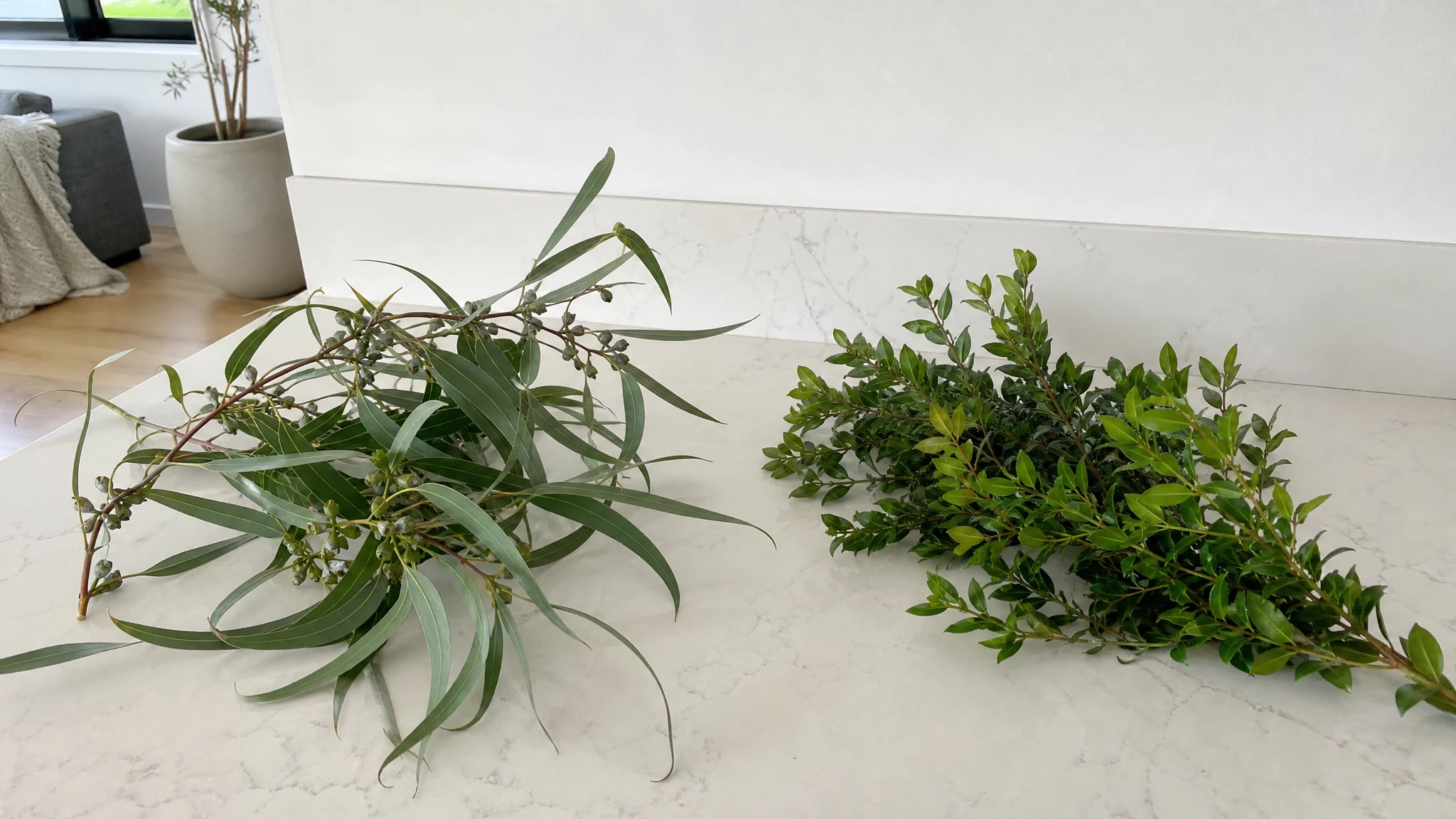
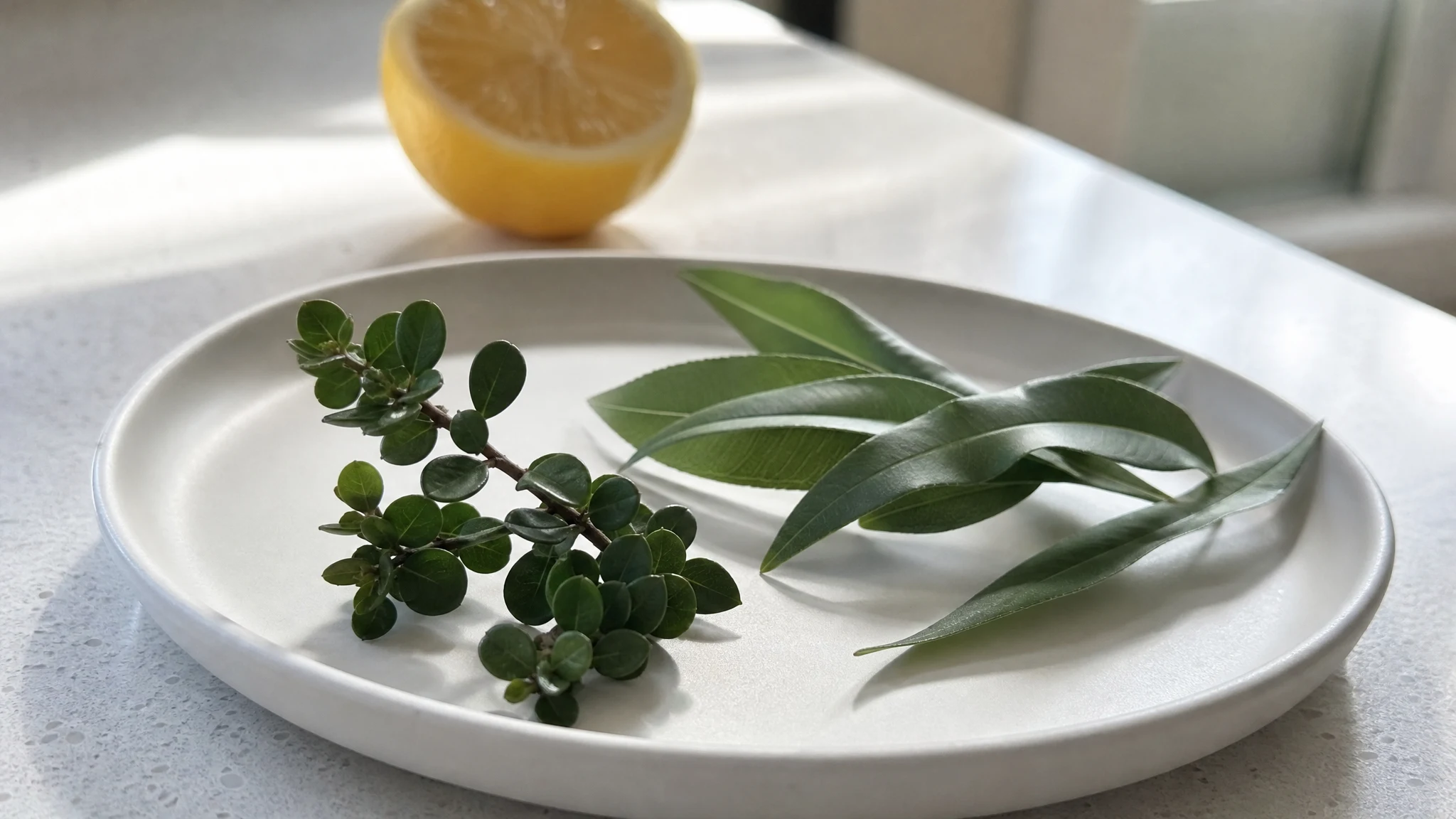
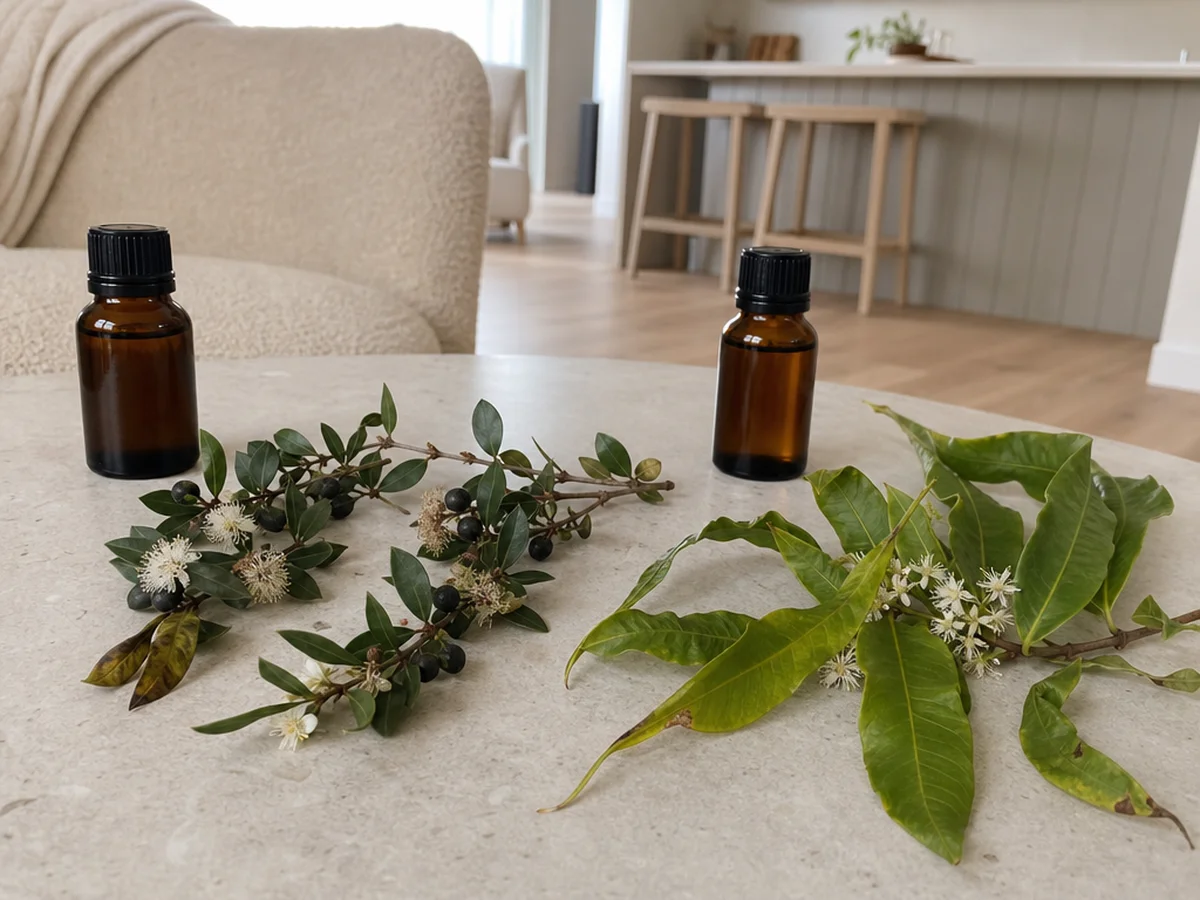
Shop Now →We find it helps to start from the plants themselves. One is a compact Mediterranean shrub with small, glossy, aromatic leaves. The other is a rainforest tree from Australia with a famously lemony leaf. Seen side by side, nobody would confuse them, which makes it all the stranger that a shared word in the name causes so much mix-up online.
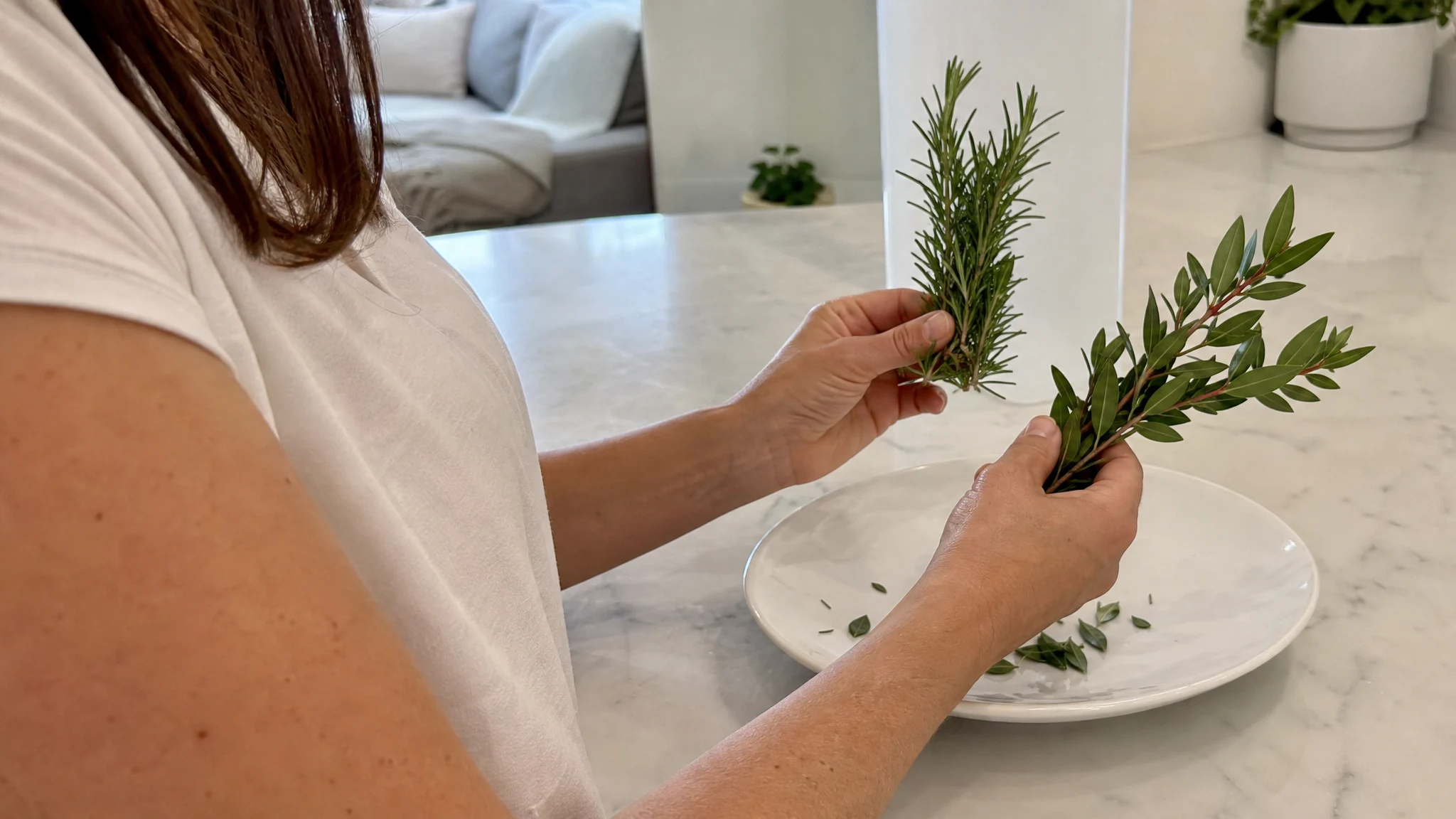
Meet the two plants
Myrtle is Myrtus communis, the plant we sell. Lemon myrtle is Backhousia citriodora, an Australian species in the same broad plant family. A 2022 study of a Malaysian plantation sample found that its leaf oil was 98.50% accounted for by 21 compounds, with geranial at 52.13% and neral at 37.65%, the two forms of citral, together about 89.78% (Lim et al., 2022). A review of the plant calls it an unrivalled source of citral (Southwell, 2021), and citral is the lemony compound you smell.
Myrtle looks nothing like that on paper. A Corsican producer's leaf oil was led by alpha-pinene at 43.0% and 1,8-cineole at 28.8% (Hardy et al., 2025), and 19 Algerian populations averaged 50.1% alpha-pinene and 22.27% cineole (Mohamadi et al., 2021). Pinene is the fresh, green, slightly resinous note; cineole adds coolness. No lemon.
What that means for your nose
Our myrtle is fresh, clear and gently floral, with a soft eucalyptus-like coolness and faintly honeyed facets. Lemon myrtle is a citrus-forward oil. If a bottle sold as myrtle smells strongly of lemon candy, it is worth checking its botanical name; that is our reasoning from the chemistry, and a smell check is a good first clue rather than proof. You can smell it for yourself by picking up a bottle from our shop.
For a blend, they play different roles. Myrtle slots in as a green, herbal-floral heart note beside lavender, rosemary or neroli. Lemon myrtle is a top-note citrus accent. Both are lovely, in different bottles.
A ten-second smell test
If you are comparing two bottles, put a drop of each on a strip of blotting paper and sniff. Lemon myrtle is unmistakable, bright and sharp like lemon sweets. Myrtle starts greener and cooler, then drifts toward something floral with a honeyed edge. Wait a minute and sniff again, because the second impression often tells you the most.
A short checklist before you order
- Read the botanical name, not the common name. Myrtus communis is myrtle; Backhousia citriodora is lemon myrtle. If a listing says only myrtle oil, ask which. Our label-reading guide covers what else to look for.
- Match the scent to what you expect. Green and herbal points to myrtle; bright lemon points to lemon myrtle.
- Ask for a constituent report if the use is serious. Citral at the top of a table means lemon myrtle or another citral-rich oil; pinene or cineole at the top is consistent with Myrtus communis. Our GC-MS reading guide shows the order to read it in.
- Keep the literature separate. A study of lemon myrtle's citral says nothing about myrtle, and the reverse is also true, so do not carry safety or dilution figures from one oil to the other.
Which one belongs in which room
Think of lemon myrtle as the bright spark and myrtle as the quiet backdrop. A kitchen that wants an instant citrus lift calls for the first. A hallway, a study or a cologne you want to smell green and floral calls for ours. Plenty of people end up with both bottles, which is perfectly sensible as long as the labels stay separate.
If lemon myrtle is what you want
We do not carry it. Look for a supplier that lists Backhousia citriodora on the product page, and ask for the same lot information you would for any oil. We have written about it on its own terms in our lemon myrtle explainer, and our tour of the myrtle family shows where honey myrtle and other relatives fit.

If you are ever unsure what is in a bottle, keep it out of the diffuser and the dilution jar until you have the answer in writing. Waiting a few days for a reply costs nothing, and it keeps two very different oils from landing in the same recipe.
A note on safe handling
Whichever you choose, treat it as a concentrated material. For our myrtle, we recommend diluting to 0.5% to 2% in a carrier for skin, patch testing first, and starting at 0.5%, since a supplier page quoting Tisserand and Young puts the maximum dermal level at 1.9% (Myrtle - Hopewell Essential Oils). Lemon myrtle has its own limits because of its citral content, so follow the guidance of whoever supplies it.
One small housekeeping tip: if you do keep both, write the Latin name on each bottle. Two clear liquids in similar bottles are easy to mix up on a busy shelf.
Two plants, two moods. Pick the one that matches the room you are trying to make. Our bulk page and guide to buying myrtle oil in bulk cover larger quantities of the one we sell.
Myrtle Essential Oil
Myrtle Essential Oil from our own shop, in sizes from 0.5 oz to bulk.
From $16.99
Shop Now →Sources & Further Reading
- Lim AC, Tang SGH, Zin NM, et al., 2022. Chemical Composition, Antioxidant, Antibacterial, and Antibiofilm Activities of Backhousia citriodora Essential Oil. Molecules. PMC9370046
- Southwell I, 2021. Backhousia citriodora F. Muell. (Lemon Myrtle), an Unrivalled Source of Citral. Foods. PMC8305781
- Hardy E, Poli JP, Bighelli A, et al., 2025. Quorum-Quenching Activity of Myrtus communis Corsican Essential Oil Against the Marine Bacterium Aliivibrio fischeri. Microorganisms. PMC12195544
- Mohamadi Y, Lograda T, Ramdani M, Figueredo G, Chalard P, 2021. Chemical composition and antimicrobial activity of Myrtus communis essential oils from Algeria. Biodiversitas 22(2). smujo.id
- Hopewell Essential Oils. Myrtle - Hopewell Essential Oils. hopewelloils.com