How Myrtle Oil Is Made: From Leaf to Steam Still
Somewhere, a pile of dark green myrtle leaves goes into a still, steam moves through them, and a few hours later a clear, fresh-smelling oil drips out the other end. The idea is simple. What makes it interesting is how many small decisions sit between the leaf and the bottle, and how much each one changes the finished oil.
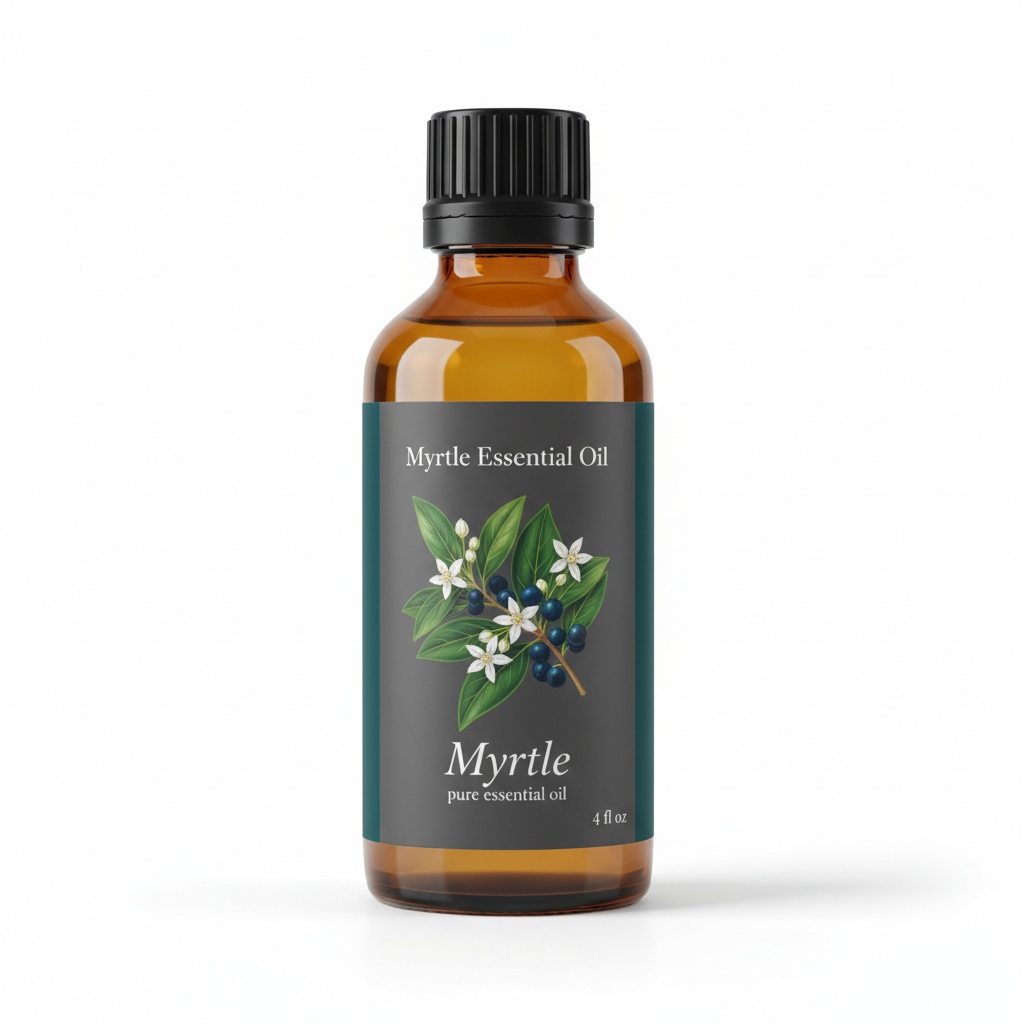
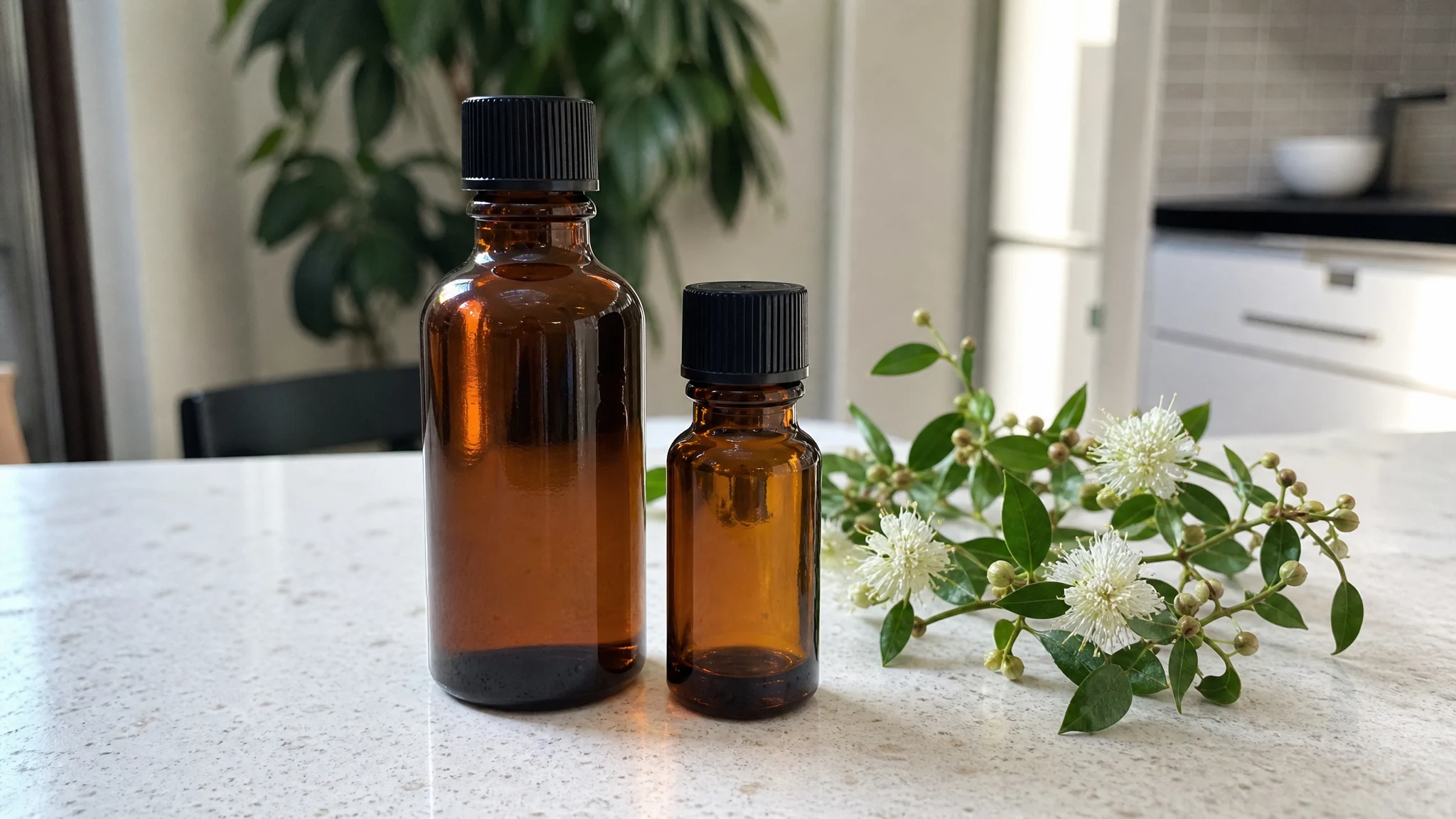
Myrtle Essential Oil
Our own Myrtle Essential Oil, in sizes from 0.5 oz to bulk.
From $16.99
Shop Now →Steam does the carrying
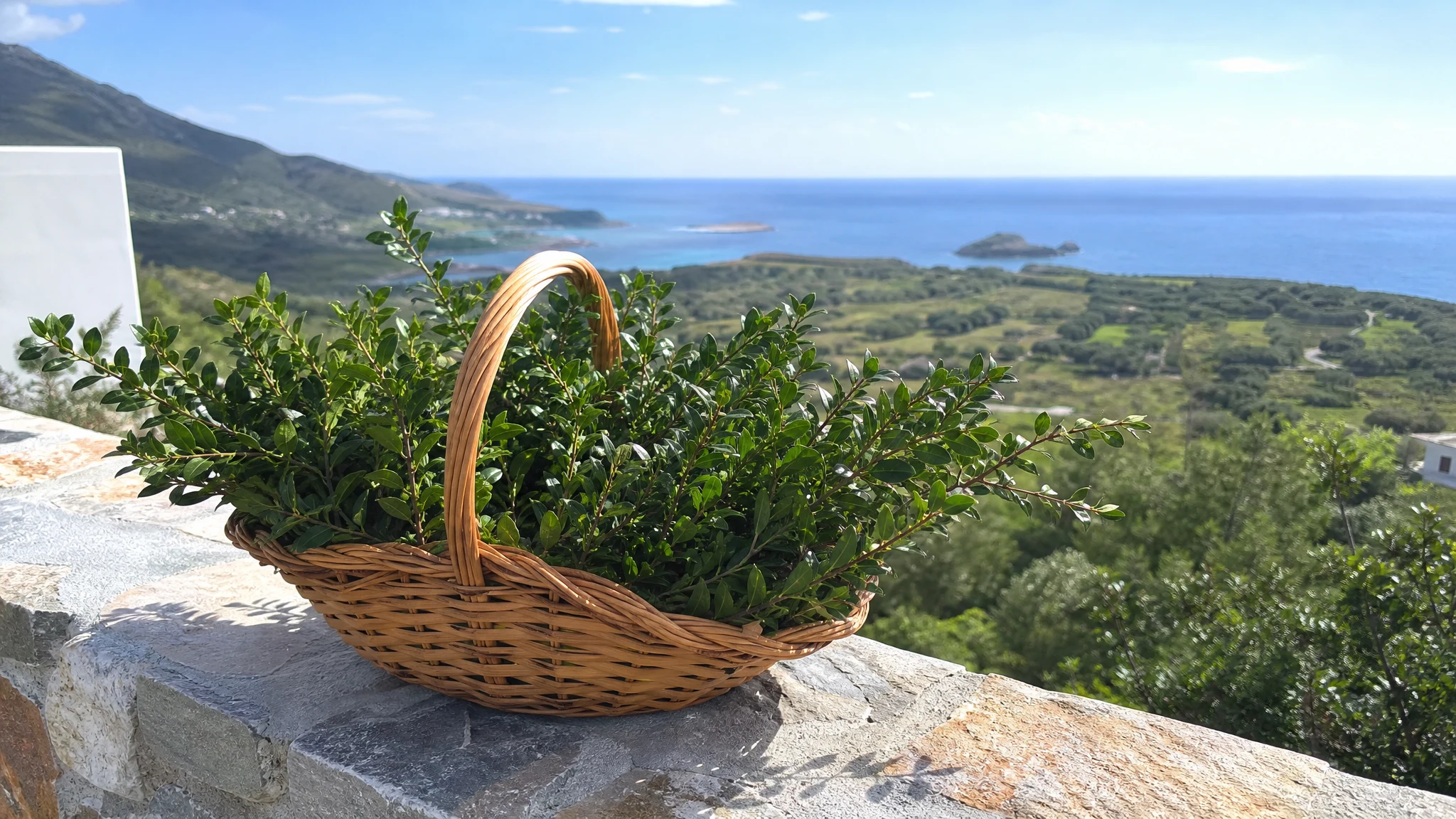
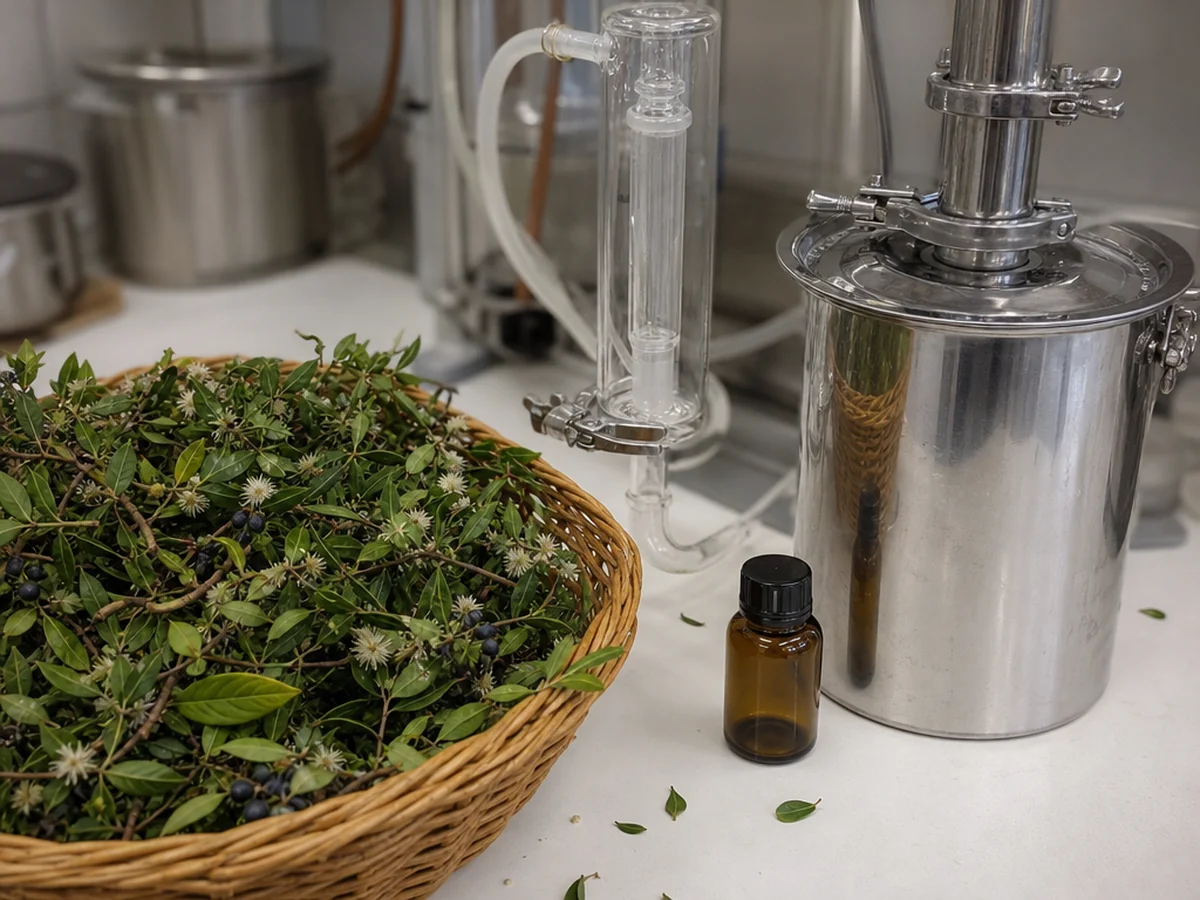
Myrtle leaves are dotted with tiny oil glands. Heat and steam open those glands up and carry the aromatic molecules along as vapor. The vapor passes through a cooler, turns back into liquid, and the oil, which is lighter than water, floats on top of the water to be skimmed off. Our Myrtle Essential Oil (Myrtus communis) is steam-distilled in this way, from the leaves and twigs of the shrub.
Laboratories often use a close cousin of this method called hydrodistillation, where the plant material sits in boiling water instead of having steam pass through it. Most of the myrtle research below used that version, so it is a good guide to what changes in a still, not a description of any one producer's equipment.
How long you distil changes the scent
A team in Tunisia gave us a lovely demonstration of this. They collected myrtle leaves in one season and distilled them for 1.5, 2.5 or 3.5 hours, fresh or dried, whole or ground (Optimization of Tunisian Myrtus communis L. Essential Oil Extraction by Complete Factorial Experimental Design). Alpha-pinene, the piney note, was highest at nearly 55% in the shortest run. 1,8-cineole, the eucalyptus-like one, peaked at 2.5 hours at about 37%. Myrtenyl acetate, the ester that marks green myrtle, was richest in fresh whole leaves at the longest run.
So the balance of an oil depends on when the distiller stops, and a shorter or longer run gives a different bouquet. It is a bit like steeping tea: pull the bag early for a lighter cup, leave it for a deeper one.
Some things hardly budged. Limonene stayed steady across all the settings, and grinding the leaf made no real difference to how much oil came out in that hydrodistillation setup. The authors also note that the best conditions may differ with other extraction methods, which is a polite way of saying a laboratory flask and a production still are not interchangeable.
The plant matters as much as the still
Researchers in Sardinia distilled 52 different myrtle plants growing in the same field for the same four hours (Chemotaxonomic Evaluation by Volatolomics Analysis of Fifty-Two Genotypes of Myrtus communis L.). Alpha-pinene still ranged from about 14% to 47%, 1,8-cineole from about 1% to 27%, and some plants carried plenty of myrtenyl acetate while many had almost none. Nothing about the method changed, so the differences came from the plants themselves.
That is why myrtle oils are sorted loosely into green myrtle, which is richer in myrtenyl acetate, and red myrtle, which is richer in cineole. Two bottles can both say "myrtle, steam distilled" and still smell different. Our green versus red myrtle post explores that spectrum.
How much leaf makes an ounce
The same Sardinian study measured yields from 0.6 to 5.2 grams of oil per kilogram of fresh leaf. Divide an ounce of oil, about 28.35 grams, by those figures and an ounce needs roughly 5.5 kg of fresh leaf from the best plants and 47 kg from the least generous ones. That is our arithmetic from a four-hour laboratory run, so a commercial still will vary, but it explains why a small bottle of any botanical oil represents a lot of foliage.
What we say about our own oil
We describe the oil as steam-distilled from the leaves and twigs of Myrtus communis, and the Certificate of Analysis for one batch lists the extraction method as steam distilled. If you want to know more about a specific lot, ask us in writing through the contact page and we will tell you what we can document. We would encourage the same question to any supplier, and our sourcing questions post lists good ones. For the shrub itself, start with our Myrtus communis profile.
Smell the oil, then picture the still
When you open a bottle of myrtle oil, slow down for a moment. Hold it a little below your nose and let the scent rise to you rather than sniffing hard. Our description is fresh, clear and gently floral, with a soft eucalyptus-like coolness and faintly honeyed facets. You will probably catch the cool edge first and the soft sweetness a few breaths later. Everything in this post, the clock, the leaf, the plant, is sitting in that small bottle, and a slow sniff is the nicest way to meet it.
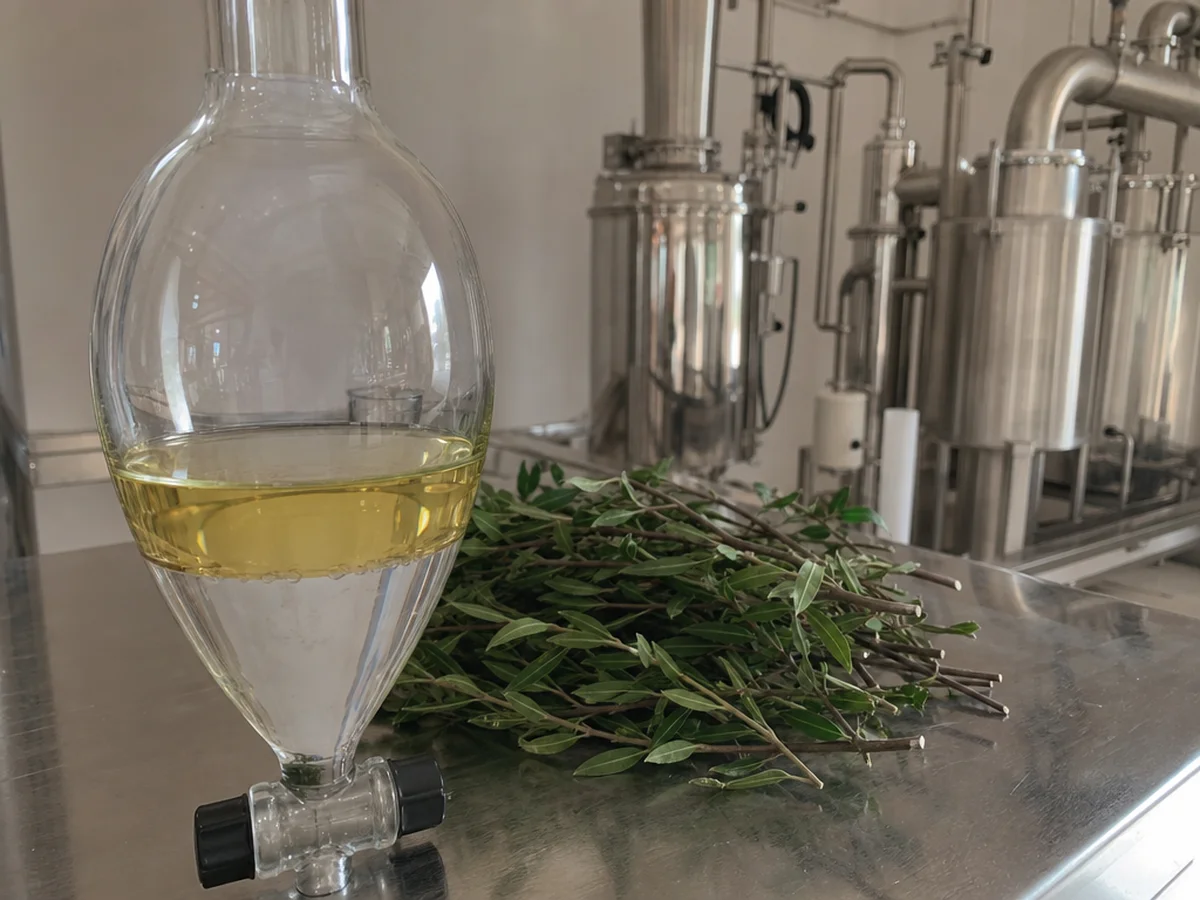
If you are comparing myrtle oils from different places, try the same slow sniff with each. Write a line about what you noticed and the date, and the next bottle will have something to be compared against.
Why we leave home distilling to the experts
Distilling involves boiling water, steam and hot glassware, and at the yields above, 500 g of fresh leaf would give only about 0.3 to 2.6 g of oil. Enjoying the finished oil is more rewarding than making it.
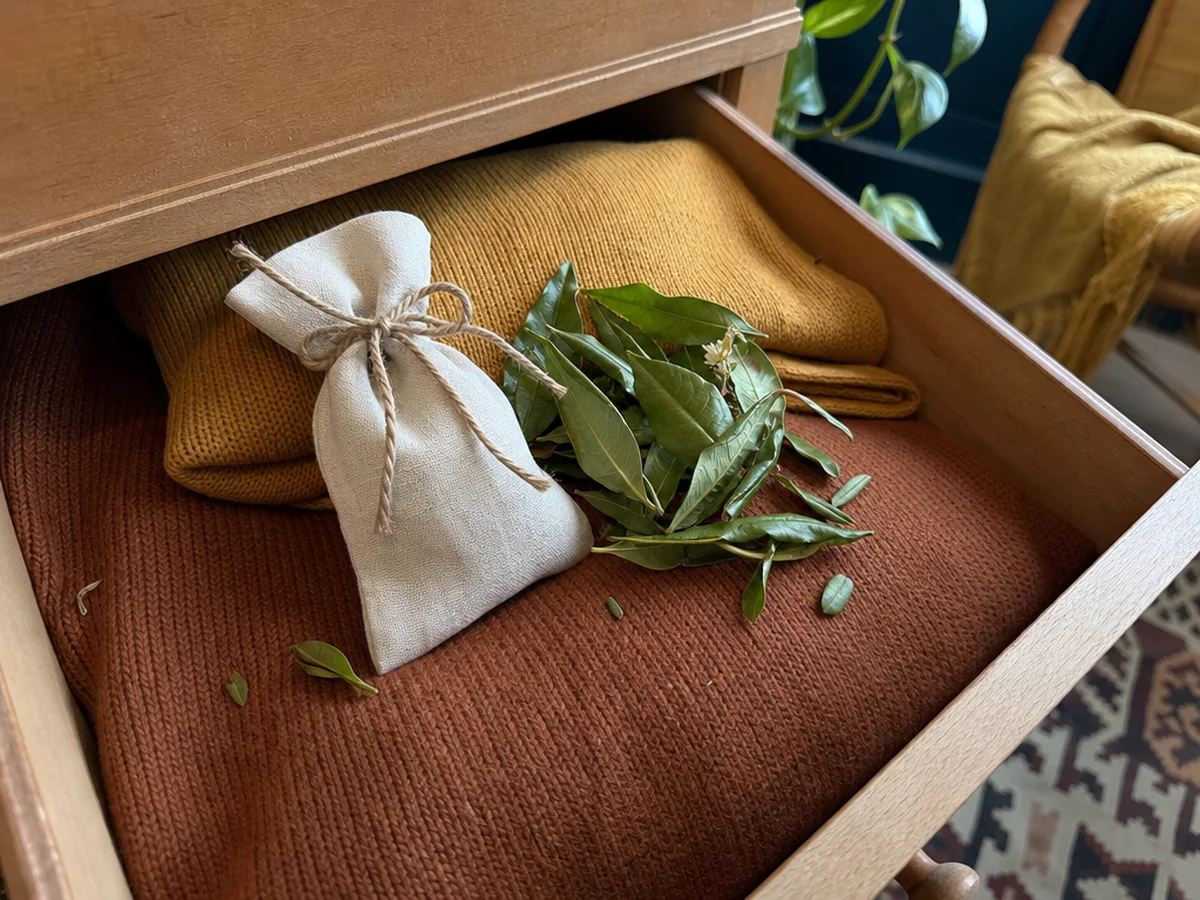
Next time you open a bottle, remember that its character was shaped by the plant, the leaf, and the clock.
Myrtle Essential Oil
Myrtle Essential Oil from our own shop, in sizes from 0.5 oz to bulk.
From $16.99
Shop Now →