Myrtle Oil Bottle Sizes: Which One Is Right for You?
The surprise of buying myrtle oil is how long a small bottle lasts. Most people reach for the bigger size because it feels like better value, and then find that a year later the bottle is still two-thirds full. The right size is the one you will finish while the oil is still bright, and a little arithmetic makes that easy to see.
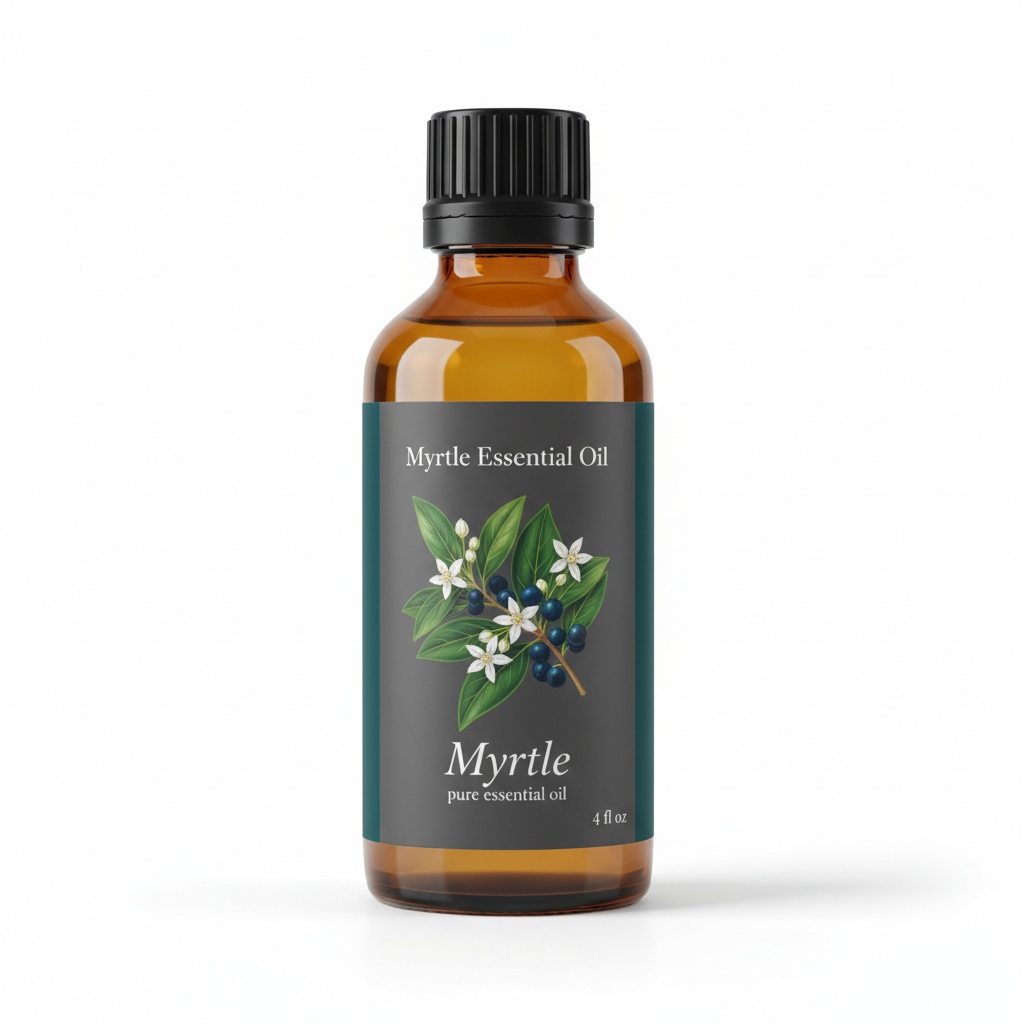
Myrtle Essential Oil
Our own Myrtle Essential Oil, in sizes from 0.5 oz to bulk.
From $16.99
Shop Now →What each size holds
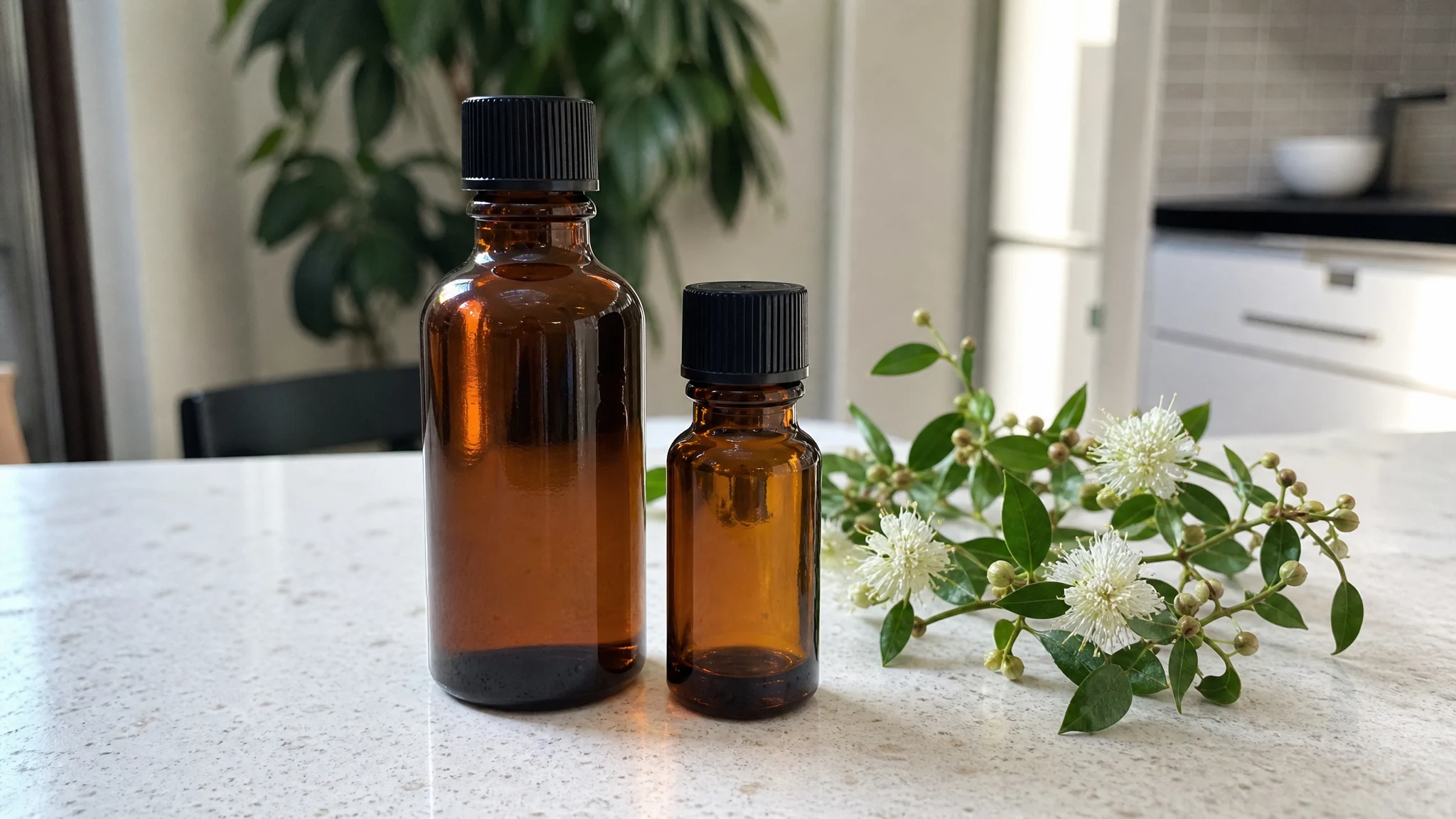
We offer one myrtle oil in ten sizes, from 0.5 oz up to 400 lb. Using 29.57 ml to the ounce, a density of about 0.9 g/ml (our Certificate of Analysis states a standard range of 0.890 to 0.922 and does not print a measured value) and a rough convention of 20 drops to the milliliter, the approximate picture is:
| Size | Approximate volume | Approximate drops |
|---|---|---|
| 0.5 oz | 14.8 ml | about 300 |
| 1 oz | 29.6 ml | about 590 |
| 2 oz | 59.1 ml | about 1,180 |
| 4 oz | 118 ml | about 2,370 |
| 8 oz | 237 ml | about 4,730 |
| 16 oz | 473 ml | about 9,460 |
The 5, 25, 100 and 400 lb sizes are measured by weight and are made for production. Droppers vary, so weigh when the percentage matters.
How far a drop goes on skin
Our dilution guidance is 0.5% to 2% in a carrier oil, which is roughly 3 to 12 drops per ounce of carrier, with a patch test first. We suggest starting at 0.5%. A supplier page quoting Tisserand and Young lists 1.9% as the maximum dermal level for myrtle oil, and IFRA restricts methyl eugenol, which swings widely from one myrtle oil to another (a mean of 1.40% in nineteen Algerian populations, for instance), so the low end is the sensible place to begin.
At 0.5%, a one-ounce bottle of carrier takes about 3 drops. A 0.5 oz bottle of about 300 drops therefore makes roughly 100 one-ounce blends. Even at 2% (12 drops) it covers about 25. A 2 oz bottle makes more than 390 of the 0.5% blends. Unless you are making products to sell, a person mixing a small bottle a week would struggle to finish a 1 oz bottle inside a year.
Why a half-empty big bottle is not a bargain
We describe a typical shelf life of 2 to 3 years when the bottle is kept tightly capped. Every time you open a bottle, air goes in, and the emptier the bottle gets the more air it holds. The best-documented example of what air, light and warmth can do to a close relative is tea tree oil: in a 1999 study, tea tree oil left on a window sill rose from under 50 to over 500 ppm peroxides within four days, and the oxidized oil was a stronger sensitizer than fresh oil. A review of fragrance allergy makes a similar point about oxidized limonene and linalool, both of which turn up in myrtle oils. We did not find a myrtle-specific study, so this is reasoning by analogy, but it points the same way as plain common sense: buy what you expect to use while the bottle is young, and keep it capped, cool and dark. The details are in how to store myrtle oil.
Small bottles are easy to love
There is a quiet pleasure in a 0.5 oz or 1 oz bottle that a large container never gives you. You can keep it on a desk or a shelf next to your diffuser, open it often and get to know it. A small bottle gets used, and an oil you use is an oil you remember to enjoy. We would rather you have a little left in a small bottle than a large one sitting forgotten at the back of a cupboard.
If you are not sure, jot down a quick note before you order: what you plan to make, how often, and how many ounces that adds up to over a few months. Two minutes with a pencil often settles the question.
Choosing by what you are doing
Your first bottle, whatever the plan. Pick 0.5 or 1 oz. You are still learning whether the fresh, floral, faintly honeyed aroma suits you.
Personal blends and room scenting. 1 or 2 oz covers the arithmetic above with room to spare. If you are tempted by a larger size for the lower cost per ounce, ask yourself what you could name that you would use it for.
Making soap, candles, colognes or skincare to sell. Work out oil per batch (batch weight times your percentage), multiply by batches per quarter, and buy about a quarter at a time. For leave-on products, work from the dilution limit that applies to the finished product. Our bulk page suggests decanting working amounts into smaller airtight bottles and keeping the main container closed, which fits the same logic. If you want to try before committing to volume, ask about a sample through the wholesale page, or look over where to buy myrtle oil for the questions to ask any supplier. Current prices for every size are on the shop page.
Label it when it arrives
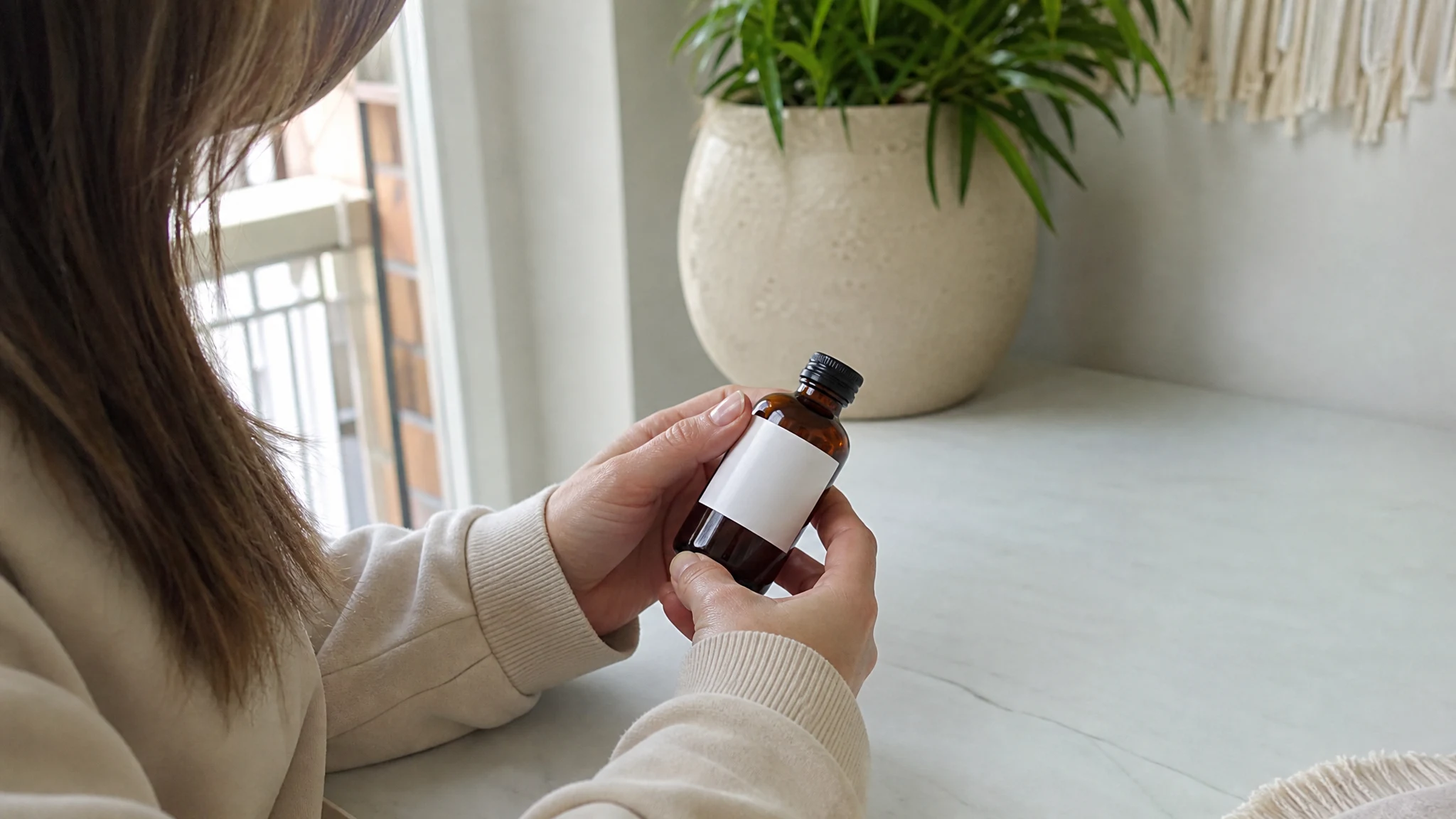
Whichever size you choose, put a strip of tape on the bottle and write the date you opened it. It costs nothing, takes ten seconds and makes it easy to judge how long you have had it. If you decant a working amount into a smaller airtight bottle, label that one too, so you always know which is which.
Whichever you choose, a small bottle used while fresh will always beat a big one used reluctantly.
Myrtle Essential Oil
Myrtle Essential Oil from our own shop, in sizes from 0.5 oz to bulk.
From $16.99
Shop Now →Sources & Further Reading
- Myrtle - Hopewell Essential Oils
- Chemical composition and antimicrobial activity of Myrtus communis essential oils from Algeria (Biodiversitas, 2021)
- Degradation products of monoterpenes are the sensitizing agents in tea tree oil (American Journal of Contact Dermatitis, 1999)
- Contact allergy to fragrances: current clinical and regulatory trends (Allergologie Select, 2017)