How to Read a Myrtle Oil Label, Line by Line
A myrtle oil label can be read like a small contract. Some lines make firm promises: the Latin name and the plant part. Others, like "green myrtle" or a country of origin, are closer to a mood. Knowing which is which makes shopping a lot calmer.
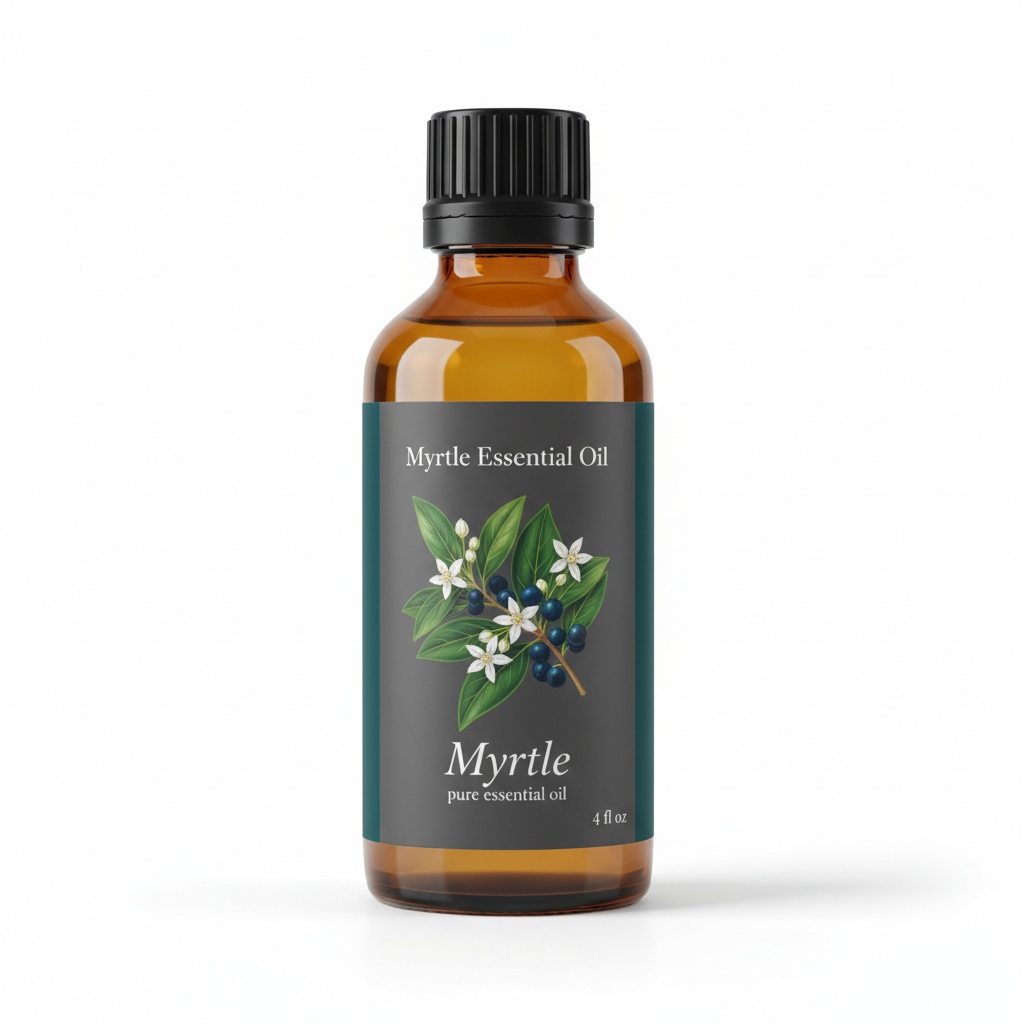
Myrtle Essential Oil
Our own Myrtle Essential Oil, in sizes from 0.5 oz to bulk.
From $16.99
Shop Now →The firm lines
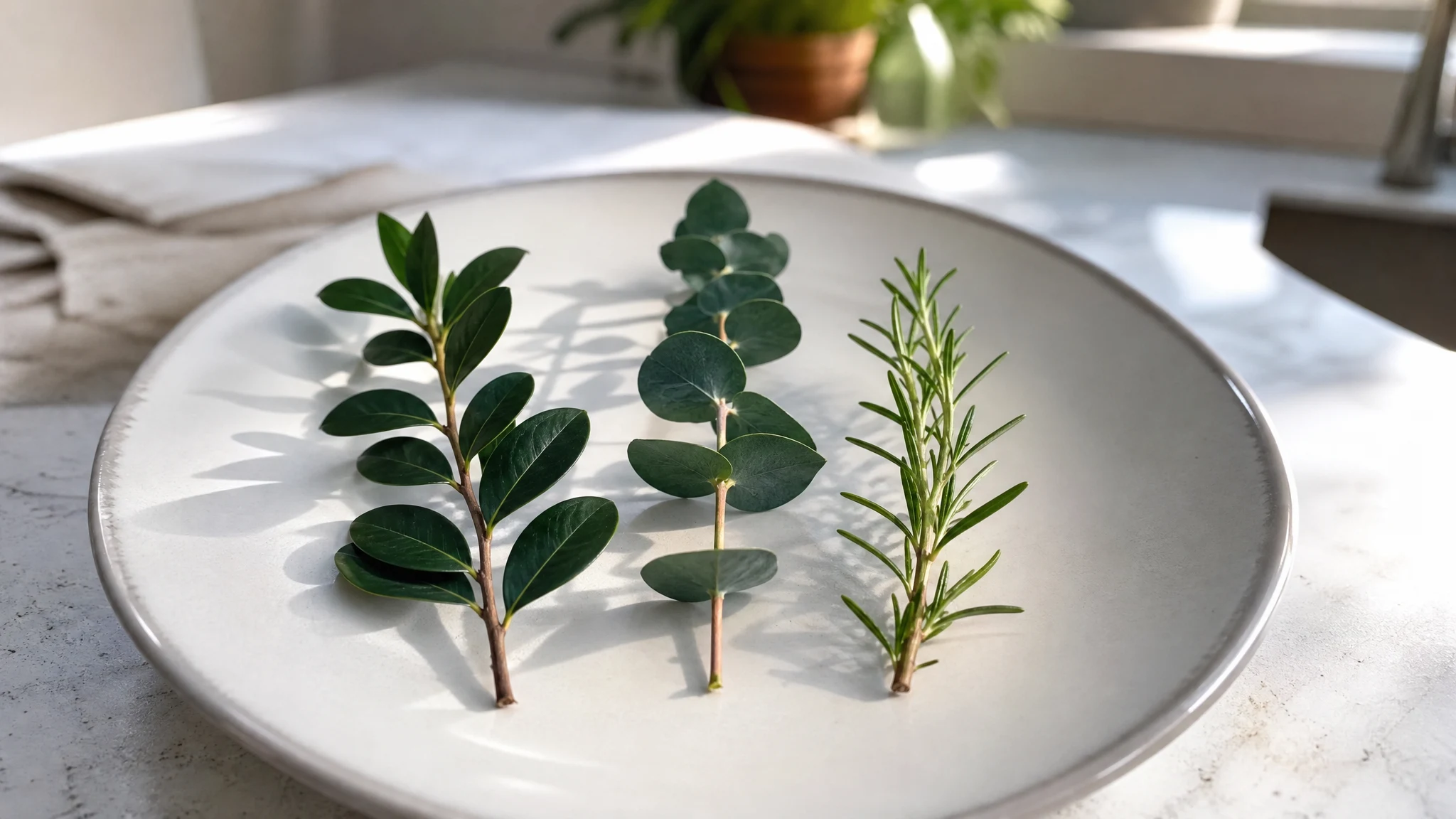
Botanical name. It should read Myrtus communis. "Myrtle" alone does not identify the plant, and lemon myrtle (Backhousia citriodora) is another species entirely. We sell Myrtus communis and no lemon myrtle; our comparison explains the difference.
Plant part. Leaf, leaf and twig, or berry. This tells you what went into the still, and it shapes the oil. Our oil is steam-distilled, and our Certificate of Analysis lists the extraction as steam distilled.
Lot number and best-by date. A lot number lets a document be matched to a bottle. A best-by date is the seller's own statement about shelf life. On our side, a typical shelf life of 2 to 3 years applies to a bottle kept tightly capped.
Place names on a label are a little like the name of a wine region. They give you a mood and a story, and they can be part of a perfectly honest description, but they are not an analysis. We enjoy the story as much as anyone. We just prefer that you also have the document in your hand.
The looser lines: green, red and place names
Buyers are often told that green myrtle is the myrtenyl acetate and linalool type from Corsica, and red myrtle the cineole-rich type from Morocco. One supplier page attributes that to Robert Tisserand. It makes a handy rule of thumb, and the published analyses show why it stays a tendency. A Corsican producer's leaf oil came in led by alpha-pinene at 43.0% with 1,8-cineole at 28.8%, and no large myrtenyl acetate share. Two Moroccan regions in a 2019 paper differ sharply: one is rich in cineole (36.3%), while the other carries methyl eugenol at 18.7%. Nineteen Algerian localities sorted into six chemotypes, with myrtenyl acetate (10.66% to 20.94%) in only four populations. In Iran, 14 accessions grown together ranged from 2.35% to 53.09% alpha-pinene, which hints that genetics matters as much as geography.
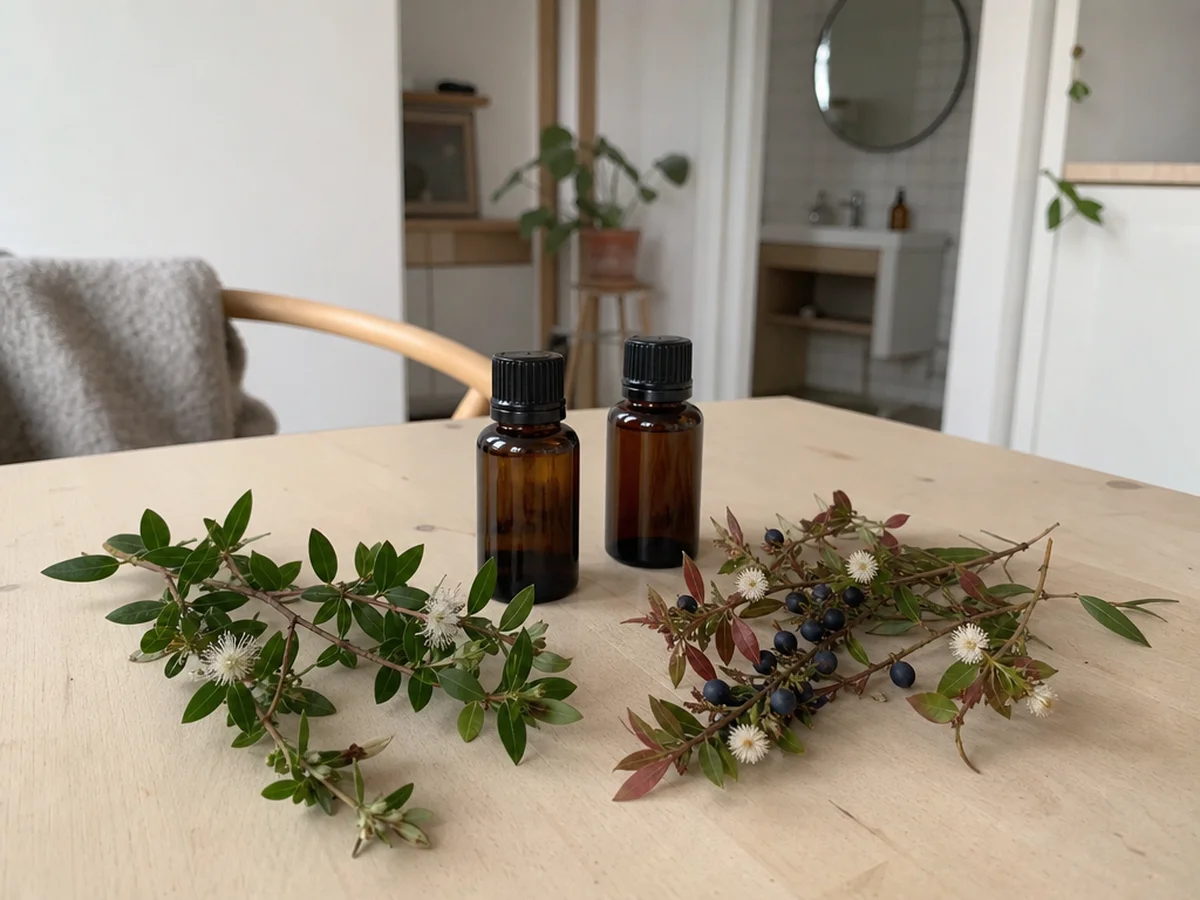
We describe our oil as a green myrtle profile: fresh, clear, softly floral. The practical lesson is that a color word or a country name tells you about the seller's intent, and a GC-MS table tells you what is in the bottle. If you want to know more, ask for a lot report, and see green versus red myrtle and the origin comparison. Ask for the region, harvest year and whether the lot blends areas.
Look at the bottle itself
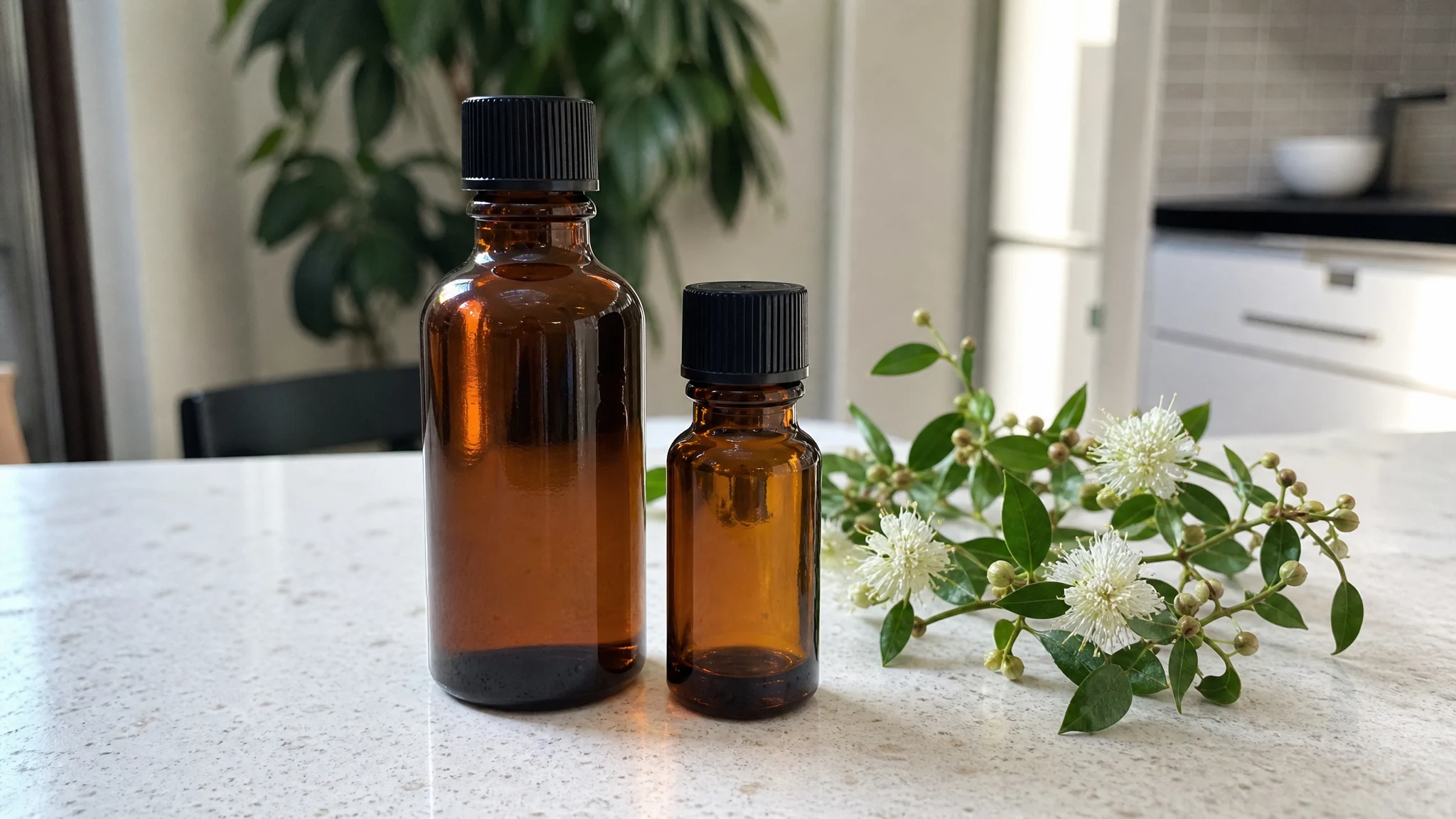
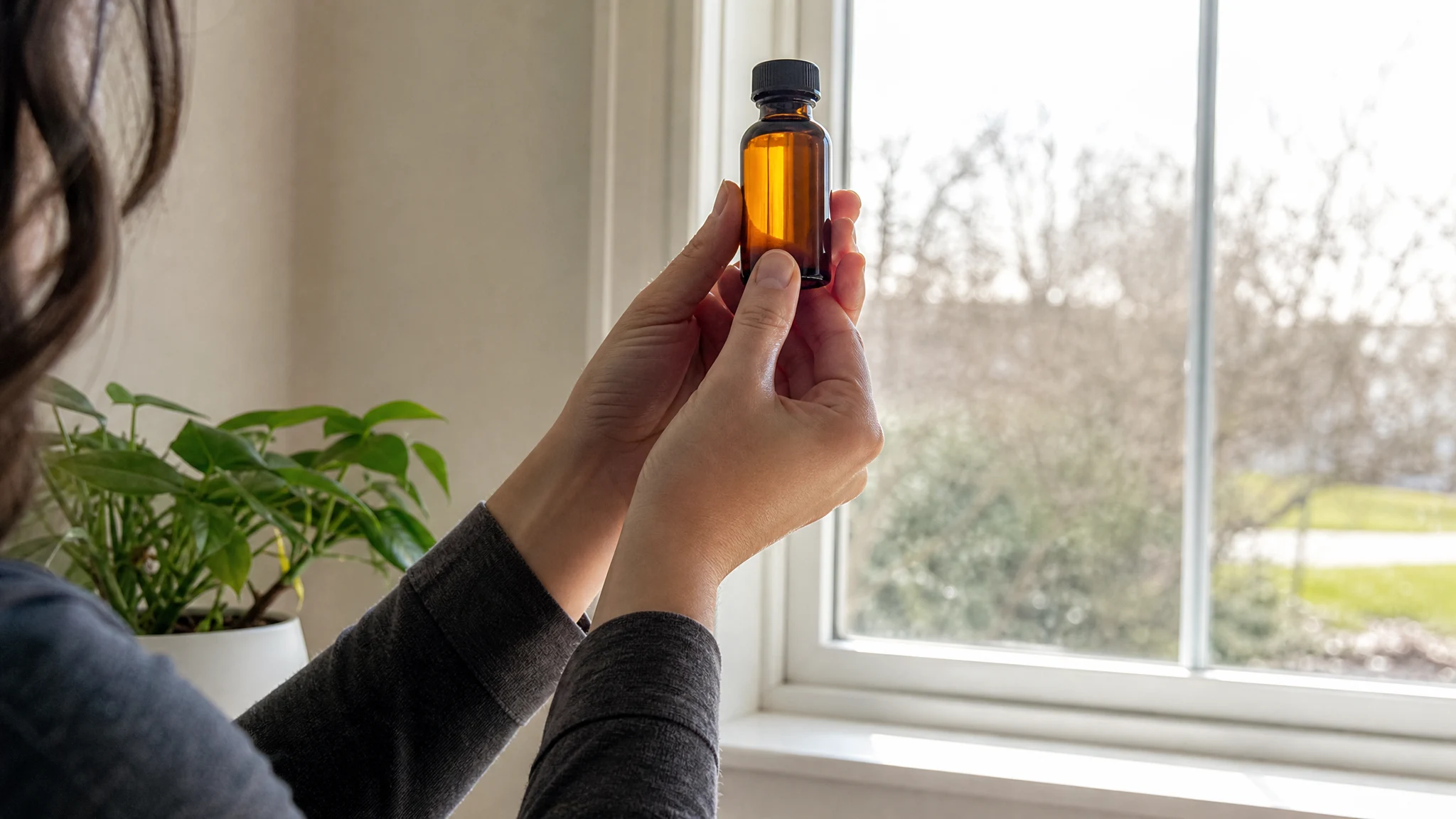
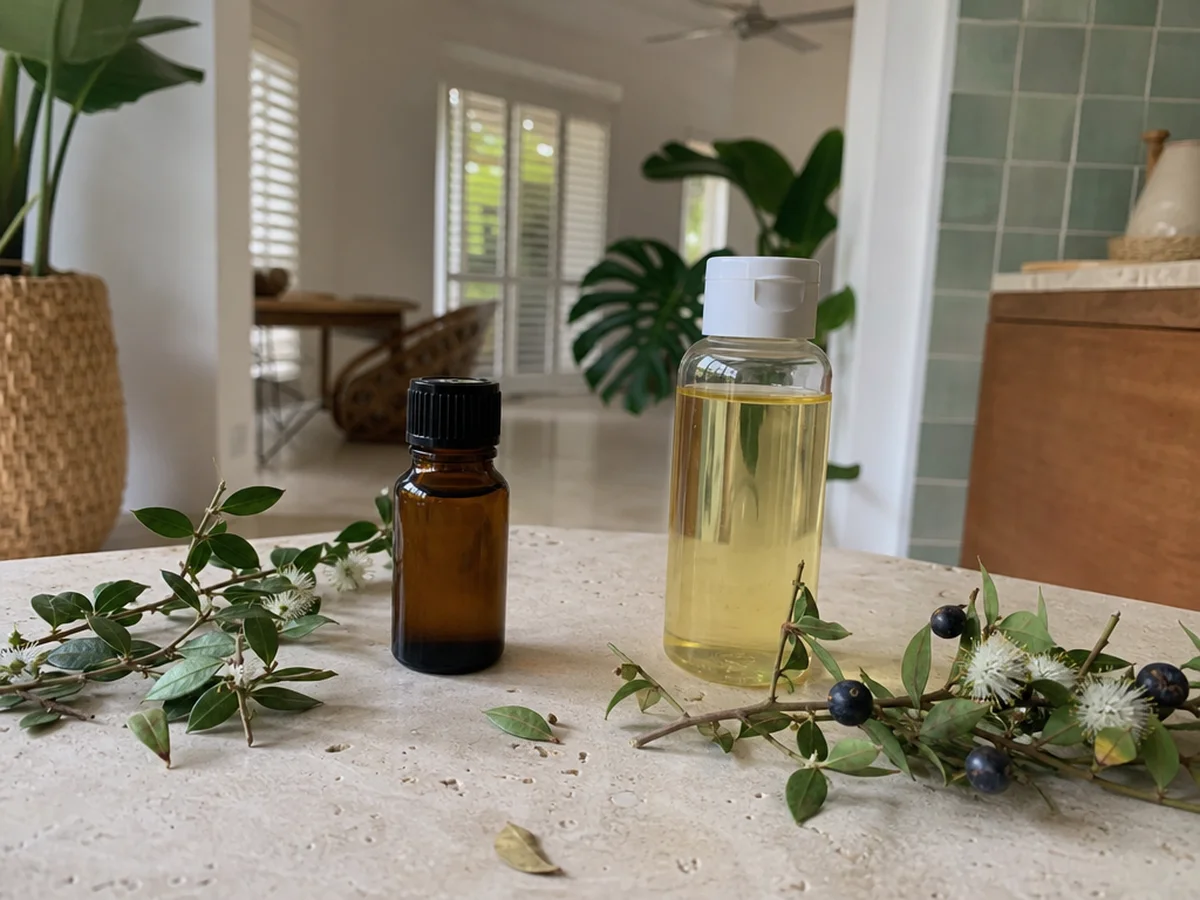
The glass tells a story too. Dark amber or blue glass with a tight cap and, ideally, a drop reducer suggests the seller cares about how the oil will live on your shelf. A clear bottle in a sunny window is a small warning sign, and a loose or missing seal is worth asking about. None of this proves anything about the oil, but it is a quick first look before you read the small print.
The ingredient list
In the United States, a cosmetic must list its ingredients in descending order of predominance, with fragrance allowed to be declared as such (21 CFR 701.3). The rule is about naming, not about origin, chemotype or words like "pure," so those words remain marketing rather than measurement. A neat oil has one ingredient, so the test is simply whether that name is the Latin binomial.
Check where the safety wording sits, too. A label that puts the dilution guidance and the keep-away-from-children line in plain sight, rather than in tiny print at the back, is telling you something about how seriously the seller takes the oil.
Safety wording
A good label tells you to dilute and to keep the oil away from eyes, children and pets. Ours says to dilute to 0.5% to 2% in a carrier oil, patch test, and not use it internally. Because one supplier page quoting Tisserand and Young gives a maximum dermal level of 1.9%, and IFRA restricts methyl eugenol (so a lot's share matters more than any adjective), we start at 0.5%. Our myrtle safety basics cover the practicalities.
Your own label
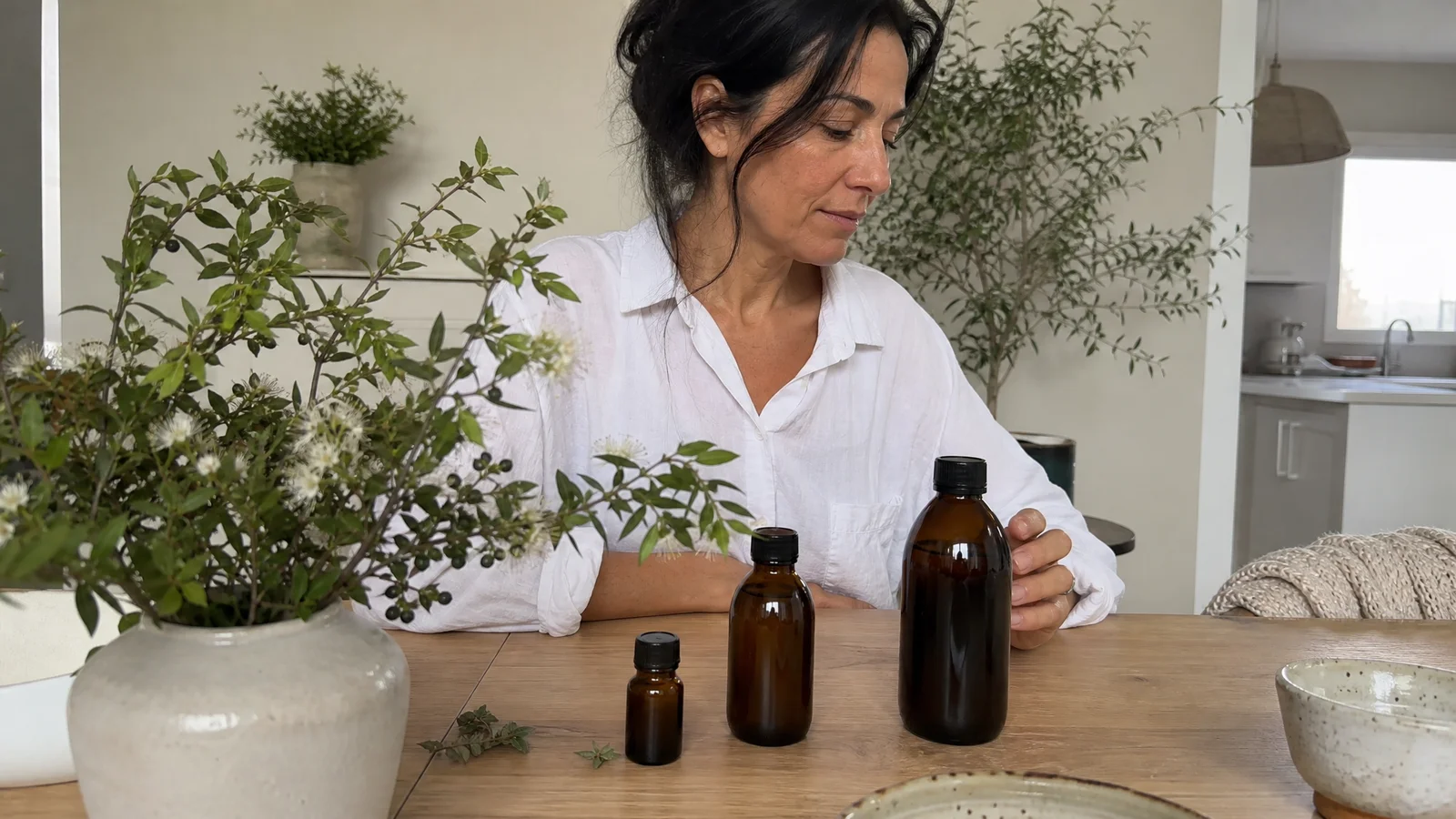
If you decant the oil or make something with it, label it as carefully as you would want a bottle labeled for you: the Latin name, the date, and what it has been mixed with. It is a small habit that pays off the first time you cannot remember which bottle is which.
What to do with the rest
If a label gives an origin, chemotype or color but no lot number, treat it as a claim and ask for a document. If a label gives only "myrtle," ask which plant. Our Certificate of Analysis is for one batch and records Myrtus communis, steam distillation, a batch number, a best-by date and four physical checks reported as "Complies". Further detail on any of it is available if you ask us in writing through the contact page. Where to buy myrtle oil lists the questions we would bring to any seller.
When the paperwork lines up, do the nicest part of the job and open the bottle. Take your time with the fresh, softly floral scent and its cool edge, and you will know the label has been read properly.
Read the firm lines first, treat the rest as an invitation to ask, and a label becomes a conversation starter.
Myrtle Essential Oil
Myrtle Essential Oil from our own shop, in sizes from 0.5 oz to bulk.
From $16.99
Shop Now →Sources & Further Reading
- Quorum-Quenching Activity of Myrtus communis Corsican Essential Oil Against the Marine Bacterium Aliivibrio fischeri (Microorganisms, 2025)
- Phytochemical analysis, cytotoxic and antioxidant activities of Myrtus communis essential oil from Morocco (Journal of Complementary and Integrative Medicine, 2019)
- Chemical composition and antimicrobial activity of Myrtus communis essential oils from Algeria (Biodiversitas, 2021)
- Essential Oil Variability of Superior Myrtle (Myrtus communis L.) Accessions Grown under the Same Conditions (Plants, 2022)
- Myrtle - Hopewell Essential Oils
- 21 CFR 701.3 Designation of ingredients (eCFR)