Myrtus communis: Meet the Shrub Behind Myrtle Oil
Rub a myrtle leaf between your fingers and you get the whole story in one sniff: green, resinous, a little sweet, with a cool edge that makes you want a second smell. That shrub is Myrtus communis, and it is the plant behind every bottle of myrtle oil we sell.
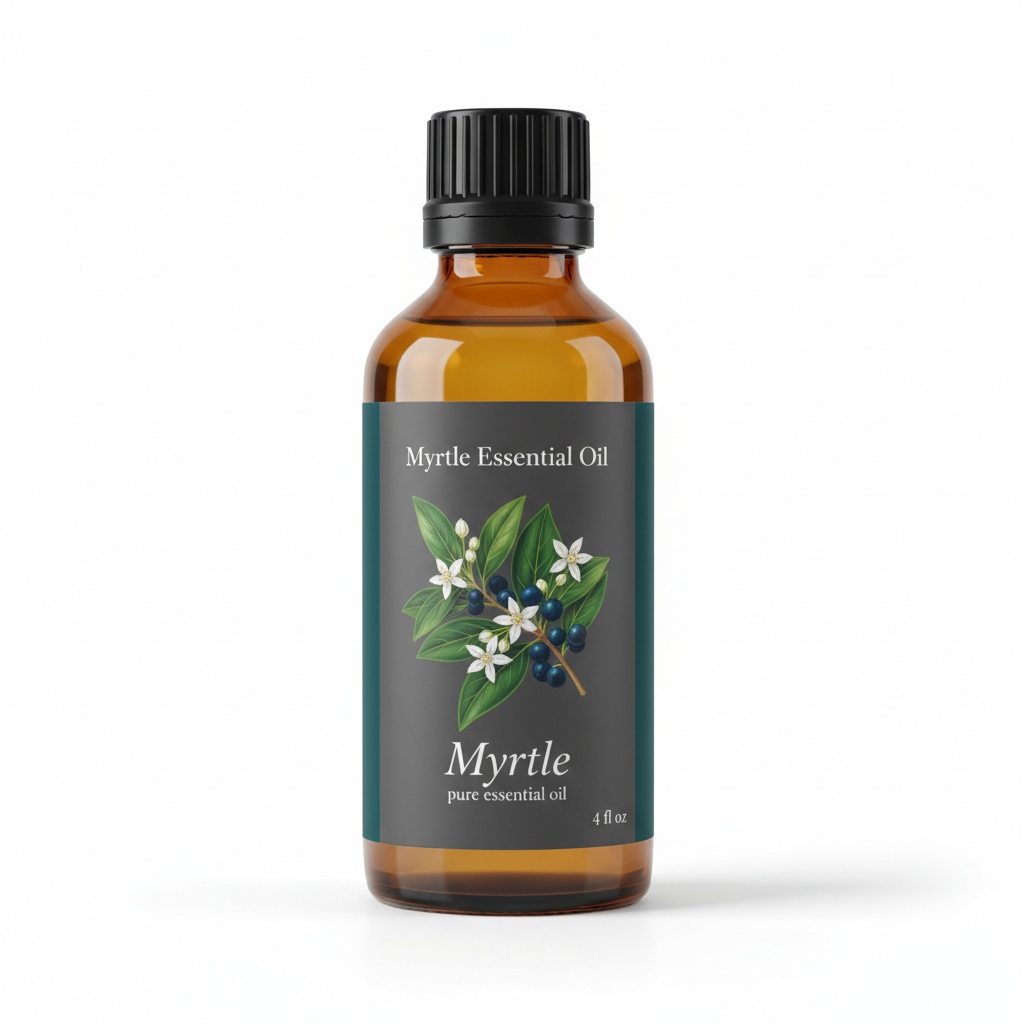
Myrtle Essential Oil
Our own Myrtle Essential Oil, in sizes from 0.5 oz to bulk.
From $16.99
Shop Now →A tidy Mediterranean evergreen
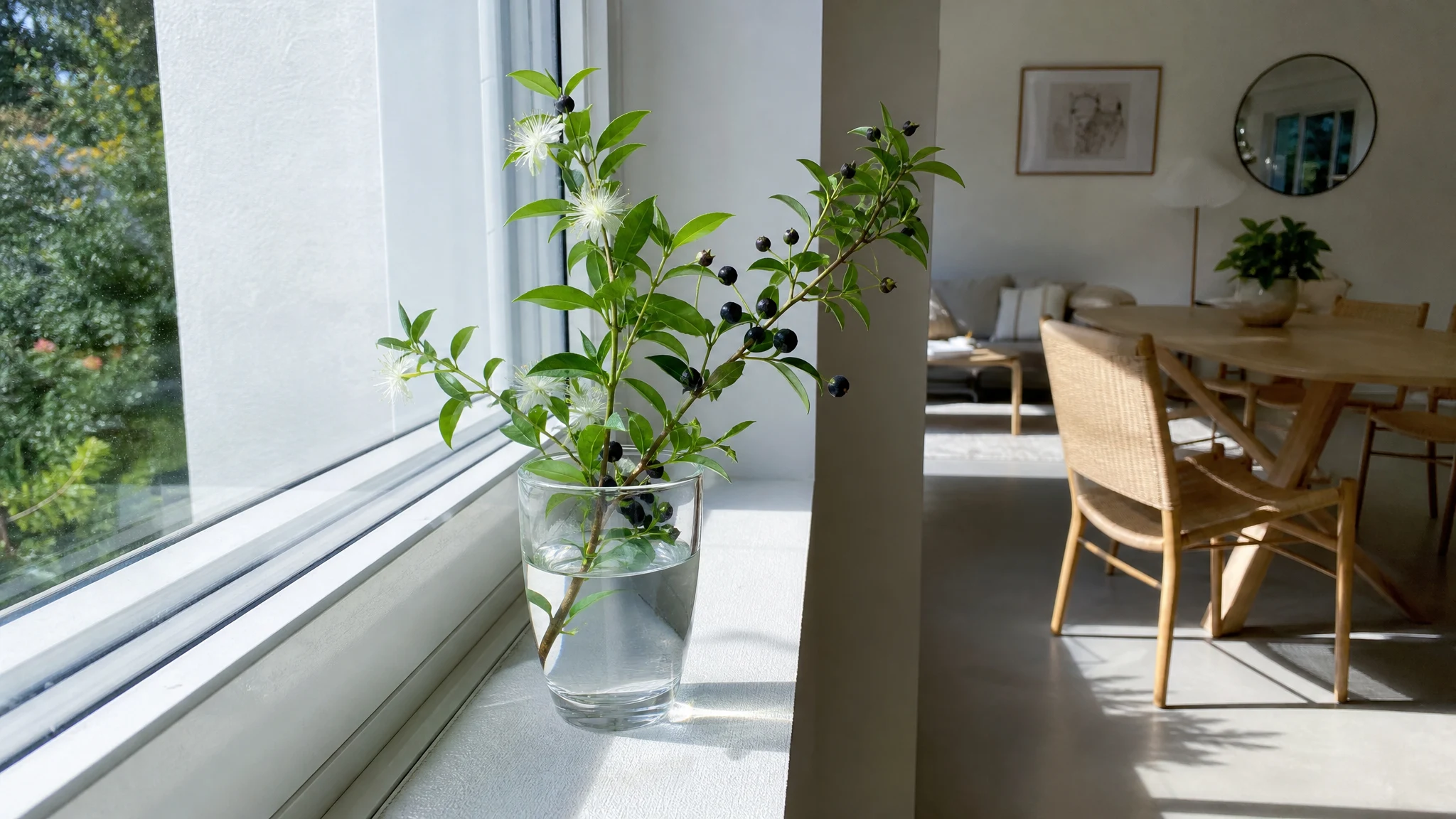
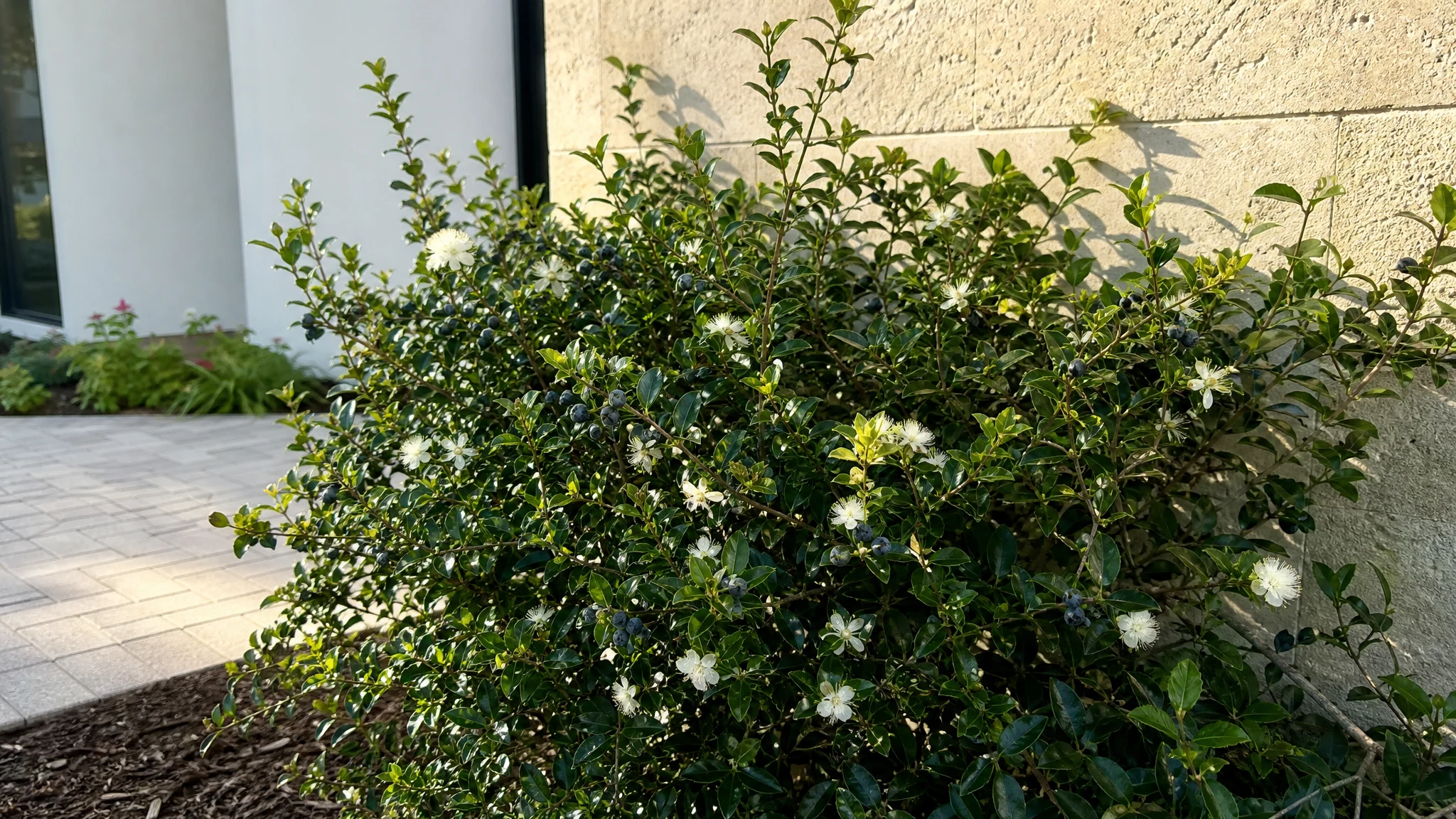
The Royal Horticultural Society describes myrtle as a dense, bushy evergreen with small, glossy, deep green leaves that give off a pleasant fragrance. In mid to late summer or autumn it covers itself in white flowers about 2 cm across, each with a brush of pale stamens at the center. A garden plant reaches roughly 2.5 to 4 m tall and 1.5 to 2.5 m wide, though the RHS notes it takes 10 to 20 years to get there.
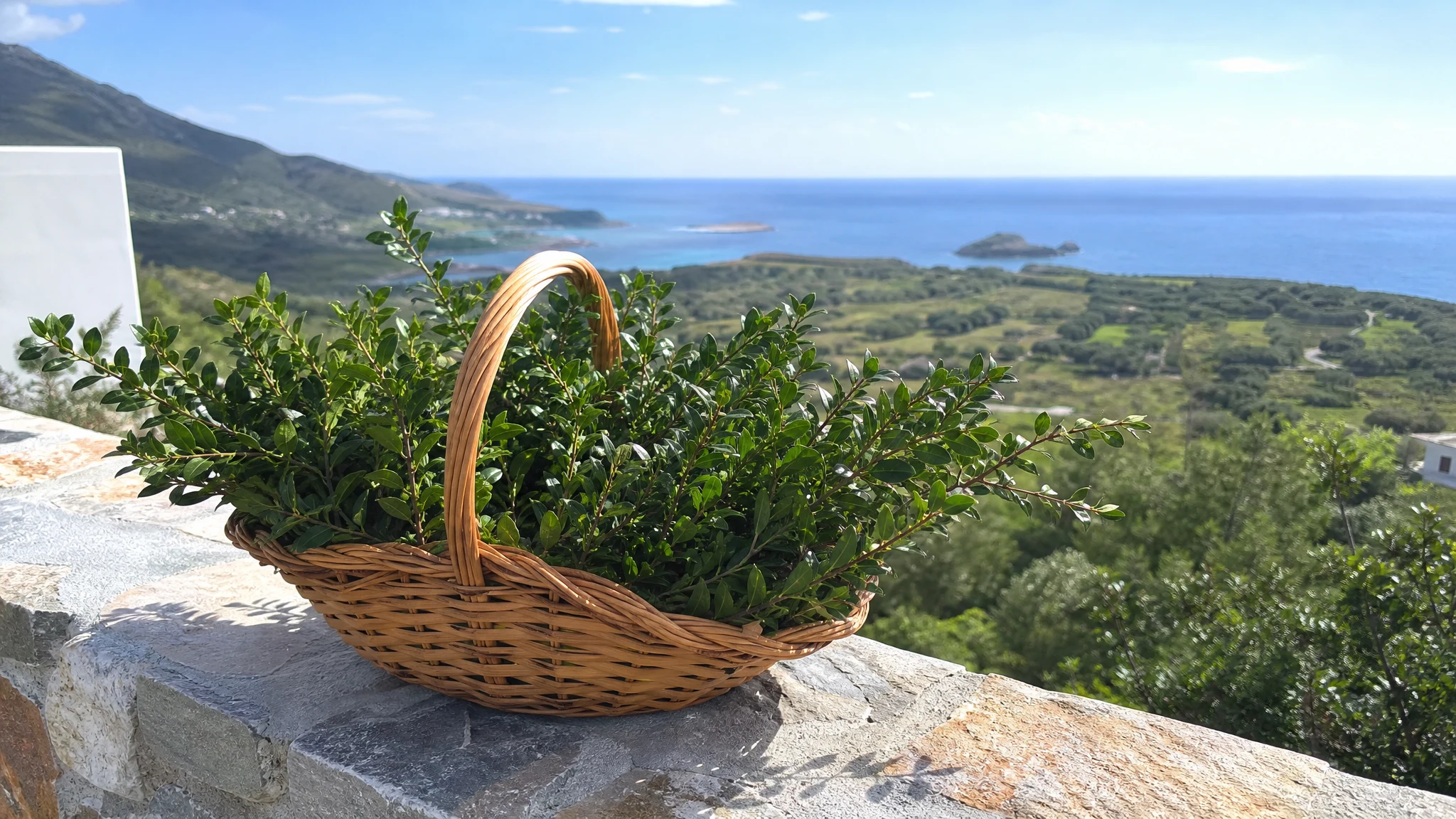
The flowers give way to berries, usually blue-black, though some forms bear white or yellowish ones. A 2024 review of the plant places them ripening between October and February. In the wild the species grows naturally across western Asia, southern Europe and North Africa, which is why you will see myrtle on everything from Sardinia to Morocco.
Leaves for oil, berries for the table
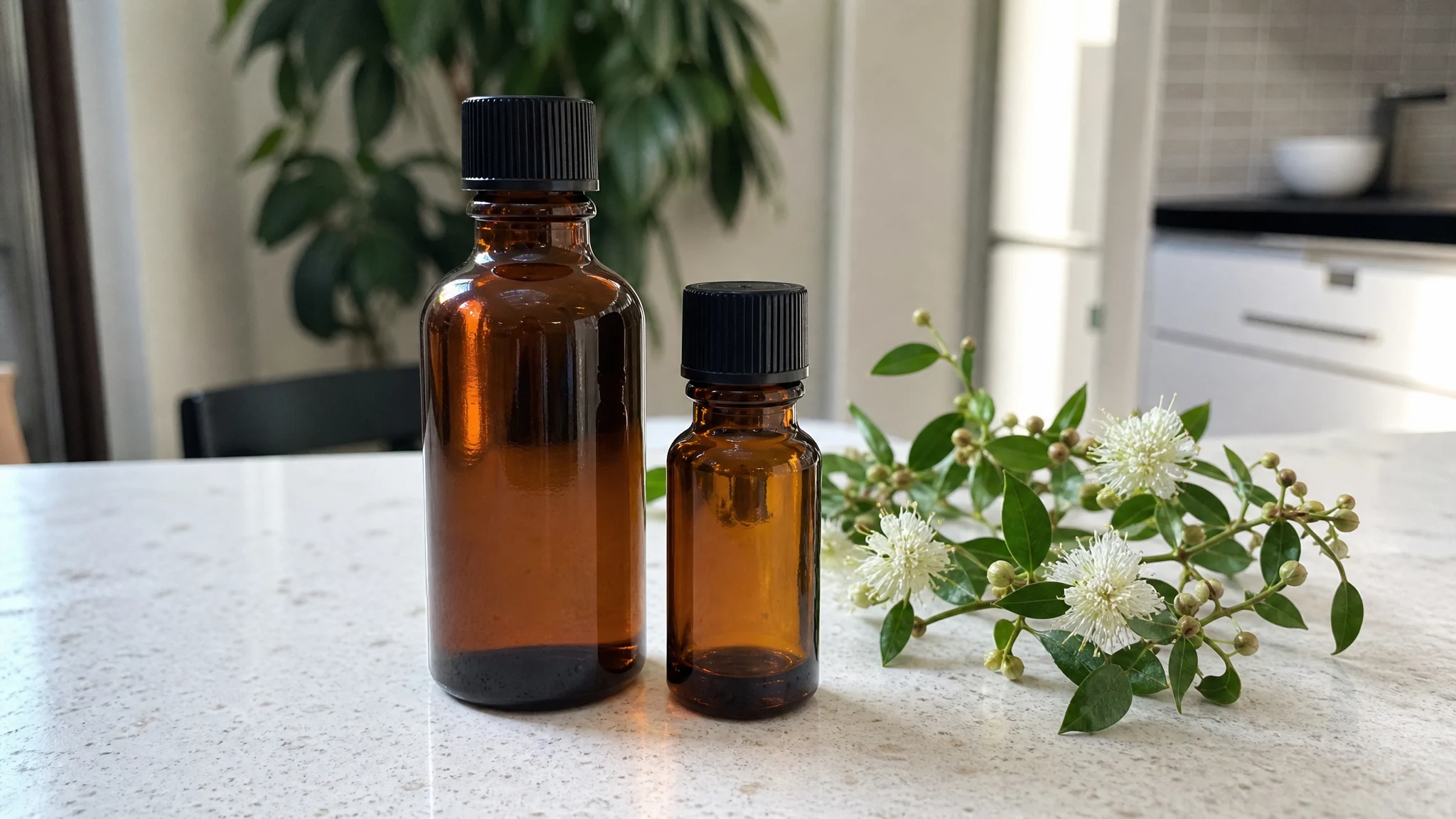
Different parts of the plant end up in different bottles. The berries are a food: Sardinia famously steeps them into a liqueur, and we cover that side in our guide to mirto and cooking with myrtle. The essential oil is a separate thing entirely, and it comes from the foliage. Ours is steam-distilled from Myrtus communis.
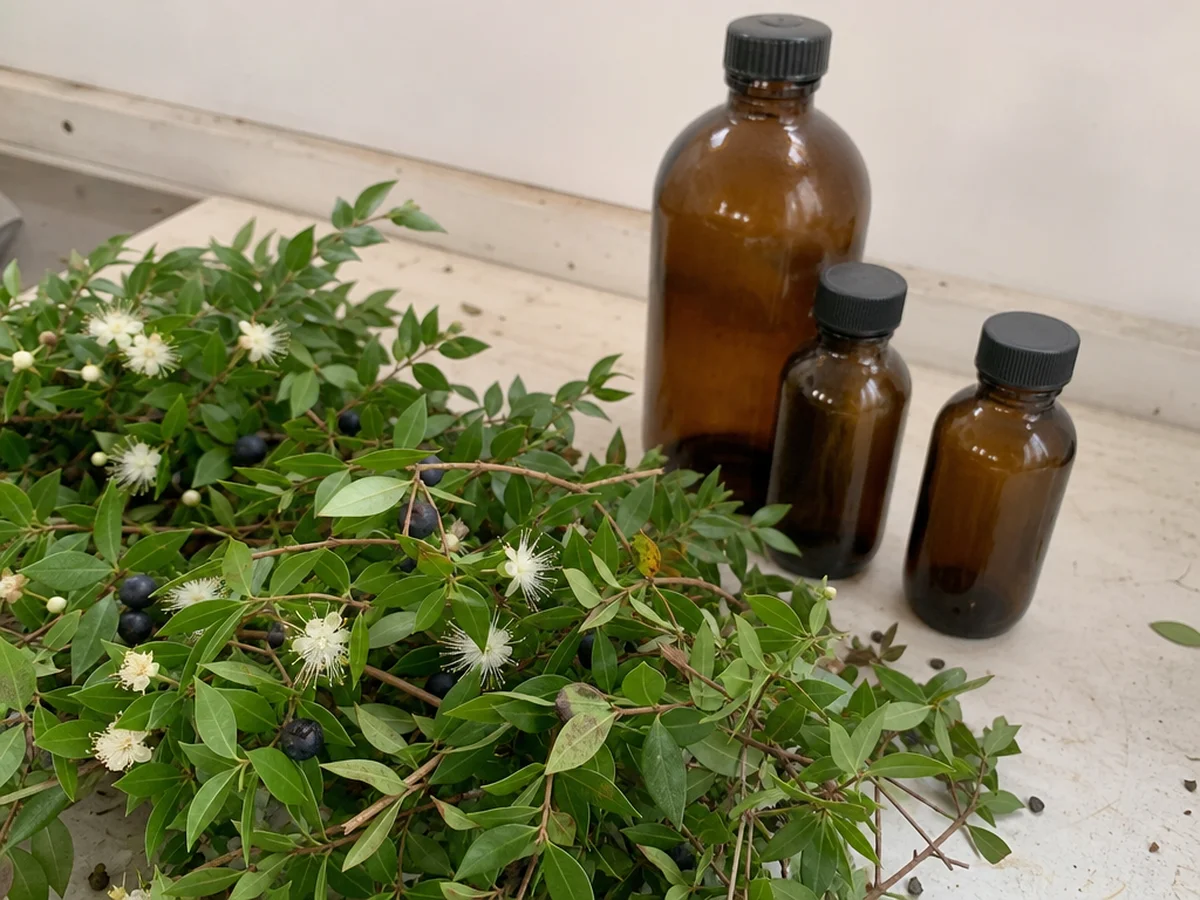
It helps to picture how much plant sits behind a small bottle. The same review reports leaf oil yields of 1.3% from ripe-stage leaves and 2.61% from leaves at flowering in Iranian material. Those are figures for particular samples, not a rule, but as arithmetic they are striking: one ounce of oil is about 28 g, which at those two yields means somewhere between 1 and 2 kg of leaf. A 16 oz bottle starts to look like a small hedge.
Why myrtle oil is never one fixed thing
Because the shrub varies, so does its oil. One study grew 52 Sardinian myrtle genotypes side by side in a single field and found 1,8-cineole ranging from about 1.4% to 27% and alpha-pinene from about 14% to 47% in their leaf oils. Same species, same soil, same year, very different profiles. Put plants in different countries and altitudes and the spread only widens.
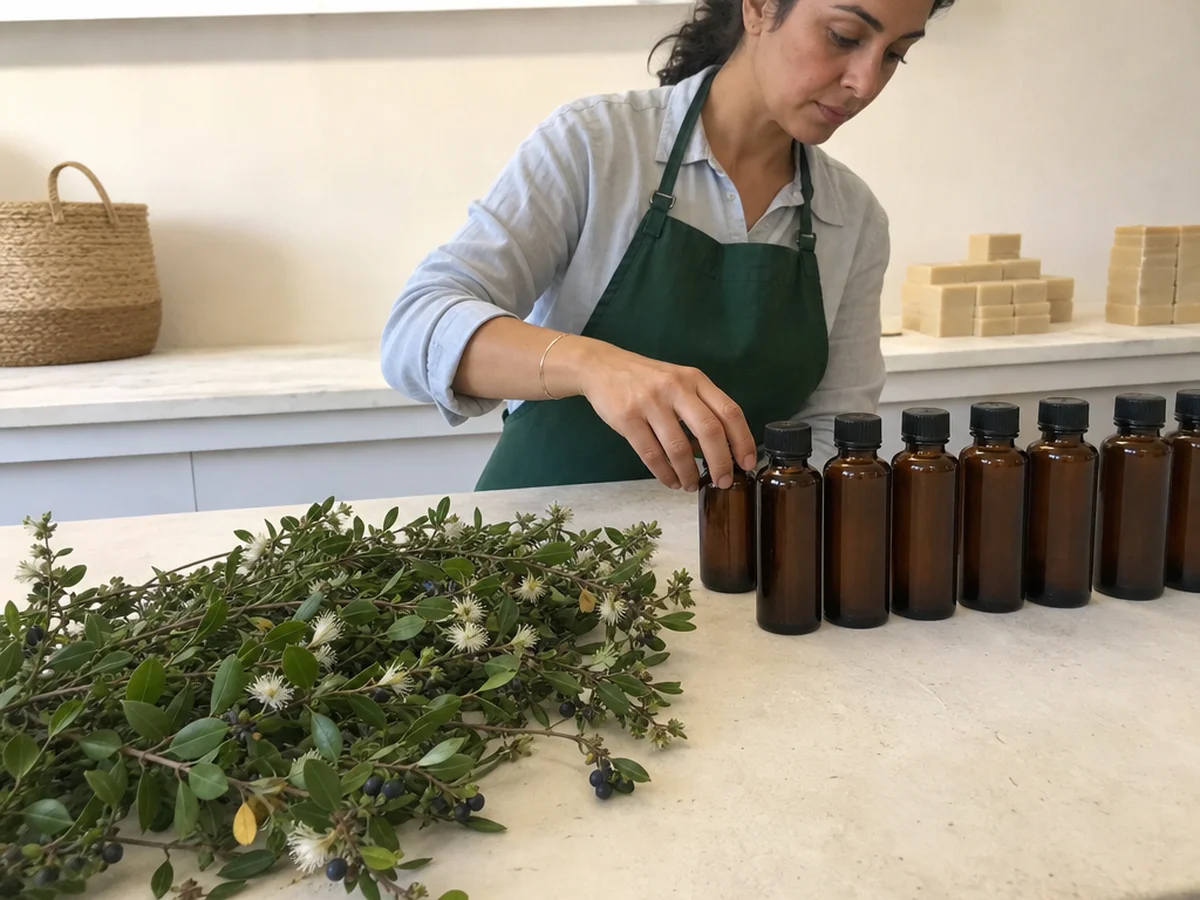
That is why people talk about "green" and "red" myrtle, and why we think it is worth understanding the labels before you compare bottles; our piece on green and red myrtle walks through it. We describe our own oil as a green myrtle profile: fresh, clear and gently floral, with a soft eucalyptus-like coolness and faintly honeyed facets. If you would like to know what that smells like before you buy, our scent profile goes into detail.
A leaf worth crushing
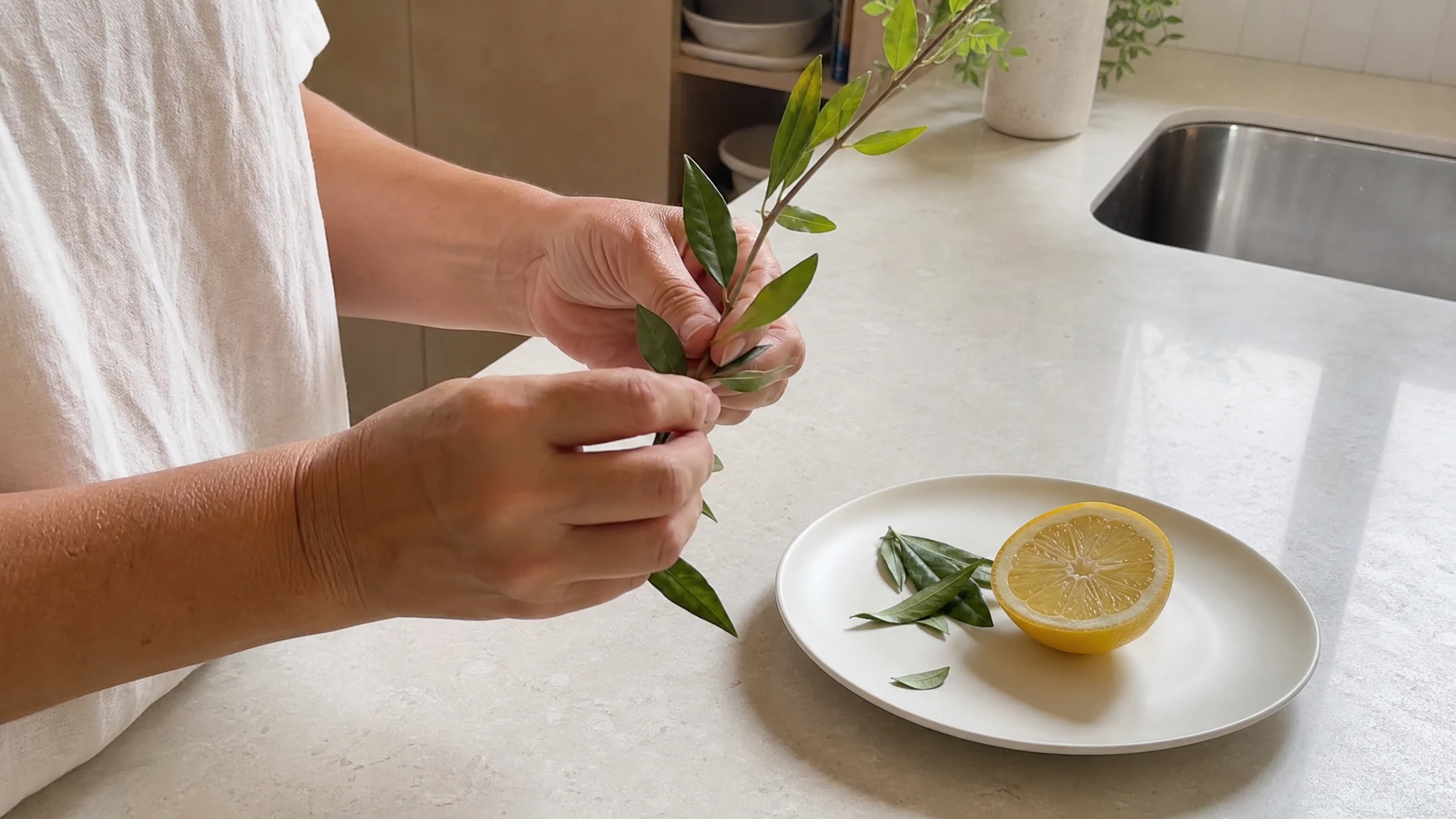
If you have access to a myrtle plant, perhaps in a garden, a botanical collection or a friend's pot by the door, take a single leaf, roll it between your fingers and smell the result. Look at the leaf too: small, glossy and deep green. You will meet the plant's green, resinous side straight away, and it gives you a reference point for the bottle, though a crushed leaf and a distilled oil are not the same thing and do not smell identical.
Not every myrtle is a myrtle
The common name gets borrowed generously. Lemon myrtle (Backhousia citriodora) and honey myrtle (Melaleuca) are relatives in the same family, Myrtaceae, but they are different plants with different oils, and we do not sell either. Crape myrtle belongs to another family altogether and is grown for its flowers; here is how to tell it apart. The easy rule is to look for the Latin name. If a label says Myrtus communis, you are holding true myrtle. Our tour of the myrtle family sorts out the cousins.
If you want to grow one
Myrtle is a rewarding garden plant. The RHS recommends full sun and moist but well-drained soil, and says it likes a sheltered spot, such as against a wall, in cooler regions. It dislikes prolonged cold and harsh winter winds, and heavy frosts can damage it, so in colder climates a pot that can come indoors is the sensible choice. Its hardiness rating of H4, roughly -10 to -5 C, is a guide for UK gardens rather than a promise.
Growing it for oil is another matter. Given the leaf-to-oil ratio above, a home shrub is better enjoyed for its fragrant foliage, its summer flowers and its berries, and the distilling left to people with proper equipment. Myrtle has been tied to weddings since ancient times, and the RHS notes a sprig is still often tucked into bouquets; our history of myrtle in weddings follows that thread.
Why we like it
We love myrtle because it is understated. It does not announce itself the way some oils do; it offers a fresh, clear note with something sweet behind it and lets you decide how far to take it. A plant with that much history in gardens and weddings is a good one to know, and getting to know the shrub makes the oil more interesting. Take a little time with both.
However you meet it, in a hedge, a bouquet or a bottle, the plant rewards a closer look, and the crushed leaf is the best introduction there is.
Myrtle Essential Oil
Myrtle Essential Oil from our own shop, in sizes from 0.5 oz to bulk.
From $16.99
Shop Now →Sources & Further Reading
- Myrtus communis | common myrtle, Royal Horticultural Society.
- Myrtle / RHS Plant Guide, Royal Horticultural Society.
- The therapeutic value of Myrtus communis L.: an updated review, Al-Snafi et al., Naunyn-Schmiedeberg's Archives of Pharmacology, 2024.
- Chemotaxonomic Evaluation by Volatolomics Analysis of Fifty-Two Genotypes of Myrtus communis L, Usai et al., Plants, 2020.