Myrtle Oil in Steam Inhalation: Why We Skip It
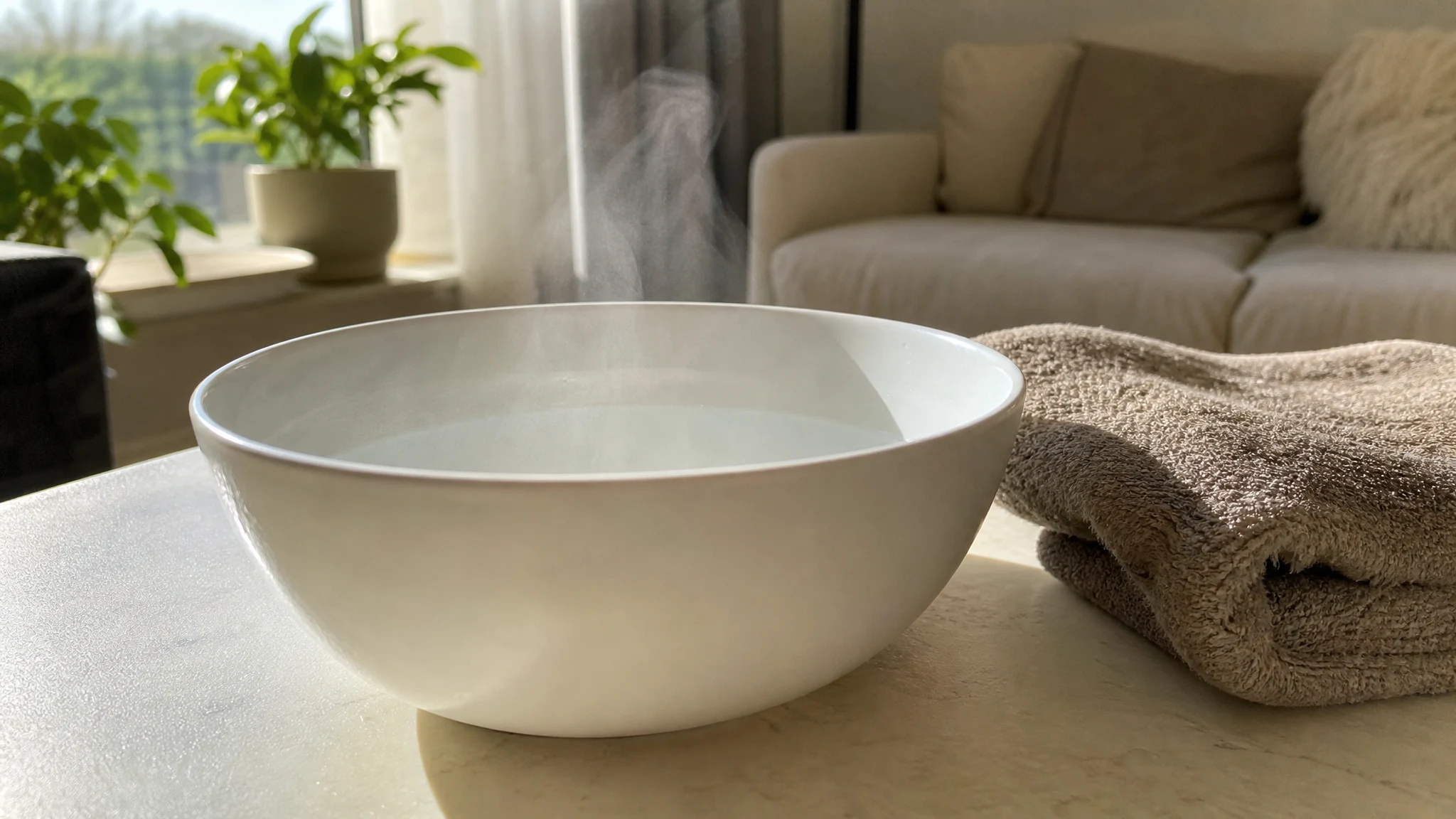
A towel over your head, a bowl of just-boiled water, a few drops of aromatic oil: it is a scene many of us know from childhood. It is also one we do not suggest repeating with myrtle oil. We love myrtle oil as a room fragrance, and the reasons we leave the steam bowl out of the picture are worth sharing, because they have nothing to do with the oil being unpleasant and everything to do with the bowl.
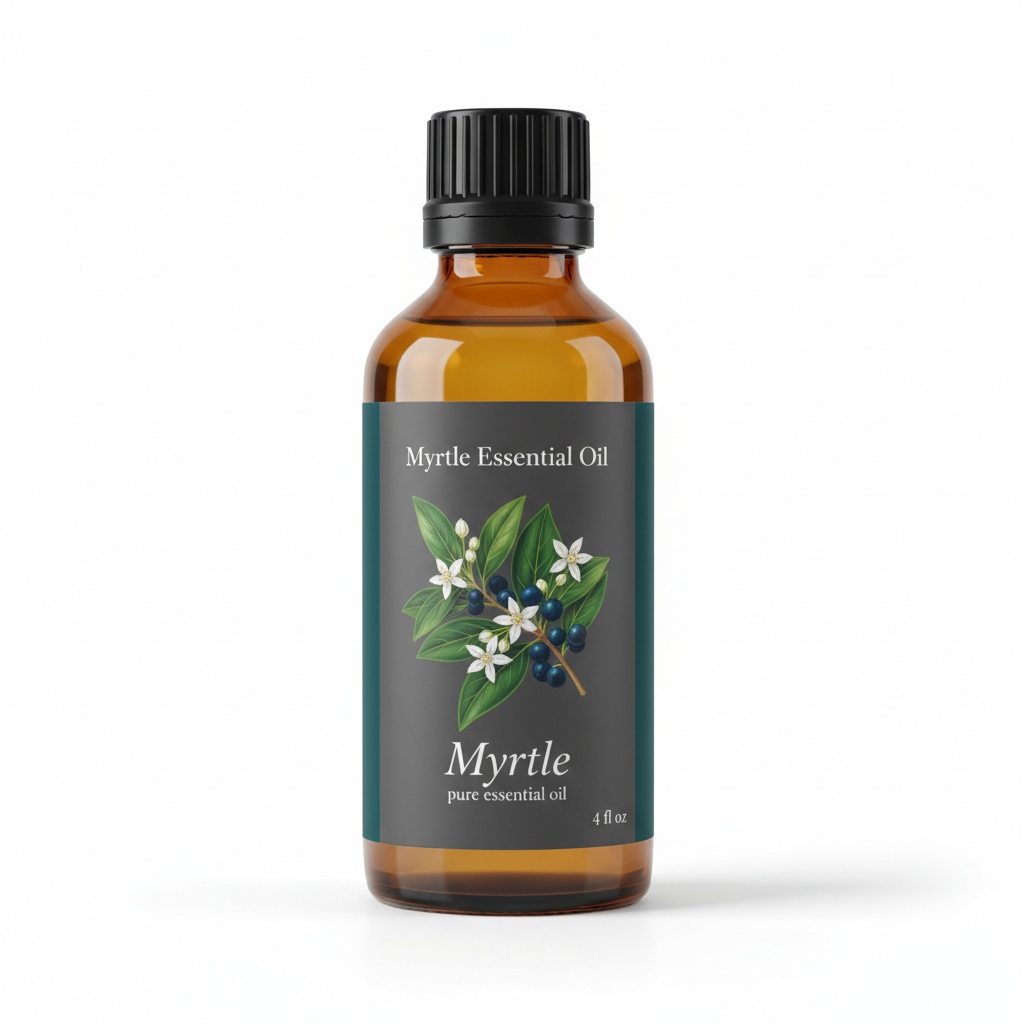
Myrtle Essential Oil
Our own Myrtle Essential Oil, in sizes from 0.5 oz to bulk.
From $16.99
Shop Now →The bowl is the hazard
Hospitals have been counting the injuries for years. A burns centre in Swansea, Wales, found 16 children admitted with steam inhalation scalds over five years, and noted that most of the local GPs it surveyed still recommended the practice (Home remedy or hazard?: management and costs of paediatric steam inhalation therapy burn injuries). A London burns centre identified 19 patients of all ages, from two weeks to 91 years old, in two years, most burned on the lower body, with six needing surgery, and 201 cases nationally in the same period. Its authors suspect the true figure is higher, because their count only included people admitted to hospital (Steam inhalation: More harm than good? Perspective from a UK burns centre). The mechanism is mundane: a bowl tips, or a lap gets splashed.
Those are counts of injured people rather than rates, so they cannot tell us how many people steam without trouble. They do tell us the injuries are real and that they can be serious. It is not a setting we want to place a bottle of oil in.
It helps to say what this post is not. It is not a criticism of anyone who has steamed with a bowl, and it is not a list of promises about what myrtle oil does. It is a short explanation of why we keep the bottle and the boiling water apart.
What the research says about steam itself
A Cochrane review of heated, humidified air for the common cold pooled six trials with 387 participants. All six used a machine called the RhinoTherm that delivers controlled warm humid air, not a bowl of boiling water, and the review concluded the evidence does not show clear benefits or harms (Heated, humidified air for the common cold). In other words, the closest thing to evidence concerns a controlled device, and none of those trials added essential oil. We sell myrtle oil as a fragrance, and nothing here suggests it does anything for a sinus or a cold. For stuffy-nose questions, a pharmacist or physician is the right person to ask.
Why we would not add oil to hot water
There is also a practical chemistry point. Essential oils do not dissolve in water, so drops float on the surface in a concentrated film, and the vapor rising into your face is hot and strongly scented at close range. The Tisserand Institute's general guidance is to avoid putting undiluted oil near skin and eyes and to keep inhalation gentle and intermittent, suggesting diffusers run 30 to 60 minutes on and 30 to 60 minutes off with some fresh air (Safety Guidelines - Tisserand Institute). A towel tent at close range is the opposite of that. That is our reading of the guidance, not a quote from it.
People with asthma, sensitive airways or sensitive skin have extra reason to be careful, and anyone with a health condition should ask a clinician first.
If you love the ritual, keep the ritual
Part of the appeal of the steam bowl is the ritual: the towel, the warmth, the pause. You can keep the ritual and drop the hazard. Make a warm drink and sit by an open window. Run a diffuser on a stable table across the room for a short session. Take a warm shower with the bathroom fan on and leave the oil on its shelf. The pause is the part that matters, and it does not need a bowl of hot water on your lap.
A better way to enjoy the scent
If what you want is the fresh, clear, gently floral aroma of myrtle drifting through a room, there are calmer options:
- Use a diffuser on a stable table out of reach of children and pets, in short sessions with a window ajar.
- Dilute the oil in a carrier if you plan to use it on skin at all, and patch test first. Our guidance is 0.5% to 2%, and our safety basics explain why we suggest starting at the low end.
- Keep warm showers for washing and let the diffuser handle the fragrance.
Our guide to using myrtle oil at home covers diffuser habits, and our look at myrtle in a facial steam or splash follows the same reasoning for the skin. Households with small children or pets will find the sections on those in our safety post especially useful.
If you grew up with the bowl
Plenty of us grew up with the bowl and the towel, and we are not here to scold. If you used to do it, you are in good company. We just think the risk is not worth it for a pleasant aroma, and there are easier ways. If there is a child in the house, the argument is stronger still, because a bowl of just-boiled water is the kind of thing a small hand or a tripping foot can find in a second.
Some old rituals are better admired from a distance, and the steam bowl is one of them; the aroma is every bit as enjoyable from a diffuser across the room.
Myrtle Essential Oil
Myrtle Essential Oil from our own shop, in sizes from 0.5 oz to bulk.
From $16.99
Shop Now →