What Is Myrtle Oil? Plant, Scent and Safe Use
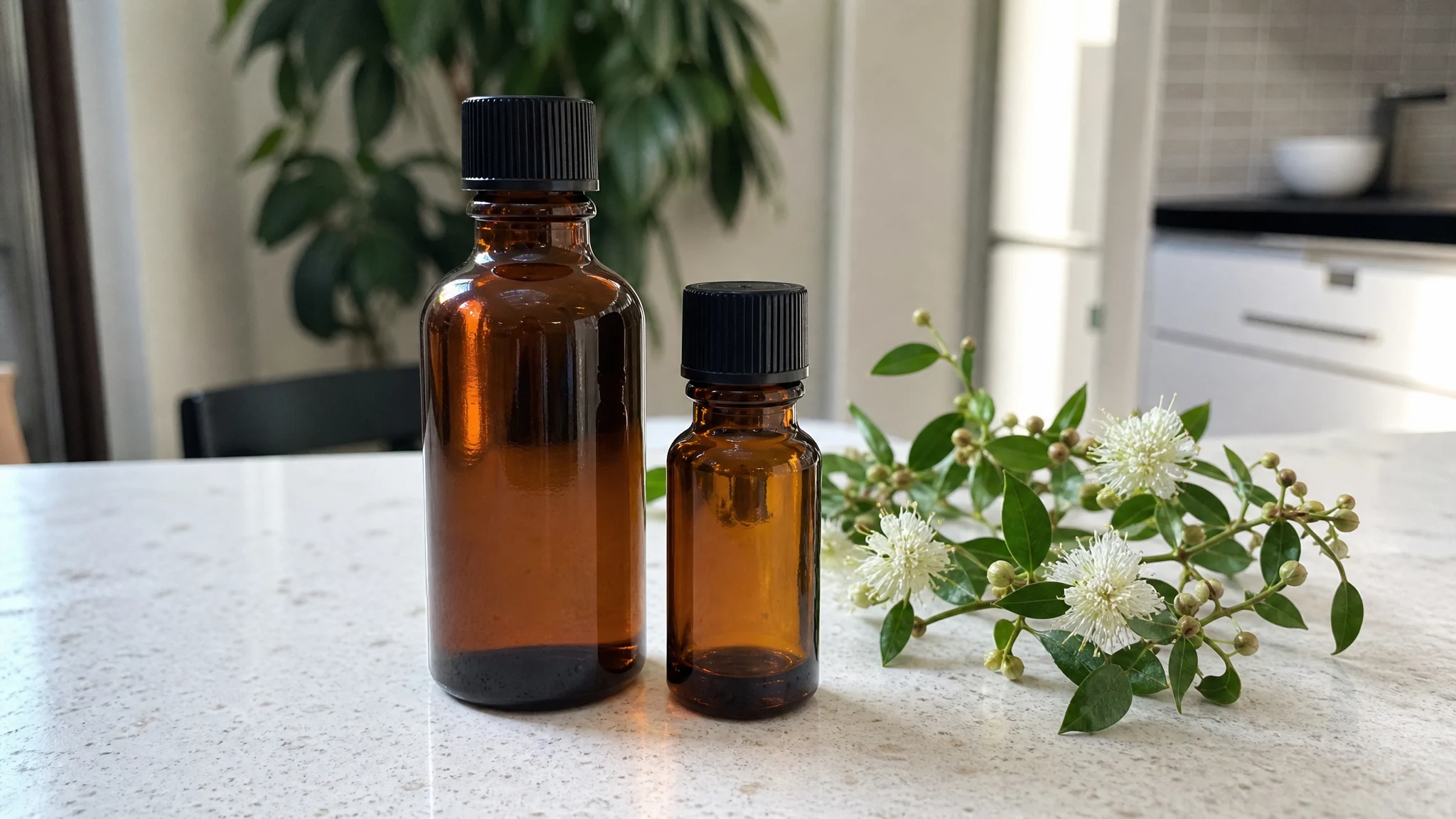
An ounce of myrtle oil is a surprisingly large pile of leaves. Myrtus communis is a glossy, small-leaved Mediterranean shrub that has been grown for centuries beside doorways and in wedding garlands, and its oil is what you get when you gently steam the foliage and collect the aromatic vapor that rises. The result is a clear, fresh, lightly floral oil that we think deserves more attention than it gets.
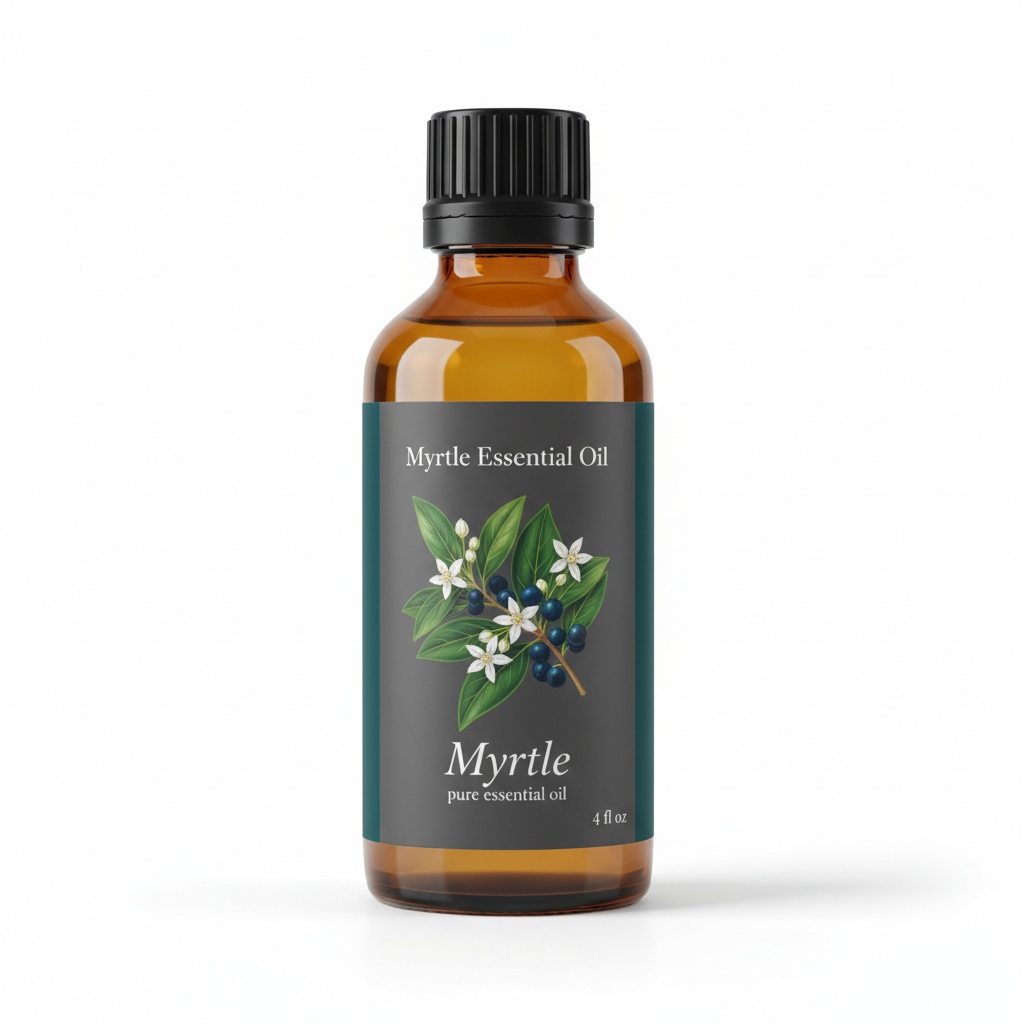
Myrtle Essential Oil
Our own Myrtle Essential Oil, in sizes from 0.5 oz to bulk.
From $16.99
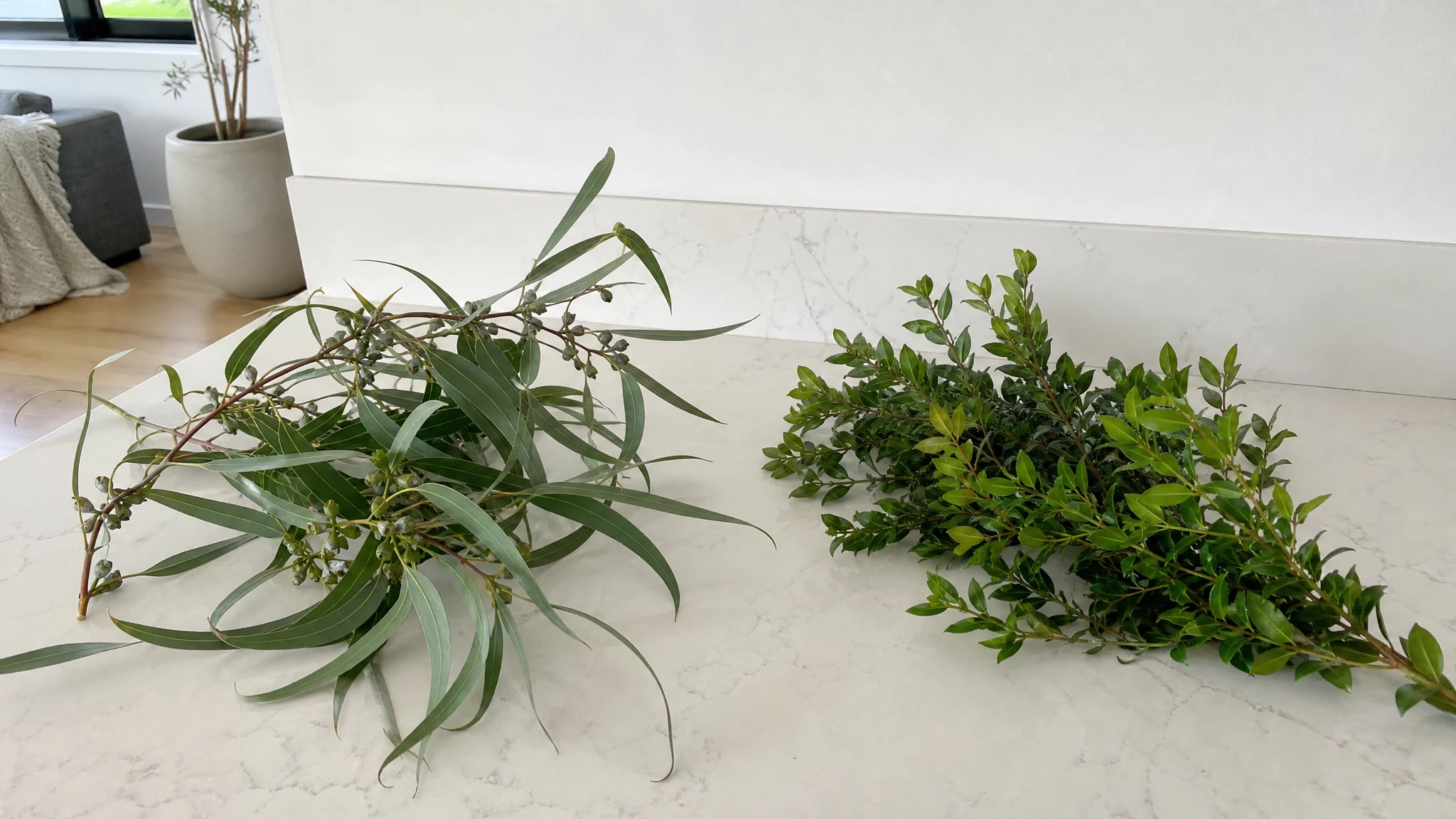
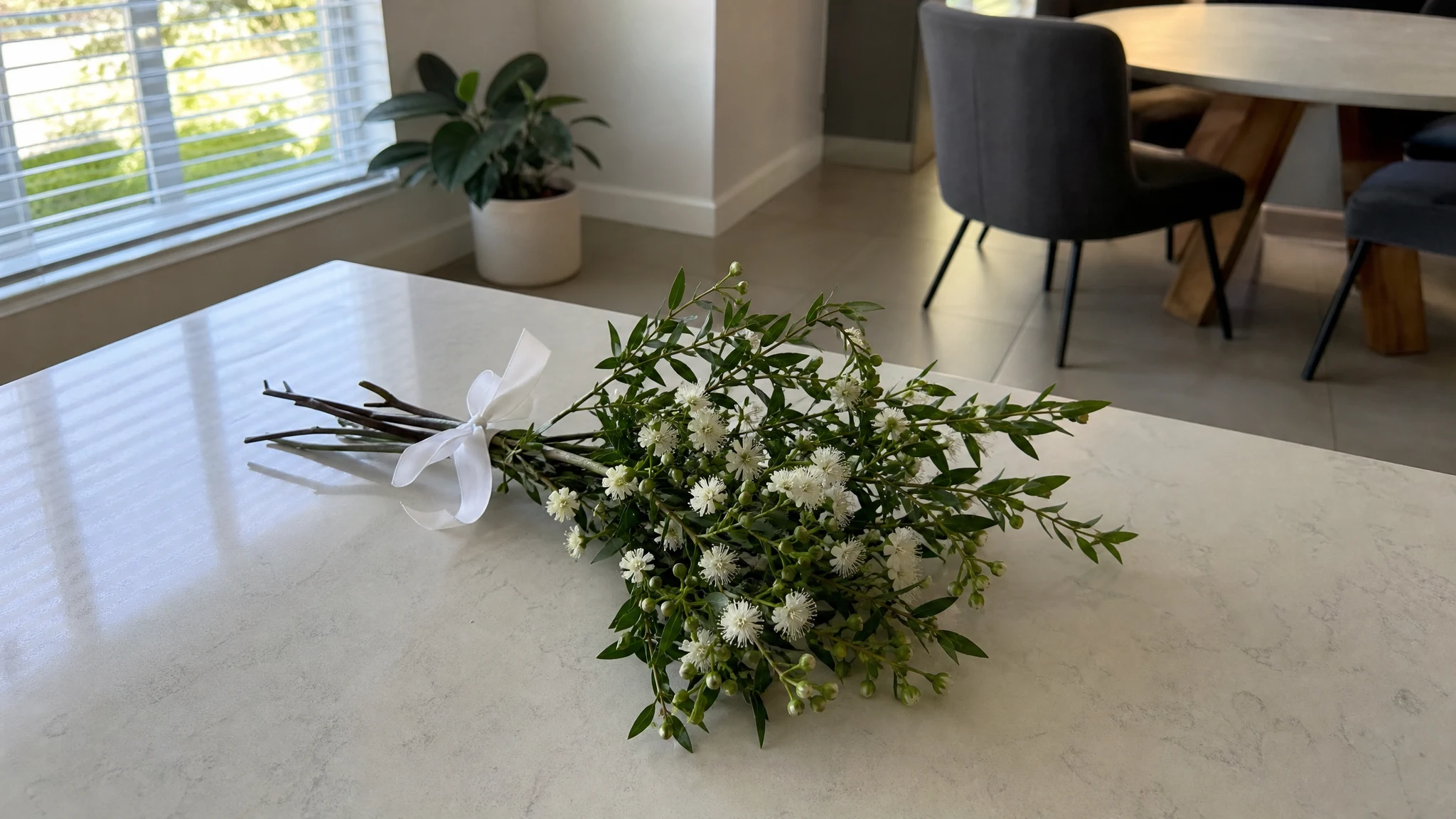
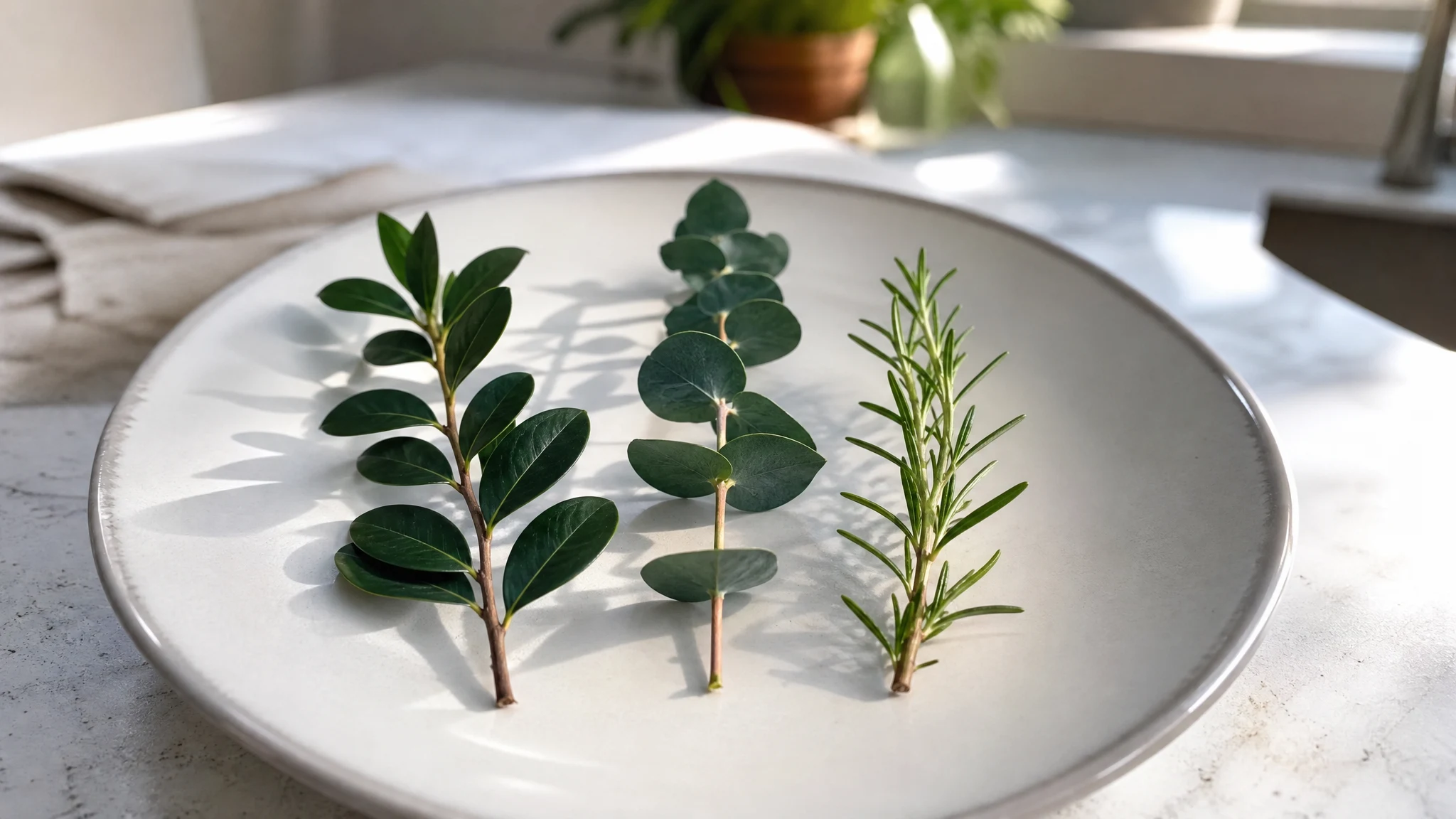
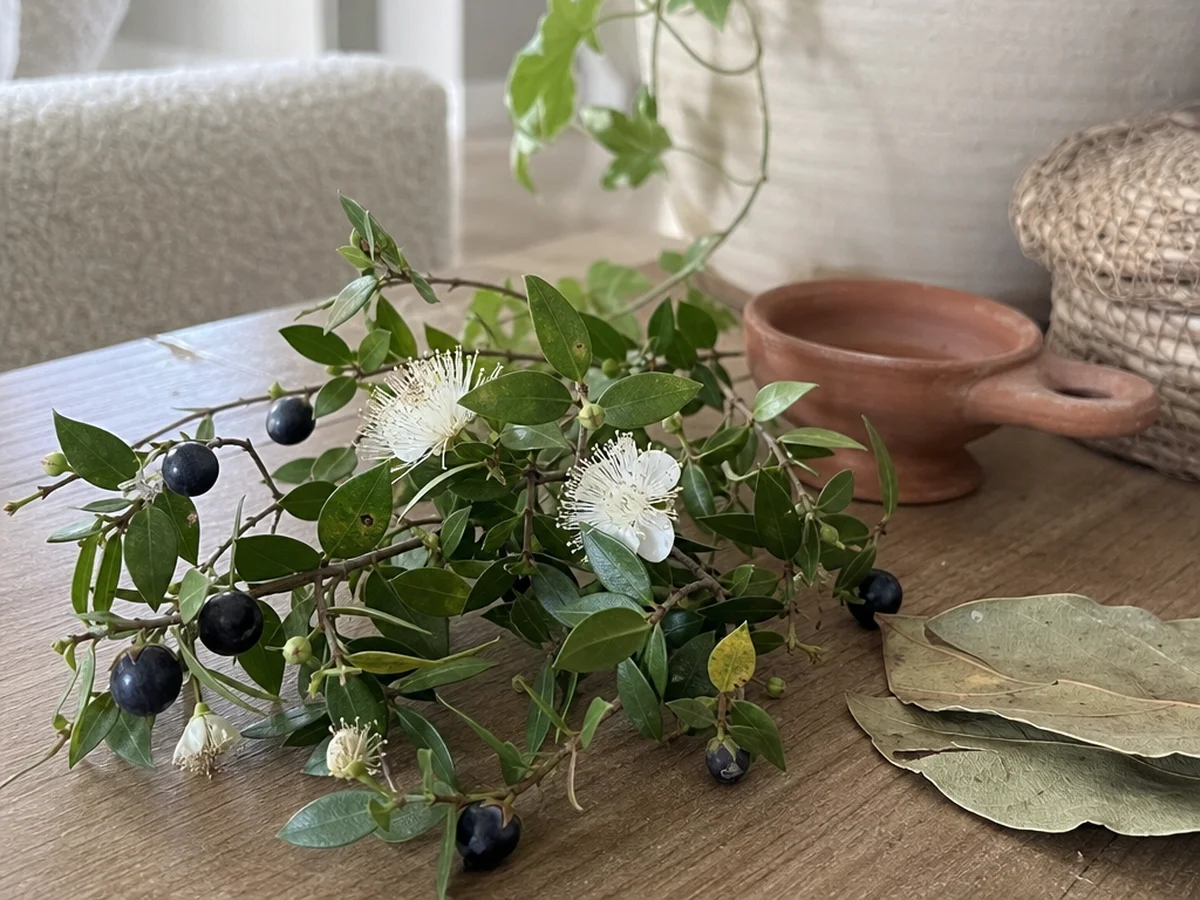
Shop Now →It helps to picture the plant first. Myrtle bushes are evergreen, with small, pointed leaves that feel waxy and smell resinous and green when you rub them. White flowers with a tuft of stamens appear in summer, followed by dark berries. The oil comes from the foliage, which is why a fresh, leafy note sits at the center of its scent.
How much leaf makes a bottle
Oil yields are small, and they vary. In a Sardinian collection of 52 myrtle genotypes, grown together in one field and distilled in the lab, the oil ran from 0.60 to 5.17 grams per kilo of fresh leaf in the best-studied group. An ounce of oil weighs about 28 grams, so on those figures one ounce needs somewhere between roughly 5.5 and 47 kilos of fresh leaf. Moroccan mountain leaves averaged 0.9% in another study, and 19 Algerian coastal localities averaged 0.68%. Whichever figure you pick, the arithmetic is the same: a half-ounce bottle represents kilos of foliage, which is part of why we suggest using it a drop at a time.
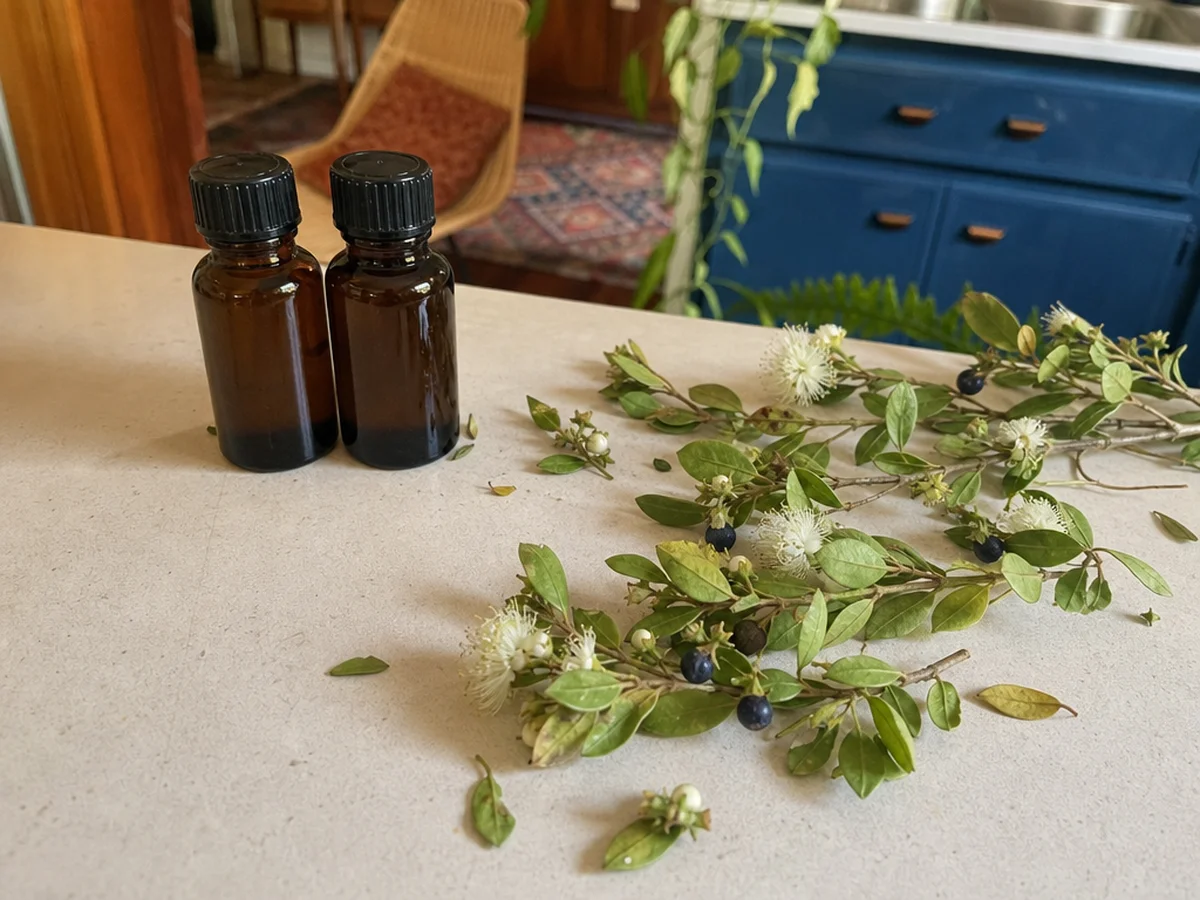
We sell one myrtle oil, steam-distilled Myrtus communis, sold neat with nothing added.
An oil with a wide range
Here is what makes myrtle genuinely interesting. Its aroma comes from a handful of molecules, and the balance between them shifts from plant to plant. Alpha-pinene (pine-like) has been reported anywhere from about 2% to 53% in 14 Iranian accessions grown side by side. In Sardinia, linalool, the floral molecule, spanned under 1% to roughly 24%. A Corsican oil came in at 43.0% alpha-pinene and 28.8% 1,8-cineole, while Moroccan work has recorded cineole near 36% in one region and a very different, methyl eugenol-rich profile in another.
So when people talk about "green" myrtle (a myrtenyl acetate and linalool type often linked with Corsica) and "red" myrtle (a cineole-rich type often linked with Morocco), they are naming tendencies. We describe our oil as a green myrtle profile, fresh and gently floral with a cool edge. If you like to dig into that distinction, our green versus red myrtle article takes it apart, and the GC-MS reading guide shows how to read a composition table once you have one.
What it is like to smell
Put a drop on a paper strip and give it a moment. The first thing is a fresh, clear brightness with a cool edge, the kind you might link with eucalyptus but softer. Then the floral side comes forward, with a faint honeyed sweetness that harsher leaf oils lack. That is the part we keep coming back to.
What the certificate tells you
We publish a Certificate of Analysis for one batch. It names Myrtus communis, a steam-distilled extraction, and gives results of "Complies" against stated standards for appearance, smell, relative density and refractive index. It is a sensible identity check for a single batch. If you need constituent data for a formulation, ask us in writing through the contact page before you order and we will tell you plainly what we can provide.
One more tip from a small-business owner who likes things simple: start with one oil and one use. Learn the myrtle by itself in the diffuser before you blend it, and you will find it much easier to judge any blend you try later.
Using it with care
Myrtle oil is concentrated, so it is used a drop or two at a time. For skin we recommend diluting to 0.5% to 2% in a carrier oil, which works out to roughly 3 to 12 drops per ounce of carrier, and patch testing first. A supplier page quoting Tisserand and Young lists a maximum dermal level of 1.9% for myrtle, and IFRA restricts methyl eugenol, a component that varies enormously from one myrtle oil to another. So we start at the low end, and we suggest you check the IFRA standards for your own product if you are making something to sell. Keep it away from eyes, children and pets, and do not take it internally. Anyone who is pregnant, nursing or managing a medical condition should check with a physician first. We sell a cosmetic oil for external, aromatic use; it is not a treatment for anything.
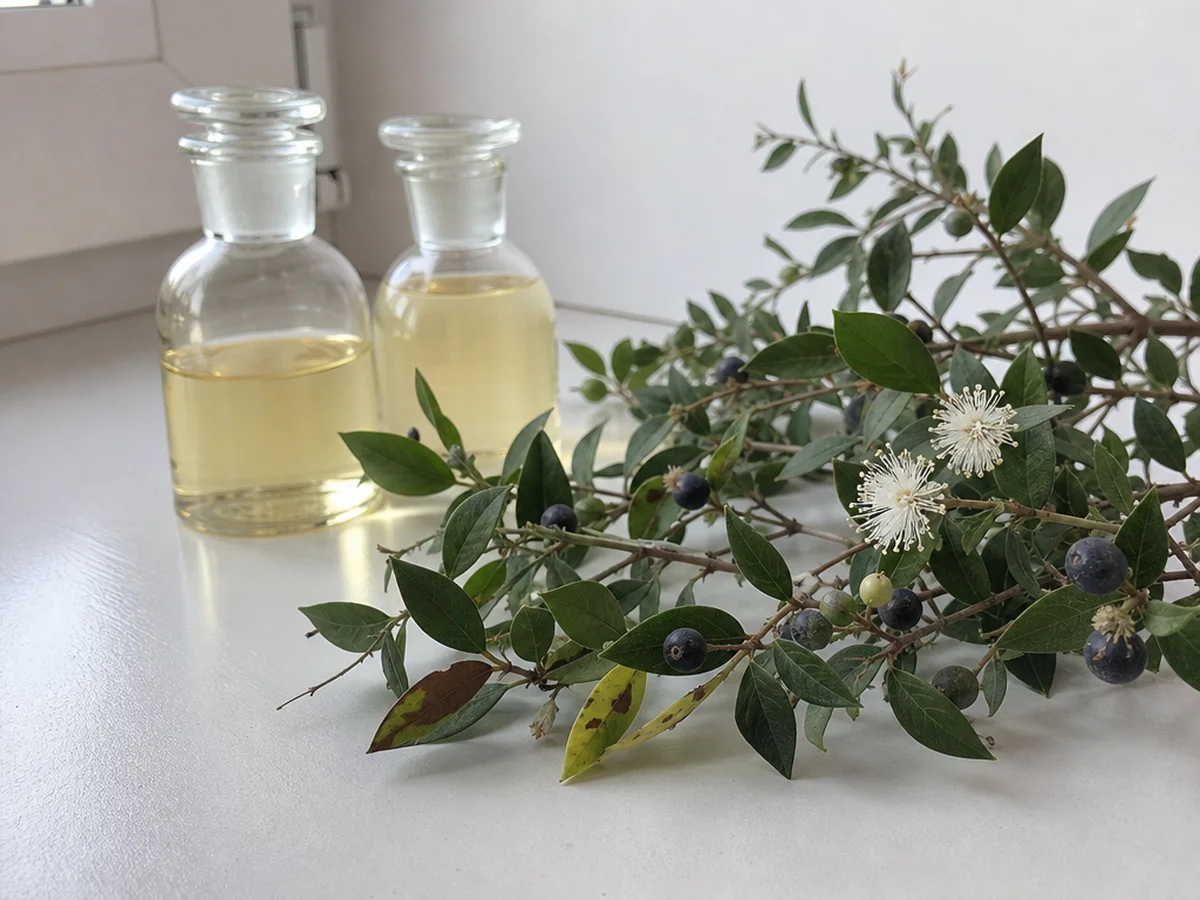
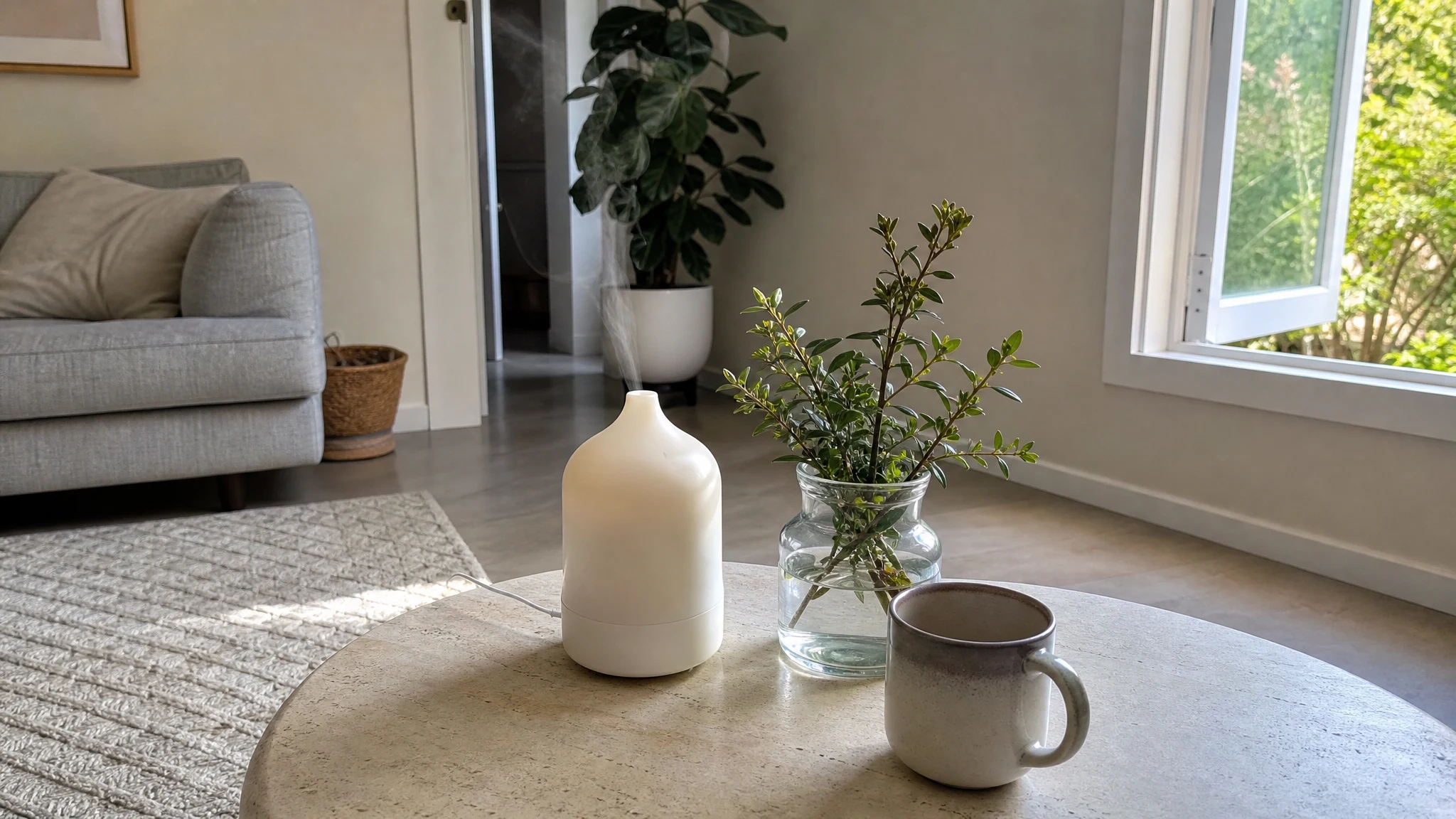
In the diffuser, it gives a room a clean, leafy freshness. In a cologne or a diluted skincare blend, it adds a green-floral top note, and for home fragrance it layers well with lemon and lavender. To learn the plant itself, start with our myrtle plant profile, and for its aroma in detail see what myrtle oil smells like.
A good first project is the simplest one: a few drops in a diffuser, a window open and nothing else. Once you know the scent, try layering it with a drop of lemon or lavender, and see our pairing guide for ideas.
Myrtle rewards a slow introduction. Start with a blotter, take your time with the aroma, and let the oil show you its range.
Myrtle Essential Oil
Myrtle Essential Oil from our own shop, in sizes from 0.5 oz to bulk.
From $16.99
Shop Now →Sources & Further Reading
- Chemotaxonomic Evaluation by Volatolomics Analysis of Fifty-Two Genotypes of Myrtus communis L. (Plants, 2020)
- Essential Oil Variability of Superior Myrtle (Myrtus communis L.) Accessions Grown under the Same Conditions (Plants, 2022)
- Bioactive Profiling, Antibacterial Efficacy and Computational Modelling of Myrtus Communis Essential Oil (Morocco) (Chemistry and Biodiversity, 2024)
- Chemical composition and antimicrobial activity of Myrtus communis essential oils from Algeria (Biodiversitas, 2021)
- Quorum-Quenching Activity of Myrtus communis Corsican Essential Oil Against the Marine Bacterium Aliivibrio fischeri (Microorganisms, 2025)
- Phytochemical analysis, cytotoxic and antioxidant activities of Myrtus communis essential oil from Morocco (Journal of Complementary and Integrative Medicine, 2019)
- Myrtle - Hopewell Essential Oils