Myrtle Oil on Skin: How Much Is Too Much?
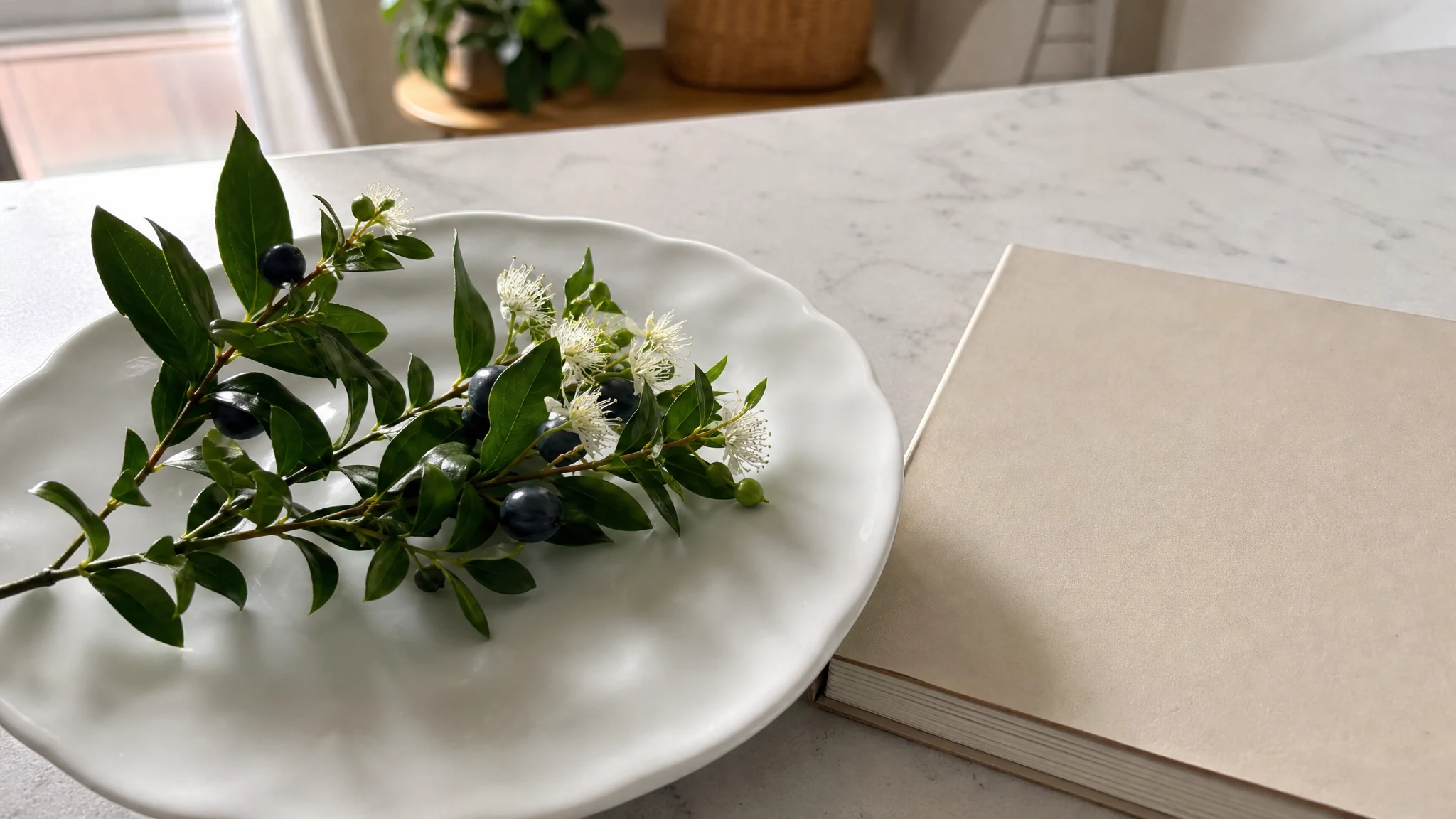
Myrtle smells fresh and clear, with a gently floral heart, a cool edge and a faint honeyed sweetness, and it is easy to picture it in every body oil and aftershave you might ever mix. Skin is where we slow down a little. Myrtle oil is a concentrated botanical, so the right amount for a leave-on blend is a few drops in an ounce of carrier, and the interesting question is just how few.
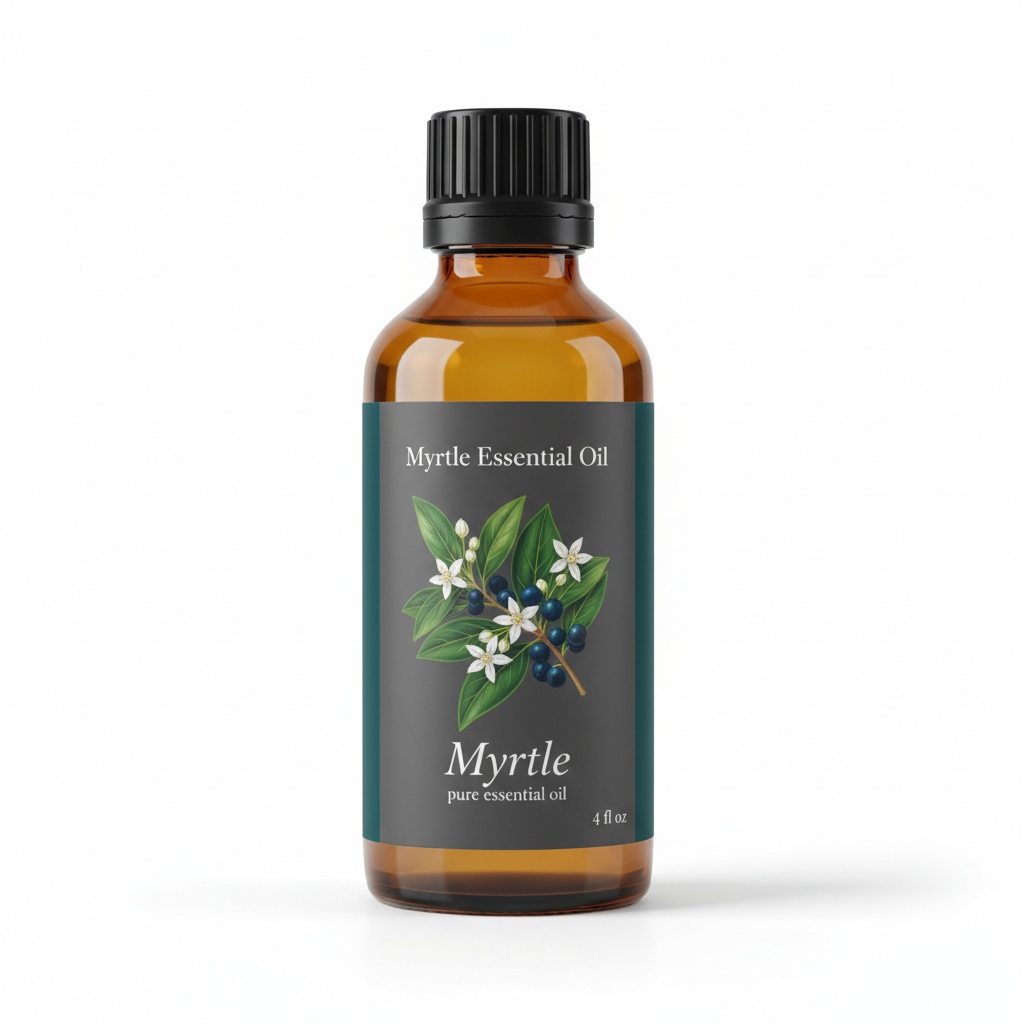
Myrtle Essential Oil
Our own Myrtle Essential Oil, in sizes from 0.5 oz to bulk.
From $16.99
Shop Now →Begin at 0.5%
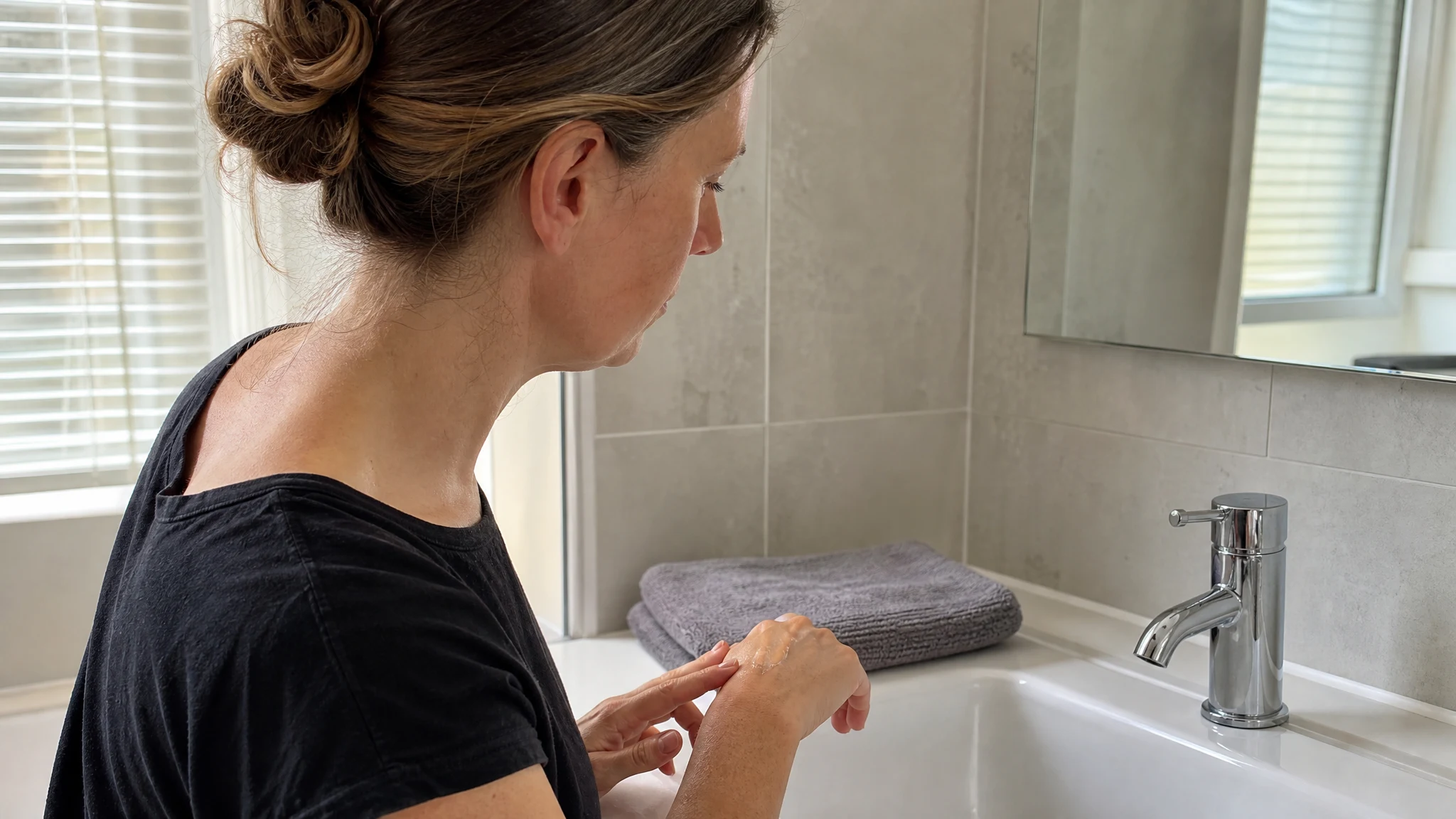
Our dilution guidance for skin is 0.5% to 2% in a carrier oil, with a patch test on a small area first. In kitchen terms that is roughly 3 to 12 drops per ounce of carrier. We would start at the bottom of that range, and for a scented body oil or an aftershave splash you may never need to leave it. Think of the top of the range as a ceiling for general use rather than a target. Keep the oil away from eyes, children and pets, and keep it for external use only.
We sell the oil neat, so the carrier is your choice. Any fragrance-free skin oil from a craft shop, pharmacy or grocery will do. A patch test simply means dabbing a little of the finished blend on a small area before you use it more widely, and stopping if you notice redness, itching or burning. If irritation lingers, a dermatologist is the right person to ask.
Why a small number is the smart one
Myrtle oil is a natural mixture, and the minor parts of the mixture move around more than you might expect. The one that matters most for skin products is methyl eugenol, a fragrance constituent that IFRA, the fragrance industry's standards body, limits in finished products. IFRA has no standard that names myrtle, but its limit counts methyl eugenol wherever it comes from, including a natural oil. That makes the arithmetic simple: divide the limit by methyl eugenol's share of the oil, and you get the most oil a product can hold.
Published analyses show how wide that share can be. A Corsican producer's leaf oil contained 0.2% methyl eugenol (Hardy et al., 2025). Wild Algerian populations averaged 1.40% (Mohamadi et al., 2021). Fifty-two Sardinian genotypes grown in a single field ranged from roughly 0.5% to 5% (Usai et al., 2020).
IFRA's limit for body lotions and creams (its category 5A) is 0.0015% methyl eugenol in the finished product (IFRA Standards, 51st Amendment; category definitions in the IFRA guidance). Our arithmetic, at about 20 drops to the millilitre: an oil with 0.2% methyl eugenol could make up about 0.75% of a lotion, roughly 4 drops per ounce, while an oil at the Algerian average of 1.40% works out to about two-thirds of a drop per ounce. Face moisturizers and toners (category 5B) carry a limit about seven times lower.
Two honest notes on those numbers. They come from published oils, not from a measurement of ours, and IFRA's limits are written for products made and sold commercially, so applying them to a blend you mix at home is our reading rather than a rule. The takeaway is the direction: the right amount depends on the oil's chemistry, and low is a good place to begin. The Certificate of Analysis we publish for one batch lists density and refractive index against stated ranges and does not list constituents. If methyl eugenol is a number you need for a formula, ask us in writing through the contact page before you order, and get the answer in writing.
What the skin research does and does not cover
Myrtle appears in plenty of laboratory papers, but studies of the distilled oil on skin are scarce. One recent paper looked at a fresh-leaf myrtle oil (mostly 1,8-cineole at 41.86% and alpha-pinene at 20.98%) for topical use. The oil was tolerated by cultured skin cells at the concentrations tested, and the authors reported good skin compatibility in human patch tests at a 0.05% dilution (Dănilă et al., 2026). That is one study, and 0.05% is a tenth of the bottom of our range, which is one more reason a gentle start suits this oil.
Measuring a few drops without fuss
Small numbers are easier to hit when you set up before you start. Use a clean glass bottle with a dropper or a small funnel, pour in the carrier first, then count the myrtle drops in slowly, one at a time, with the bottle held upright. If you lose count, tip the lot out and begin again rather than guessing. Cap it, tilt it gently a few times to mix, and write the date and the number of drops on the label.
Droppers differ, so the drop counts in this post are a guide. If you make blends often, a small kitchen scale that reads to a hundredth of a gram is a worthwhile purchase.
Where myrtle earns its place
Myrtle shines in scent-led blends. Lemon, lavender, rosemary, neroli and clary sage all sit well beside it, and our pairing guide goes through them. For a simple body oil, 0.5% is roughly 3 drops in an ounce of carrier, and you can adjust from there. The massage oil post covers carriers and format, and the safety basics cover the household details.
When you first try a blend, smell it on your skin a few minutes after you put it on, and not only from the bottle. You may find the opening softer than it was in the bottle, with the floral, honeyed side easier to notice. Keep a note of what you like so the next batch is easier.
Start low, enjoy the aroma and let a few drops do the talking.
Myrtle Essential Oil
Myrtle Essential Oil from our own shop, in sizes from 0.5 oz to bulk.
From $16.99
Shop Now →Sources & Further Reading
- Hardy E et al., 2025. Quorum-Quenching Activity of Myrtus communis Corsican Essential Oil Against the Marine Bacterium Aliivibrio fischeri. Microorganisms. PMC12195544
- Mohamadi Y et al., 2021. Chemical composition and antimicrobial activity of Myrtus communis essential oils from Algeria. Biodiversitas. smujo.id
- Usai M et al., 2020. Chemotaxonomic Evaluation by Volatolomics Analysis of Fifty-Two Genotypes of Myrtus communis L. Plants. PMC7650784
- Dănilă E et al., 2026. Chemical Characterization, Evaluation of Antimicrobial Potential, and Cytotoxic Activity of Thuja occidentalis L. and Myrtus communis L. Essential Oils for Topical Applications. Molecules. Europe PMC
- IFRA Standards, 51st Amendment (methyl eugenol standard). IFRA
- Guidance for the Use of IFRA Standards, 30 June 2023. IFRA