Why Is Myrtle a Wedding Plant? A Short History
In Ovid's calendar poem, the first of April belongs to Venus, and myrtle turns up in the very first story. The poet describes the goddess drying her hair on a shore when a crowd of satyrs spotted her, and she hid her body behind a screen of myrtle. It is a charming origin tale for a plant that has been tied to love and weddings ever since.
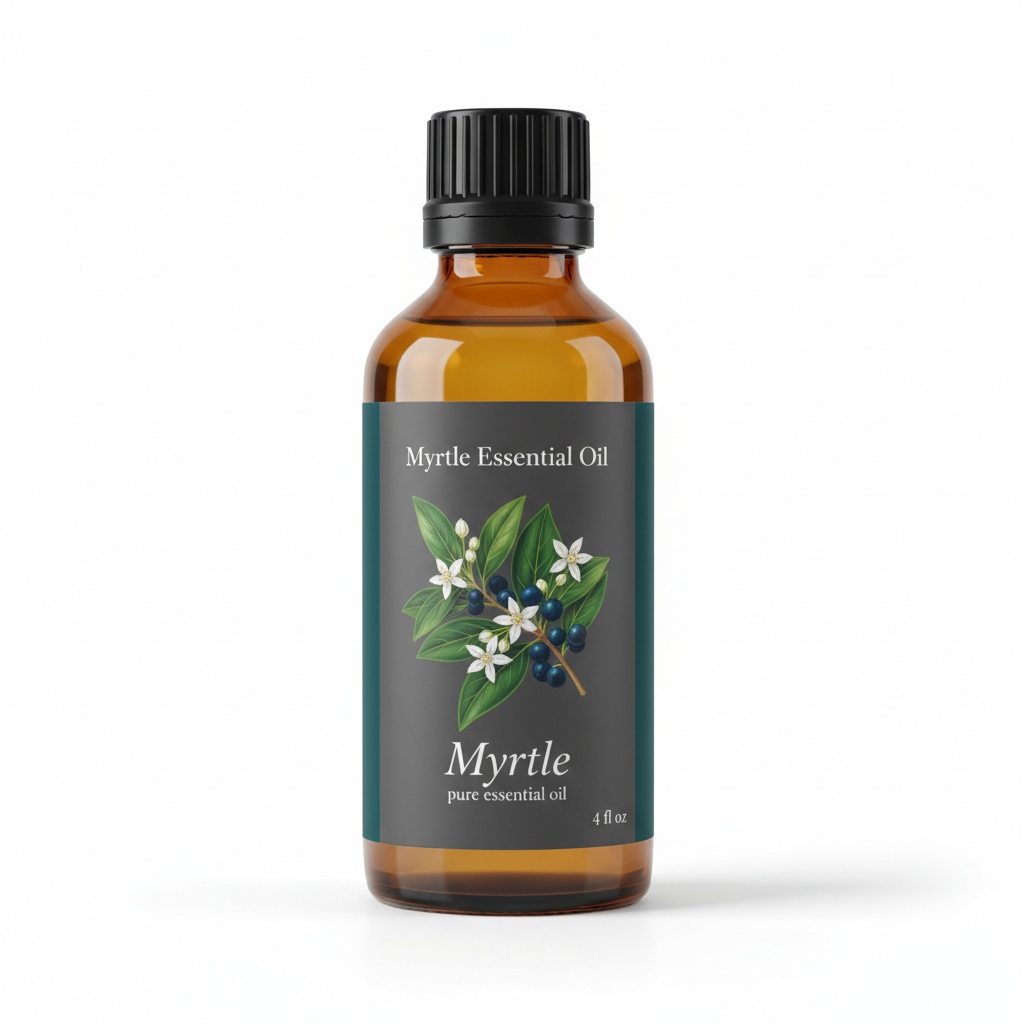
Myrtle Essential Oil
Our own Myrtle Essential Oil, in sizes from 0.5 oz to bulk.
From $16.99
Shop Now →Rome: a goddess behind a green screen
The passage is in the fourth book of Ovid's Fasti, a poem organised around the Roman calendar. In A. S. Kline's translation, Venus "hid her body with a screen of myrtle", and the poet goes on to tell his readers to do likewise (Ovid, Fasti, Book IV). What the text gives us is a myth that explains a ritual, and it shows how naturally Romans linked the evergreen shrub with their goddess of love.
Picture the scene those painters had in mind: a bride in a doorway, a wreath of small dark leaves resting on her hair, and the faint resinous scent of crushed foliage in the air. It is a modest, lovely image, and one reason the plant has held its place for so long.
Greece: wreaths on painted pots
For weddings in particular, the strongest early evidence is visual. Erika Kunze-Götte published a study of myrtle on Athenian vases, and a review of it in the Bryn Mawr Classical Review summarises the picture. In the Classical period, the reviewer notes, myrtle wreaths crown the heads of the bride and groom in depictions of famous mythological weddings such as Peleus and Thetis, and the wreath also works as a sign of desire that leads to love affairs or marriages (Papalexandrou, 2009).
That tells us what painters and their customers agreed a wedding looked like. It is strong evidence of what the plant meant to the people who commissioned the pots, and a lighter guide to what ordinary couples did on the day, but it is lovely evidence all the same. Myrtle, in short, was the visual shorthand for romance.
Britain: a royal cutting that kept growing
The bridal myrtle most people recognise today is a royal one. According to Royal Central, a sprig of myrtle was taken from the bouquet Queen Victoria carried when she married Prince Albert in 1840. A bush grew from it, and pieces from that bush went into later royal bouquets: the Princess Royal's in 1858, and Princess Alexandra's in 1863. The same account says myrtle featured strongly in the dresses of Victoria's daughters and daughters-in-law, sprays on hems or woven into wedding wreaths (Royal Central, Royal Wedding Bouquets: The Osborne Myrtle Bush). It is a family tradition told by a news site, and it is a good story: a single living cutting handed down from bride to bride.
A sprig is still the easiest place to start
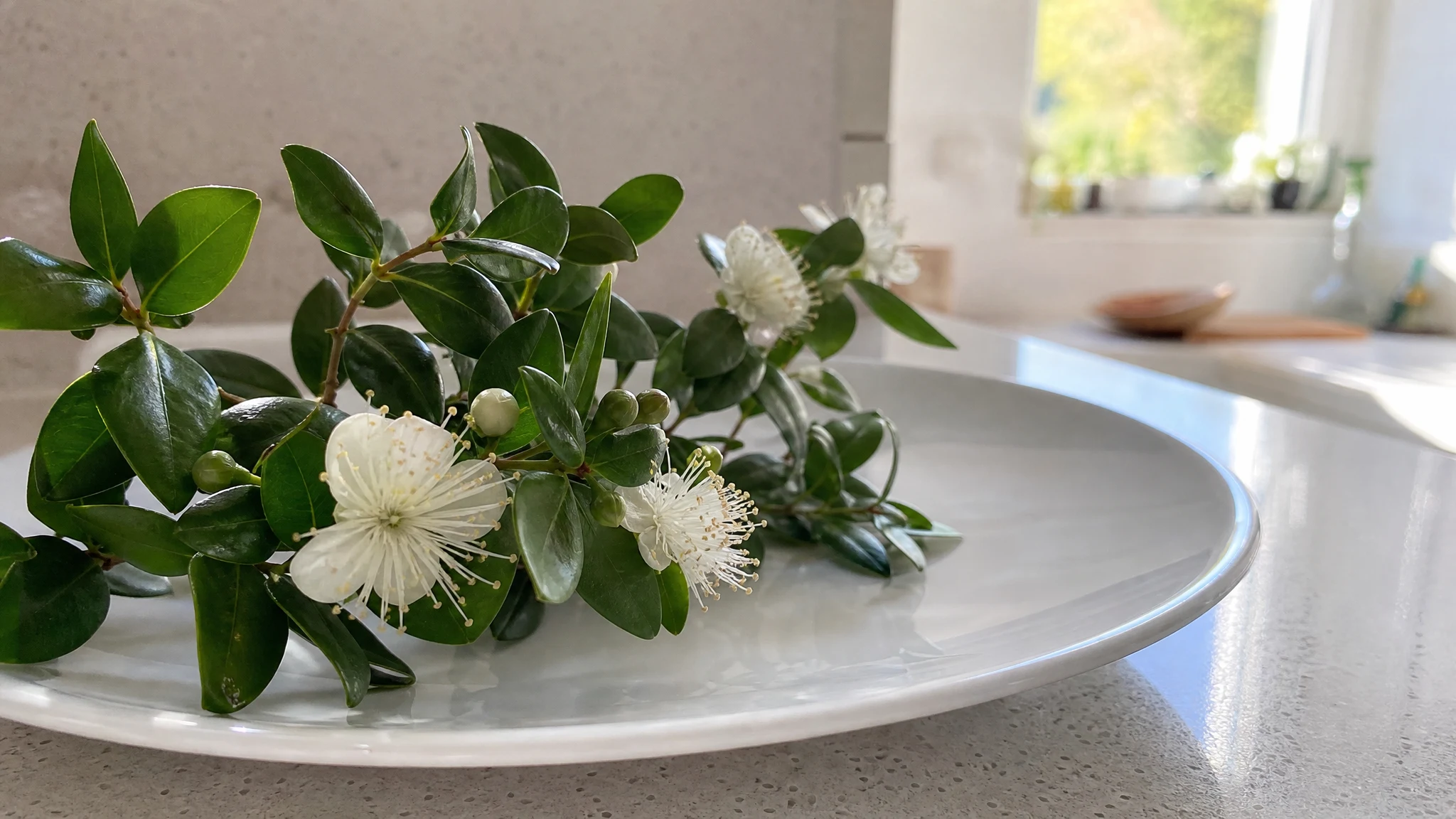
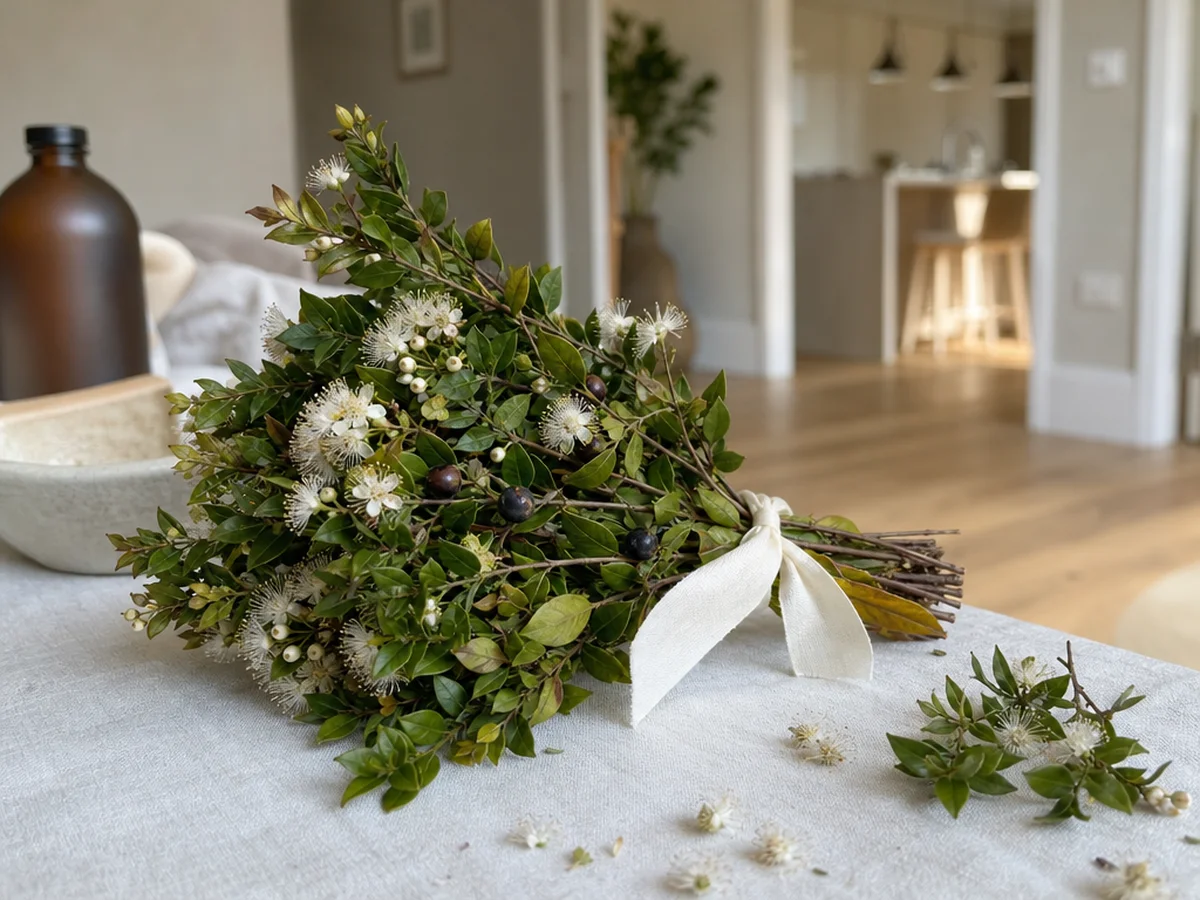
If this history makes you want to bring myrtle into your own day, the simplest route is a real sprig. Crush one leaf between your fingers and the resinous, green aroma comes up at once, which is a good reminder of why people tied the plant to ceremonies in the first place. Tuck a few stems into a bouquet, a buttonhole or a table arrangement, and keep them in water until the last moment.
What the old stories are really about
Look at the three accounts together and a pattern emerges. A poem, a painted pot and a royal bouquet all feature the living plant: branches, wreaths and sprigs, with a foliage that stays green through every season and a fragrance released when the leaves are brushed. That is the heart of myrtle's wedding symbolism. The scent belongs in the story too, since the leaves are aromatic, and it is one reason our oil appeals to anyone who loves the plant.

Bringing myrtle to a wedding today
- For the bouquet or wreath, use the plant. A nursery or florist can supply cut sprigs of Myrtus communis, which our plant guide describes. Check the Latin name, because crape myrtle is a different plant that would not be the one the tradition means (see our comparison).
- For a keepsake scent, think small. Myrtle oil can scent a cologne, a body oil or a room, and our blending guide shows pairings that suit it. For skin we suggest diluting to 0.5% to 2% in a carrier oil and patch testing first, and the safety basics explain why we start at the low end.
- Remember your guests. A scent that fills a room reaches everyone in it, including people with fragrance sensitivities, anyone who is pregnant and children, so keep it light and ventilate. Anyone with a medical condition or who is pregnant should ask their physician.
If you are making something small as a favor, such as a scented card or a cologne for the couple, keep the scent soft so it feels like a quiet green accent rather than a cloud of perfume. Test any skin product on the inner arm well before the day.
We like to think of myrtle as the plant that quietly gets on with its job: evergreen, fragrant when brushed, and happy to sit at the edge of the picture.
Myrtle's wedding history makes a good reason to plant a shrub, or to carry a sprig down the aisle with a bit of Victorian flair.
Myrtle Essential Oil
Myrtle Essential Oil from our own shop, in sizes from 0.5 oz to bulk.
From $16.99
Shop Now →Sources & Further Reading
- Ovid. Fasti, Book IV (translated by A. S. Kline). Poetry in Translation. poetryintranslation.com
- Papalexandrou N, 2009. Review of Myrte als Attribut und Ornament auf attischen Vasen. Akanthiskos, 1. Bryn Mawr Classical Review. bmcr.brynmawr.edu
- Royal Central. Royal Wedding Bouquets: The Osborne Myrtle Bush. royalcentral.co.uk