Lemon Myrtle Oil: Why It Isn't True Myrtle Oil
Open a bottle of lemon myrtle oil and you could swear someone has zested a basket of lemons into the room. It is bright, sweet and unmistakably citrusy. It is also not the oil we sell, and it is worth knowing why, because the two share a common name and very little else.
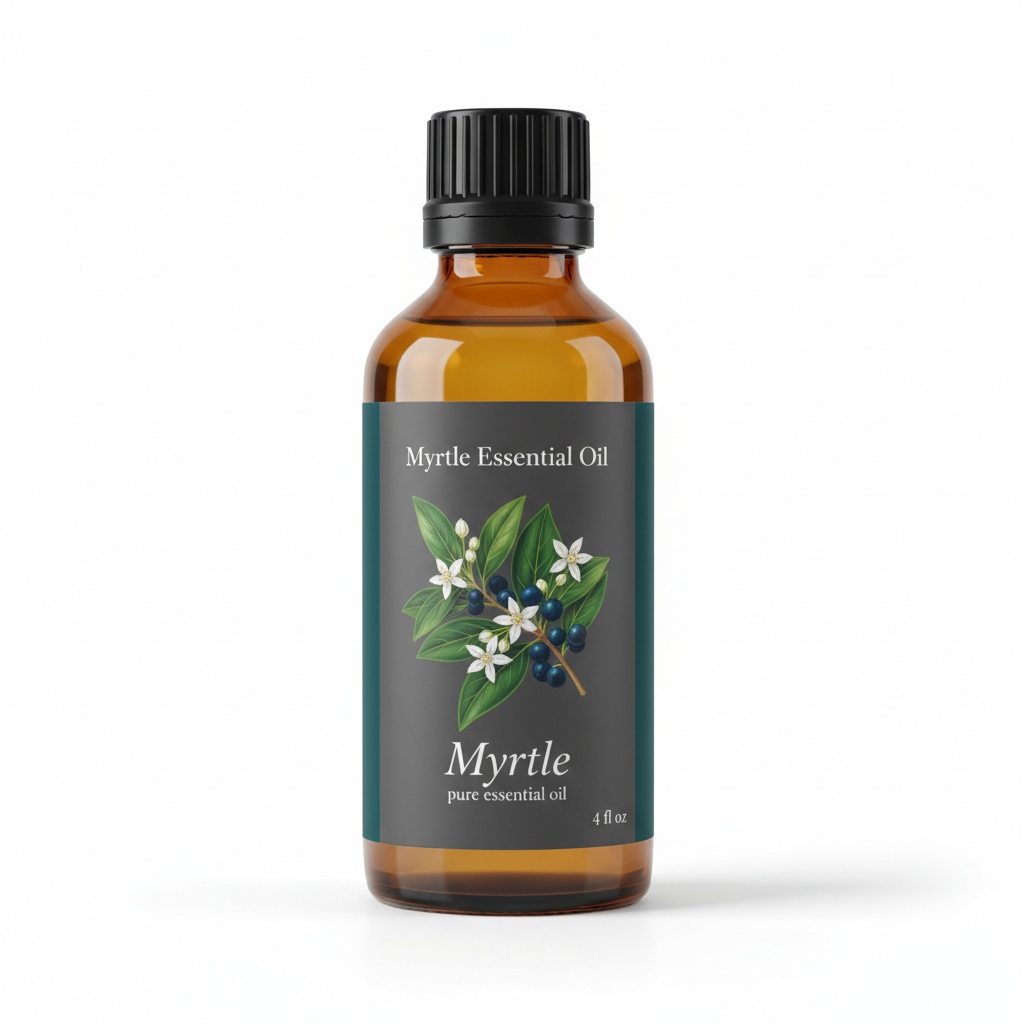
Myrtle Essential Oil
Our own Myrtle Essential Oil, in sizes from 0.5 oz to bulk.
From $16.99
Shop Now →Two different trees
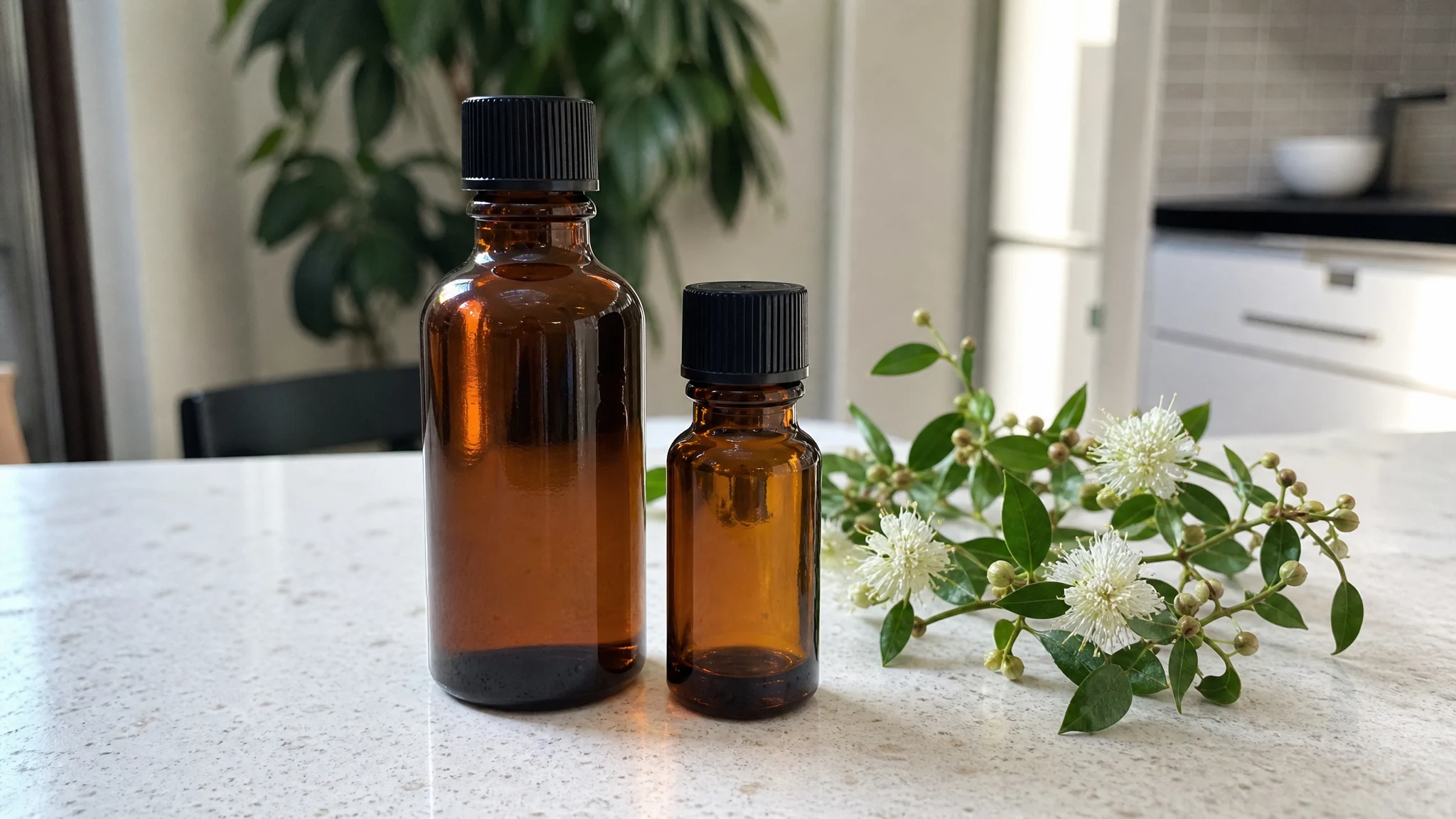
Lemon myrtle is Backhousia citriodora, an Australian tree in the same plant family as true myrtle. Our Myrtle Essential Oil comes from Myrtus communis, the Mediterranean shrub, and is a different oil with a different scent: fresh, clear and gently floral, with a soft eucalyptus-like coolness and faintly honeyed facets. We do not sell lemon myrtle, and our side-by-side comparison covers the two in more detail.
One molecule does most of the talking
Why does lemon myrtle smell so lemony? Because of one ingredient. In a 2022 study, leaves from an organic plantation in Malacca, Malaysia, were distilled for four hours, and 21 compounds made up 98.5% of the oil. Two of them, geranial at about 52% and neral at about 38%, are the two forms of citral, together roughly 90% of that sample (Chemical Composition, Antioxidant, Antibacterial, and Antibiofilm Activities of Backhousia citriodora Essential Oil). That is one sample from one plantation, so it describes that oil rather than all lemon myrtle oil, but it shows how concentrated the character is. Compare a Corsican myrtle oil, led by alpha-pinene at 43% and 1,8-cineole at about 29% (Quorum-Quenching Activity of Myrtus communis Corsican Essential Oil Against the Marine Bacterium Aliivibrio fischeri), and you can see why the aromas have little in common.
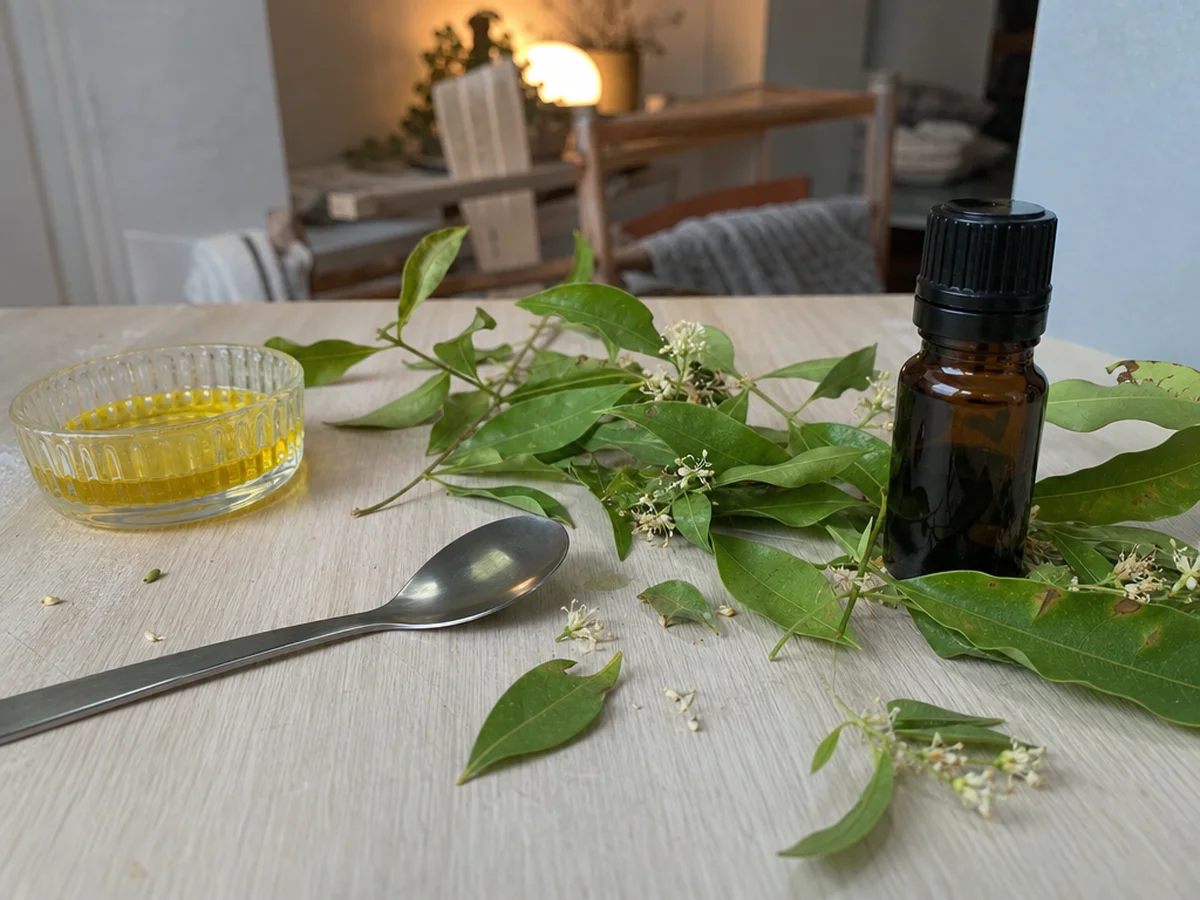
What a citral-rich oil means for blending
Citral is a familiar ingredient in perfumery, and because it can cause skin sensitization, the fragrance industry's standards body, IFRA, sets limits on it by product type. In its 51st Amendment, the maximum is 0.15% of a finished body lotion or face moisturizer, 0.60% of an aftershave or cologne and 1.2% of bar soap or bath products (IFRA Standards, up to and including the 51st Amendment (January 2024)).
These caps apply to citral, not to the whole oil. If an oil were 90% citral, simple division puts the oil itself at about 0.17% of a body lotion, 0.67% of an aftershave and 1.3% of a soap. That is our arithmetic, and the limits are designed for commercial products, but it is a handy starting point if you are formulating with lemon myrtle. For comparison, our own myrtle oil guidance is 0.5% to 2% in a carrier oil with a patch test first, and our safety basics post explains why we suggest starting at the low end.
What the skin research looked at
The most-quoted skin work on lemon myrtle is a two-part study from Australia, and it is a good reminder to read past the headline. Part one tested the oil and citral on human cell lines in the laboratory and found them very toxic to those cells, though the authors still judged a product containing 1% lemon myrtle oil to be low in toxicity (Toxicity of Australian essential oil Backhousia citriodora (Lemon myrtle). Part 1. Antimicrobial activity and in vitro cytotoxicity.). Part two put the oil on excised human abdominal skin: neat oil damaged the tissue, while a 1% formulation let very little citral through and caused limited damage (Toxicity of Australian essential oil Backhousia citriodora (lemon myrtle). Part 2. Absorption and histopathology following application to human skin.). Those are laboratory models rather than trials on living people, but they point the same way as common sense. Dilute lemon myrtle well, and never use it neat.
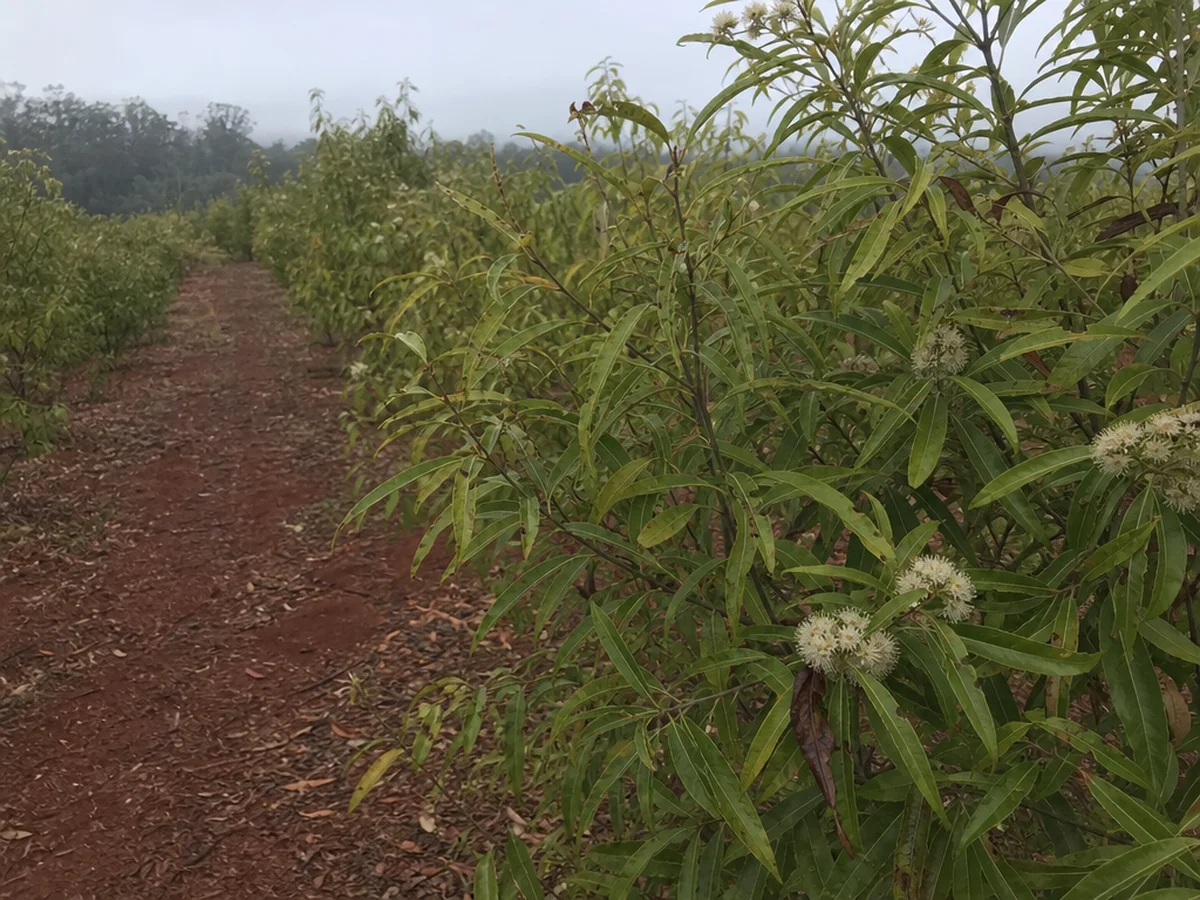
Smell the difference
If you ever have both oils in front of you, the contrast is instant. Lemon myrtle jumps out of the bottle with a sweet, sharp lemon scent. Ours is quieter: fresh and clear, with a cool edge first and a soft floral, faintly honeyed side coming through behind it. One shouts and the other murmurs, and which you prefer depends on the room and the project. Smelling them on separate paper strips, with a few minutes between, makes the difference very easy to see.
It is also worth noticing how each one behaves as it fades. A bright lemon note tends to announce itself and then thin out, while a cool, leafy oil like ours shifts character as the minutes pass. Neither is better. They simply suit different jobs, and knowing that makes it much easier to pick the right bottle for the project in front of you.
If you decide to buy lemon myrtle
You will find it from craft suppliers and aromatherapy retailers, not from us. A few things help you choose well:
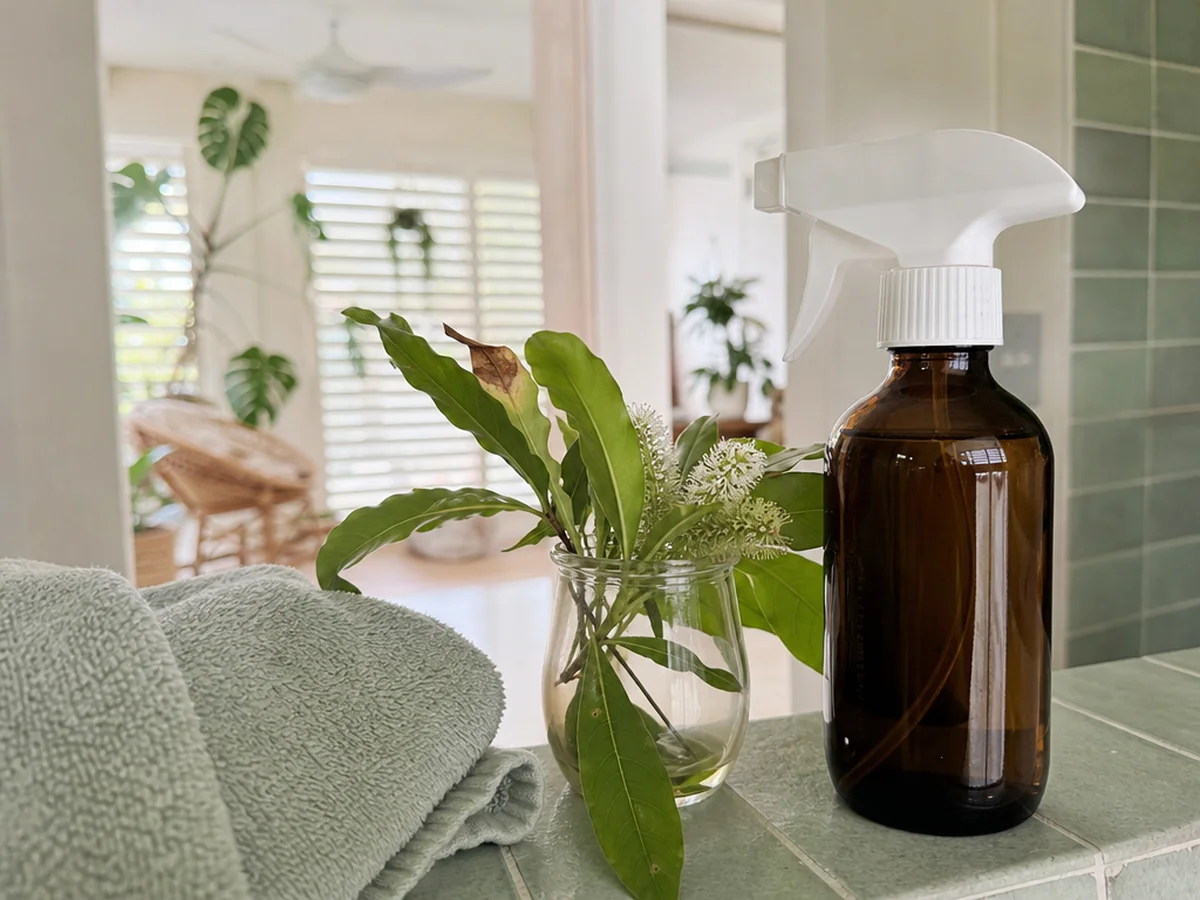
- Look for the botanical name Backhousia citriodora on the label. "Lemon myrtle" on its own cannot be checked.
- Ask for a GC-MS report for the lot, so you know the citral share. Our guide to reading a GC-MS report works for any oil.
- Decide the product first, then the citral cap, then the oil amount.
- Label every bottle with its Latin name the day it arrives, so two "myrtle" bottles never get mixed up on your shelf.
If the fresh, green, floral side of the myrtle family is what you are after, we are happy to talk about our own oil, and our guide to reading a myrtle oil label shows how to tell which plant you have in your hand.
Lemon myrtle and true myrtle are cousins, but each deserves to be bought, blended and enjoyed for what it actually is.
Myrtle Essential Oil
Myrtle Essential Oil from our own shop, in sizes from 0.5 oz to bulk.
From $16.99
Shop Now →Sources & Further Reading
- Chemical Composition, Antioxidant, Antibacterial, and Antibiofilm Activities of Backhousia citriodora Essential Oil
- Quorum-Quenching Activity of Myrtus communis Corsican Essential Oil Against the Marine Bacterium Aliivibrio fischeri
- IFRA Standards, up to and including the 51st Amendment (January 2024)
- Toxicity of Australian essential oil Backhousia citriodora (Lemon myrtle). Part 1. Antimicrobial activity and in vitro cytotoxicity.
- Toxicity of Australian essential oil Backhousia citriodora (lemon myrtle). Part 2. Absorption and histopathology following application to human skin.