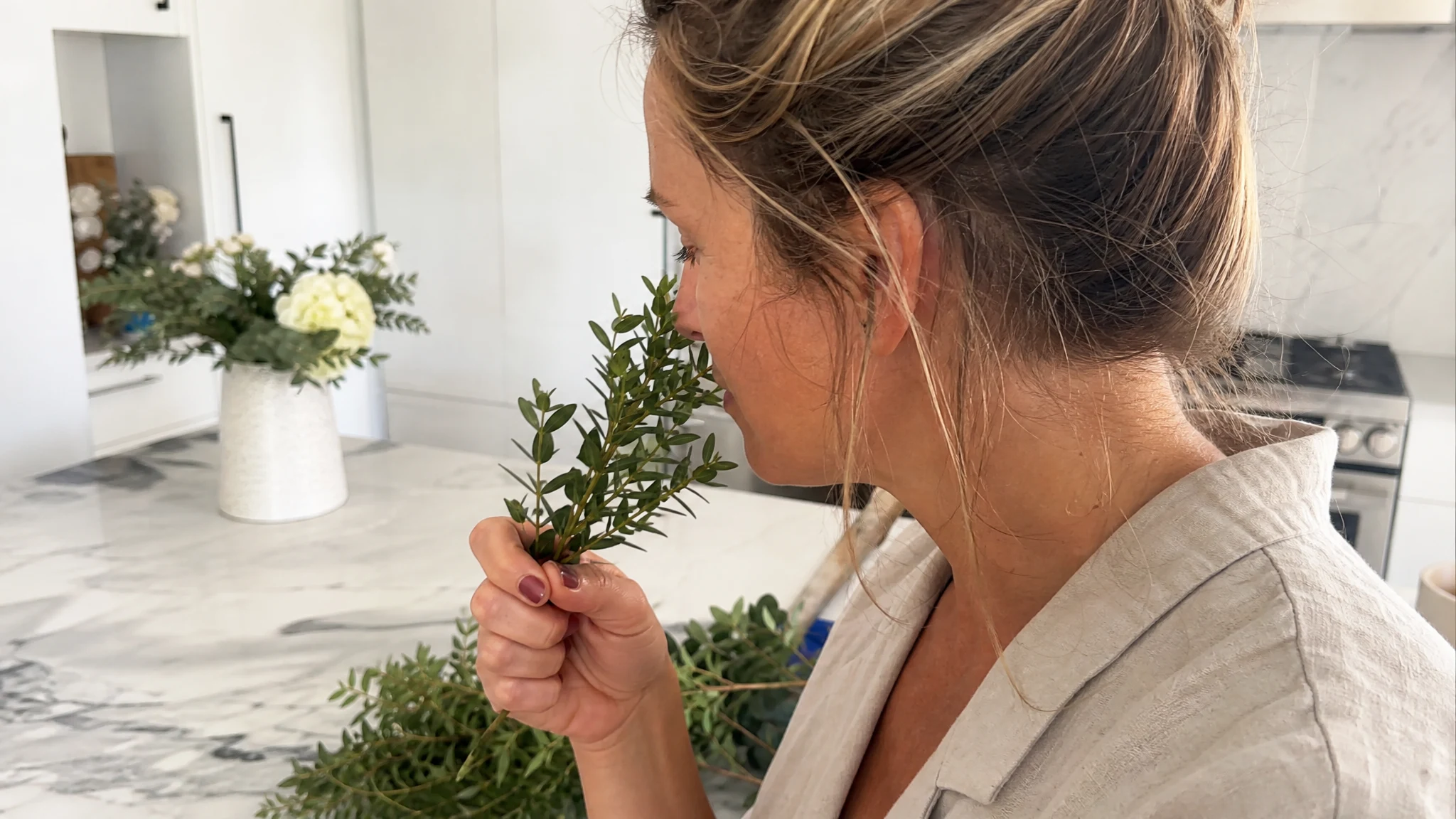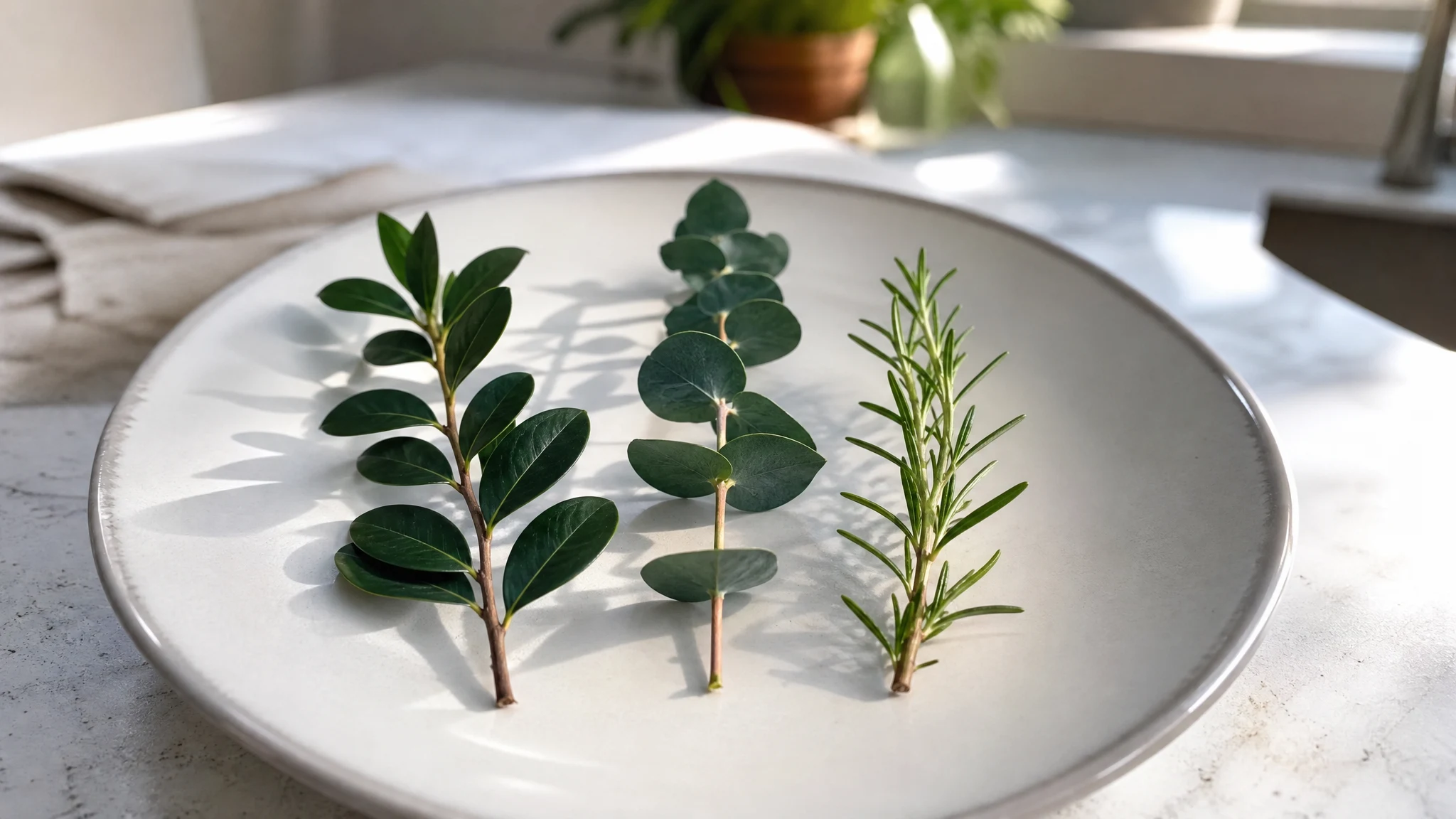
Honey Myrtle vs Myrtle: Who Is in the Myrtle Family?
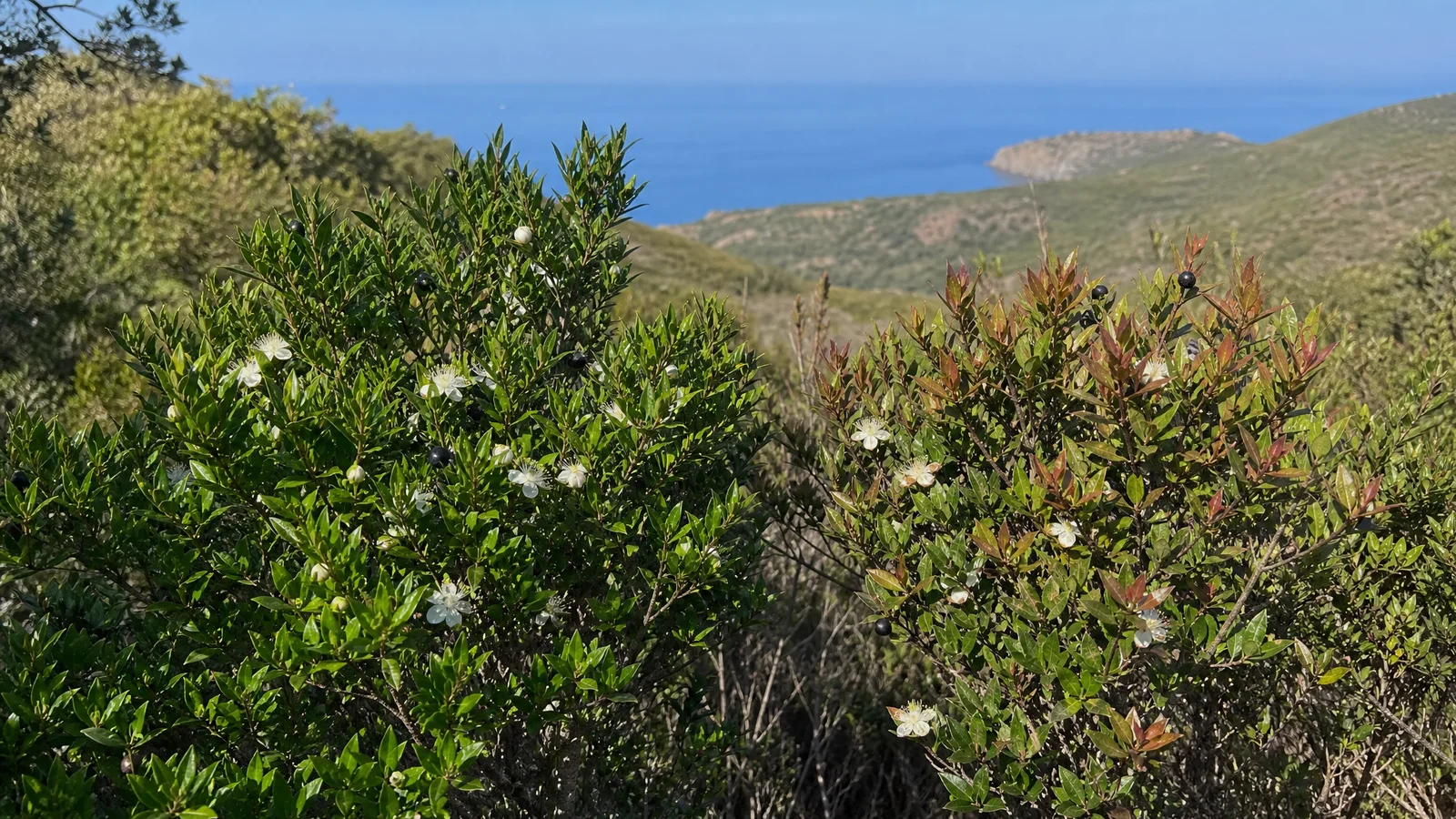
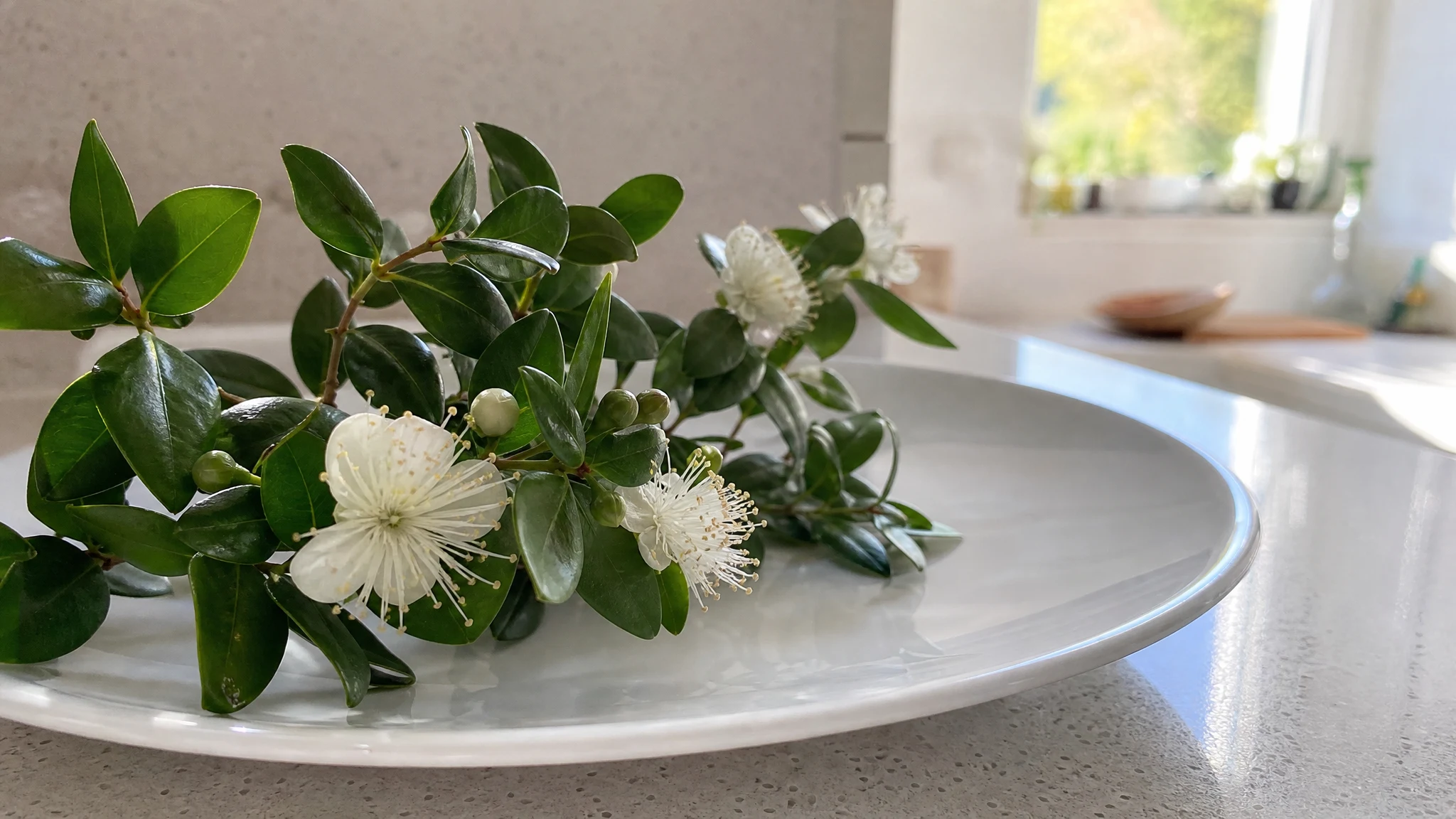
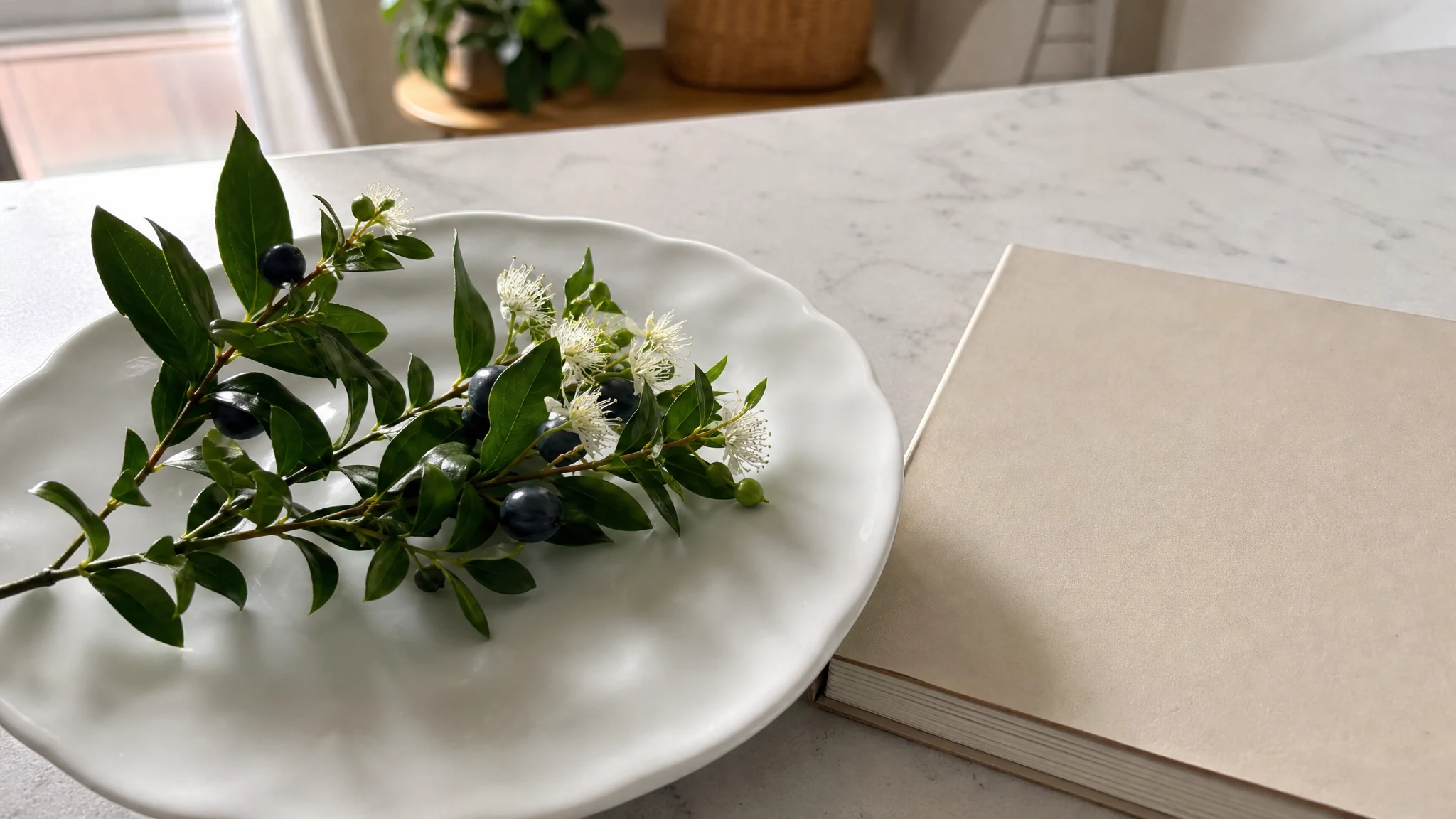
Walk the garden-centre aisle and "myrtle" turns up on all sorts of labels. Honey myrtle, lemon myrtle, crape myrtle, even tea tree get lumped in. The botanical truth is that many of these plants share a family, Myrtaceae, but the oils from that family differ so much that the family name alone tells you very little about a bottle. We sell Myrtus communis, and this post is about telling the cousins apart.
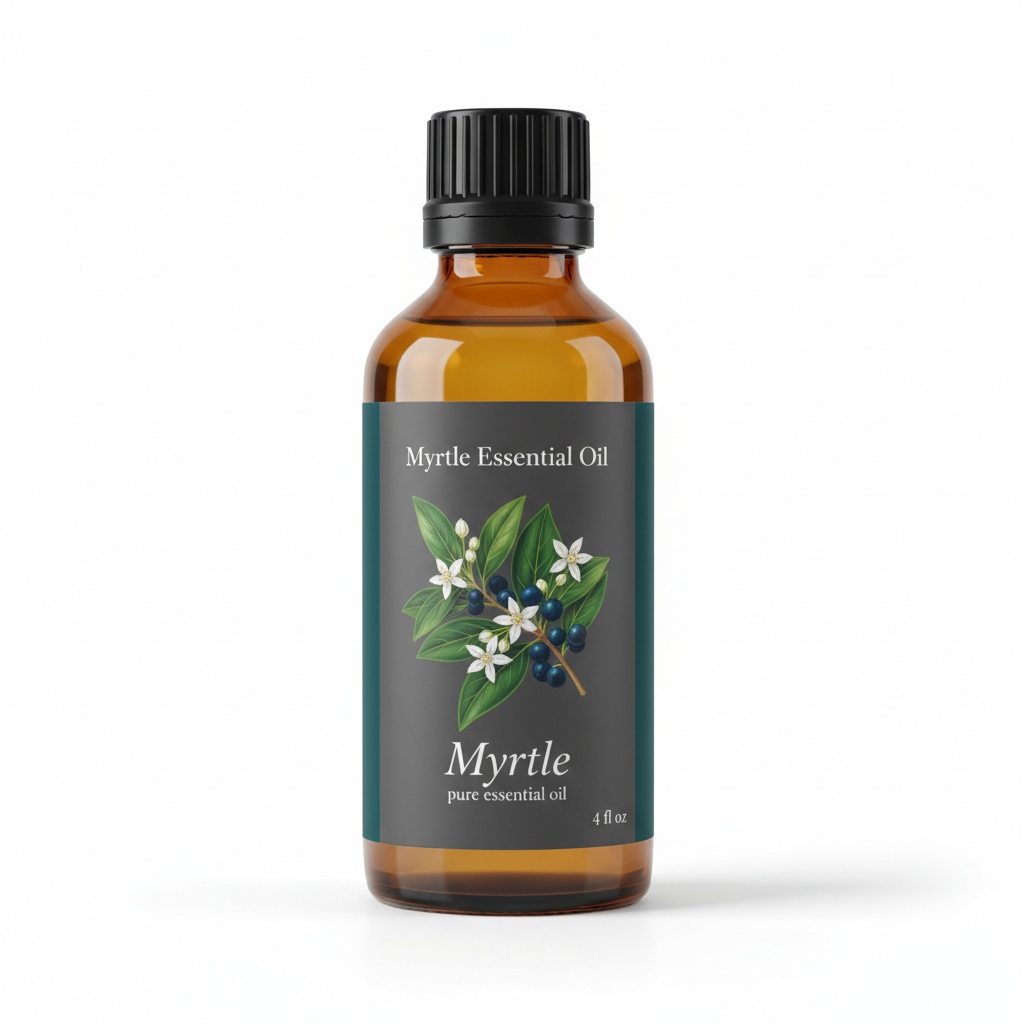
Myrtle Essential Oil
Our own Myrtle Essential Oil, in sizes from 0.5 oz to bulk.
From $16.99
Shop Now →One garden, one method, three different oils
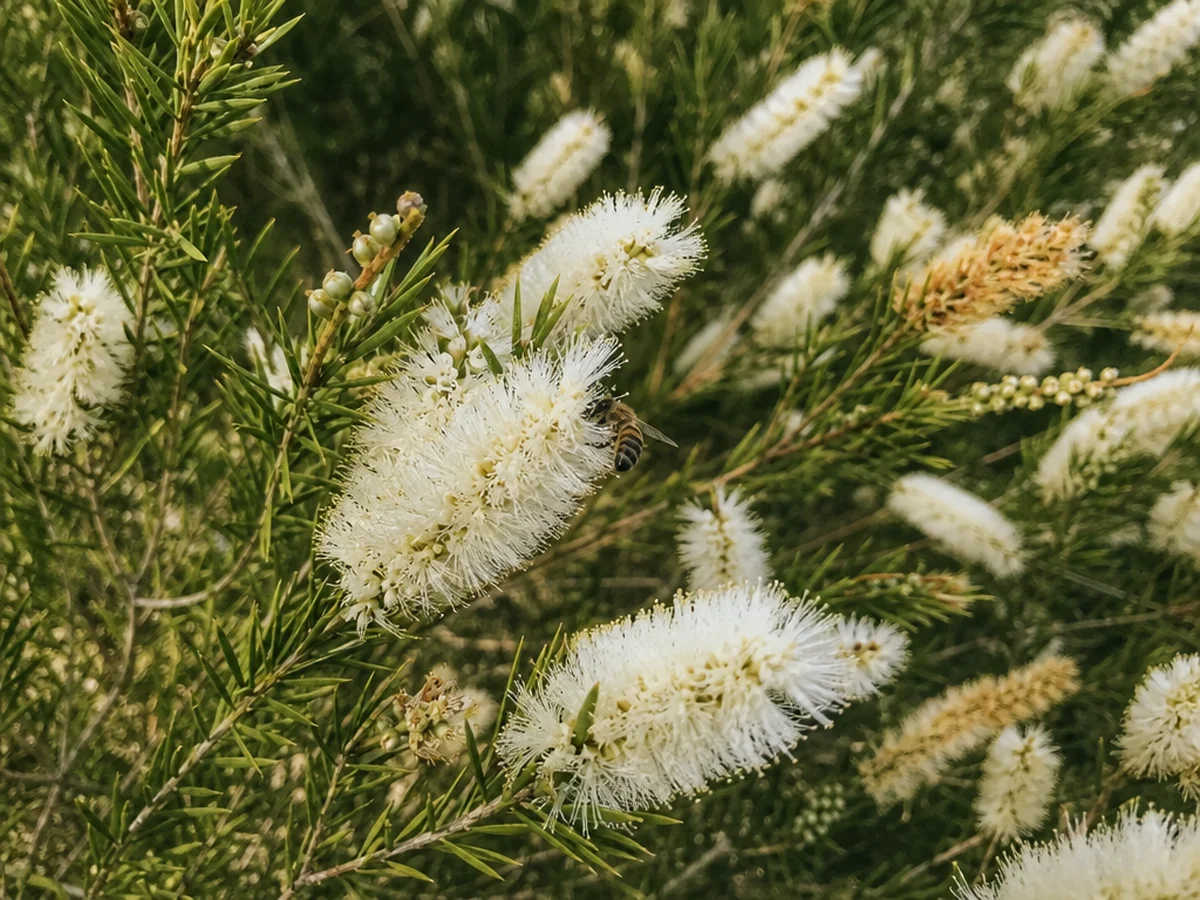
The clearest demonstration is a 2012 study from Tunisia. Researchers collected leaves of three Melaleuca species in April 2011 from a single botanical garden in Ariana and hydrodistilled 100 g of each (dried and ground) for three hours. The paper uses the common name "Bracelet Honey Myrtle" for Melaleuca armillaris and places the genus in Myrtaceae. The three oils could hardly have been less alike:
- M. armillaris (0.65% yield) was led by sesquiterpenes, with cis-calamenene at 19.0% and torreyol at 15.1%.
- M. acuminata (0.53% yield) was mostly oxygenated monoterpenoids, with trans-pinocarveol at 25.1% and dihydrocarveol at 23.6%.
- M. styphelioides (0.35% yield) was 91.1% methyl eugenol.
Nothing in that list says "honey", and nothing repeats from row to row. If a label says only "honey myrtle", you cannot tell which of these, or of many other plants, is inside. Ask for the Latin name, the plant part and a constituent report, in that order.
Yield tells a similar story. At the 0.65% yield, an ounce of oil (28.35 g) takes about 4.4 kg of dried leaf, and at 0.35% about 8.1 kg. That is our arithmetic, and it is one reason a price comparison between two oils that share a family name seldom compares like with like.
Reading a garden-centre tag
The tag on a plant, like the label on a bottle, is a short story, and the Latin name is the part to trust. A plant sold as honey myrtle might be one of several Melaleuca species, while lemon myrtle is Backhousia and ours is Myrtus. When you stand in an aisle, take a moment to read the small print instead of the big friendly word. It is the same habit that makes a good oil shopper, and it takes ten seconds.
Lemon myrtle, the cousin everyone asks about
Lemon myrtle (Backhousia citriodora) is the cousin that gets mistaken for ours most often, and it could not smell more different. A review by Southwell puts the citral chemotype at 80% to 98% citral in the oil, depending on which table you read, which gives it its bright lemon character. We do not sell it. Our lemon myrtle comparison and the lemon myrtle explainer cover the differences. Tea tree and eucalyptus are family members as well, and we compare ours against them in myrtle versus tea tree and myrtle versus eucalyptus.
Why family is a poor guide to safety
That 91.1% methyl eugenol figure shows why we never carry a safety assumption from one oil to a relative. IFRA caps methyl eugenol at 0.0015% of the finished product for body lotions and oils (Category 5A). Dividing the cap by the share, an oil like that could make up at most about 0.0016% of such a product. Published Myrtus communis analyses report far less: 0.2% in a Corsican leaf oil (Hardy et al., 2025) and a mean of 1.40% across 19 Algerian localities. The spread between the Corsican oil and that Melaleuca is roughly 450-fold, inside one family and one compound.
The Certificate of Analysis we publish for one batch of our myrtle lists density and refractive index against stated ranges. To see where an oil sits on a scale like this, you need a GC-MS report, and our reading guide shows what to look for. If a constituent report matters for your formulation, ask us in writing through the contact page before ordering.
We say all this with affection for the whole family. Gardeners, perfumers and cooks each love a different cousin, and none of them is wrong to. Our recommendation is only that you know which one you are holding. If you smell the leaves of one plant and then the oil of another, a bit of the delight goes missing, and the label is the easiest way to avoid that.
A short checklist for any label that says myrtle
- Is there a binomial? Myrtus communis is the plant we sell. Melaleuca, Backhousia, Eucalyptus or Syzygium on a label means a different oil, whatever the common name.
- Is the plant part named? That is the minimum.
- Is there a constituent report for the lot? Without one, take the stricter methyl eugenol case when you work out a dilution.
- Is it even an oil plant? The crape myrtle in a garden centre belongs to a different family altogether; see our guide to that mix-up.
One caution on scope: the Tunisian study is one garden, one harvest month and dried ground leaf, so a different season or a fresh-leaf distillation could shift the percentages, as the studies in our plant guide show for Myrtus communis itself. For us the takeaway is simple. The myrtle family is full of interesting plants, and the one in our bottle is Myrtus communis.
Myrtle Essential Oil
Myrtle Essential Oil from our own shop, in sizes from 0.5 oz to bulk.
From $16.99
Shop Now →Sources & Further Reading
- Amri et al., Chemical composition and biological activities of the essential oils from three Melaleuca species grown in Tunisia, International Journal of Molecular Sciences, 2012. PMC3546708
- Southwell, Backhousia citriodora F. Muell. (Lemon Myrtle), an Unrivalled Source of Citral, Foods, 2021. PMC8305781
- International Fragrance Association, IFRA Standards, 51st Amendment (methyl eugenol standard). ifra-standards-51st-amendment.pdf
- Hardy et al., Quorum-Quenching Activity of Myrtus communis Corsican Essential Oil Against the Marine Bacterium Aliivibrio fischeri, Microorganisms, 2025. PMC12195544
- Mohamadi et al., Chemical composition and antimicrobial activity of Myrtus communis essential oils from Algeria, Biodiversitas, 2021. smujo.id/biodiv/article/view/7327