Myrtle vs Eucalyptus Oil: Which Cool Scent Is Yours?
Open a bottle of eucalyptus oil and the cool, sharp lift is unmistakable. Open a bottle of myrtle oil and you may catch a faint echo of it, then something greener, softer and a little floral behind it. People often ask whether one can stand in for the other, and the short answer is that they overlap in one note and then go their own ways.
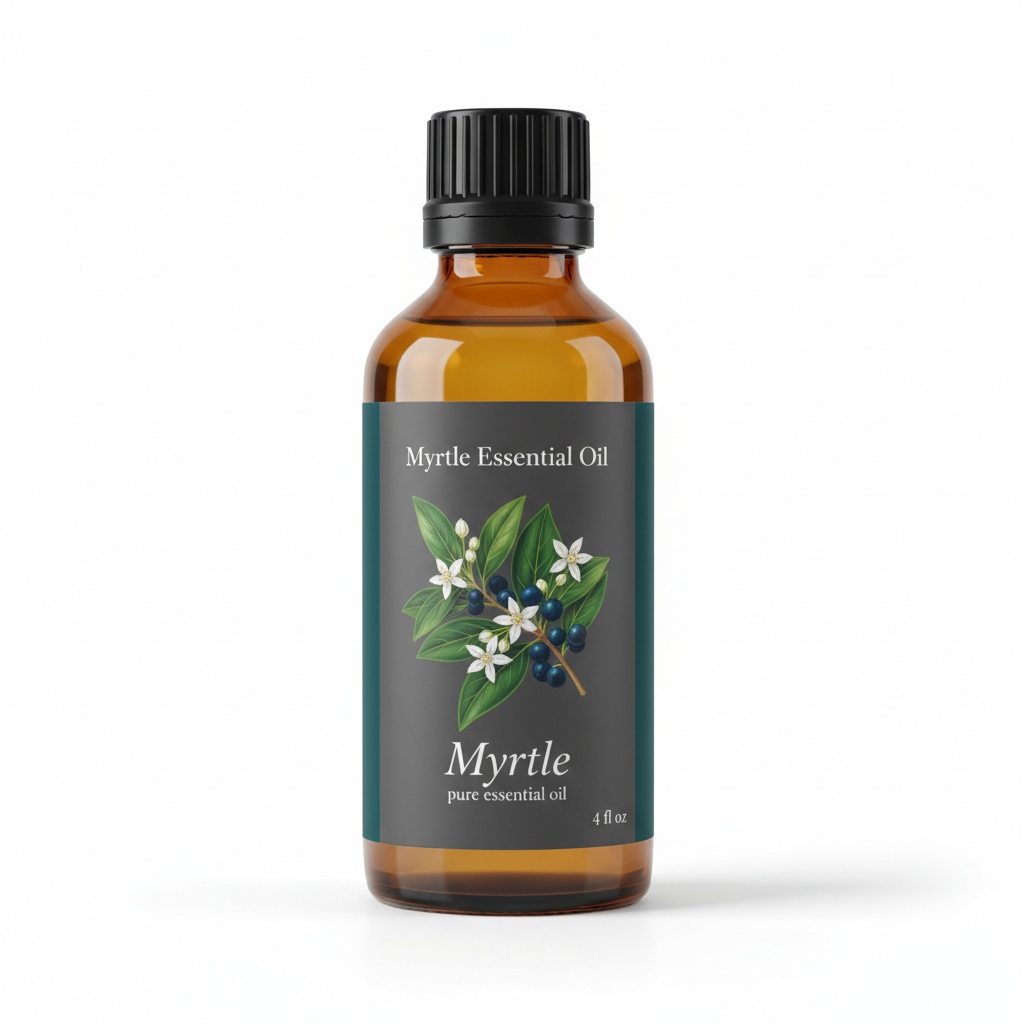
Myrtle Essential Oil
Our own Myrtle Essential Oil, in sizes from 0.5 oz to bulk.
From $16.99
Shop Now →The note they share
The overlap is a compound called 1,8-cineole, also known as eucalyptol. It is the cool, camphor-like note people connect with eucalyptus. In eucalyptus oil it is the headline: the International Programme on Chemical Safety monograph states that medicinal eucalyptus oil contains not less than 70% w/w of cineole (Eucalyptus oil (PIM 031)). That is a medicinal specification, but it shows how central cineole is to the oil.
Myrtle has no single defining compound. A Corsican producer's leaf oil was led by alpha-pinene at 43.0%, with cineole second at 28.8% (Hardy et al., 2025). Nineteen Algerian populations averaged 50.1% alpha-pinene and 22.27% cineole (Mohamadi et al., 2021), and a Moroccan oil from the Ouazzane region reached 36.3% cineole (Harassi et al., 2019). So myrtle can carry plenty of cineole, but the typical sample is pinene-led and the range is wide.
If you only have one of the two at home, do not worry. Describe what you smell in your own words, whether that is garden, laundry line, pine needles or a cool cellar, and write it down. Your own vocabulary is the most useful guide you will ever have for choosing oils.
How they smell side by side
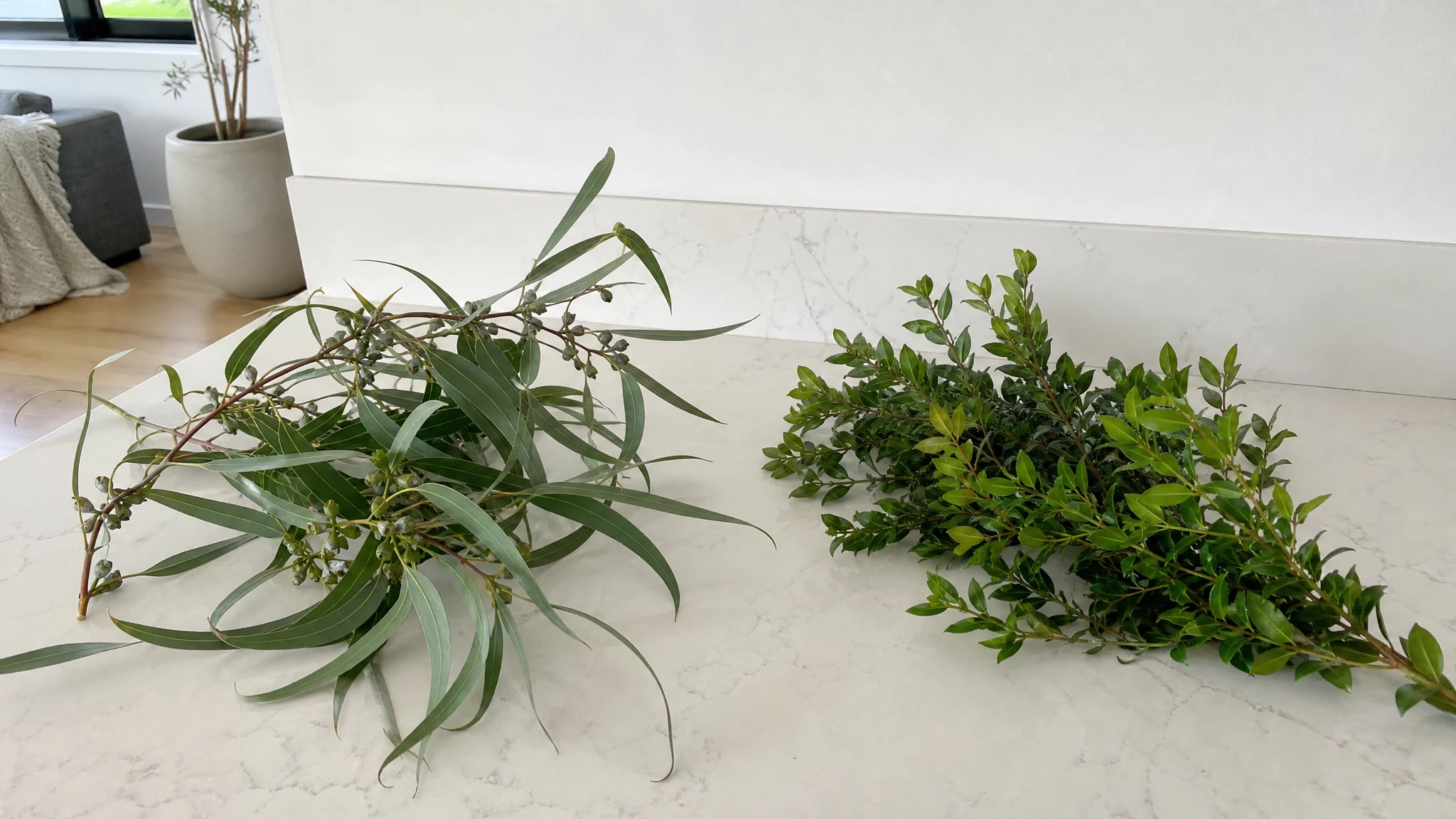
Reading those numbers into a nose is our own interpretation, but it fits what we describe. Eucalyptus is bright and penetrating, a straight line of cool. Our myrtle is fresh, clear and gently floral, with a soft eucalyptus-like coolness and faintly honeyed facets. If eucalyptus is a window thrown open, myrtle is the garden just outside it. For a diffuser, a room spray or a cologne, that softer, greener profile is the reason to choose myrtle.
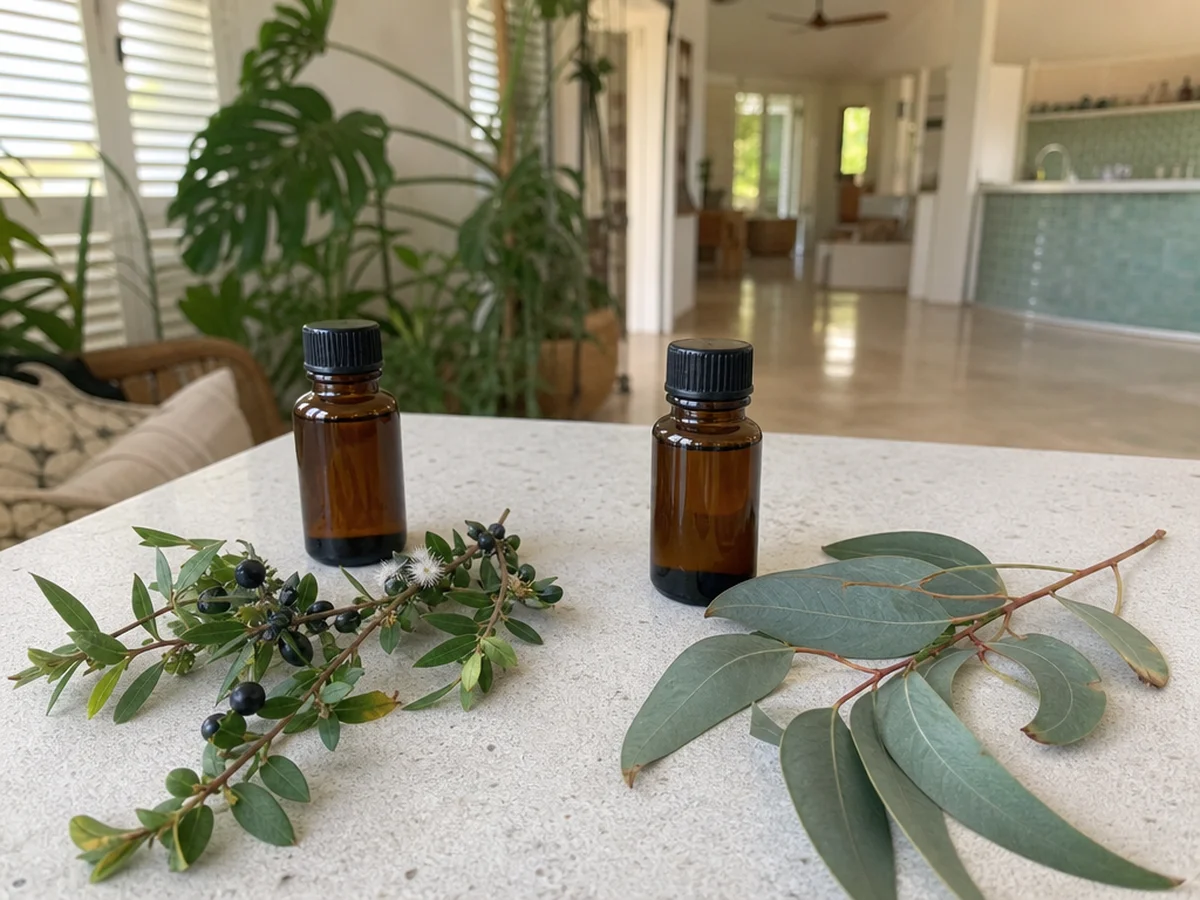
If you want that sharp, clean blast, eucalyptus is the oil to buy, and you will find it at an aromatherapy or craft supplier, since we sell myrtle only. Our post on myrtle substitutes goes through what matches and what does not.
Try them side by side on paper
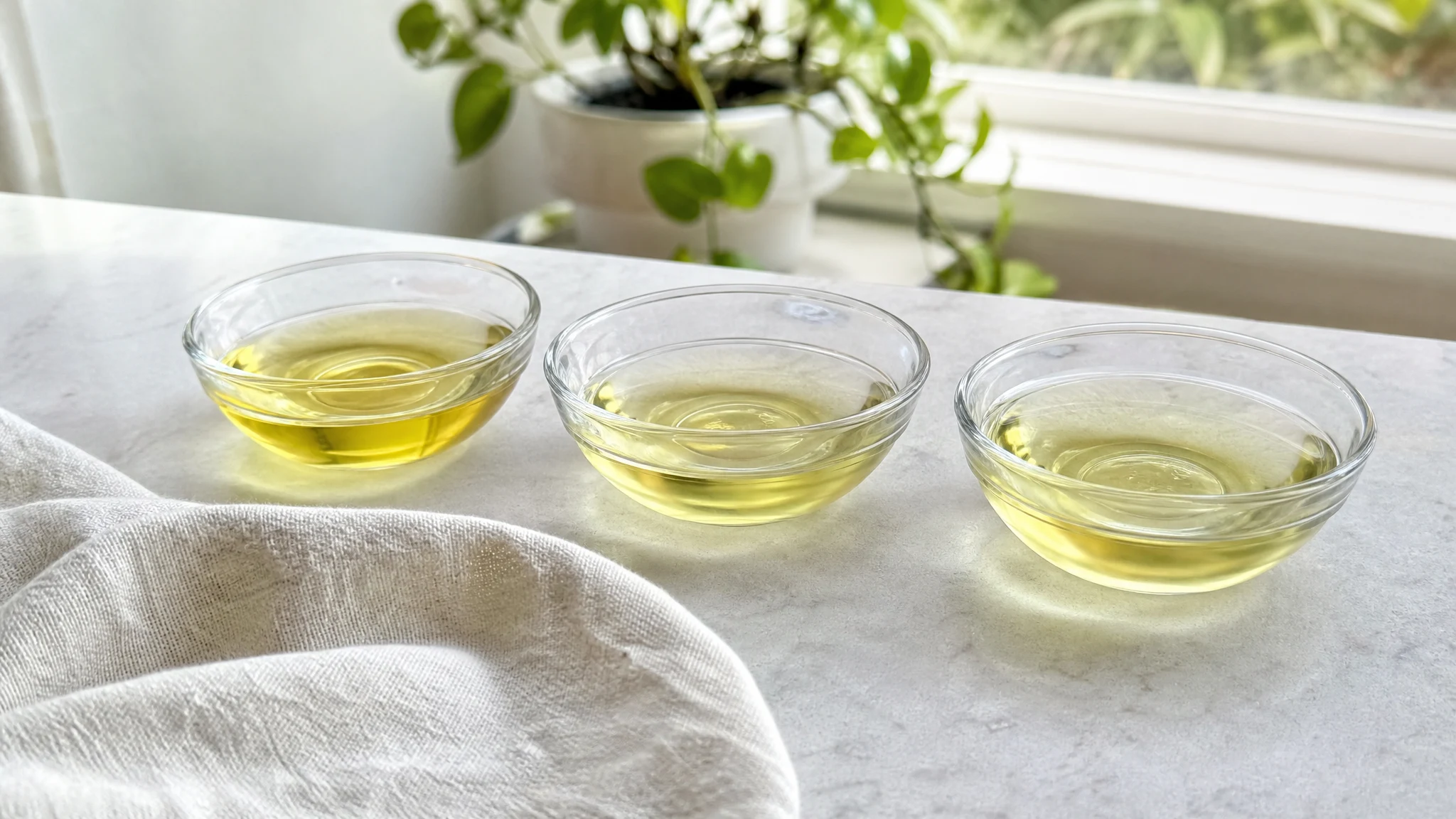
The easiest way to learn the difference is with your nose. Put a drop of each oil on separate strips of blotting paper or plain unscented card, label them in pencil, and hold them a few inches away one at a time. Eucalyptus reaches you in one clean sweep. With myrtle, wait a few seconds and look for the greener, rounder note under the coolness, then come back to the strips after ten minutes and see what is left.
In a diffuser or a cologne
In a room, a little myrtle goes a long way, and the coolness stays friendly. It can sit beside lemon or lavender and read as a garden rather than a pharmacy. If you blend the two oils on a blotter, start with more myrtle than eucalyptus and add the eucalyptus a drop at a time, because the sharper oil can take over a blend faster than you expect.
A shared habit worth keeping
Both oils are concentrated materials and both belong on a high shelf with a closed cap. The eucalyptus monograph notes that children who swallowed 2 to 3 mL of pure eucalyptus oil showed minor depression of consciousness, which is a good reason to keep any essential oil out of reach and out of the bathroom counter routine. We apply the same line to our myrtle: for external use only, keep away from eyes, children and pets, and do not take it internally.
On skin, our dilution guidance for myrtle is 0.5% to 2% in a carrier with a patch test first. Because one supplier page quotes a maximum dermal level of 1.9% from Tisserand and Young (Myrtle - Hopewell Essential Oils), we suggest starting at 0.5% and keeping under that figure. The skin figures for eucalyptus are its own, so do not carry them over from one oil to the other.
Why we love the softer one
We sell myrtle because we love how unshowy it is. Eucalyptus announces itself from across the room, and myrtle rewards you for leaning in. That is a matter of taste, of course, and the nicest thing about owning both is that you can reach for whichever suits the day.

Picking by purpose
- You want a crisp, cooling room scent. Eucalyptus does that more directly, and you can pair it with myrtle if you like; we list eucalyptus among the oils that blend well with myrtle.
- You want something green and softly floral. That is myrtle. Our guide to what myrtle smells like describes it in more detail.
- You are comparing herbal oils. See myrtle vs rosemary and myrtle vs tea tree, two more neighbours in the same aromatic family of shelves.
- You need exact numbers for a formula. Ask your supplier for the GC-MS report for the lot. If you would like constituent data from us, ask in writing through the contact page.
Two oils can share a cool edge and still be different characters. Smell them both, and let your nose pick the one you want to live with.
Myrtle Essential Oil
Myrtle Essential Oil from our own shop, in sizes from 0.5 oz to bulk.
From $16.99
Shop Now →Sources & Further Reading
- International Programme on Chemical Safety (INCHEM). Eucalyptus oil (PIM 031). inchem.org
- Hardy E, Poli JP, Bighelli A, et al., 2025. Quorum-Quenching Activity of Myrtus communis Corsican Essential Oil Against the Marine Bacterium Aliivibrio fischeri. Microorganisms. PMC12195544
- Mohamadi Y, Lograda T, Ramdani M, Figueredo G, Chalard P, 2021. Chemical composition and antimicrobial activity of Myrtus communis essential oils from Algeria. Biodiversitas 22(2). smujo.id
- Harassi Y, Tilaoui M, Idir A, et al., 2019. Phytochemical analysis, cytotoxic and antioxidant activities of Myrtus communis essential oil from Morocco. Journal of Complementary and Integrative Medicine. PubMed 30661057
- Hopewell Essential Oils. Myrtle - Hopewell Essential Oils. hopewelloils.com