Is Myrtle Oil Like Tea Tree Oil? How They Differ
Tea tree and myrtle share a family tree, and that is about where the family resemblance ends. Tea tree is sharp, medicinal and easy to recognise. Myrtle is greener, a little floral, and harder to pin to a single note. Comparing them is a nice way to see how much two relatives can differ once you smell them.
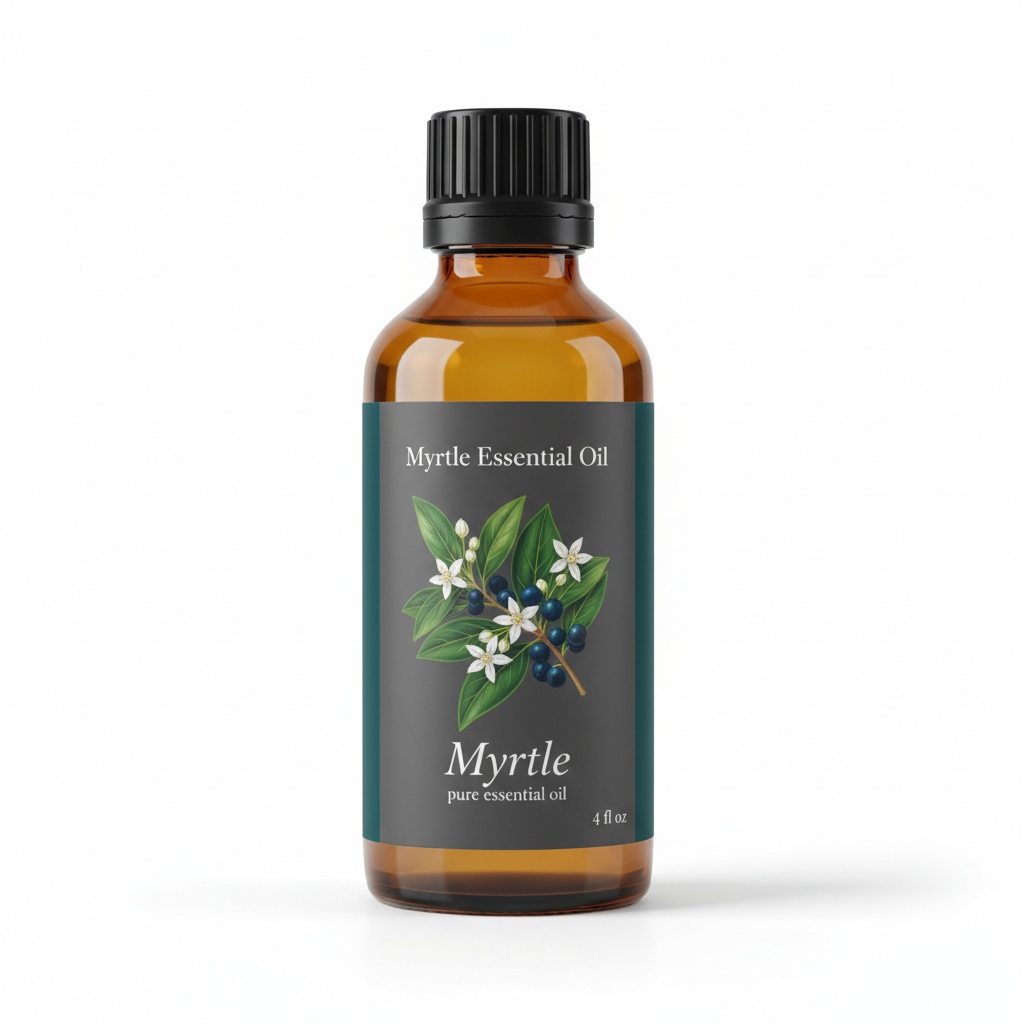
Myrtle Essential Oil
Our own Myrtle Essential Oil, in sizes from 0.5 oz to bulk.
From $16.99
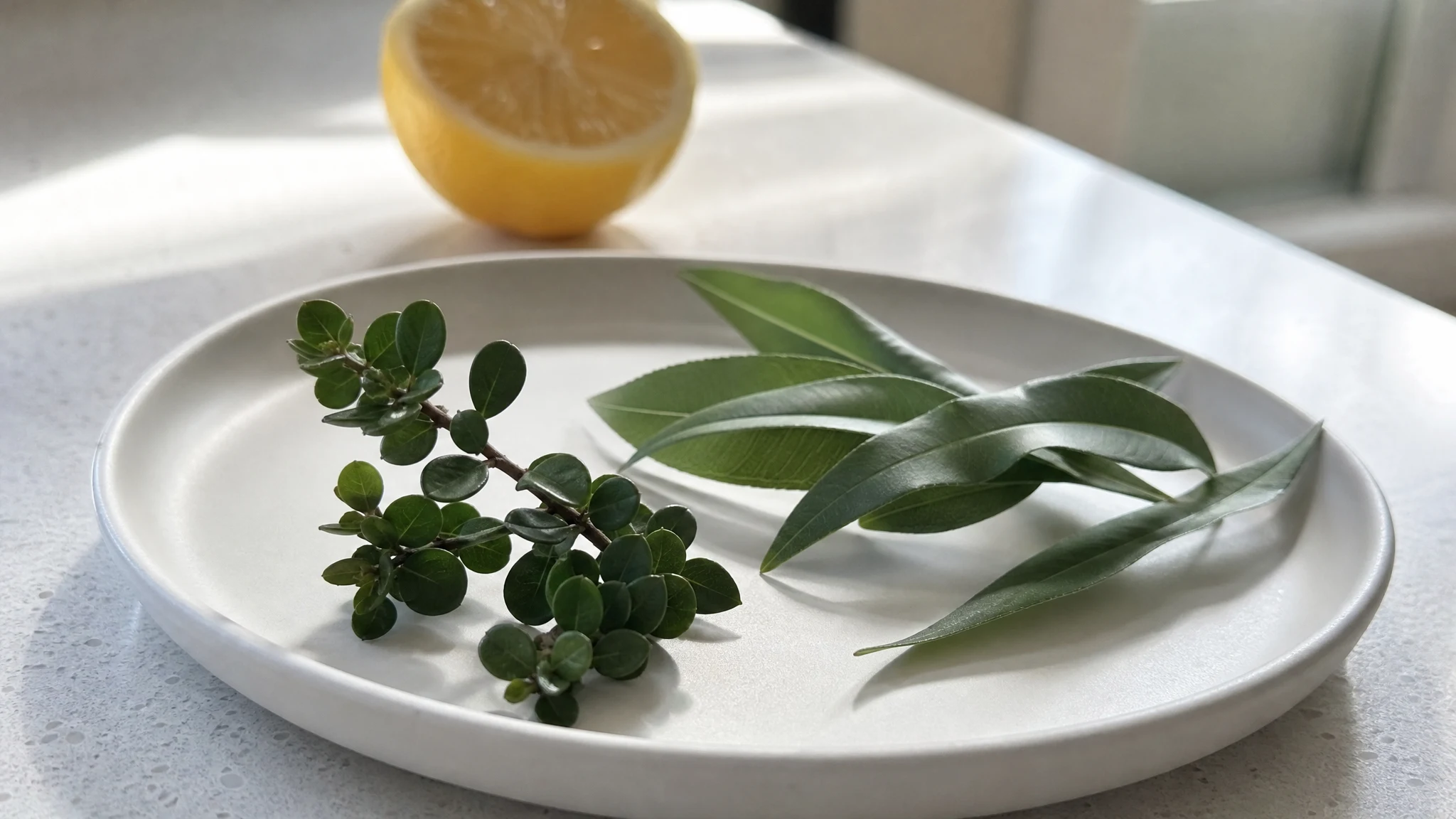
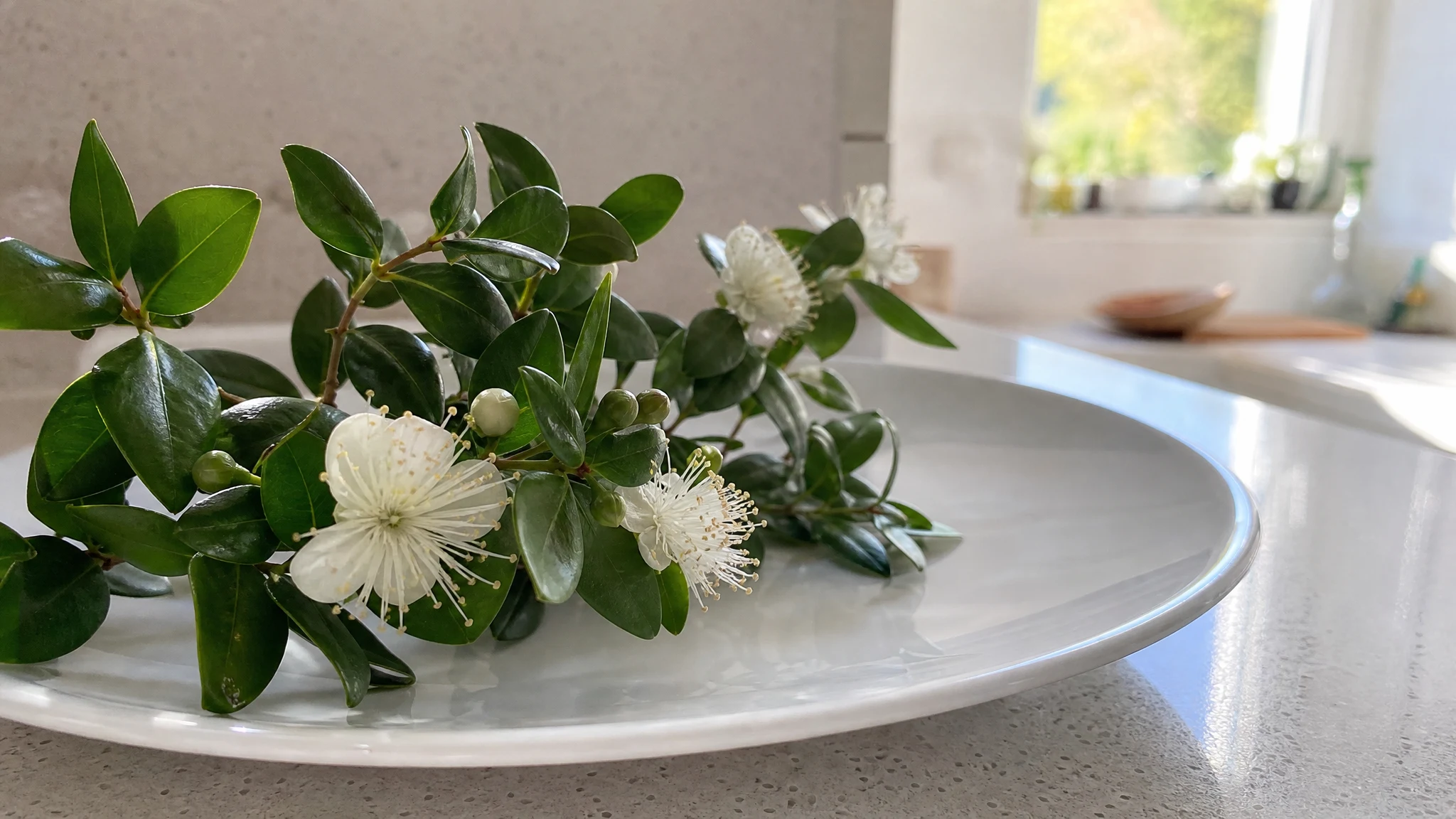
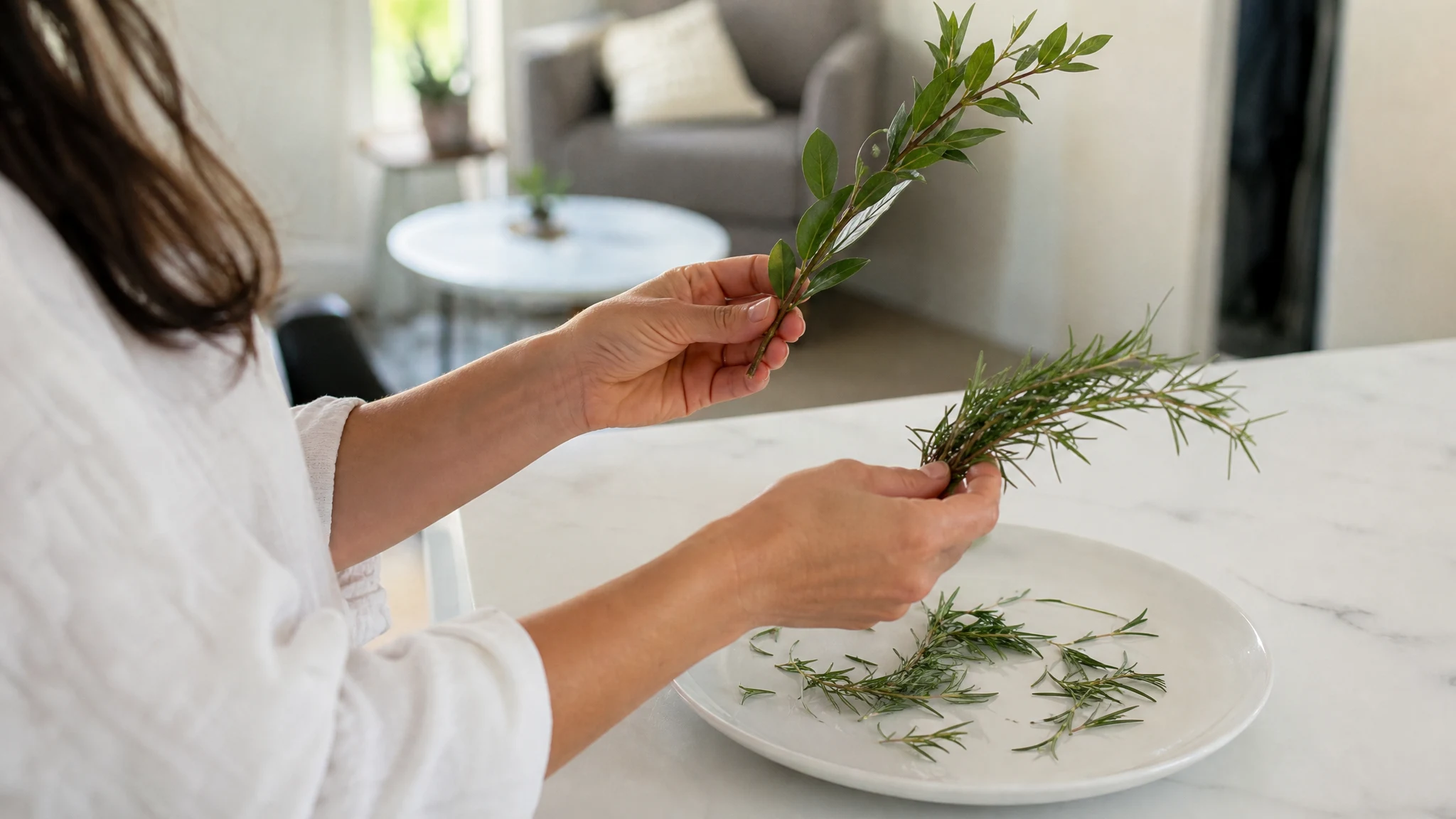
Shop Now →The funny part is how the family resemblance hides in plain sight. Pick up a myrtle leaf and a tea tree leaf and both are small, narrow and aromatic when rubbed. Close your eyes and sniff, though, and the personalities part ways quickly. Looks run in the family, but scent is its own talent.
Cousins, not twins
Tea tree oil comes mainly from Melaleuca alternifolia, which a USDA-led study places in the Myrtaceae, the myrtle family (Vazquez et al., 2023). Myrtle is Myrtus communis, a Mediterranean shrub of the same family. Membership of a plant family predicts surprisingly little about an oil. What matters is which aromatic molecules the leaf makes.
What defines each oil
Tea tree's calling card is terpinen-4-ol. In seven tea tree oils analysed in that USDA-led study, it ran from 37.66% to 44.28%, followed by gamma-terpinene and alpha-terpinene. Those are the molecules behind tea tree's sharp, medicinal character.
Myrtle is built on a different set. Leaf oils in the literature are typically led by alpha-pinene, with 1,8-cineole behind it: a Corsican producer's oil came in at 43.0% pinene and 28.8% cineole (Hardy et al., 2025), and 19 Algerian populations averaged 50.1% and 22.27% (Mohamadi et al., 2021). Linalool and myrtenyl acetate often add a sweeter layer. The result is why we describe our oil as fresh, clear and gently floral, with a soft eucalyptus-like coolness, rather than medicinal. Myrtle varies more from one plant or place to another, so if you are formulating for a precise result, a constituent report for your lot is the useful document.
How the two smell side by side
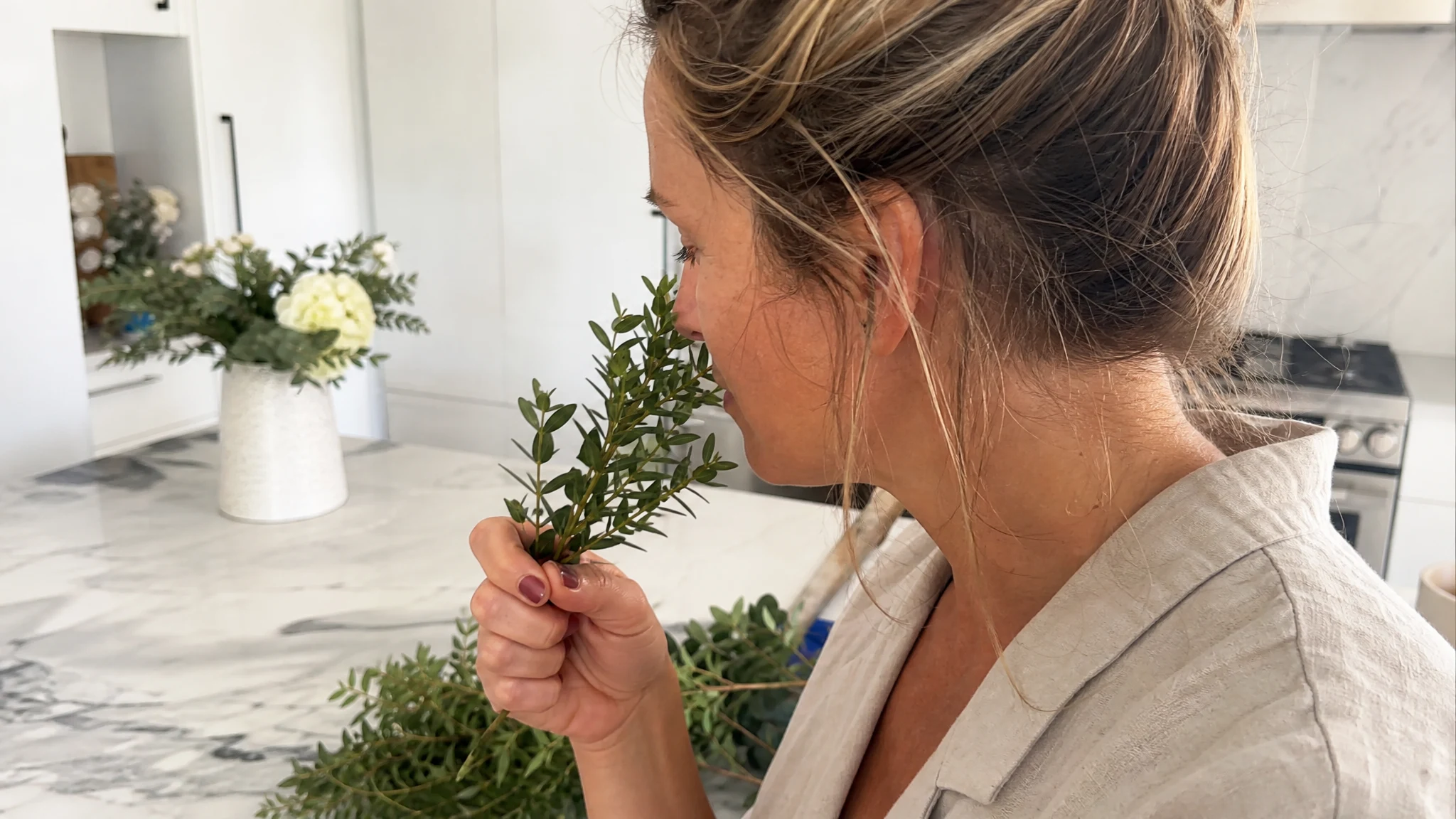
Hold tea tree to your nose and the word that comes up is clinical: sharp, camphor-edged, a little like a first-aid cupboard. Hold myrtle there and the word is garden: leafy and cool, with sweeter floral notes tucked behind. Neither is better, and the contrast is the most useful thing a blotter strip can teach you.
What tea tree teaches about storage
Tea tree has been studied closely on skin, and one lesson applies to nearly every essential oil. In a 1999 study, tea tree oil left on a window sill saw its peroxides climb from under 50 to over 500 ppm within four days, and the oxidised oil was about three times as strong a sensitiser in guinea pigs as the fresh oil (Hausen et al., 1999). The US National Center for Complementary and Integrative Health makes a similar point in plain language: skin reactions to tea tree oil may be more likely if the product is old or has been exposed to heat, light or air (Tea Tree Oil: Usefulness and Safety | NCCIH).
That work is about tea tree, not myrtle. Reasoning from it, since myrtle oil also contains monoterpenes such as alpha-pinene, we apply the same habits: keep it tightly capped, in a cool, dark place, and decant working amounts into smaller airtight bottles. Our storage post, how to store myrtle oil, gives the full routine, and our shelf life guidance is typically 2 to 3 years.
Dilution for myrtle
Our dilution guidance for myrtle on skin is 0.5% to 2% in a carrier oil, with a patch test on a small area first. A supplier page quotes Tisserand and Young's maximum dermal level for myrtle as 1.9% (Myrtle - Hopewell Essential Oils), so we suggest starting at 0.5% and staying below that figure. For one ounce of carrier, that is roughly 3 drops at 0.5%, using the usual 20 drops per ml convention. Tea tree has its own guidance from its own sources, which is another reason not to swap one oil's numbers for the other's.
Using myrtle where you might have reached for tea tree
If you came here looking for a fresh scent for a room, myrtle makes a pleasant diffuser oil with a light, leafy freshness. Start with a couple of drops and a short session with a window cracked, and let your nose decide whether you want more.
A friendly rule: choose an oil for how it smells and what you plan to make, not because it belongs to a plant family. A recipe written for tea tree was built around tea tree's character, and swapping in myrtle turns it into a different recipe. Write the Latin name on every bottle you own and your shelf stays honest.
Which one is for you
- You want a sharp, clinical-smelling oil. Tea tree is the one, available from other suppliers since we sell myrtle only.
- You want green, herbal and a little floral. That is myrtle. Try our eucalyptus comparison or the rosemary comparison for other neighbours.
- You are comparing for a product. Read our GC-MS guide so you know what to ask for.
Two oils from one plant family, two quite different moods. Smell both and you will not mistake one for the other.
Myrtle Essential Oil
Myrtle Essential Oil from our own shop, in sizes from 0.5 oz to bulk.
From $16.99
Shop Now →Sources & Further Reading
- Vazquez A, Tabanca N, Kendra PE, et al., 2023. HPTLC Analysis and Chemical Composition of Selected Melaleuca Essential Oils. Molecules. PMC10180325
- Hardy E, Poli JP, Bighelli A, et al., 2025. Quorum-Quenching Activity of Myrtus communis Corsican Essential Oil Against the Marine Bacterium Aliivibrio fischeri. Microorganisms. PMC12195544
- Mohamadi Y, Lograda T, Ramdani M, Figueredo G, Chalard P, 2021. Chemical composition and antimicrobial activity of Myrtus communis essential oils from Algeria. Biodiversitas 22(2). smujo.id
- Hausen BM, Reichling J, Harkenthal M, 1999. Degradation products of monoterpenes are the sensitizing agents in tea tree oil. American Journal of Contact Dermatitis. PubMed 10357714
- National Center for Complementary and Integrative Health. Tea Tree Oil: Usefulness and Safety | NCCIH. nccih.nih.gov
- Hopewell Essential Oils. Myrtle - Hopewell Essential Oils. hopewelloils.com