Corsican vs Moroccan Myrtle Oil: Does Origin Matter?
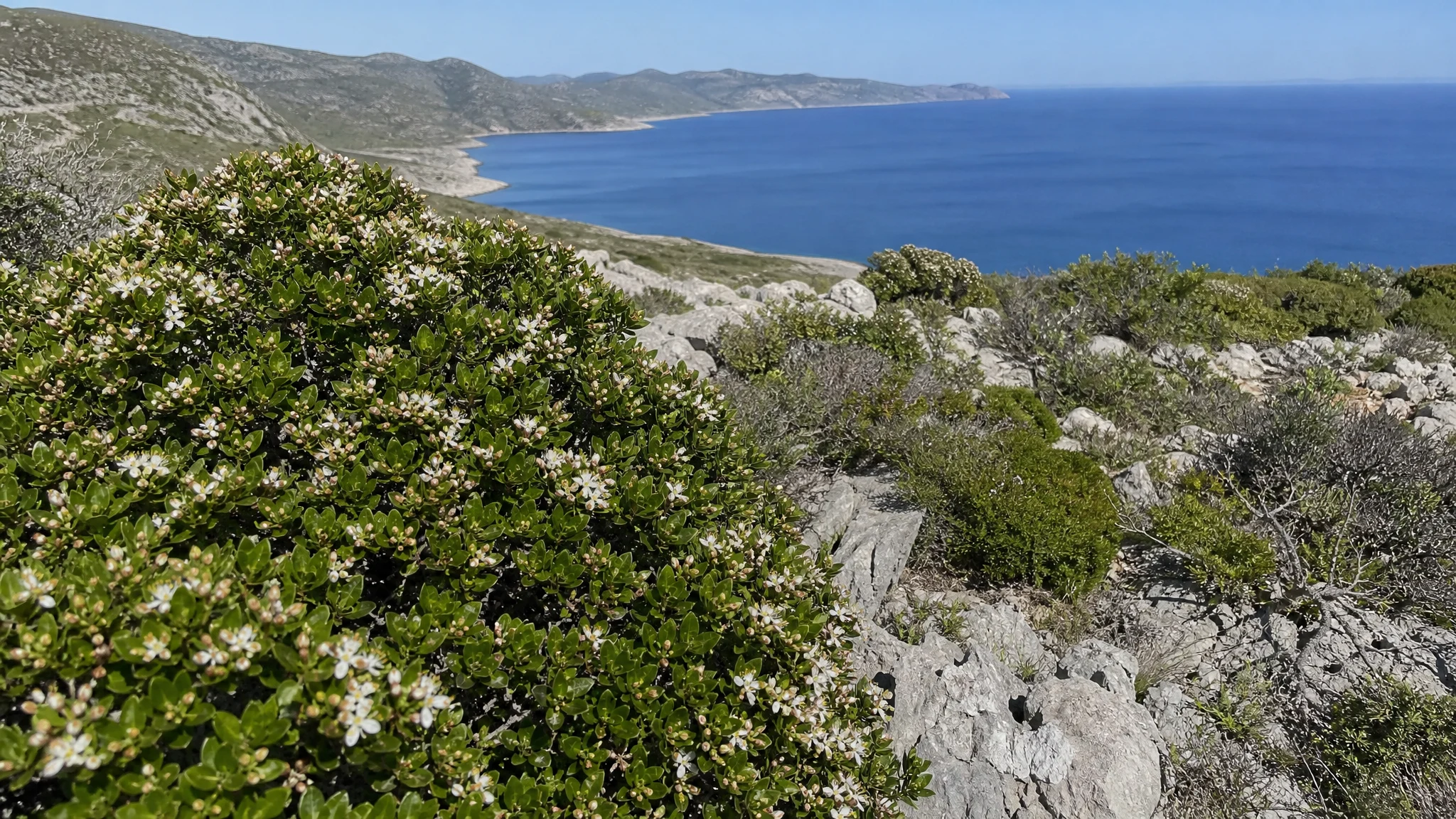
Myrtle is a Mediterranean shrub, and when a bottle says Corsica or Morocco it is easy to assume you know what is inside. Trade lore has an appealing shorthand: green myrtle from Corsica, red myrtle from Morocco. Laboratory papers tell a richer story, and it is a more useful one if you want to pick an oil you will actually enjoy.
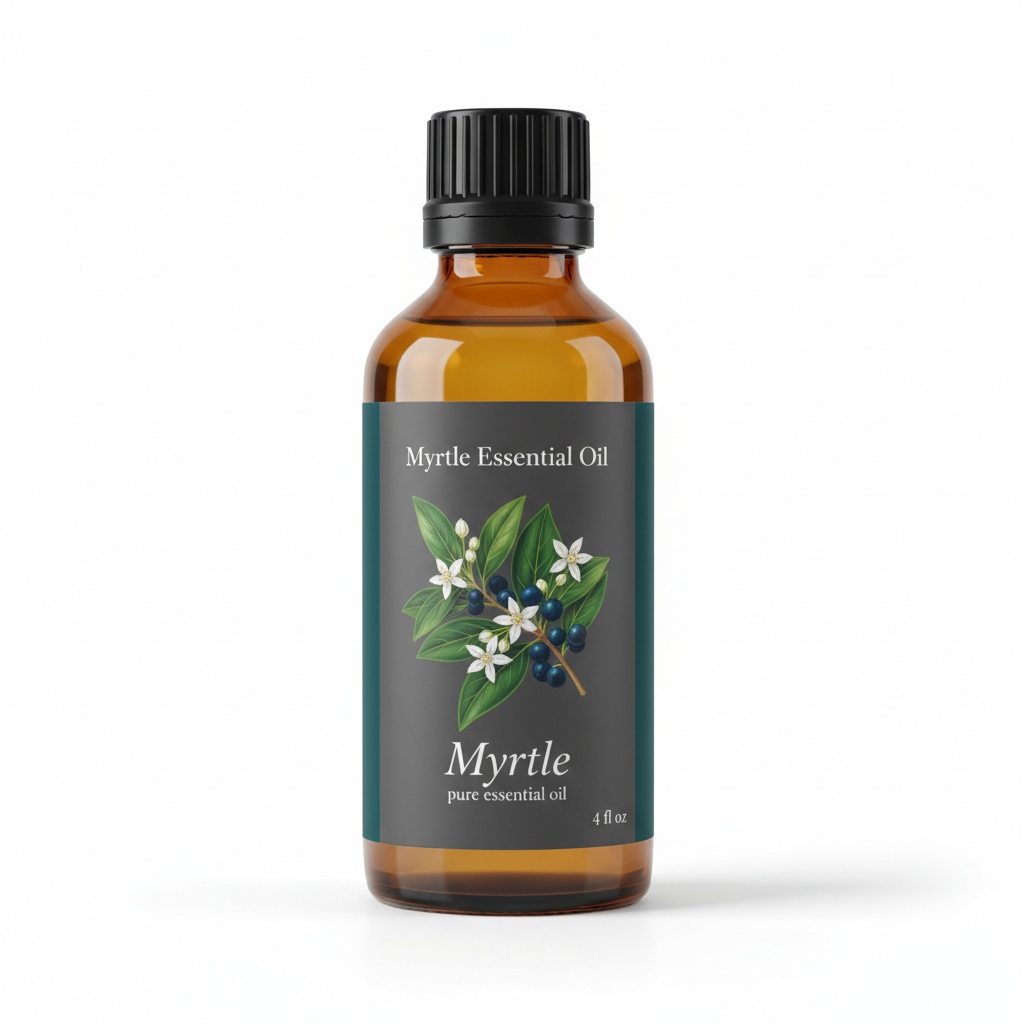
Myrtle Essential Oil
Our own Myrtle Essential Oil, in sizes from 0.5 oz to bulk.
From $16.99
Shop Now →The shorthand, and where it comes from
One supplier page quotes Robert Tisserand to the effect that green myrtle, high in myrtenyl acetate and linalool, is produced in Corsica, while red myrtle is the cineole-rich type available from Morocco (Myrtle - Hopewell Essential Oils). It is a handy way to think about the two ends of the style range. Cineole is the cool, camphor-like note; linalool and myrtenyl acetate are softer and sweeter, so the idea is that a Corsican oil leans floral and a Moroccan one leans crisp.
What the analyses show
A Corsican producer's leaf oil analysed in 2025 was led by alpha-pinene at 43.0%, with 1,8-cineole at 28.8% and limonene at 8.7% (Hardy et al., 2025). That is a pinene-and-cineole profile rather than a myrtenyl acetate one, a useful reminder that a trade description describes a tendency.
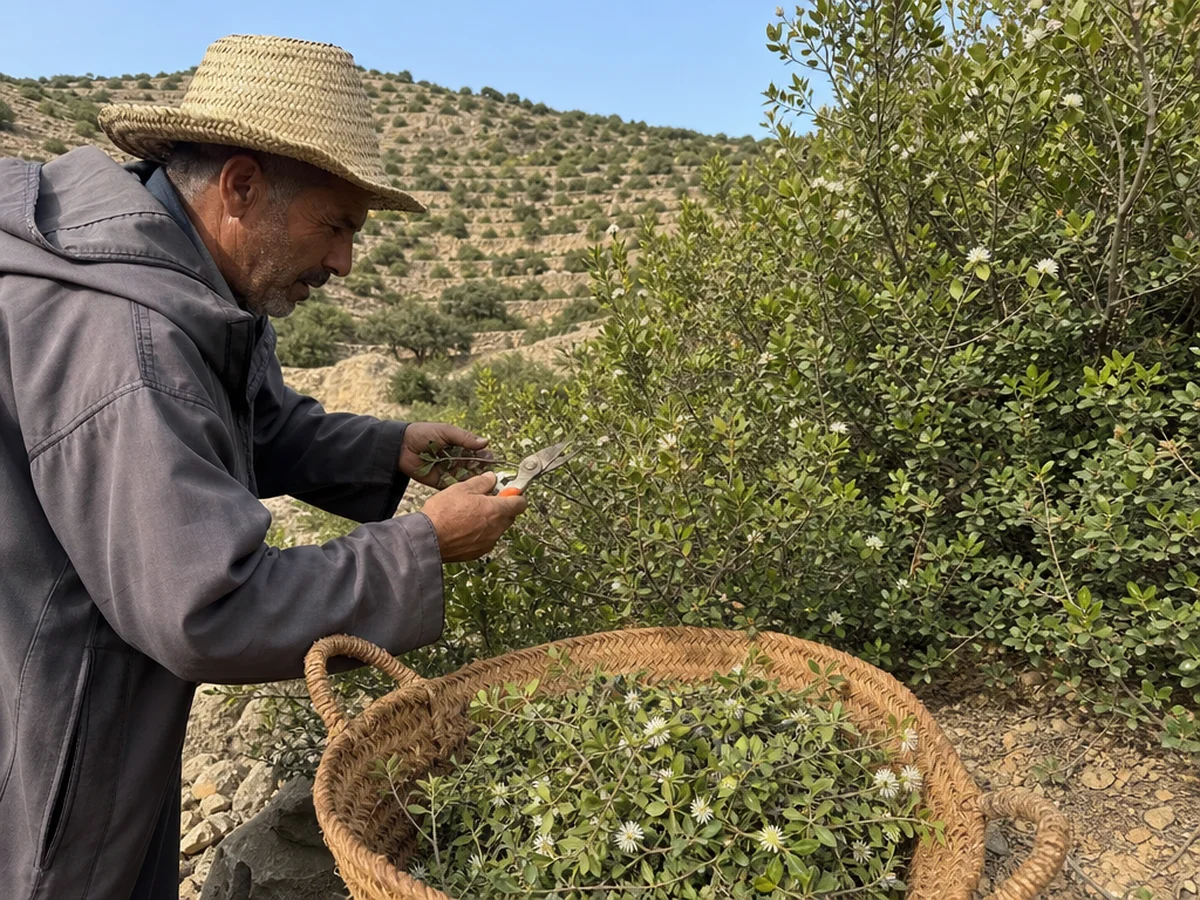
Morocco shows the spread within a single country. Oils distilled from two regions were studied side by side: the Ouazzane oil was particularly rich in 1,8-cineole at 36.3%, while the Benslimane oil was dominated by methyl eugenol at 18.7%, alpha-terpineol at 15.5% and geranyl acetate at 11.64% (Harassi et al., 2019). Those two are different oils in the bottle even though the country on the label is the same.
Algeria offers the largest survey. Nineteen coastal populations averaged 50.1% alpha-pinene, 22.27% cineole and 1.40% methyl eugenol, yet the authors identified six chemotypes, and several populations were characterised by myrtenyl acetate instead (Mohamadi et al., 2021).
It is worth a moment to enjoy the surprise in these numbers. A hillside, a harbor town and a country name all sound like precise information, and yet they leave the most interesting question open: what does the oil in the bottle actually smell like?
Why the plant matters as much as the place
If geography were the whole story, plants grown together should produce the same oil. They do not. Fourteen superior myrtle accessions from southern Iran, grown under the same greenhouse conditions and harvested the same month, produced leaf oils with alpha-pinene anywhere from 2.35% to 53.09% and 1,8-cineole from none to 18.0%, and the authors sorted them into four chemical groups (Shahbazian et al., 2022). Genetics, harvest stage and distillation all leave their mark. A reasonable reading is that origin is a hint about the aroma family, and nothing more precise.
Smelling the difference yourself
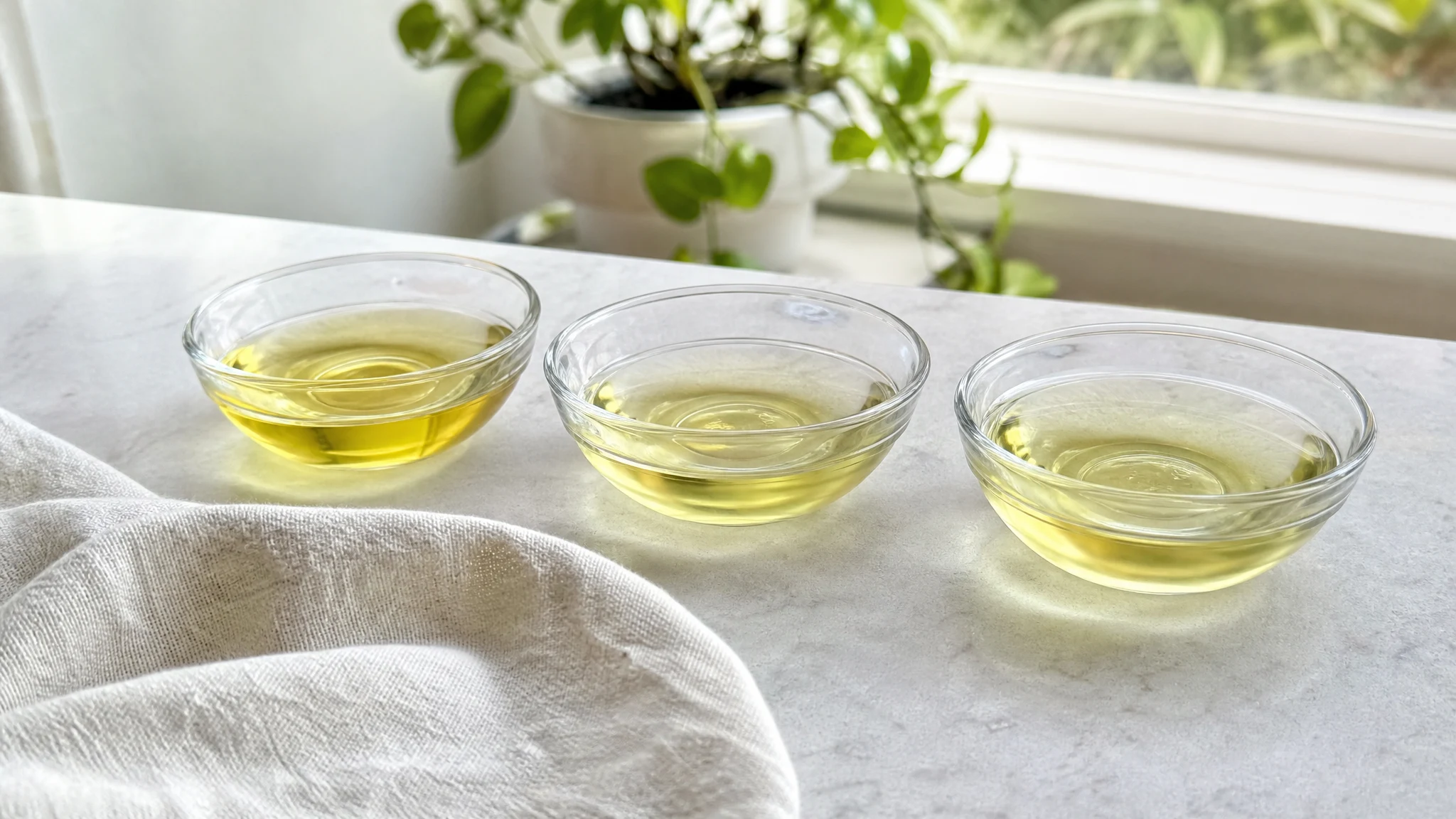
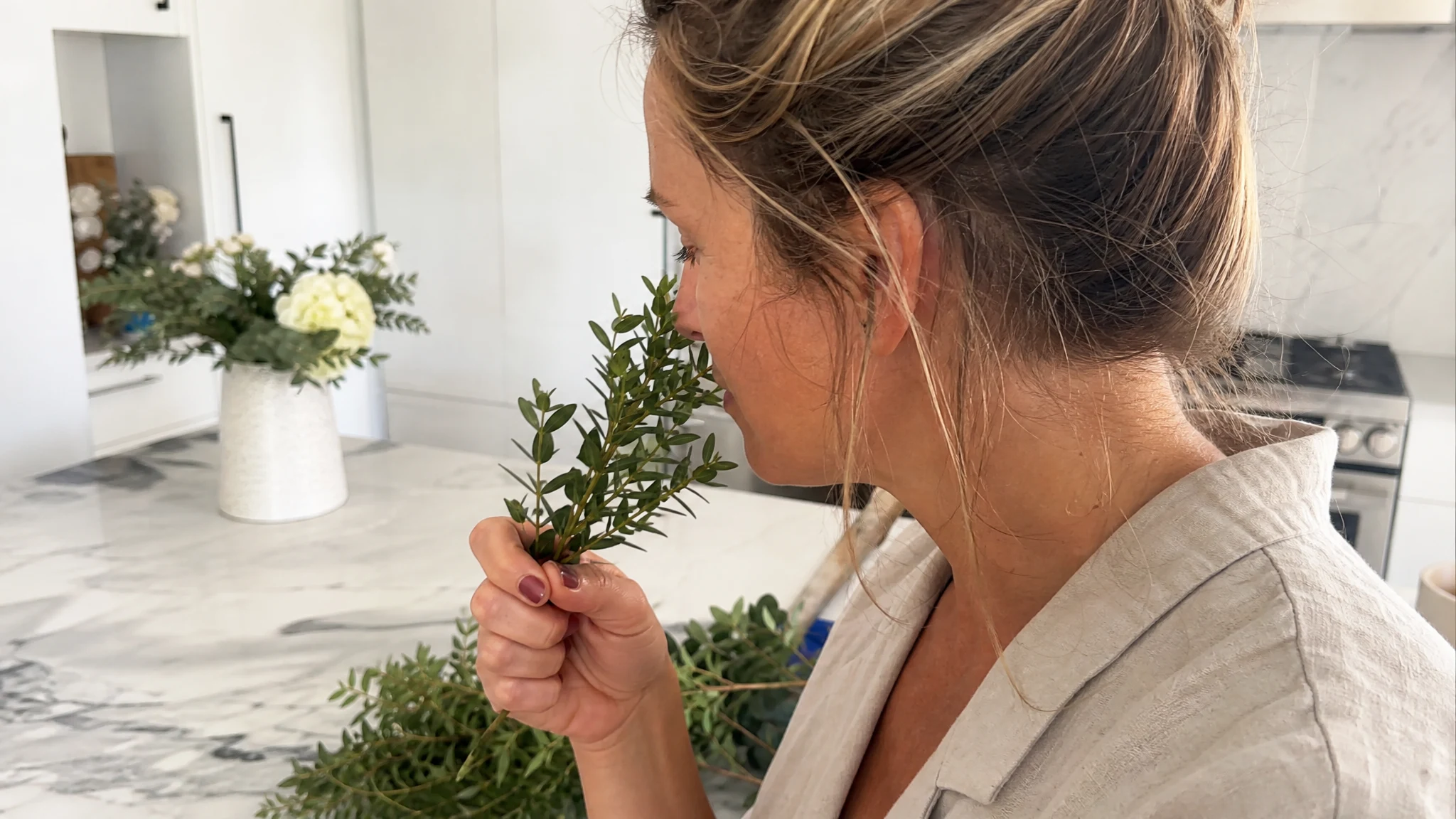
Numbers are interesting, but a nose is faster. If you ever have two myrtle oils to hand, put a drop of each on separate blotters, label them and come back after ten minutes and again after an hour. Look at the opening first (is it sharp and cool, or soft and sweet?) and then at what remains. Cineole is the cool, camphor-like note and linalool the softer, sweeter one, so those are the two things to listen for.
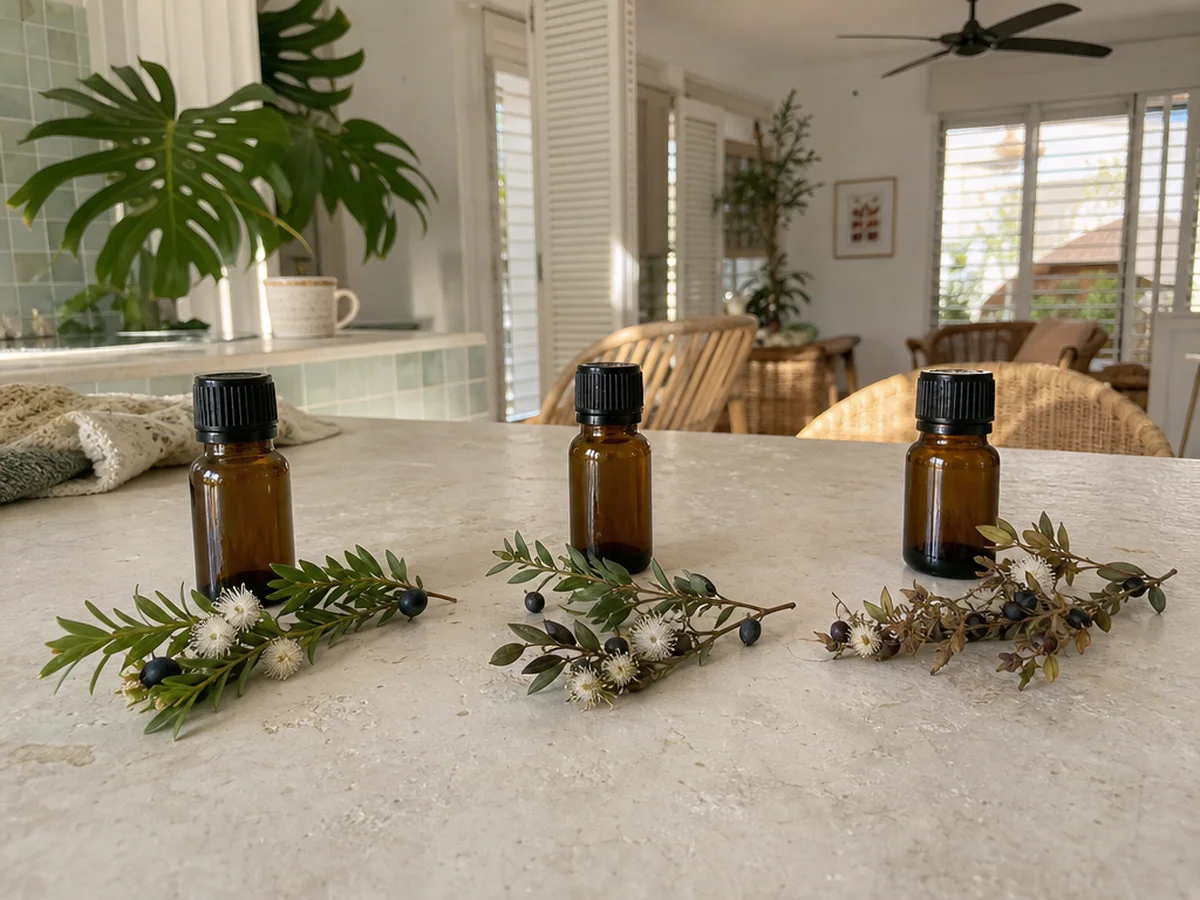
Keep a small notebook of what you smell, with the name on the label, because labels and memories blur quickly. After two or three oils the differences start to jump out at you. Do not worry if you cannot name every note. Describing a scent is a skill that grows with practice, and "fresh", "sweet" and "a bit like eucalyptus" are all perfectly good words.
Choosing with that in mind
Three practical points follow. First, your nose is the best specification for anything you will diffuse or wear, so smell before you commit to a large size. Our myrtle is a Myrtus communis oil that we describe as fresh, clear and gently floral, with a soft eucalyptus-like coolness and faintly honeyed facets, and we recommend smelling it against that description rather than against a country name.
Second, if you are formulating for skin or for sale, a constituent report for the exact lot is more informative than a place name. Look at 1,8-cineole, alpha-pinene, myrtenyl acetate and methyl eugenol; our guide to reading a GC-MS report walks through the order to read them in. The Certificate of Analysis we publish for one batch lists appearance, smell, density and refractive index; if you need constituent data, ask us in writing through the contact page before ordering.
Third, if a named origin matters to you for its own sake, for a story or a sustainability question, ask any seller for records: region, harvest year, whether lots are mixed, and who distilled. Our sourcing questions post lists them. For more on the label itself, see how to read a myrtle oil label, and for the plant and its range, the Myrtus communis guide.
A word on stories
Place names are romantic, and we understand why. Corsica and Morocco both conjure sunlit hillsides, and a good story can be part of the pleasure of an oil. It is just worth enjoying the story as a story, and judging the oil on what you can smell and what the paperwork says. The two can sit happily side by side.
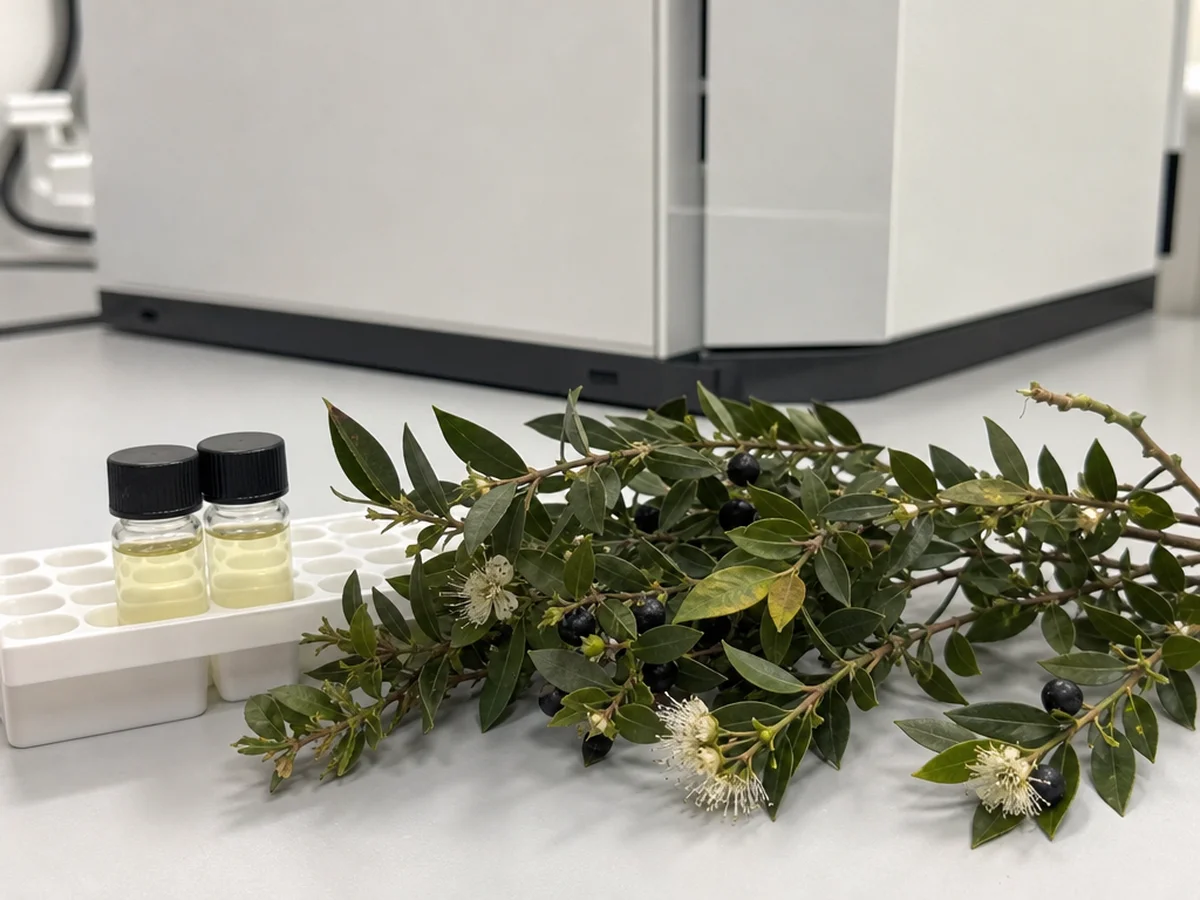
Myrtle rewards a little curiosity. The same shrub can smell crisp, sweet or deeply green depending on who grew it, and finding the version you like is part of the pleasure.
Myrtle Essential Oil
Myrtle Essential Oil from our own shop, in sizes from 0.5 oz to bulk.
From $16.99
Shop Now →Sources & Further Reading
- Hardy E, Poli JP, Bighelli A, et al., 2025. Quorum-Quenching Activity of Myrtus communis Corsican Essential Oil Against the Marine Bacterium Aliivibrio fischeri. Microorganisms. PMC12195544
- Harassi Y, Tilaoui M, Idir A, et al., 2019. Phytochemical analysis, cytotoxic and antioxidant activities of Myrtus communis essential oil from Morocco. Journal of Complementary and Integrative Medicine. PubMed 30661057
- Mohamadi Y, Lograda T, Ramdani M, Figueredo G, Chalard P, 2021. Chemical composition and antimicrobial activity of Myrtus communis essential oils from Algeria. Biodiversitas 22(2). smujo.id
- Shahbazian D, Karami A, Raouf Fard F, et al., 2022. Essential Oil Variability of Superior Myrtle (Myrtus communis L.) Accessions Grown under the Same Conditions. Plants. PubMed 36432885
- Hopewell Essential Oils. Myrtle - Hopewell Essential Oils. hopewelloils.com