How to Blend Myrtle Oil: Ratios and Dilution Math
Most blending questions boil down to a single sum: how many drops go into how much carrier. Once you have that straight, the fun part, choosing partners for myrtle's fresh, slightly floral-green scent, takes care of itself. Our guide to myrtle blends covers which oils pair well. This one is about the numbers.
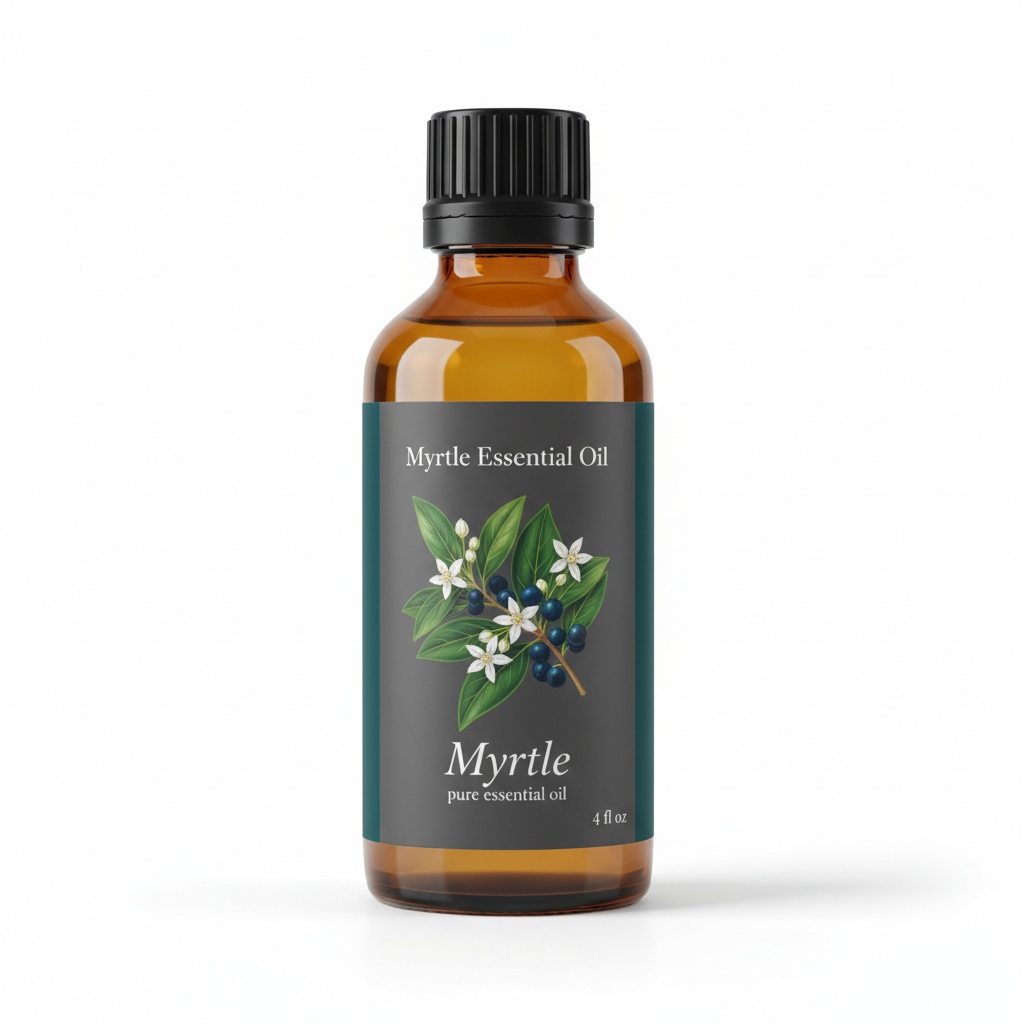
Myrtle Essential Oil
Our own Myrtle Essential Oil, in sizes from 0.5 oz to bulk.
From $16.99
Shop Now →Start with the total, then divide it up
Think of the essential oils in a blend as one pool. You decide the percentage for the pool, convert it to drops, and only then split those drops among the oils. We describe 0.5% to 2% in a carrier as the range for skin use of myrtle, and for most people we would begin at the low end and move up only if there is a reason.
The conversion is simple. A millilitre is roughly 20 drops (droppers vary, so weigh if you need precision), and an ounce is about 29.6 ml. That gives:
- 30 ml (about 1 oz) at 0.5%: 0.15 ml, roughly 3 drops in total
- 30 ml at 1%: 0.3 ml, roughly 6 drops
- 30 ml at 2%: 0.6 ml, roughly 12 drops
- 10 ml roller bottle at 1%: 0.1 ml, roughly 2 drops
To turn that into a blend, divide the drops by ratio. A 1% ounce with a 3:2:1 split is 3 drops myrtle, 2 drops of a partner such as lemon, 1 drop of another such as lavender. Partner oils are not ours; you will find them at a craft supply shop or pharmacy. Treat any such ratio as a suggestion to adjust by nose.
Why we lean toward the low end
Myrtle oil has a variable composition, and one component, methyl eugenol, is the reason. Published analyses range from a fraction of a percent in some oils to far higher in others, with Moroccan samples reported at over 18% in one study. IFRA, the fragrance industry's standards body, limits methyl eugenol in finished products by product category. In its 51st Amendment, the cap for body creams, oils and lotions is 0.0015% methyl eugenol in the finished product, and for face products it is 0.00021%.
Turn that into a recipe. If a myrtle oil contained 0.2% methyl eugenol, the body-product cap works out to about 0.75% myrtle oil in the finished product, and at 1.4% (an average reported for Algerian oils) about 0.1%. The face cap is roughly seven times tighter. So 2% is not a figure we would present as automatically fine; a number near 0.5% is easier to defend, and for the face we would use far less or skip myrtle. For a general view of dilution, see how much is too much. The Certificate of Analysis we share covers physical checks such as appearance and refractive index, so if you sell what you make, check the IFRA standards for your own formulation.
A worked example, start to finish
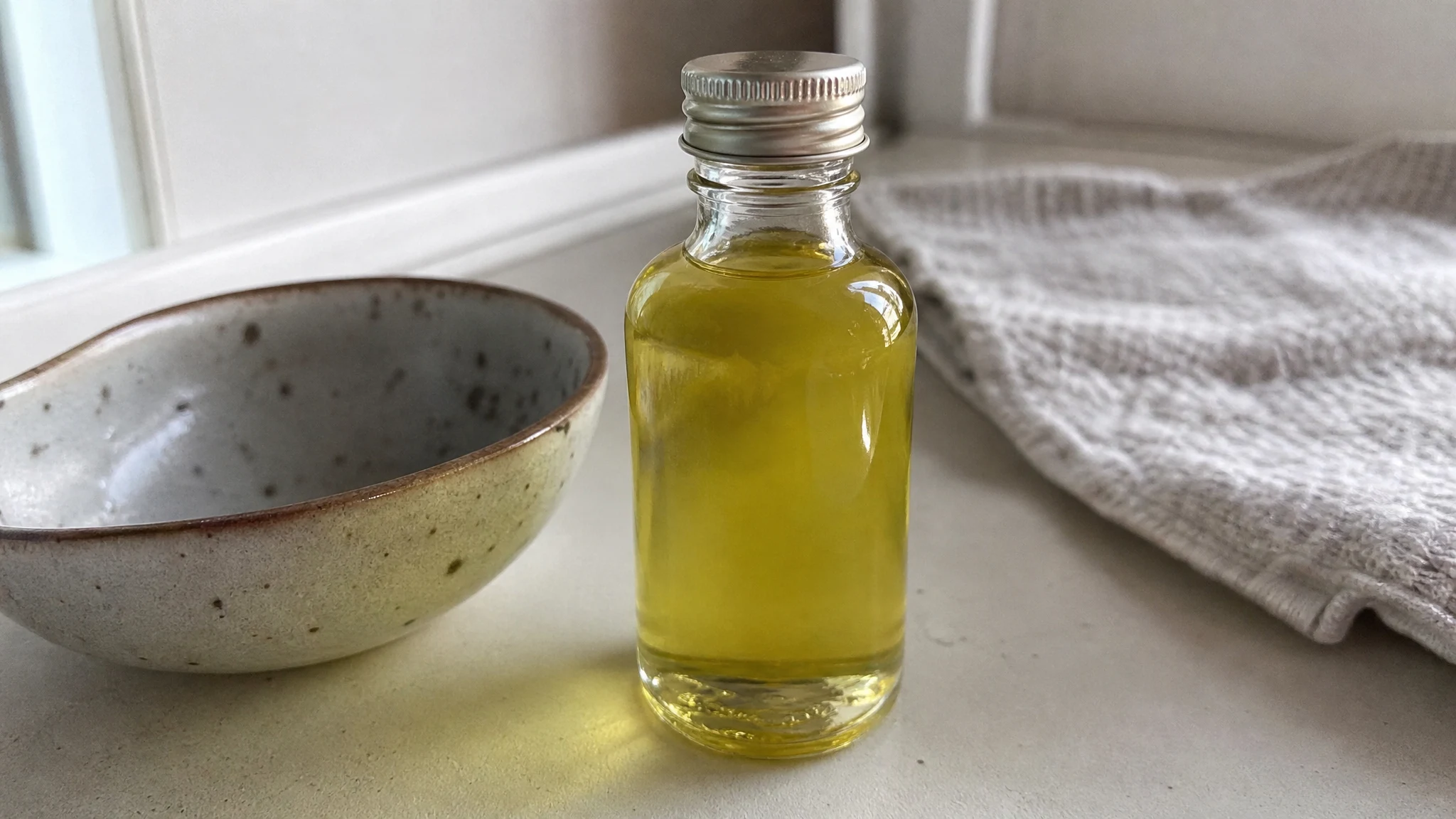
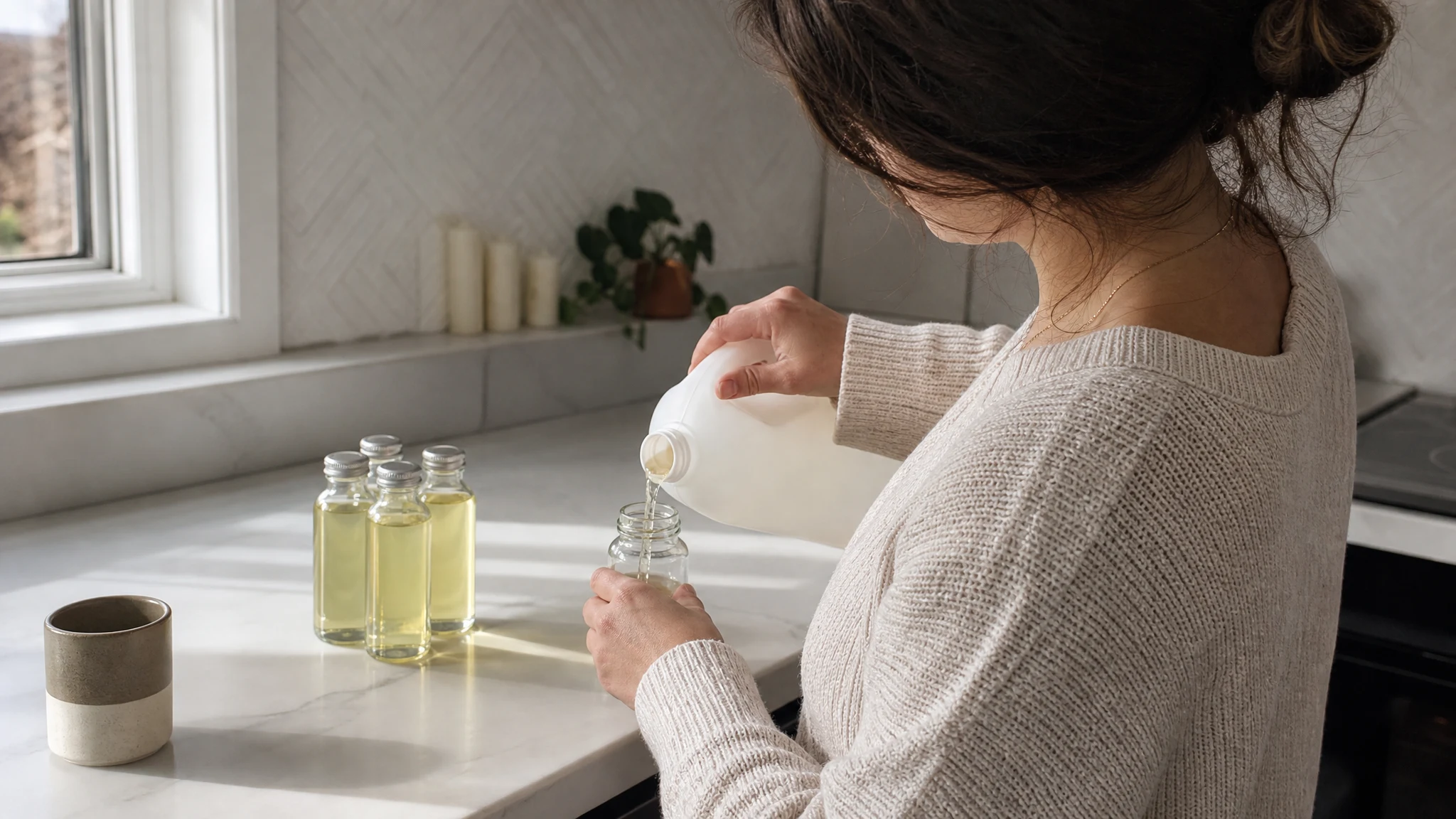
Say you want an ounce of body oil with a fresh, green character. Choose 0.5%: that is about 3 drops of essential oil in total. Divide the three drops as 2 myrtle and 1 of a bright partner such as lemon. Measure about 30 ml of carrier into a clean glass jar, add the drops, cap and roll the jar between your hands for a few seconds, and label it with the date and the ratio so you can repeat or adjust it. If you want it stronger next time, change one thing only, for instance moving to 4 drops, so you know what caused the difference. Writing down every batch is the habit that separates a recipe from a happy accident.
For a room spray or a candle the sums differ because the base differs, but the method is the same: pick a percentage of the finished product, convert to ml, convert to drops, then divide by ratio.
Common mistakes
- Counting drops per oil, not for the pool. Six drops of each of three oils is 18 drops, not 6.
- Using the dropper as a measure for small jars. At 10 ml, one extra drop is 0.5%.
- Mixing before a patch test. Put the finished blend on a small area first.
- Forgetting the other oils' limits. Citrus oils that are cold-pressed can need their own sun-exposure limits.
Pick your carrier from our carrier oil comparison, and see the body oil recipe and roller blend counts for worked examples. Our oil is sold neat, so the dilution is always yours to do.
Blending rewards a little patience: small batches, written-down ratios, and a nose that decides what you actually like.
Myrtle Essential Oil
Myrtle Essential Oil from our own shop, in sizes from 0.5 oz to bulk.
From $16.99
Shop Now →Sources & Further Reading
- IFRA Standards - 51st Amendment, International Fragrance Association
- Chemical composition and antimicrobial activity of Myrtus communis essential oils from Algeria, Mohamadi and colleagues, Biodiversitas, 2021
- Phytochemical analysis, cytotoxic and antioxidant activities of Myrtus communis essential oil from Morocco, Harassi and colleagues, Journal of Complementary and Integrative Medicine, 2019