Myrtol vs Myrtle Oil: Why the Names Get Mixed Up
Search for myrtle oil and breathing and you will meet a pile of clinical trials very quickly. Look closely and the thing in the capsules is called myrtol, which sounds like myrtle oil and is not the same product at all. Untangling those two names is the most useful thing we can do with this topic.
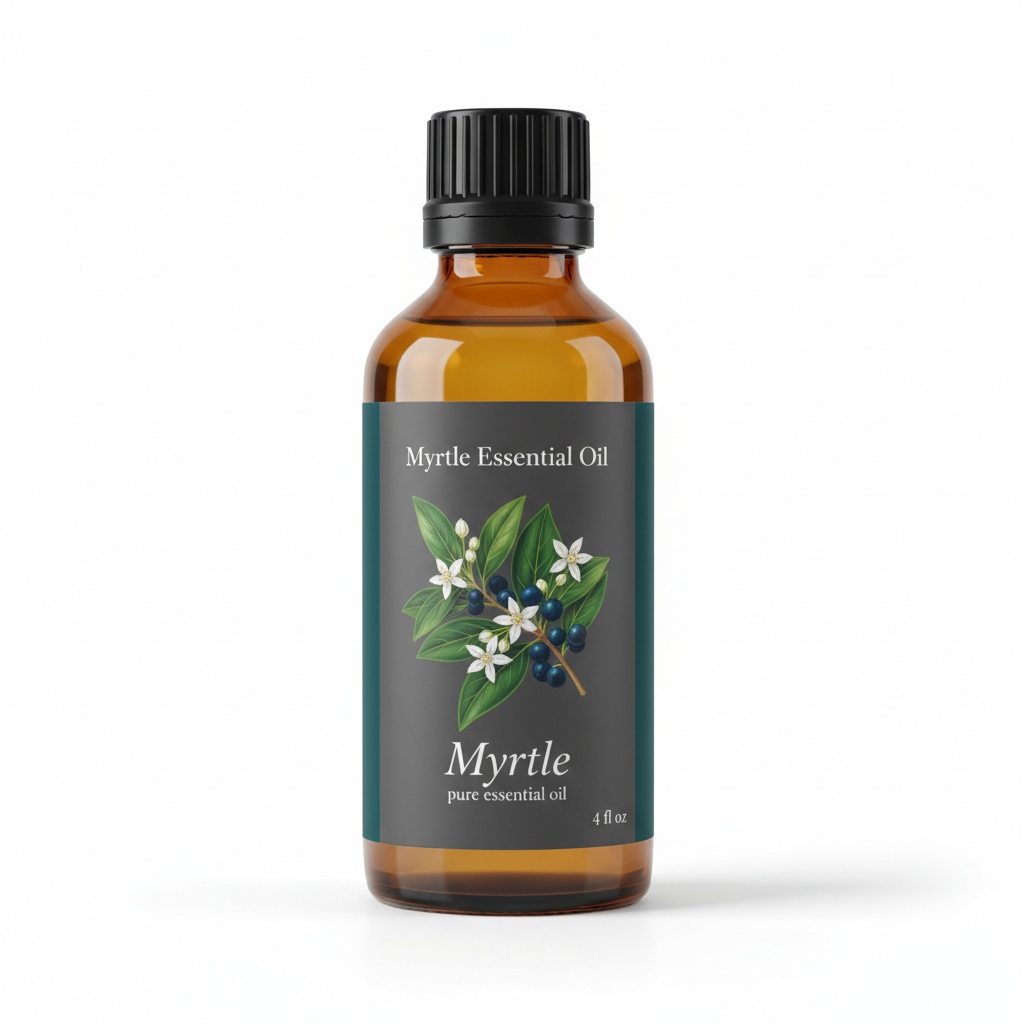
Myrtle Essential Oil
Our own Myrtle Essential Oil, in sizes from 0.5 oz to bulk.
From $16.99
Shop Now →What myrtol actually is
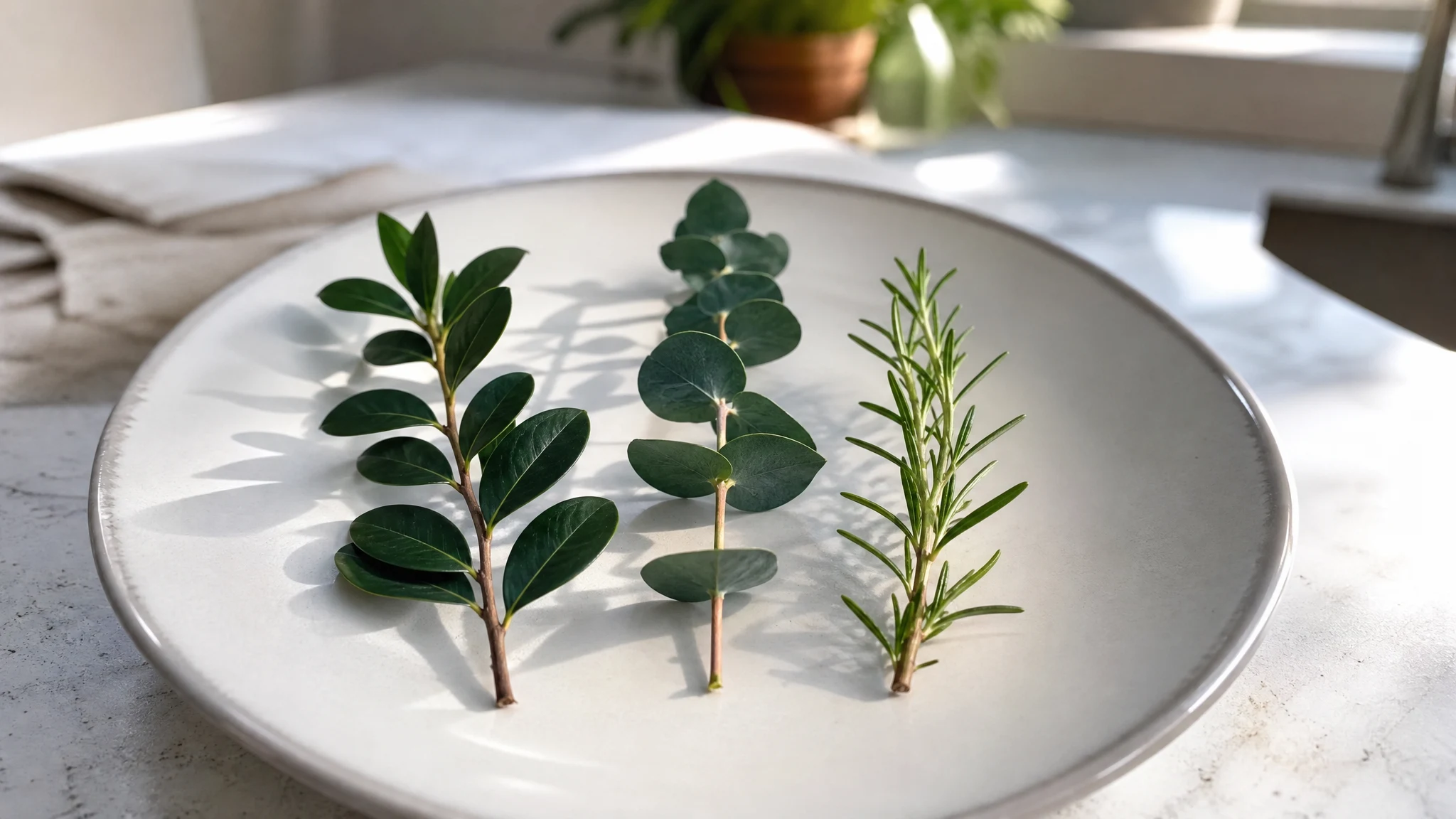
Myrtol standardized, also known as GeloMyrtol, is a medicinal product made by a multistep distillation of essential oils (Paparoupa and Gillissen, 2016). A rapid review of the research describes it as a capsule made from a mixture of eucalyptus, sweet orange, myrtle and lemon oils (Prall et al., 2020). Myrtle is one of four ingredients, and the finished capsule is characterised by three molecules, alpha-pinene, d-limonene and 1,8-cineole (Matthys et al., 2000).
Reasoning from that, whatever the capsules did in a trial cannot be credited to the myrtle part. The same three molecules can come from any of the oils in the starting mixture, and the finished product is a distillate, so its balance differs from any single oil that went in.
What the trials looked at
The best-known trials gave myrtol by mouth to adults with acute bronchitis. In the largest, 676 adults took 300 mg of myrtol four times a day for two weeks, or one of two comparison medicines, or a placebo. Everyone improved, but the placebo group improved more slowly and less completely: after one week 20.9% of the placebo group were judged to have worsened enough to stop, against 5.3% on myrtol (Matthys et al., 2000). A later trial of 413 adults measured coughing fits and found them down 62.1% on myrtol and 49.8% on placebo (Gillissen et al., 2013).
The pattern worth noticing is the placebo group's improvement. The NHS describes bronchitis as something that usually gets better on its own (NHS), and these trials sit comfortably alongside that. They are evidence about a regulated oral medicine, taken as capsules by adults with a diagnosed condition. They are not evidence about opening a bottle of essential oil, and we do not suggest swallowing any essential oil. Ours is for external use only.
It is worth saying how common this kind of mix-up is. Two names that differ by a few letters travel together across blogs, shop pages and search results, and each repeat makes the confusion seem more official. A moment spent checking the Latin name and the product type is the best defense.
And plain myrtle oil, breathed in?
The same rapid review that describes myrtol looked for research on essential oils inhaled for viral respiratory infections and reported that it found no research evidence describing the clinical effect of inhalation (Prall et al., 2020). In other words, the capsule trials have no inhaled counterpart for myrtle oil. We sell myrtle oil as an external cosmetic oil for scent and make no claims about breathing.
The FDA decides how an aromatherapy product is regulated mainly by its intended use, and health claims move a product out of the cosmetic category however natural its ingredients (FDA). That is why we keep our descriptions to aroma. The scent itself is the appeal: fresh, clear and gently floral, with a cool, eucalyptus-like edge that brightens a room.
When a cough needs a person, not a bottle
If you are coughing, wheezing or short of breath, a doctor or pharmacist is the right person to ask. The NHS suggests seeing a GP for a cough that has lasted more than 3 weeks, and asking for urgent help if the cough is very bad or quickly worse, or comes with chest pain, difficulty breathing or coughing up blood (NHS).
A simple way to remember the difference
Think of it as a recipe versus an ingredient. Myrtol is a finished product made by a manufacturer from several oils, and myrtle oil is one of the ingredients that can go into that kind of mixture, sold on its own as a fragrant oil. If a page uses the two names as if they were the same thing, take that as a cue to look for the Latin name and a real product description.
The same goes for headlines. Myrtol, myrtle berry extract, myrtle leaf tea and myrtle essential oil are four different things, and only the last is what we sell.
Sorting out the other myrtles
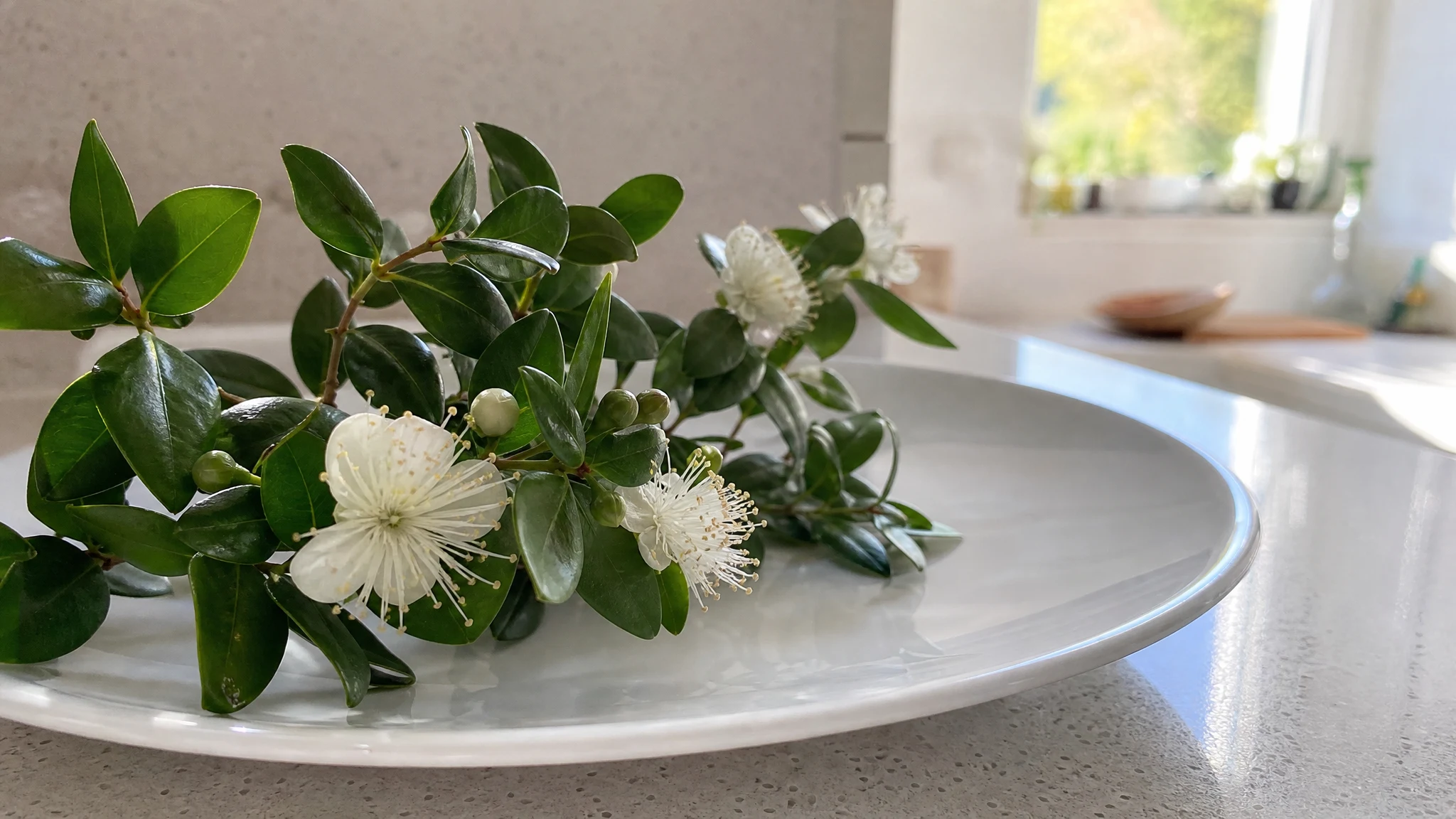
The name confusion does not stop at myrtol. Lemon myrtle is a different plant altogether, and crape myrtle is a garden tree from another family, as our comparison post explains. When you read a label, look for the Latin name, Myrtus communis, which our label guide walks through. The research overview shows where the capsule trials fit among the rest of the myrtle literature, and the steam post covers why hot water and concentrated oils need care.
We love a bottle of myrtle oil for what it smells like, and the aroma is a good enough reason to own one. Open it, enjoy the cool, green, lightly floral scent, and leave the capsule aisle to the pharmacy.
Two names, two very different products: one is a capsule medicine, and the other is a fragrant oil we are glad to tell you about.
Myrtle Essential Oil
Myrtle Essential Oil from our own shop, in sizes from 0.5 oz to bulk.
From $16.99
Shop Now →Sources & Further Reading
- Paparoupa M, Gillissen A, 2016. Is Myrtol Standardized a New Alternative toward Antibiotics? Pharmacogn Rev. PubMed
- Prall S et al., 2020. Effects of essential oils on symptoms and course (duration and severity) of viral respiratory infections in humans: A rapid review. Adv Integr Med. PubMed
- Matthys H et al., 2000. Efficacy and tolerability of myrtol standardized in acute bronchitis. A multi-centre, randomised, double-blind, placebo-controlled parallel group clinical trial vs. cefuroxime and ambroxol. Arzneimittelforschung. PubMed
- Gillissen A et al., 2013. A multi-centre, randomised, double-blind, placebo-controlled clinical trial on the efficacy and tolerability of GeloMyrtol forte in acute bronchitis. Drug Res (Stuttg). PubMed
- NHS. Bronchitis. nhs.uk
- NHS. Cough. nhs.uk
- FDA. Aromatherapy. fda.gov