Myrtle Room Spray: A Simple Two-Ingredient Recipe
Of all the things you can do with myrtle oil at home, a room spray is the one where the safety math sets the recipe, not your nose. The good news is that the math is short, the formula is just two ingredients, and a few drops go a long way in a room.
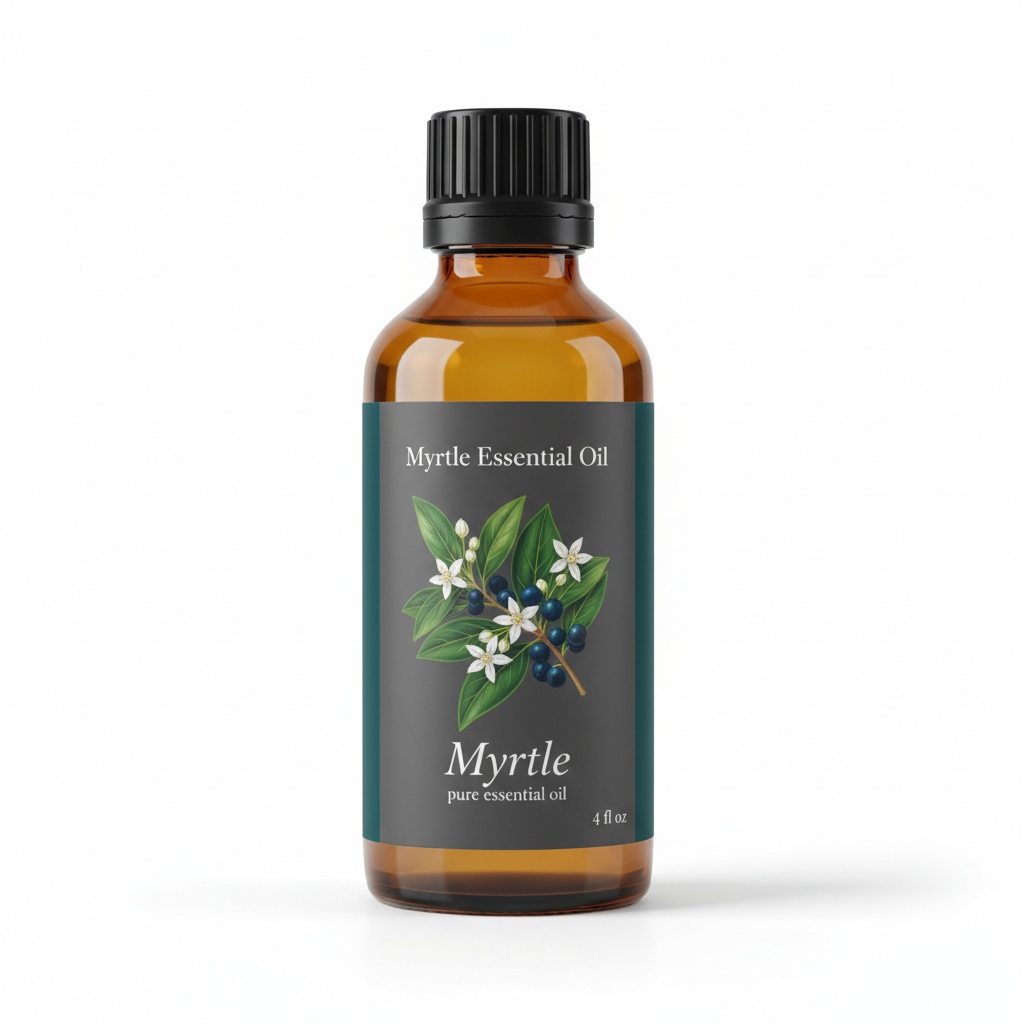
Myrtle Essential Oil
Our own Myrtle Essential Oil, in sizes from 0.5 oz to bulk.
From $16.99
Shop Now →Start with the cap
IFRA, the fragrance industry's standards body, files "air freshener sprays, manual, including aerosol and pump" under Category 10B, household products where some skin contact is possible. For that category its 51st Amendment caps methyl eugenol, a constituent some myrtle oils carry, at 0.0021% of the finished product. IFRA has no entry for myrtle oil itself, so the limit reaches your bottle through its methyl eugenol share: the maximum oil in the spray is 0.0021 divided by that share.
Published myrtle analyses differ on that figure, so the same recipe cannot suit every bottle:
| Methyl eugenol in the oil | Example | Max oil in the spray | Drops per 100 g |
|---|---|---|---|
| 0.2% | A Corsican leaf oil | 1.05% | about 23 |
| 0.40% | One supplier's red myrtle lot | 0.525% | about 12 |
| 5.15% | Top of 52 Sardinian genotypes | 0.041% | about 1 |
The drops assume roughly 0.9 g/ml and 20 drops per ml. The certificate of analysis we publish for one batch states a density range of 0.890 to 0.922 rather than a measured value, and droppers vary, so weigh if you can. It also lists no constituents, which is why we can only show the range of what has been published. If you need constituent data for a specific lot, ask us in writing through the contact page before ordering. IFRA's standards govern fragrance supply to manufacturers rather than home makers, but they are the best published yardstick, so we use them.
The recipe
Our pick is 3 drops of myrtle oil per 100 g of spray, about 0.135%. That sits under the cap for any oil with up to roughly 1.5% methyl eugenol, which covers the first two rows of the table. It is arithmetic and a suggestion, so if you hold a bottle with a higher share, use fewer drops.
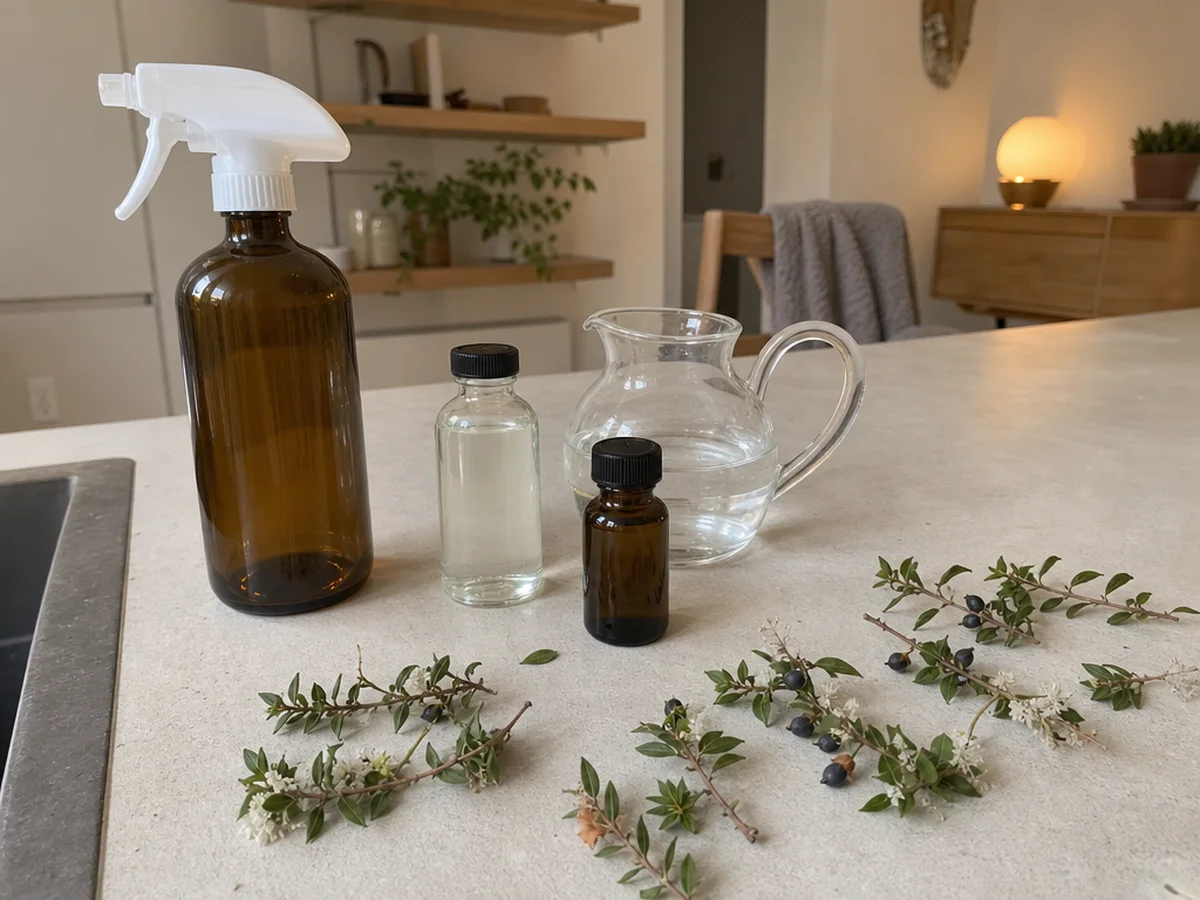
- Put a glass spray bottle on a scale and add 3 drops of myrtle oil.
- Top up with ethanol of at least 90% until the total reaches 100 g.
- Cap, swirl, and let it stand a day before judging the aroma.
We chose an alcohol base because oil dropped into plain water simply floats; a water-based spray needs a solubilizer and a preservative system, and neither is something we sell or can write a recipe for. Ethanol is the traditional carrier for fragrance, and IFRA's own guidance lists oil with alcohol as a standard fragrance format. We do not sell ethanol or spray bottles; a craft, chemical or soap-supply shop does. Ethanol is flammable, so keep a spray away from candles, stoves and heaters.
Getting the most from three drops
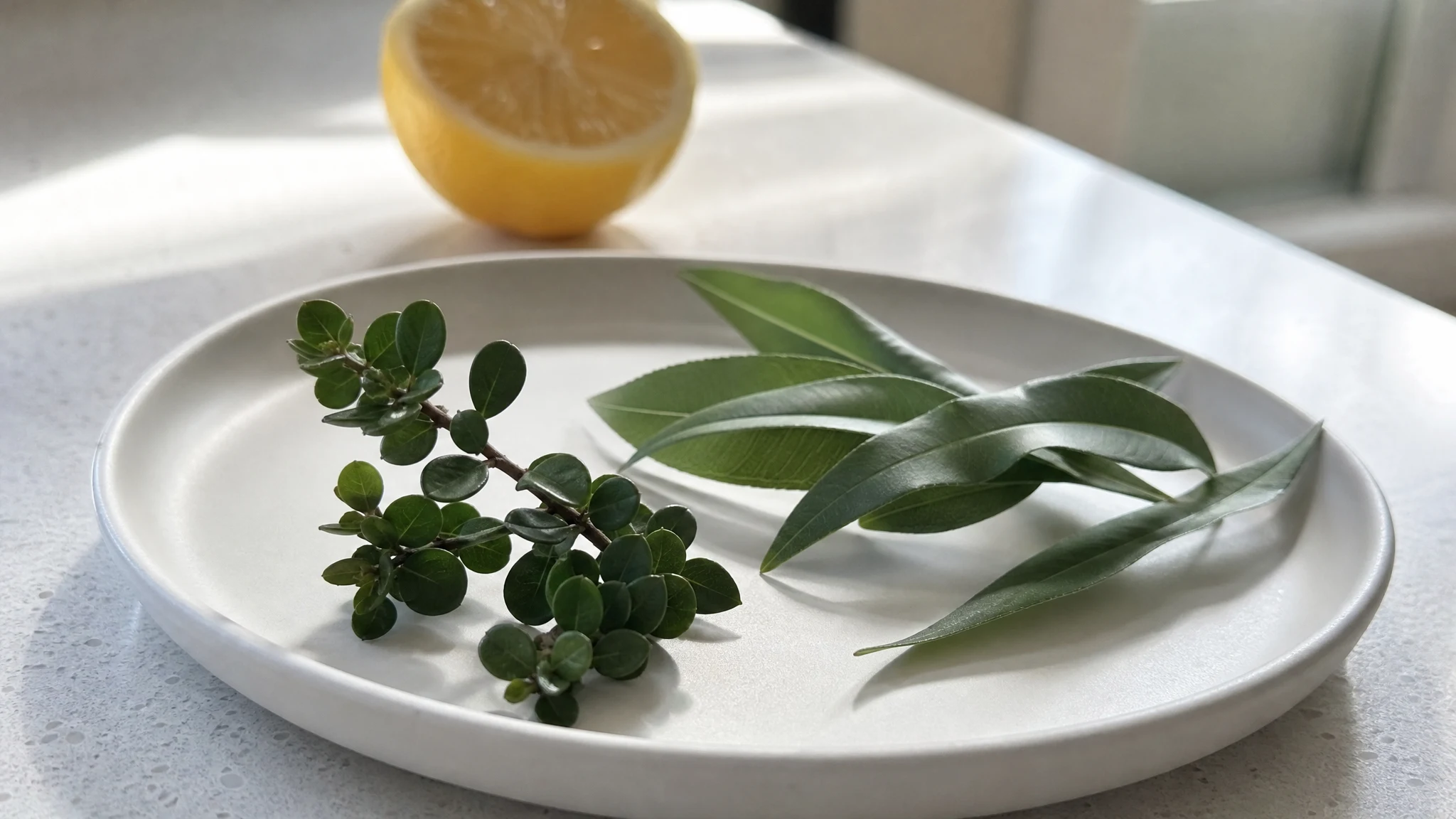
We describe the aroma as fresh, clear and gently floral, with a soft eucalyptus-like coolness. In a spray that dilute, it will be a whisper: a bright green note that drifts rather than announces. Treat myrtle as a supporting scent and spray a little more often instead of adding drops, because the cap is what holds the dose. For a stronger room scent, a diffuser follows different rules, which our home-use guide covers.
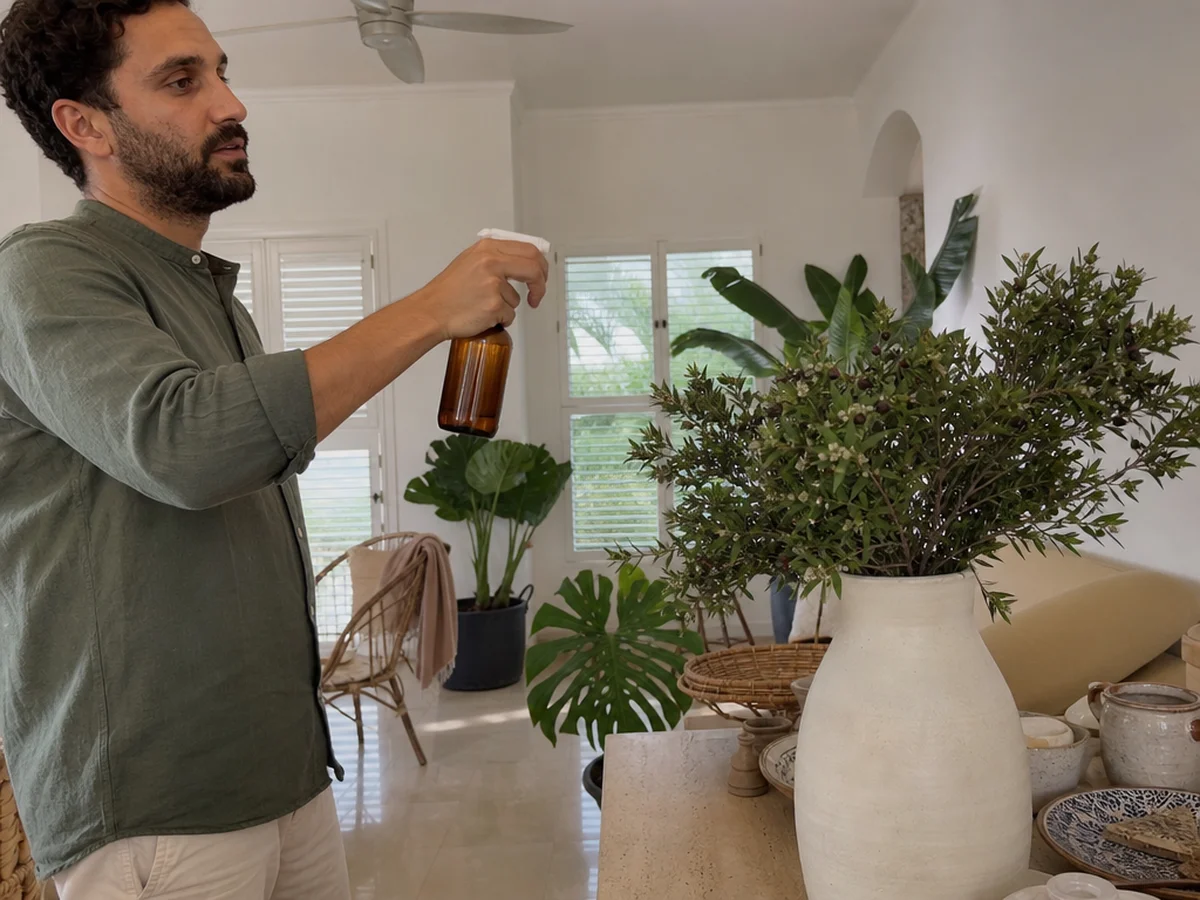
- Spray into the air, away from faces and from pets. Category 10B exists because some spray lands on skin, so aiming away is the sensible habit.
- Test a hidden patch of fabric first.
- Ventilate. The Tisserand Institute suggests air exchange and diffusing 30 to 60 minutes on and 30 to 60 minutes off rather than all day, and spraying is intermittent by nature.
- Store the bottle out of reach of children, with a child-proof cap if you can.
Where to spray
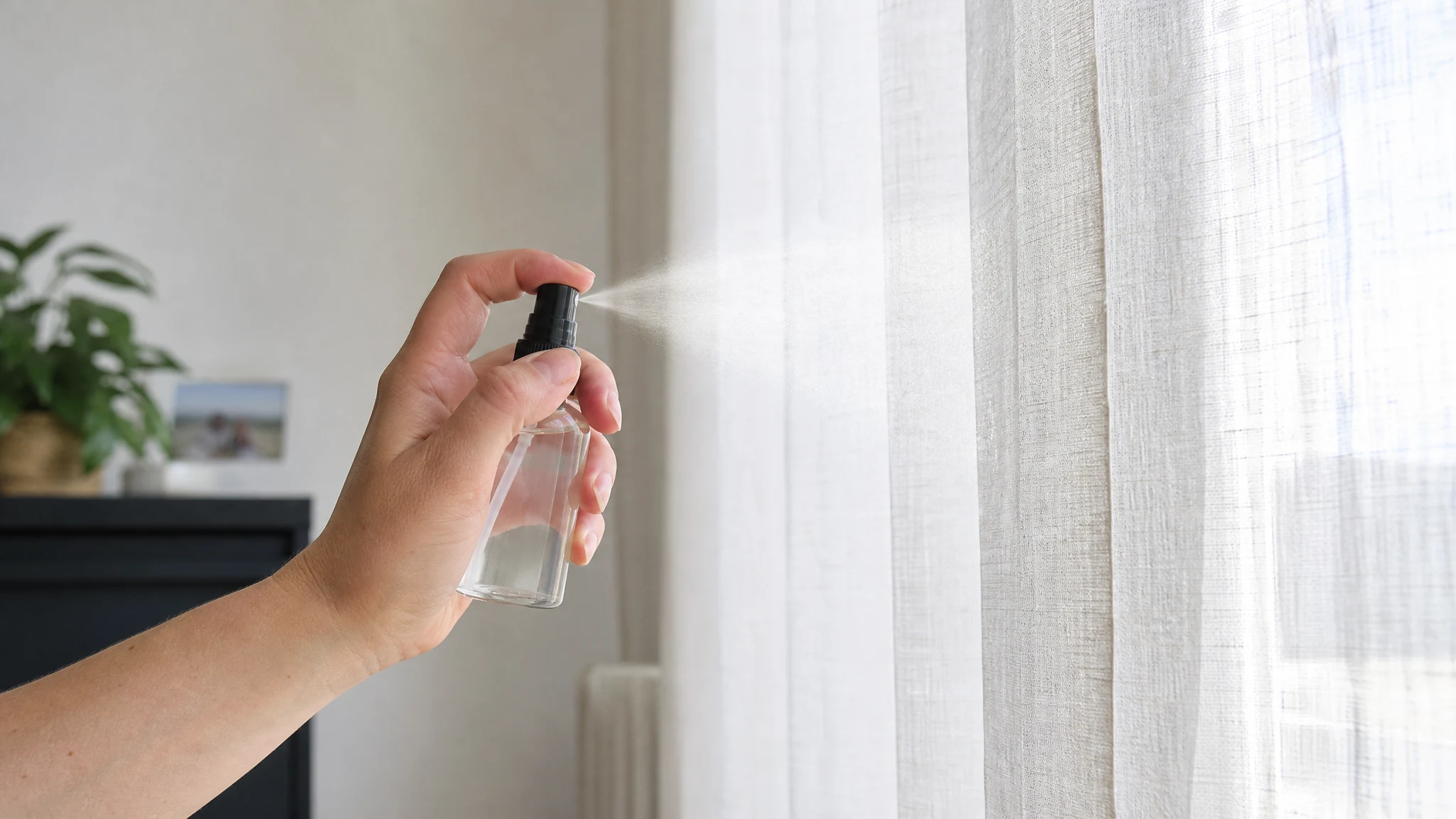
Think about the room before the recipe. A hallway, an entrance or a bathroom suits a quick pass of spray, because you walk through the scent instead of sitting in it. Hold the bottle at arm's length, give one or two pumps toward the middle of the room, and walk away. Try fabric only after the hidden-patch test, and let the alcohol dry before anyone sits on a cushion.
Who should skip it
Pets share your air. The ASPCA says a short period of diffusing in a secured area is not likely to be an issue, advises pets with a history of breathing problems to avoid diffusers, and says to avoid them around birds. That guidance is about diffusers, so extending it to a pump spray is our inference, but a good rule is to keep birds out of any room you spray and ask your veterinarian about pets with breathing conditions. We would also keep it out of a room where an infant sleeps, since myrtle leaf oils can carry a good share of 1,8-cineole (about 1.4% to 27% across the Sardinian genotypes). If you are pregnant or have asthma, our pregnancy post and safety basics cover what the sources say, and your doctor or midwife is the right person to ask.
Finally, a room-spray dose does not transfer to skin. Body mists fall under IFRA Category 2 and fine fragrance under Category 4, each with its own methyl eugenol cap. If you want myrtle on skin, the roller maths in our roller blend post is the place to start.
Label the bottle with the date and the words room spray, so nobody mistakes it for something else. Then open a window, step out for a few minutes and come back in. The first thing to notice is the cool edge, and behind it the faint green floral note that makes myrtle worth the trouble.
One bottle, three drops, a window open: it is a small project with a very fresh result.
Myrtle Essential Oil
Myrtle Essential Oil from our own shop, in sizes from 0.5 oz to bulk.
From $16.99
Shop Now →Sources & Further Reading
- Guidance for the use of IFRA Standards, IFRA, June 2023 edition.
- IFRA Standards library, 51st Amendment compilation (methyl eugenol standard), IFRA.
- Quorum-Quenching Activity of Myrtus communis Corsican Essential Oil Against the Marine Bacterium Aliivibrio fischeri, Hardy et al., Microorganisms, 2025.
- Chemotaxonomic Evaluation by Volatolomics Analysis of Fifty-Two Genotypes of Myrtus communis L, Usai et al., Plants, 2020.
- Myrtle - Hopewell Essential Oils, supplier page with GC/MS for one lot.
- Safety Guidelines - Tisserand Institute.
- The Essentials of Essential Oils Around Pets | ASPCA.