Myrtle Oil Around Cats and Dogs: What Vets Advise
A scent that reads as fresh and gently green to us can be a very different experience for an animal whose nose is far sharper than ours. If you share your home with a cat or a dog, the sensible question about myrtle oil is not "does it smell nice?" but "how do I keep it where it belongs?" We would rather give you straight guidance than pretend the answer is simple.
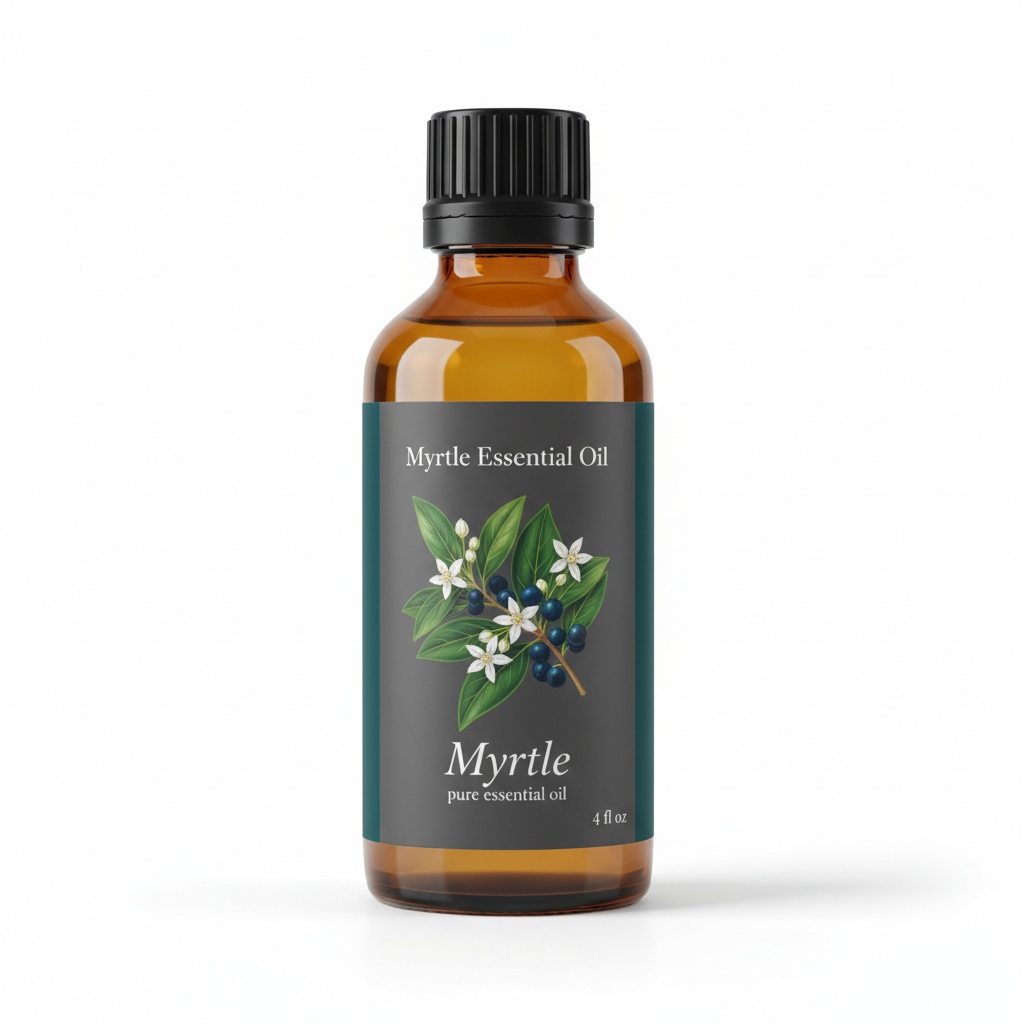
Myrtle Essential Oil
Our own Myrtle Essential Oil, in sizes from 0.5 oz to bulk.
From $16.99
Shop Now →We are an aroma oil, not a pet product
We sell myrtle essential oil (Myrtus communis) for people: for scenting a room, for diluted skin blends, for soapmaking and candle work. We do not offer it for animals, and nothing about it has been written up as suitable for them. So when readers ask whether it is "safe" for the dog or the cat, we give the honest answer, which is that we cannot say any essential oil is, and that your veterinarian is the right person to ask about your particular animal.
What the poison-control sources actually say
The ASPCA's page on the subject, The Essentials of Essential Oils Around Pets, is blunt about concentrated oils: they can harm dogs and cats that walk through a spill, get oil on their coat, or have it applied directly, and the signs it lists include unsteadiness and depression, with low body temperature in severe cases. Swallowing can bring on vomiting and diarrhoea. Its advice is to avoid applying oils directly to a pet at all, and to keep bottles beyond paw reach.
Pet Poison Helpline, on its Essential Oils page, says that toxicosis can affect all species but that cats and birds are at the greatest risk. It also notes that signs usually appear within six to eight hours for most oils, so an animal that seems fine straight after contact still deserves attention.
Diffusers: shorter, further away, with an exit
The ASPCA does not say a diffuser is automatically off-limits. It quotes the Animal Poison Control Center as saying that using one for a short time in a secured area the pet cannot get into is unlikely to be a problem, while pets with breathing difficulties should avoid diffusers, and homes with birds should skip them. Because animals notice scent more keenly than we do, something that seems light to you may overwhelm them.
That fits how we already think about diffusing myrtle in our own diffuser tips: short sessions, a few drops, good air exchange. For a home with animals, we would add a few habits:
- Run the diffuser in a room with the door closed and a way for the animal to be elsewhere, never one it is shut into.
- Keep the unit on a high surface where a cat cannot knock it over.
- Stop if the animal drools, paces, coughs or leaves the room, and air the space out.
- Skip diffusing altogether if there is a bird in the house.
Spills, skin and storage
Most real trouble with oils starts with a dropped bottle or a leaking cap, not a diffuser. Keep bottles capped, in a closed cupboard, as we describe in how to store myrtle oil. Wipe up spills at once, and keep diluted blends (body oil, roller bottles, balms) out of reach too, because a pet that licks a leg someone has just moisturised takes in whatever is on it. Myrtle is a cineole-rich oil in many analyses, and we cover how those components behave in myrtle versus eucalyptus, but chemistry is no substitute for a vet's opinion on a specific animal.
If your pet has been exposed
Pet Poison Helpline's page advises against making an animal vomit, because of the risk of aspiration, and moving an animal that has breathed in an oil to fresh air. Beyond that, call your veterinarian or the ASPCA Animal Poison Control Center at (888) 426-4435 straight away, and take the bottle with you so the oil and concentration are known. Our wider guidance on dilution and handling sits in myrtle oil safety.
The short version we would give a friend: treat myrtle oil as a thing for human spaces, keep it shut away, and let your vet make the calls about your animals.
Myrtle Essential Oil
Myrtle Essential Oil from our own shop, in sizes from 0.5 oz to bulk.
From $16.99
Shop Now →Sources & Further Reading
- The Essentials of Essential Oils Around Pets, ASPCA
- Essential Oils, Pet Poison Helpline