How to Check Myrtle Oil Quality: Read the Paperwork
Everyone has a favorite trick for judging essential oils: the paper stain, the water drop, the freezer. Myrtle oil does not need a trick. It needs a document that belongs to your bottle, and the knowledge to read it.
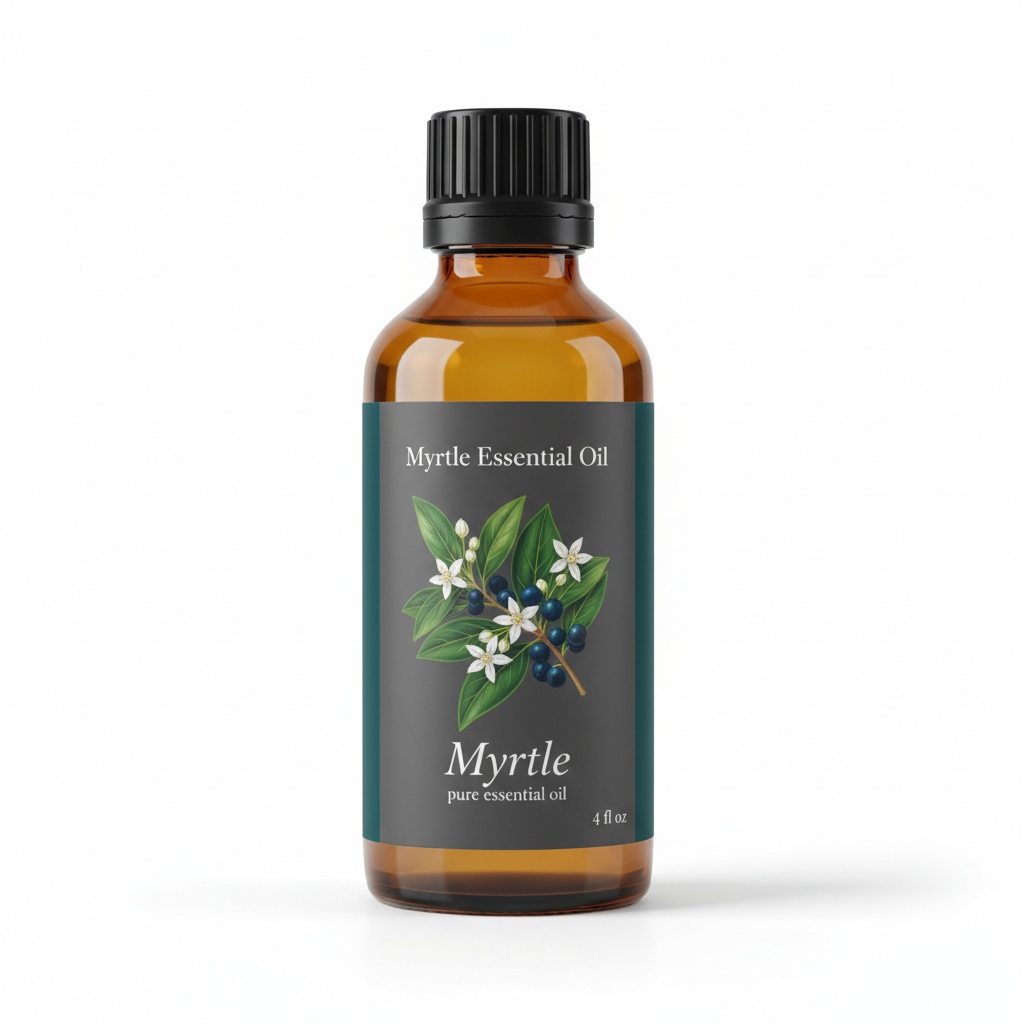
Myrtle Essential Oil
Our own Myrtle Essential Oil, in sizes from 0.5 oz to bulk.
From $16.99
Shop Now →What our certificate shows
We publish a Certificate of Analysis for one batch (MRTAICUNUNC001A). It names the botanical name Myrtus communis, gives the extraction method as steam distilled, and carries a best-by date. It then lists four checks, each reported as "Complies" against a stated standard: appearance (clear liquid), smell (herbal, fresh, camphorous), relative density at 20 C (0.890 to 0.922) and refractive index at 20 C (1.450 to 1.476). Read it as a good basic identity and physical-property check for that batch. It does not include a constituent table, so if you are formulating and need one, ask us in writing through the contact page before you order, and keep whatever answer you receive.
Why a physical check is a floor
Density and refractive index are old, inexpensive checks, and they work best when a real number is printed and compared with the standard. In 2026, researchers bought 14 pine turpentine oils on the Turkish market and measured each against the European Pharmacopoeia monograph; none of the 14 complied. So standards do catch poor commercial oils. Because both density and refractive index describe the mixture as a whole, though, they are a first screen, and a chromatography table is what tells you what the mixture contains.
The goal of all of these checks is the same: not to catch anyone out, but to know what is in the bottle you are holding. A buyer who asks careful questions is a pleasure to hear from, and good sellers welcome it.
What surveys of other oils teach
We found no adulteration survey of myrtle oil, so these are lessons from neighboring oils. A 2024 study of 30 commercial fennel, star anise and anise oils, compared with 15 authentic references by GC-MS and isotope ratio analysis, found 27% adulterated, and its authors recommend a multifaceted analytical approach. The point to take away is the method: those adulterants were caught by instruments, not by nose or kitchen tests, which is why we steer buyers to documents.
Think of the document as one half of a conversation with a seller. The other half is your own nose and a few good questions, asked politely and answered in writing.
A profile that surprises you is not a fake
The mistake in the other direction is just as easy to make. Myrtle varies enormously on its own. Fourteen Iranian accessions grown together in one greenhouse still ranged from 2.35% to 53.09% alpha-pinene, and from 0% to 18.0% 1,8-cineole. Along the Algerian coast, nineteen localities sorted into six chemotypes. A report that shows 10% cineole where you expected 25% is information about that lot, not an accusation.
What you can do at home
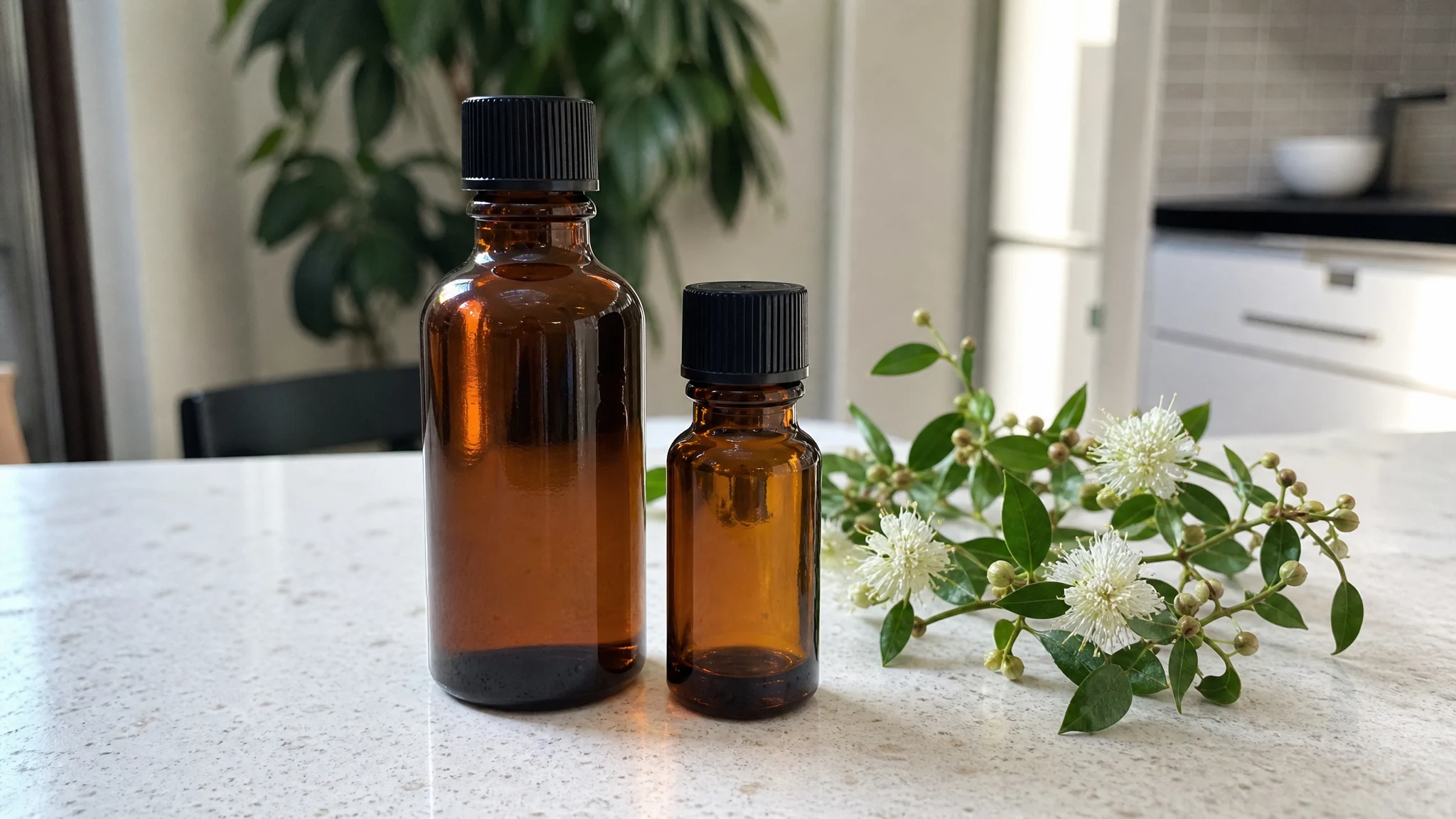
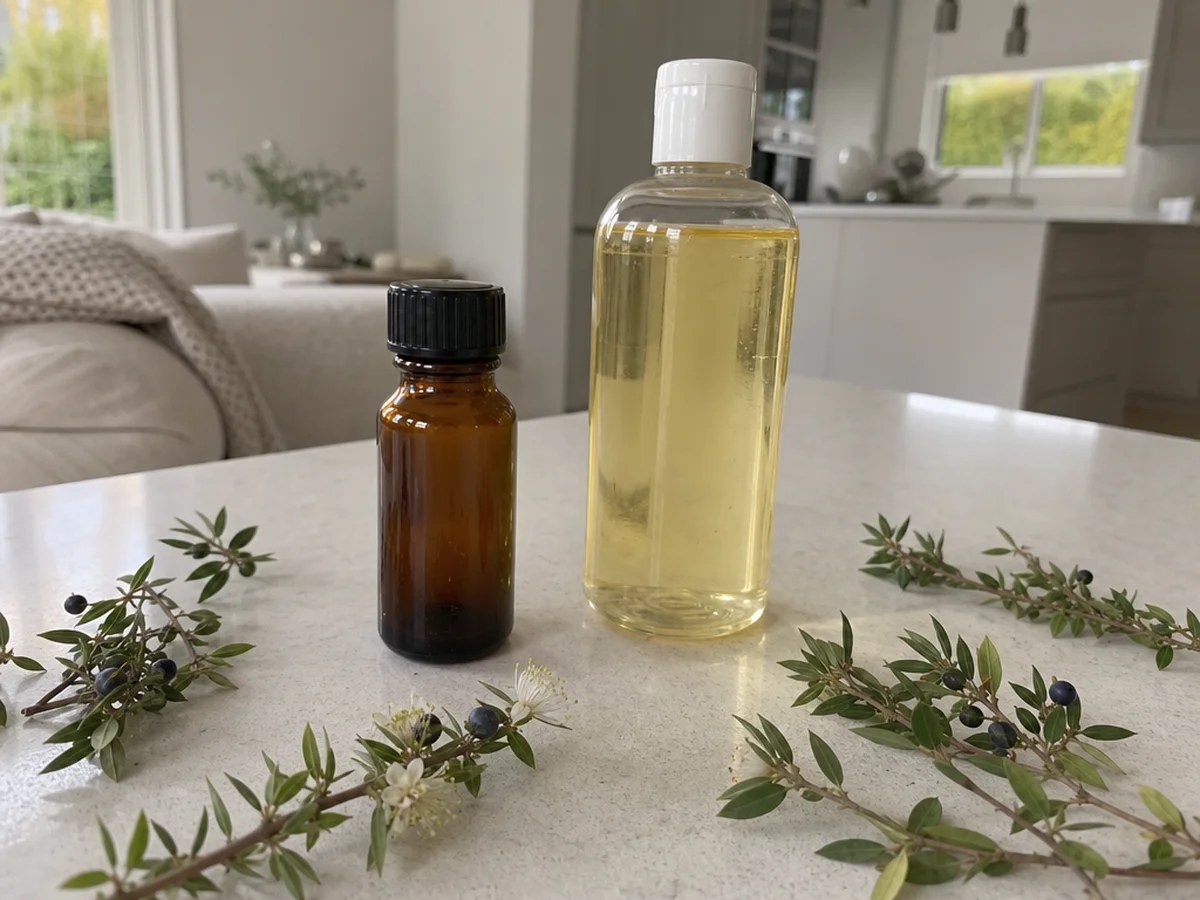
You cannot test an oil's makeup at your kitchen table, but you can check the things a document cannot tell you. Look at the bottle: is it labelled with the botanical name and a lot number? Then open it and smell. Our description is fresh and clear, gently floral, with a soft eucalyptus-like coolness and faintly honeyed facets. If what you smell is nothing like what the seller describes, make a note and ask, politely and in writing.
Look at how the oil pours, too. The appearance standard on our certificate is a clear liquid, so a cloudy or oddly coloured oil is worth a question.
The checks we would run, in order
- Botanical name. Myrtus communis on the label and on the document. "Myrtle" alone is not enough, and lemon myrtle is a different plant that we do not sell.
- A lot number that matches the bottle you hold.
- Measured values for density and refractive index, with the temperature, rather than a pass word alone.
- A GC-MS table naming the laboratory, method and date, if you need to know composition. Our GC-MS reading guide walks through it.
- The two safety constituents. IFRA restricts methyl eugenol and estragole, and the share of methyl eugenol alone ranged from 0.2% in a Corsican leaf oil to 18.7% in a Moroccan one. If you are making something that stays on skin, that line decides how much oil the product can hold.
That last point affects how we talk about dilution. Our guidance is 0.5% to 2% in a carrier with a patch test first. One supplier page quoting Tisserand and Young gives 1.9% as a maximum dermal use level for myrtle oil, so we begin at 0.5% and suggest you check the IFRA standards for your formulation. How to read the rest of a label is in reading a myrtle oil label.
Keep a simple file
Our favorite habit for anyone buying essential oils is the humblest one: a folder. Put the certificate, the invoice, a photo of the label and a note of the date you opened the bottle in one place. A year later, when you wonder which batch you were using, the answer is in the folder instead of in your memory. It takes five minutes and makes every future question easier, whether you ask us or any other seller.
A sharp price or a lovely story is a reason to ask for the paperwork, never a substitute for it. Ask, read, keep the answer, and enjoy the oil.
Myrtle Essential Oil
Myrtle Essential Oil from our own shop, in sizes from 0.5 oz to bulk.
From $16.99
Shop Now →Sources & Further Reading
- A Survey of Commercial Pine Turpentine Essential Oil Products from the Turkish Market and Their Compliance with European Pharmacopoeia 10.0 (Molecules, 2026)
- Authentication of Fennel, Star Anise, and Anise Essential Oils by Gas Chromatography (GC/MS) and Stable Isotope Ratio (GC/IRMS) Analyses (Plants, 2024)
- Essential Oil Variability of Superior Myrtle (Myrtus communis L.) Accessions Grown under the Same Conditions (Plants, 2022)
- Chemical composition and antimicrobial activity of Myrtus communis essential oils from Algeria (Biodiversitas, 2021)
- Phytochemical analysis, cytotoxic and antioxidant activities of Myrtus communis essential oil from Morocco (Journal of Complementary and Integrative Medicine, 2019)
- Quorum-Quenching Activity of Myrtus communis Corsican Essential Oil Against the Marine Bacterium Aliivibrio fischeri (Microorganisms, 2025)
- Myrtle - Hopewell Essential Oils