Myrtle Oil FAQ: Your Common Questions Answered
Customers tend to ask us the same handful of things about myrtle oil, usually in the same order: what is it, what does it smell like, how do I use it, and how long will it last? Here are the ones we hear most, answered plainly.
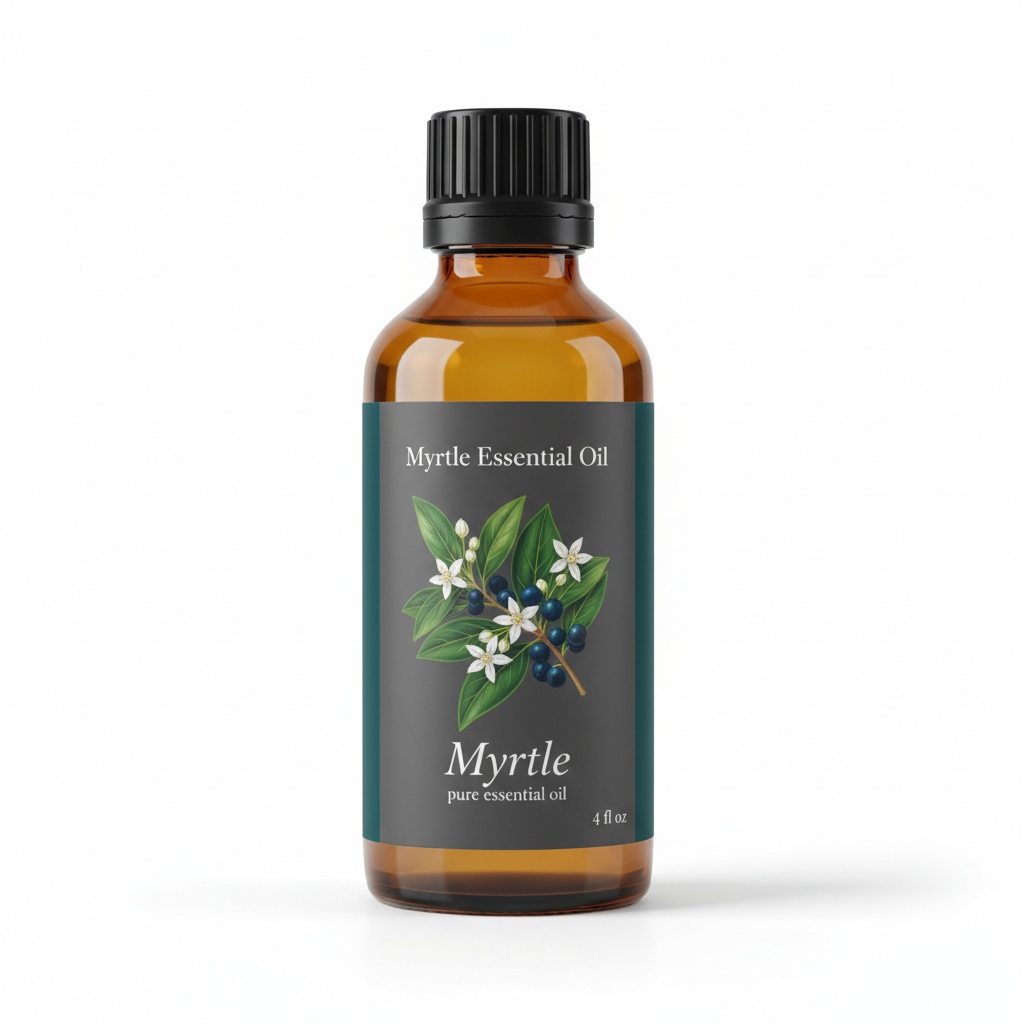
Myrtle Essential Oil
Our own Myrtle Essential Oil, in sizes from 0.5 oz to bulk.
From $16.99
Shop Now →About the oil
Is this the same as lemon myrtle oil?
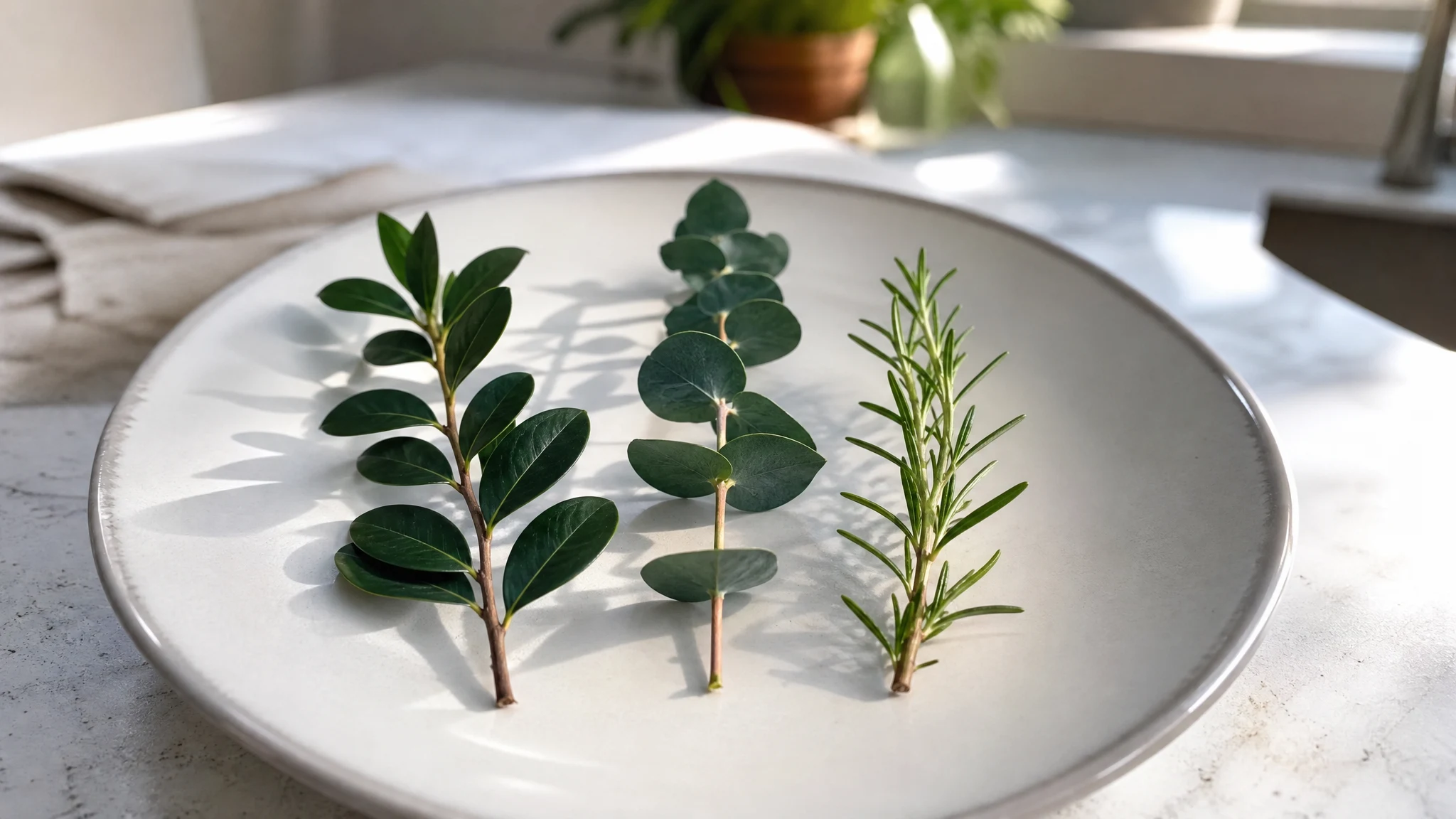
No. Ours is Myrtus communis, the Mediterranean shrub, and we do not sell lemon myrtle (Backhousia citriodora), an Australian tree. A lemon myrtle leaf oil analyzed in Malaysia was about 90% citral, the compound behind its sharp lemon scent (Chemical Composition, Antioxidant, Antibacterial, and Antibiofilm Activities of Backhousia citriodora Essential Oil). Myrtle oils are usually led by alpha-pinene or 1,8-cineole instead, so the two smell and behave quite differently. Our post on myrtle oil versus lemon myrtle oil puts them side by side.
What does it smell like?
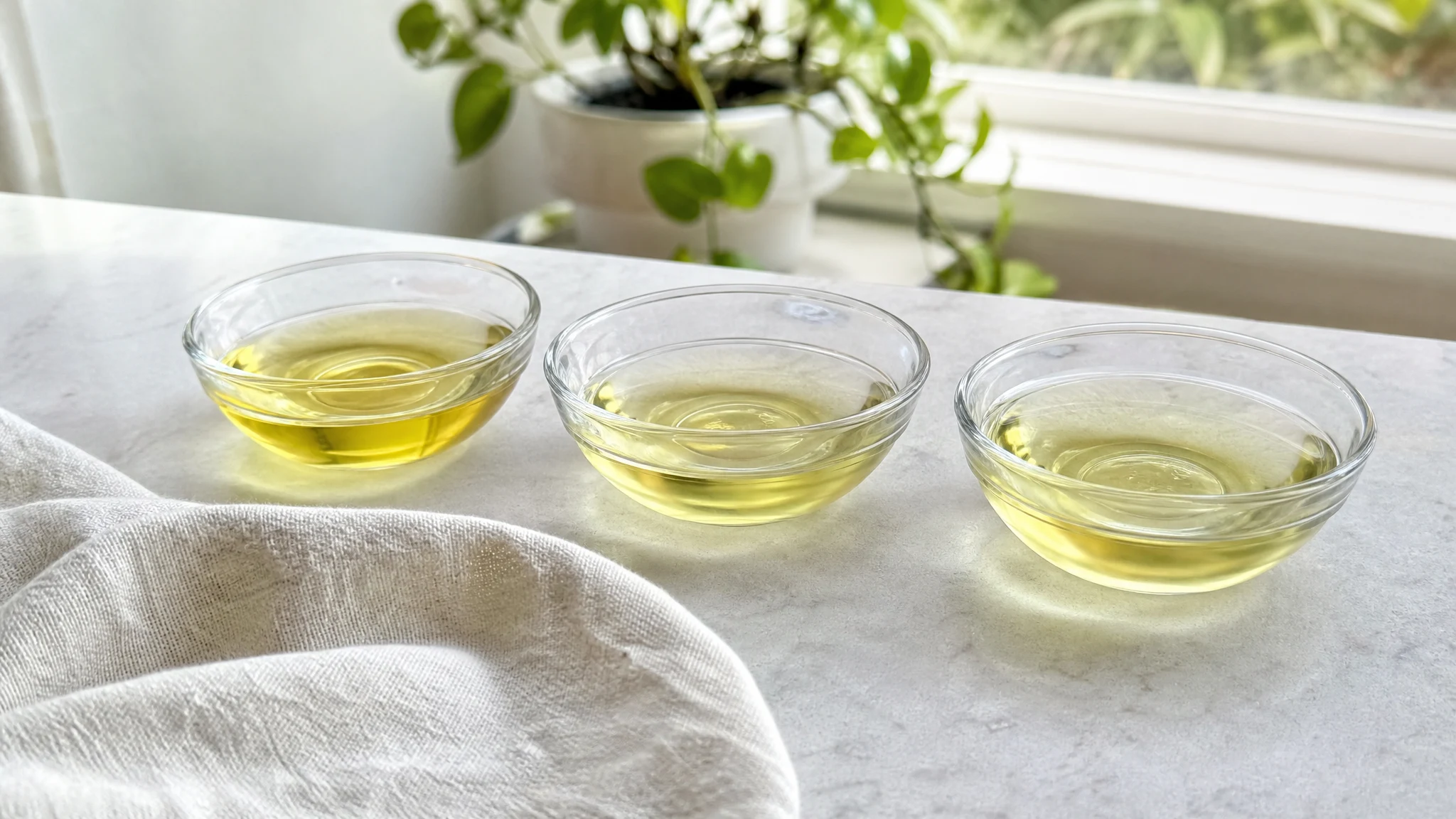
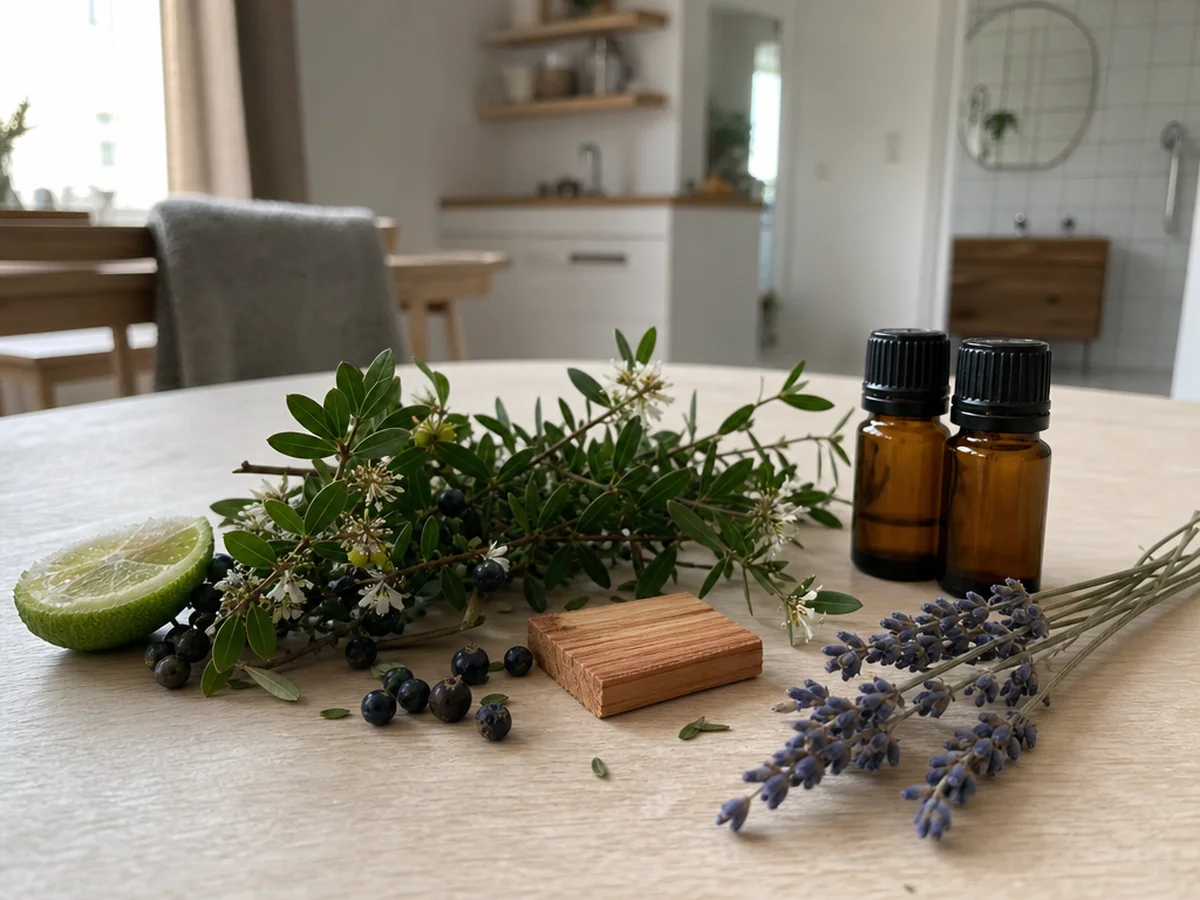
Fresh, clear and gently floral, with a soft eucalyptus-like coolness and faintly honeyed facets. It sits in the top-to-middle part of a fragrance, which is why it pairs so easily with lemon, lavender, rosemary and neroli.
Is it blended with anything?
No. It is a single oil sold neat, with no additives or fillers, so any dilution maths is yours to do in your own carrier.
What is myrtle oil made of?
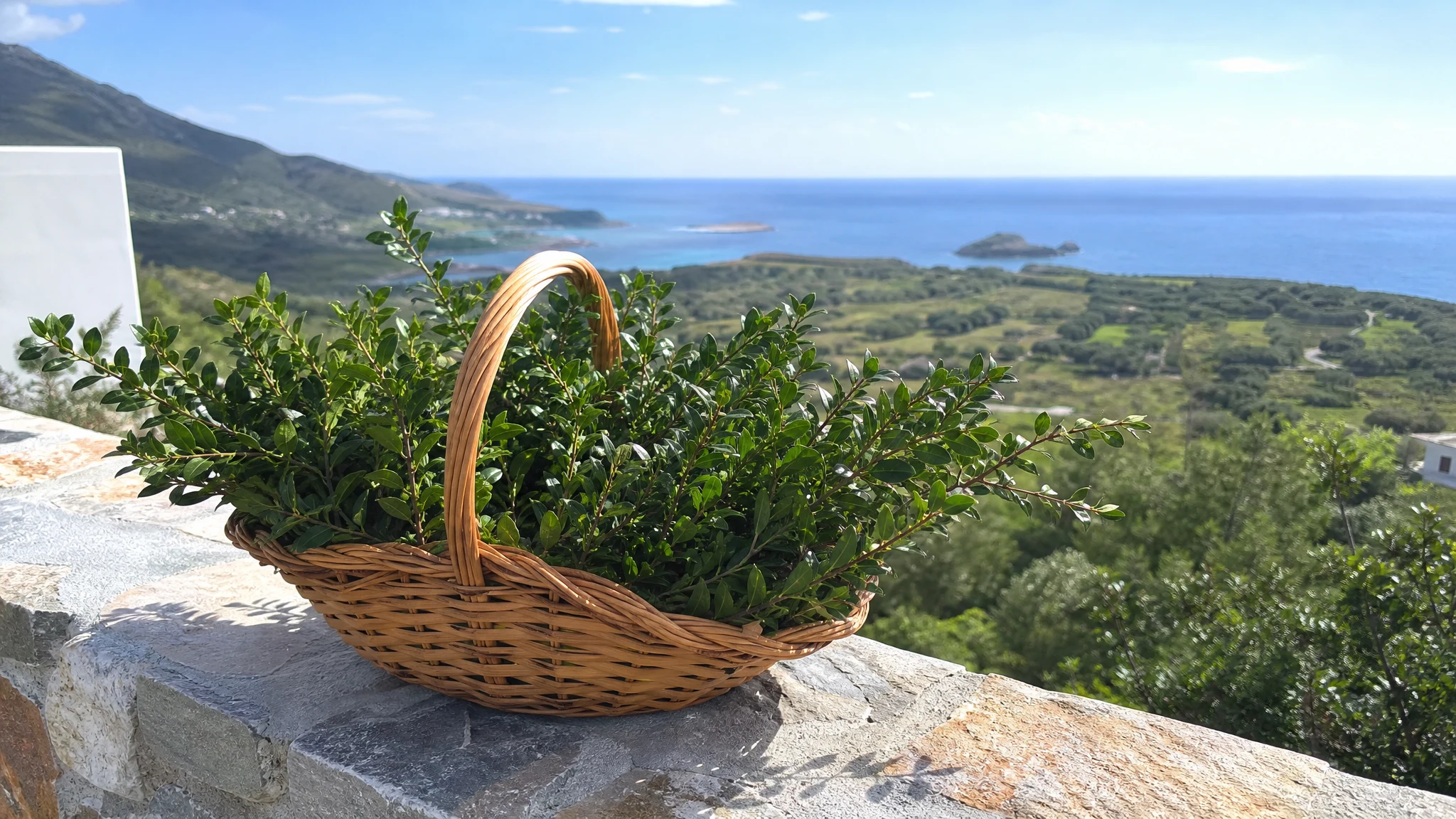
That depends on the plant, and nature is generous with variety here. One Corsican leaf oil was led by alpha-pinene at 43% and 1,8-cineole at about 29% (Quorum-Quenching Activity of Myrtus communis Corsican Essential Oil Against the Marine Bacterium Aliivibrio fischeri). Across 52 Sardinian plants grown in a single field, alpha-pinene ranged from about 14% to 47% (Chemotaxonomic Evaluation by Volatolomics Analysis of Fifty-Two Genotypes of Myrtus communis L.). That spread is why people talk about green and red myrtle, which we explain in our chemotype post. If you need a composition table for a formulation, ask us in writing through the contact page, and have a look at how to read a GC-MS report first.
Where should I start if I have never used it?
Open the bottle and smell it before you do anything else. Then pick one simple use, such as a few drops in a diffuser in a ventilated room, and stay with it for a week. Starting small lets you learn the aroma without too many variables, and you will quickly know whether you want a second bottle or a different plan.
Using it
How much should I dilute it for skin?
Our guidance is 0.5% to 2% in a carrier oil, which is roughly 3 to 12 drops per ounce, with a patch test on a small area first. We suggest starting at the low end. The fragrance industry's standards body, IFRA, caps methyl eugenol, a minor component of myrtle oil, at 0.0015% of a body lotion or body oil (Category 5A) (IFRA Standards, up to and including the 51st Amendment (January 2024)). Dividing that cap by the 0.5% to 5% methyl eugenol shares seen in the Sardinian plants gives a ceiling of roughly 0.03% to 0.3% oil in a finished body product. That is our arithmetic, and IFRA's standards are written for products made for sale, so treat it as a reference point. It is the reason we say a smaller amount is a sensible place to begin, and the reason we do not call 2% safe for everyone.
Can I use it while pregnant, or around children and pets?
Our guidance is to keep the oil away from children and pets, and our disclaimer asks anyone who is pregnant, nursing or managing a medical condition to speak with a physician first. The Tisserand Institute says the same about pregnancy and also advises keeping oils where young children cannot reach them (Safety Guidelines - Tisserand Institute). For pets, the ASPCA notes that short diffuser use in a space pets cannot enter is unlikely to be a problem, that pets with breathing problems may do better without a diffuser, and that homes with birds should skip diffusers altogether (The Essentials of Essential Oils Around Pets). Our pregnancy post goes into more detail.
Can I swallow it or cook with it?
No. It is an external cosmetic oil, not for internal use. For the full picture, see can you ingest myrtle essential oil.
Can it help with sleep, breathing or mood?
We sell myrtle oil as a fragrance and cosmetic ingredient, so we do not make health claims for it. If any of those matter to you, a physician or pharmacist is the right person to ask.
Keeping it
How long does it last?
We say typically 2 to 3 years when it is kept tightly capped in a cool, dark place. One six-month study that stored a myrtle oil in brown glass at 25 C, 4 C and -20 C found its two main components, alpha-pinene and 1,8-cineole, relatively stable, with some of the minor esters declining (Optimizing postharvest quality of myrtle (Myrtus communis L.) essential oil extracts: effects of temperature and storage duration). Oxygen is the thing to watch, so write the opening date on the bottle and keep the cap snug. Our storage guide has the details.
Which size should I choose?
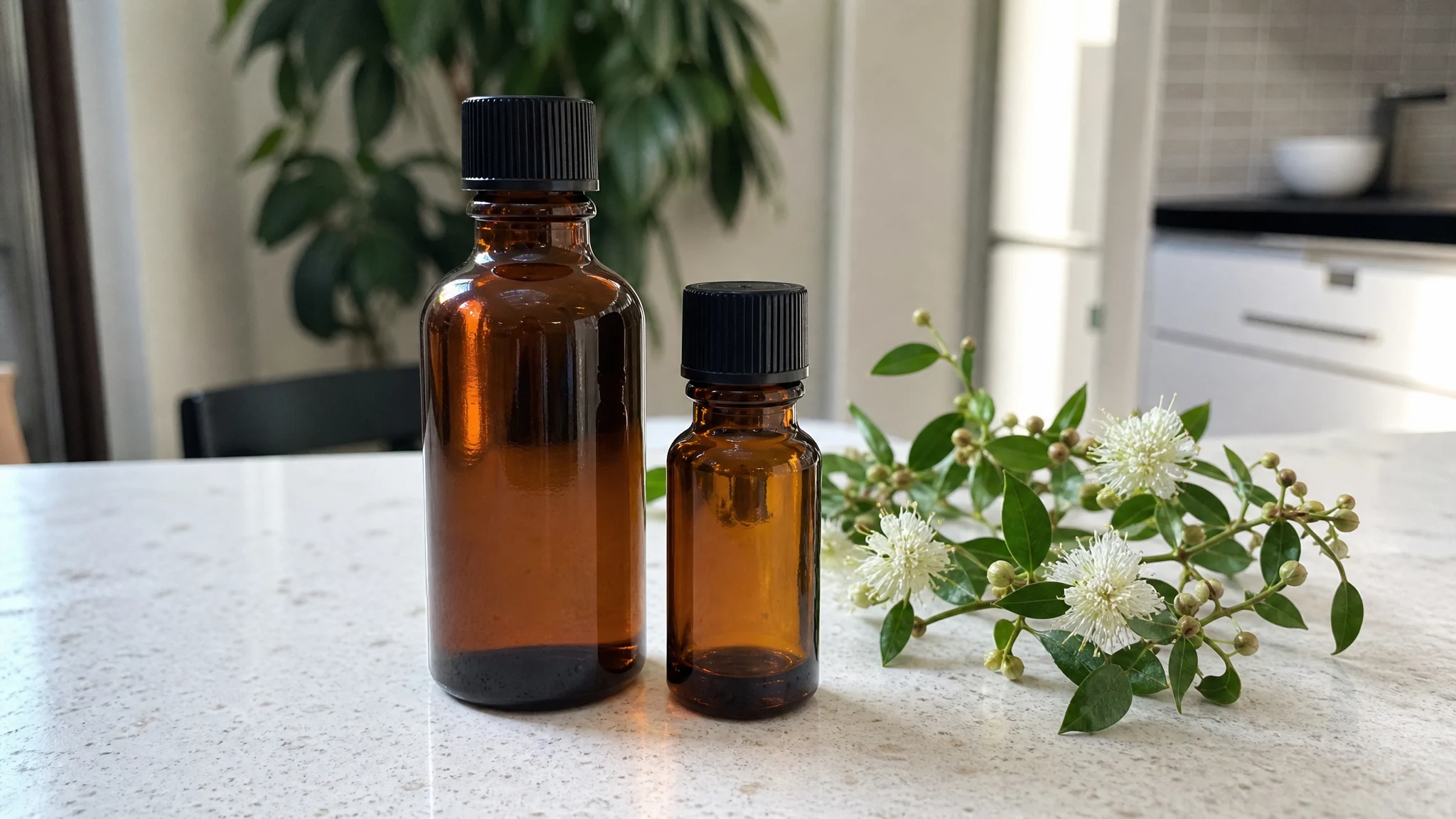
We sell ten sizes, from 0.5 oz up to 400 lb, all in the same oil. A small bottle suits trying a scent; larger sizes suit soapmakers and formulators. Sample bottles and larger quantities are available on request through our wholesale page.
Have a question we have not covered? Write to us through the contact page and we will answer it.
Myrtle Essential Oil
Myrtle Essential Oil from our own shop, in sizes from 0.5 oz to bulk.
From $16.99
Shop Now →Sources & Further Reading
- Quorum-Quenching Activity of Myrtus communis Corsican Essential Oil Against the Marine Bacterium Aliivibrio fischeri
- Chemotaxonomic Evaluation by Volatolomics Analysis of Fifty-Two Genotypes of Myrtus communis L.
- Chemical Composition, Antioxidant, Antibacterial, and Antibiofilm Activities of Backhousia citriodora Essential Oil
- Optimizing postharvest quality of myrtle (Myrtus communis L.) essential oil extracts: effects of temperature and storage duration
- IFRA Standards, up to and including the 51st Amendment (January 2024)
- Safety Guidelines - Tisserand Institute
- The Essentials of Essential Oils Around Pets