What Does Myrtle Oil Smell Like? Notes and Blends
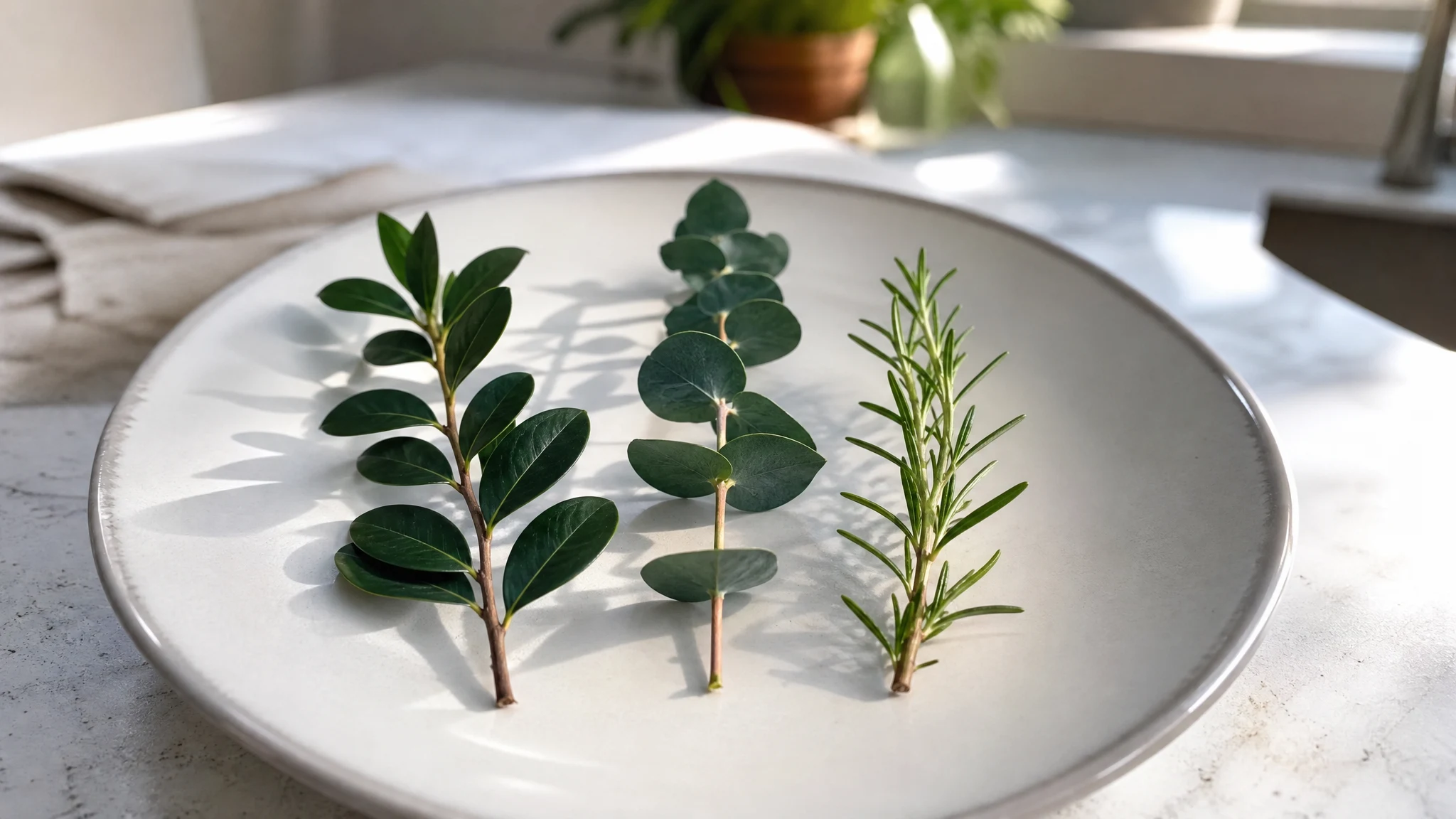
Open a bottle of myrtle oil and the first thing you notice is air. It is fresh and clear, with a cool edge that reminds people of eucalyptus, and then, a few seconds later, something softer and sweeter slips in underneath. That second act is why we keep reaching for this oil.
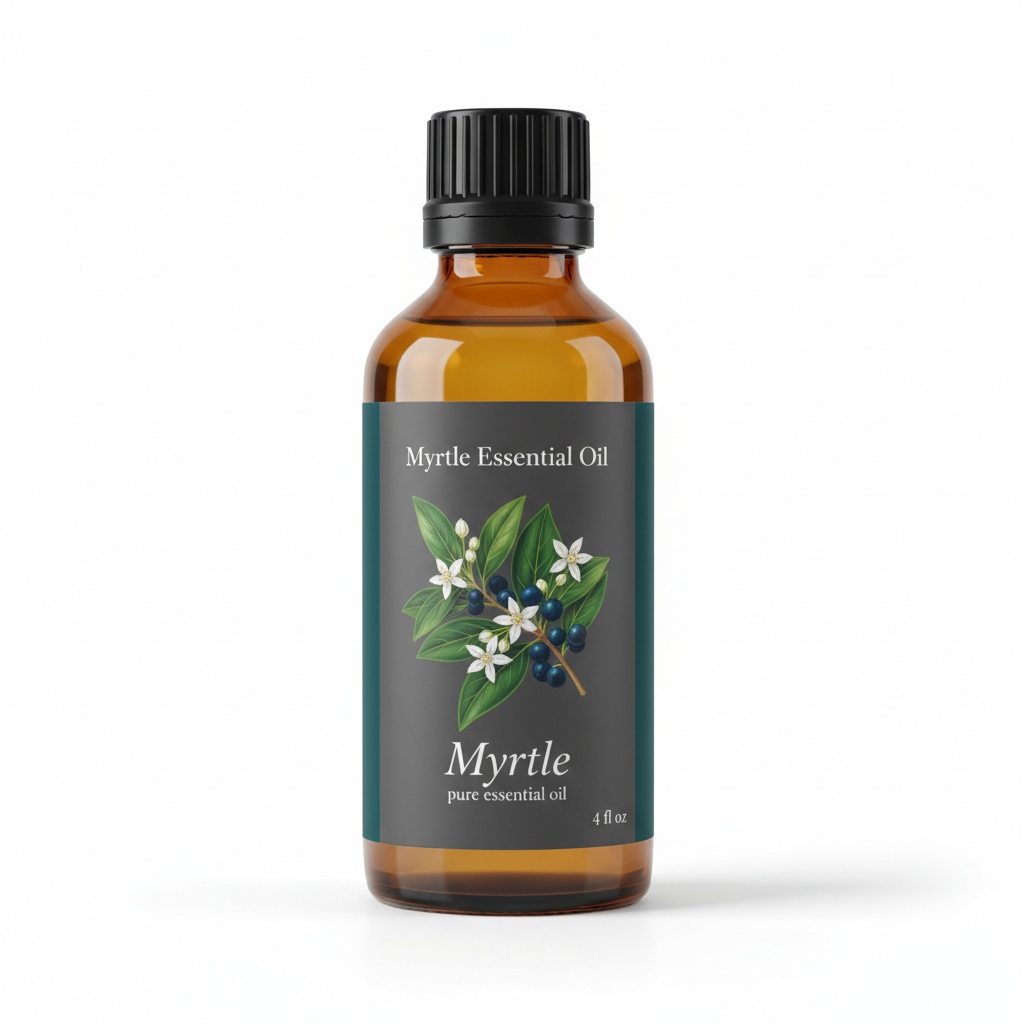
Myrtle Essential Oil
Our own Myrtle Essential Oil, in sizes from 0.5 oz to bulk.
From $16.99
Shop Now →The two halves of the scent
We describe our myrtle as fresh, clear and gently floral, with a soft eucalyptus-like coolness and faintly honeyed facets. In perfumery terms it sits as a top-to-middle note, which means the bright opening arrives first and the floral, sweeter body shows up as the oil settles on a blotter or in the air.
It helps to know what is doing the work. Myrtle leaf oils are built mostly from a handful of aromatic molecules: alpha-pinene (the resinous, pine-needle note), 1,8-cineole (the camphor-like coolness), linalool (floral, a little like lavender) and limonene (lemony). A Corsican leaf oil reported in 2025 was led by alpha-pinene at 43.0% with 1,8-cineole at 28.8%, limonene at 8.7% and linalool at 3.8%. One supplier lists a lot at 49.45% alpha-pinene, 27.07% cineole and 5.16% linalool, and describes its aroma as "fresh, camphoraceous, sweet herbal, similar to eucalyptus". Put those numbers beside our description and you can hear the same chord: crisp and cool on top, with the floral note carrying the sweetness.
Why no two myrtle oils smell identical
Here is the interesting part. In a Sardinian collection of 52 myrtle genotypes grown in one field, linalool ran from under 1% to about 24% and 1,8-cineole from about 1.4% to about 27%. Same species, same soil, same year, and a very different balance between the floral side and the camphor side. So when anyone hands you a single flat description of "myrtle oil", they are describing one bottle.
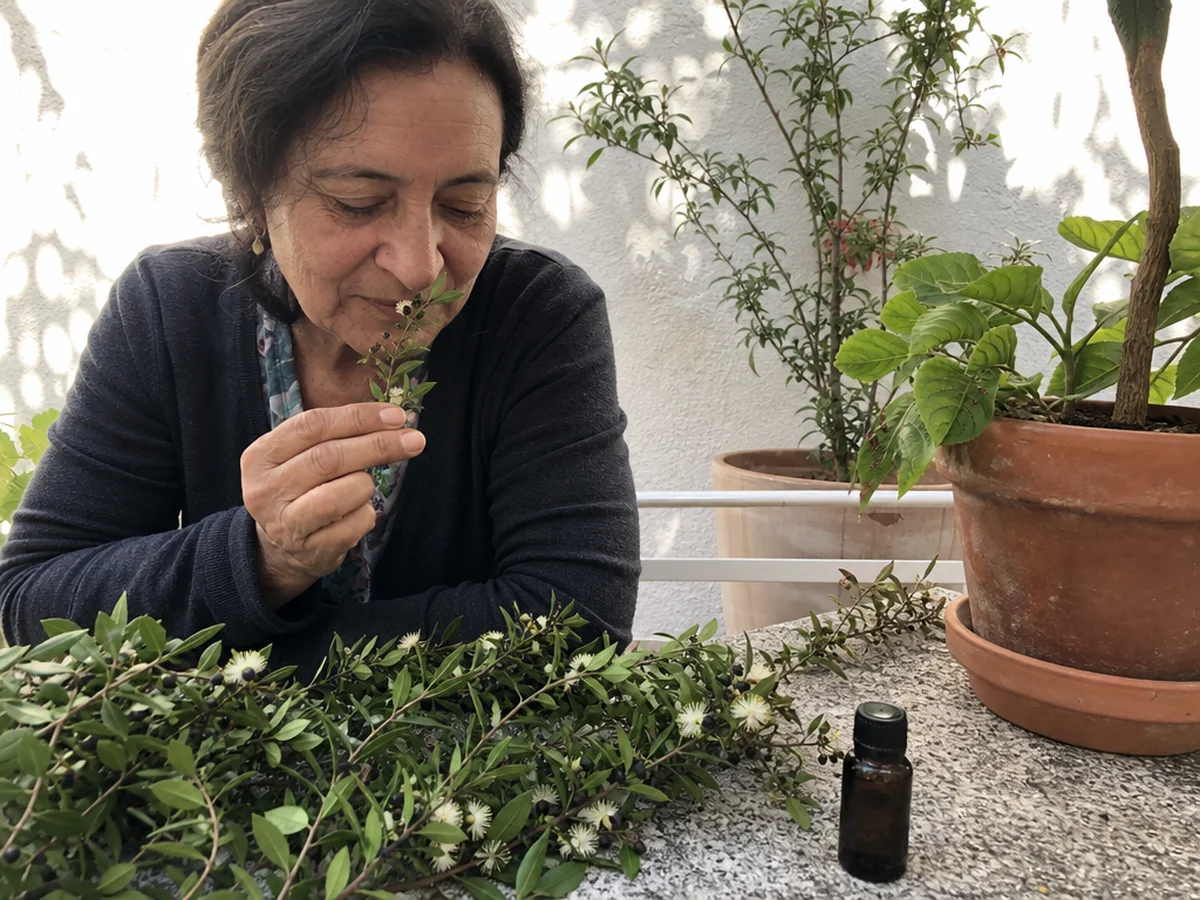
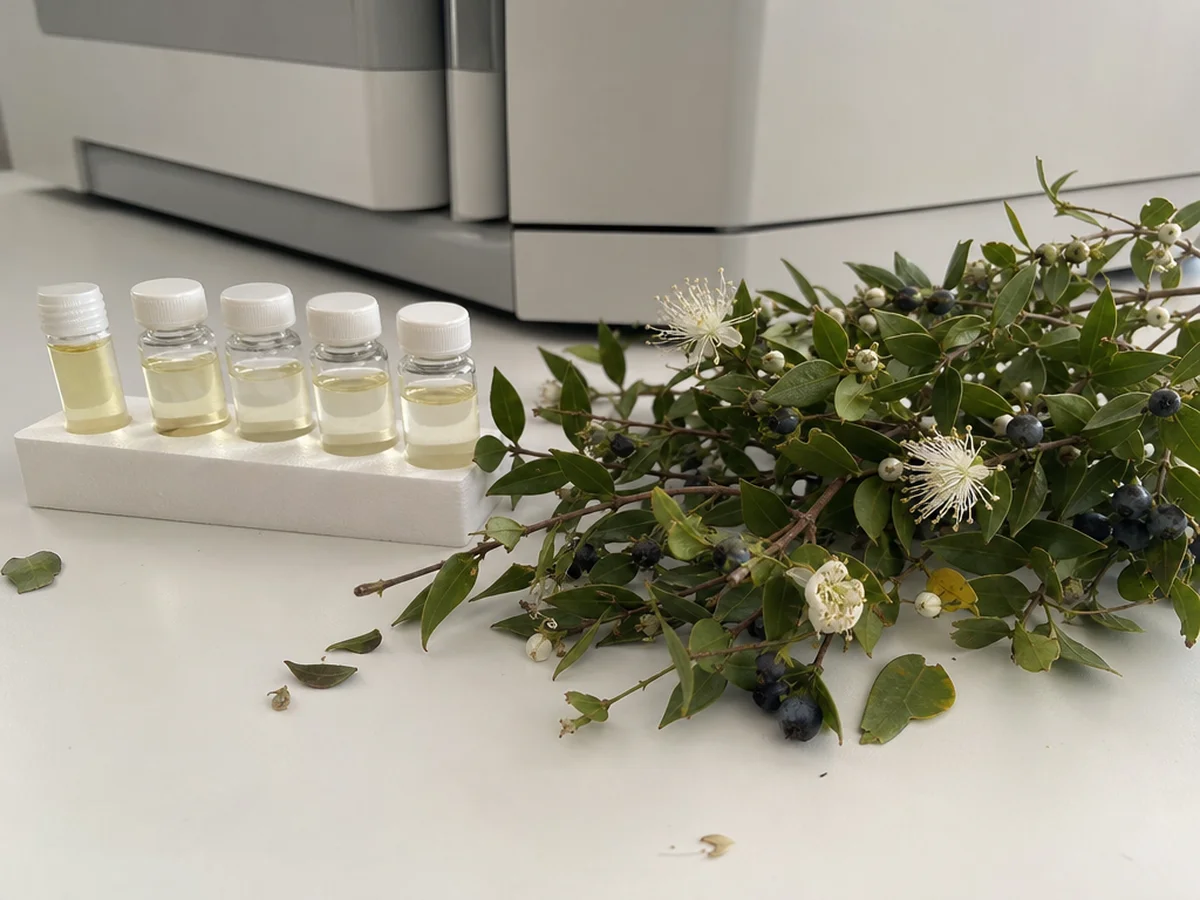
That is a good reason to treat scent as something you meet rather than something you read. The certificate of analysis we publish for one batch lists the smell standard as "Herbal, Fresh, Camphorous" with a result of "Complies". Both words ring true at different moments: herbal and camphor-like in the first breath, floral and honeyed as it warms.
How to smell it fairly
Noses tire quickly. In a 2018 experiment with 19 volunteers, people rated a pleasant fragrance as less intense over 10 minutes of exposure, and the fade came sooner when their attention was elsewhere. That is one fragrance and not myrtle, but it matches everyday experience, and it suggests a few habits:
- Smell it first, before anything else, and make a note. The opening impression is the one your nose has not yet adapted to.
- Dip a paper blotter a few millimetres rather than sniffing the neck of the bottle, and come back after 15 minutes and again after an hour. A top-to-middle note should visibly change over that time.
- Step into fresh air between samples. Do not judge the third oil in a row.
- Keep sessions short. The Tisserand Institute advises against direct, intensive inhalation for longer than 15 to 20 minutes.
Try it three ways
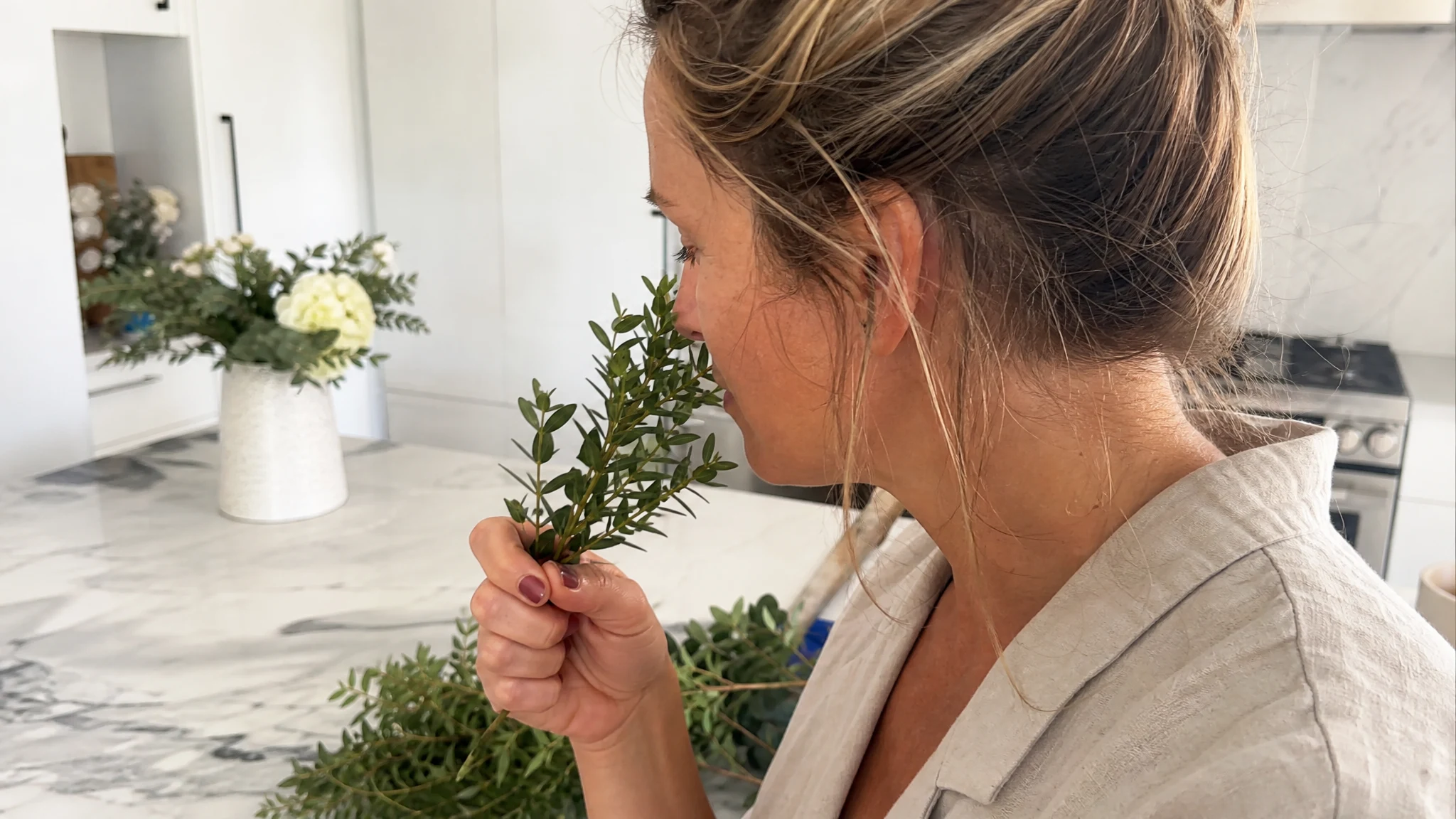
One quick way to get to know the scent is to meet it three ways in one sitting. First, smell it straight from the bottle, once, from a few centimetres away. Second, dip a blotter and wave it gently under your nose. Third, put a single drop on a cotton pad and leave it in an empty room for ten minutes, then walk in from outside. Each gives a different impression: the bottle is the most compact, the blotter shows the opening and the change, and the room shows how it feels at a distance. Write a word or two for each.
What myrtle likes to sit beside
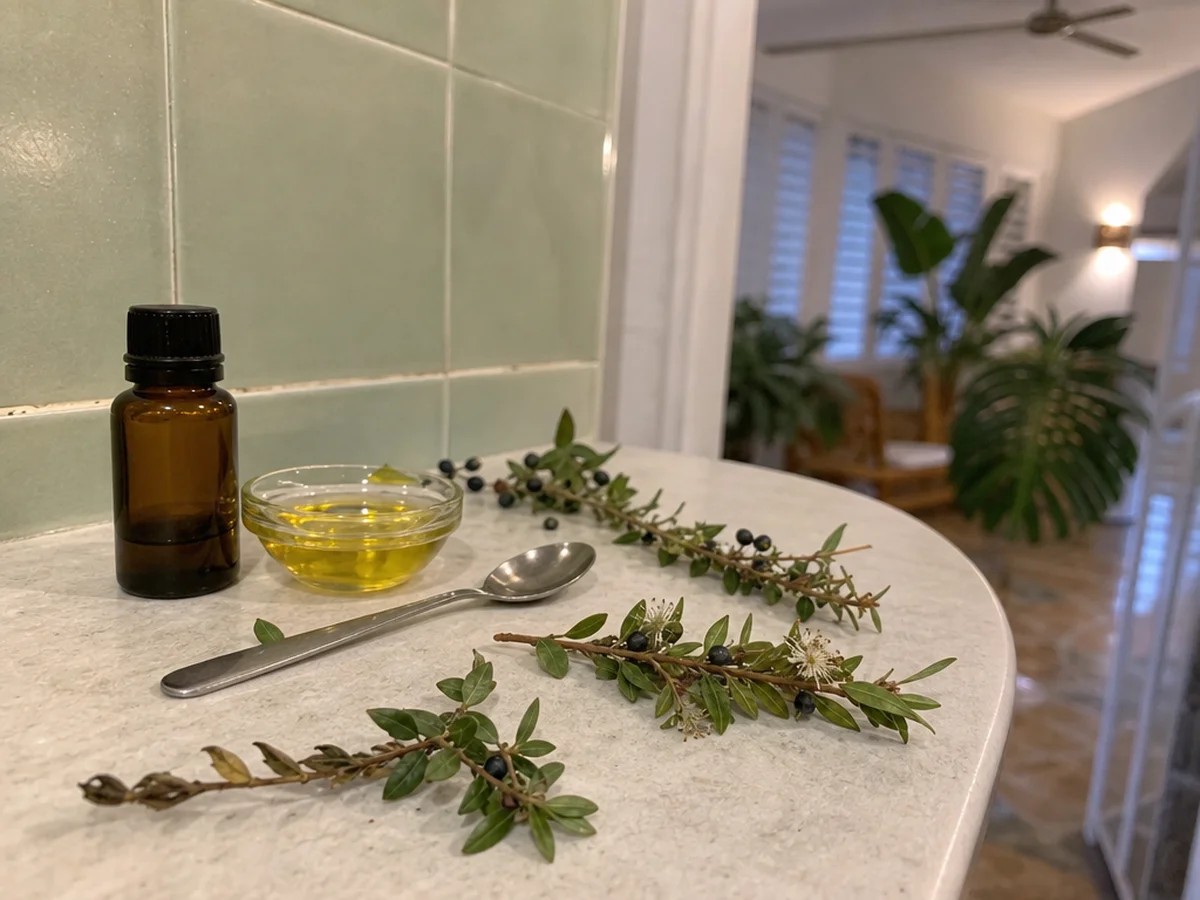
Because the scent has both a cool, green edge and a soft floral heart, it bridges nicely between citrus and herbs on one side and florals on the other. We suggest lemon, lavender, rosemary, neroli and clary sage as natural partners, and bergamot or eucalyptus work too if you are blending for a fresher result. Our oil is sold neat, so any blend is yours to compose; the lemon, lavender, rosemary and friends come from your usual supplier. If you are exploring blends, our guide to what blends well with myrtle oil goes deeper.
Keeping the scent true
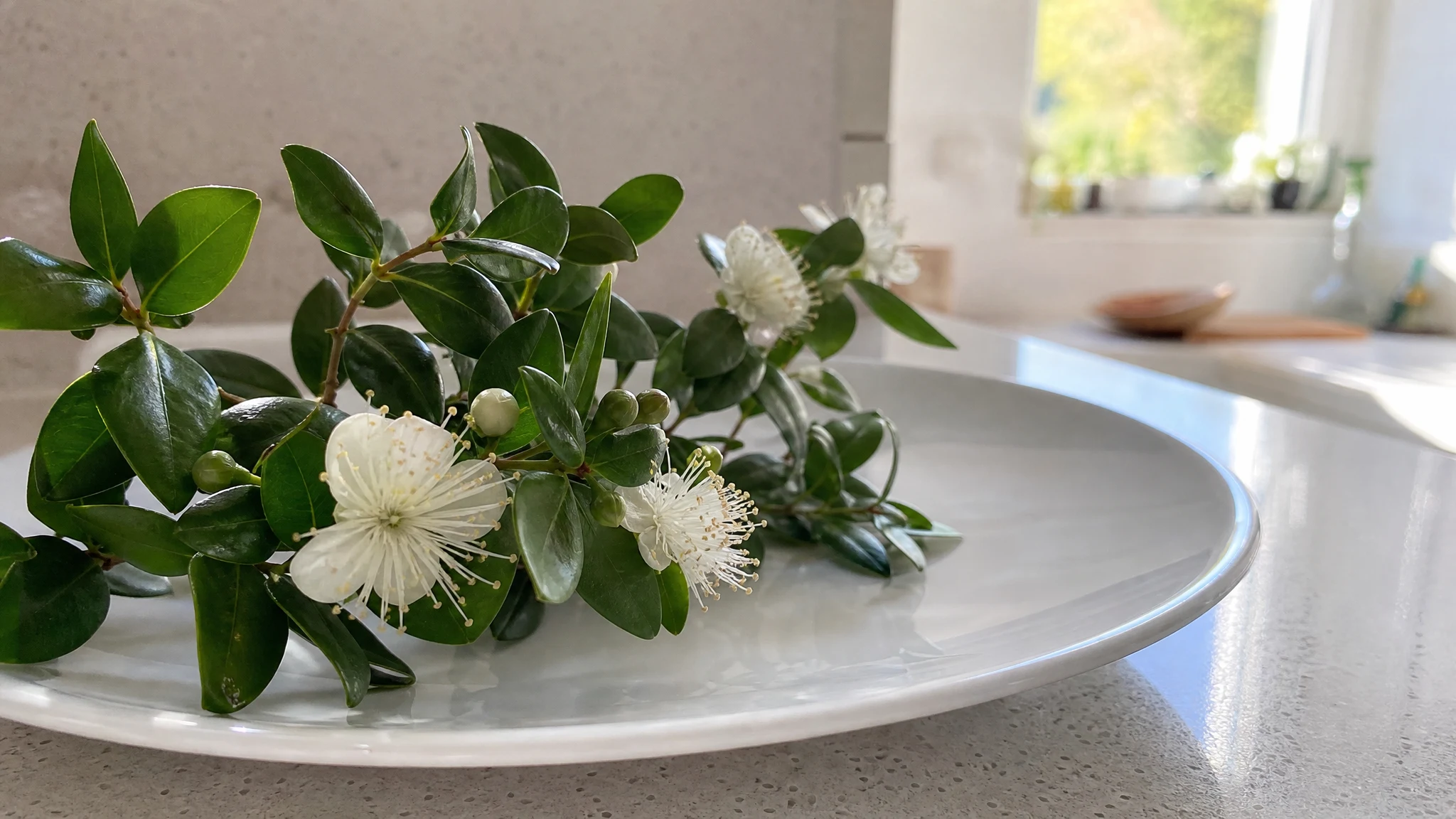
A fresh top note is the first thing to go when an oil is stored carelessly. In a six-month study of an Iranian myrtle oil kept in sealed brown glass vials at 25, 4 and minus 20 C, the main constituents stayed fairly steady, though some of the minor esters fell at room temperature. Our practical read is simple: keep the cap tight, the bottle dark and the place cool, and your oil will smell the way you remember it. We go through that in how to store myrtle oil. If you want to know which plant you are smelling, our page on myrtle versus lemon myrtle explains why a citrusy lemon myrtle is a different thing altogether.
Words that help
If you struggle to put a scent into words, borrow from the kitchen and the garden. Is it more like crushed leaves, a cut herb, a green stem or a pale flower? Does the cool edge remind you of fresh air, of cut grass or of something minty? There are no wrong answers, and a personal vocabulary makes it easier to choose blend partners later.
The best test is a simple one: a blotter, a quiet minute and your own nose. Give it an hour, and see what the oil does when you are not paying attention.
Myrtle Essential Oil
Myrtle Essential Oil from our own shop, in sizes from 0.5 oz to bulk.
From $16.99
Shop Now →Sources & Further Reading
- Quorum-Quenching Activity of Myrtus communis Corsican Essential Oil Against the Marine Bacterium Aliivibrio fischeri (Microorganisms, 2025)
- Chemotaxonomic Evaluation by Volatolomics Analysis of Fifty-Two Genotypes of Myrtus communis L. (Plants, 2020)
- Myrtle - Hopewell Essential Oils
- Attentional modulation of desensitization to odor (Attention, Perception and Psychophysics, 2018)
- Optimizing postharvest quality of myrtle (Myrtus communis L.) essential oil extracts: effects of temperature and storage duration (BMC Plant Biology, 2025)
- How to Use Essential Oils Safely (Tisserand Institute)