Myrtle Oil and Mood: What Scent Can and Can't Do
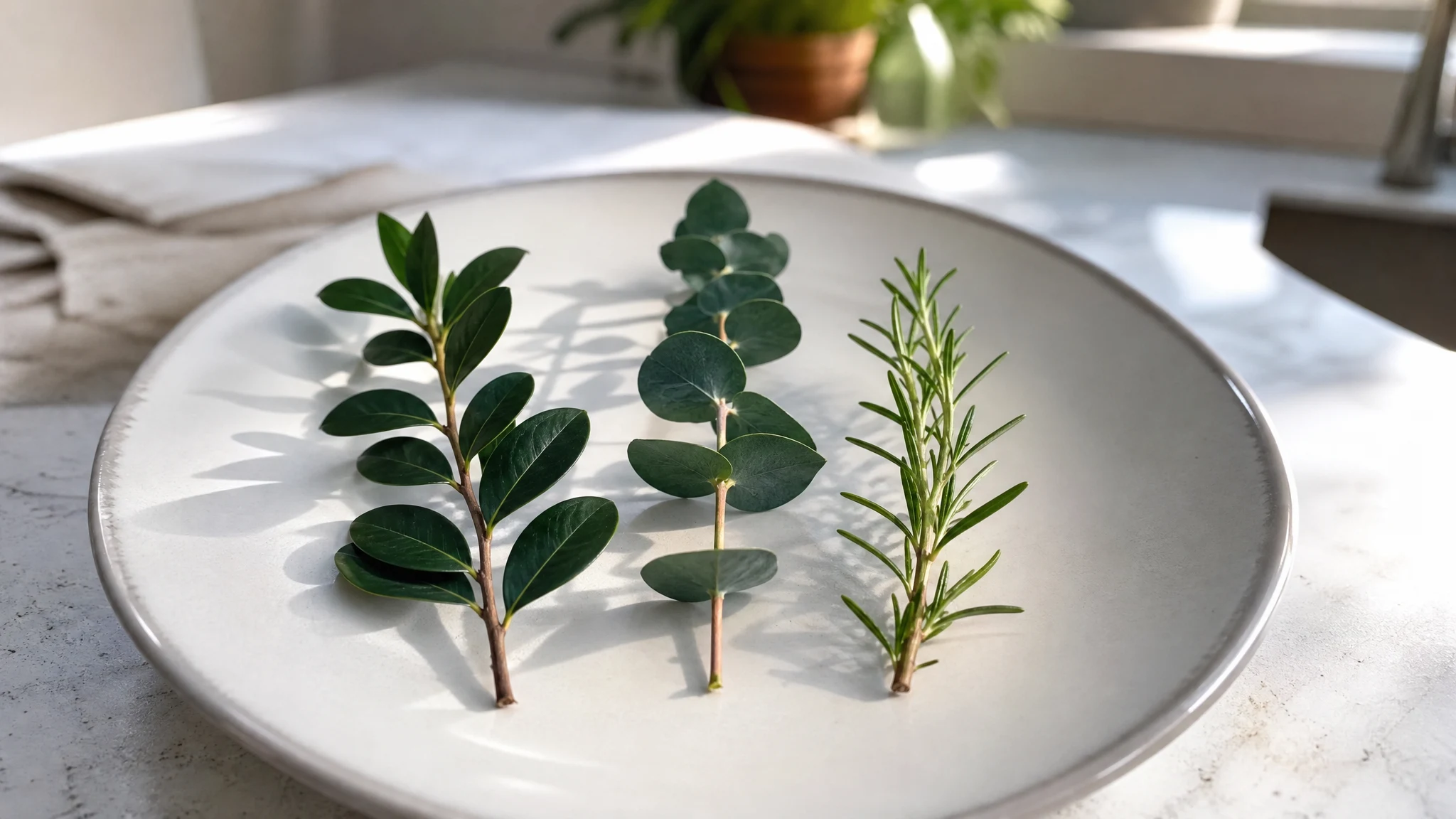
Everyone has a smell that takes them somewhere: a garden path, a grandmother's kitchen, a particular summer. Fresh green leaves are a good candidate. That quiet power of scent is real, and it is the interesting part of any conversation about oils and mood. It is also the reason we are careful about what we say for myrtle.
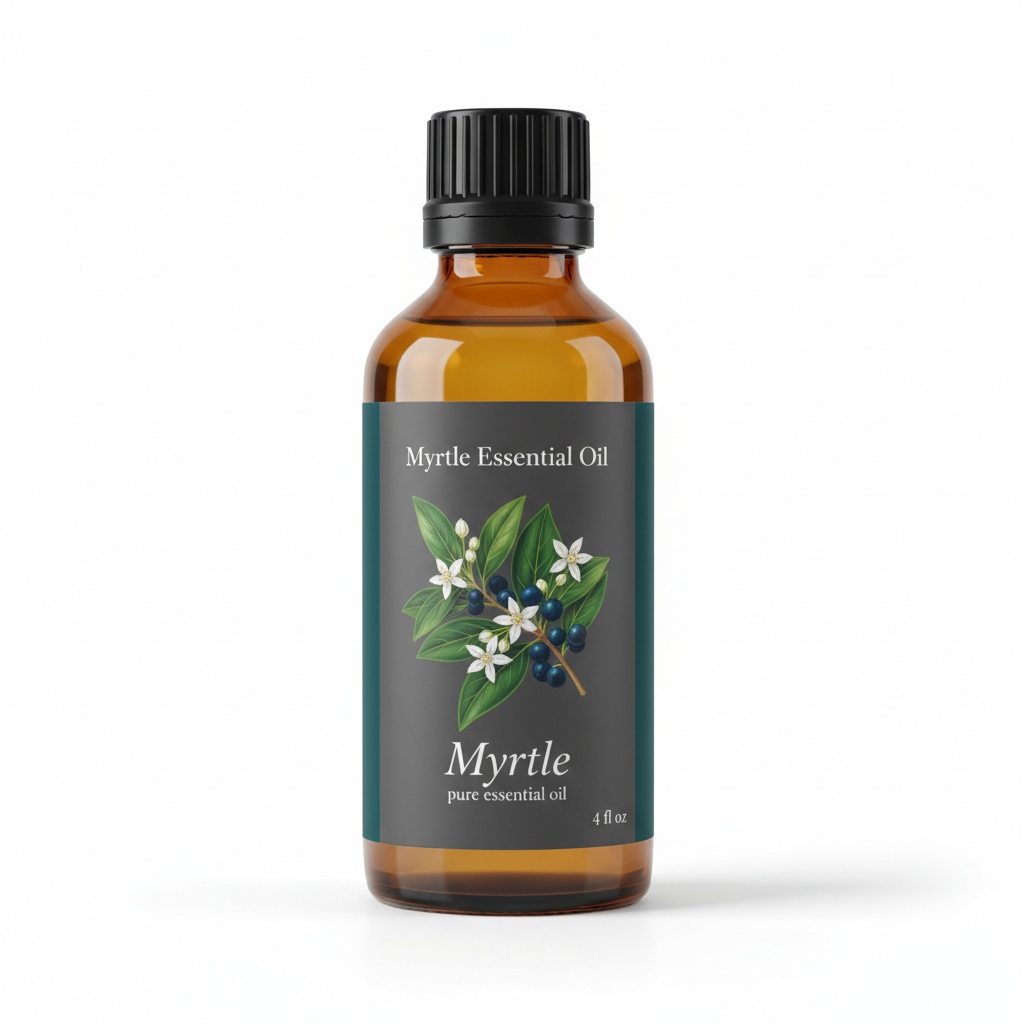
Myrtle Essential Oil
Our own Myrtle Essential Oil, in sizes from 0.5 oz to bulk.
From $16.99
Shop Now →Why a smell can feel like a mood
The best-supported idea is memory. A review by Rachel Herz concludes that odors which evoke positive autobiographical memories have the potential to increase positive emotions and decrease negative mood states, and she links this to odor-associative learning and a close neuroanatomical relationship between smell and emotion. Notice what that means. The effect lives in the person, not the bottle. A fresh, green leaf aroma may call up a garden or a wedding for one person and nothing at all for another. That is our reading of the mechanism rather than a finding, but it explains why no oil can promise the same feeling to everyone.
The wider literature is mixed in a way that is worth understanding. Herz's earlier systematic review analysed 18 studies that met strict criteria. She found credible evidence that odors can affect mood, physiology and behavior, judged a psychological explanation more comprehensive than a pharmacological one, and pointed to methodological problems behind the inconsistencies in the data. A scent also cannot be hidden from the person smelling it, so what someone expects tends to travel with the aroma into the results.
A small experiment you can run yourself
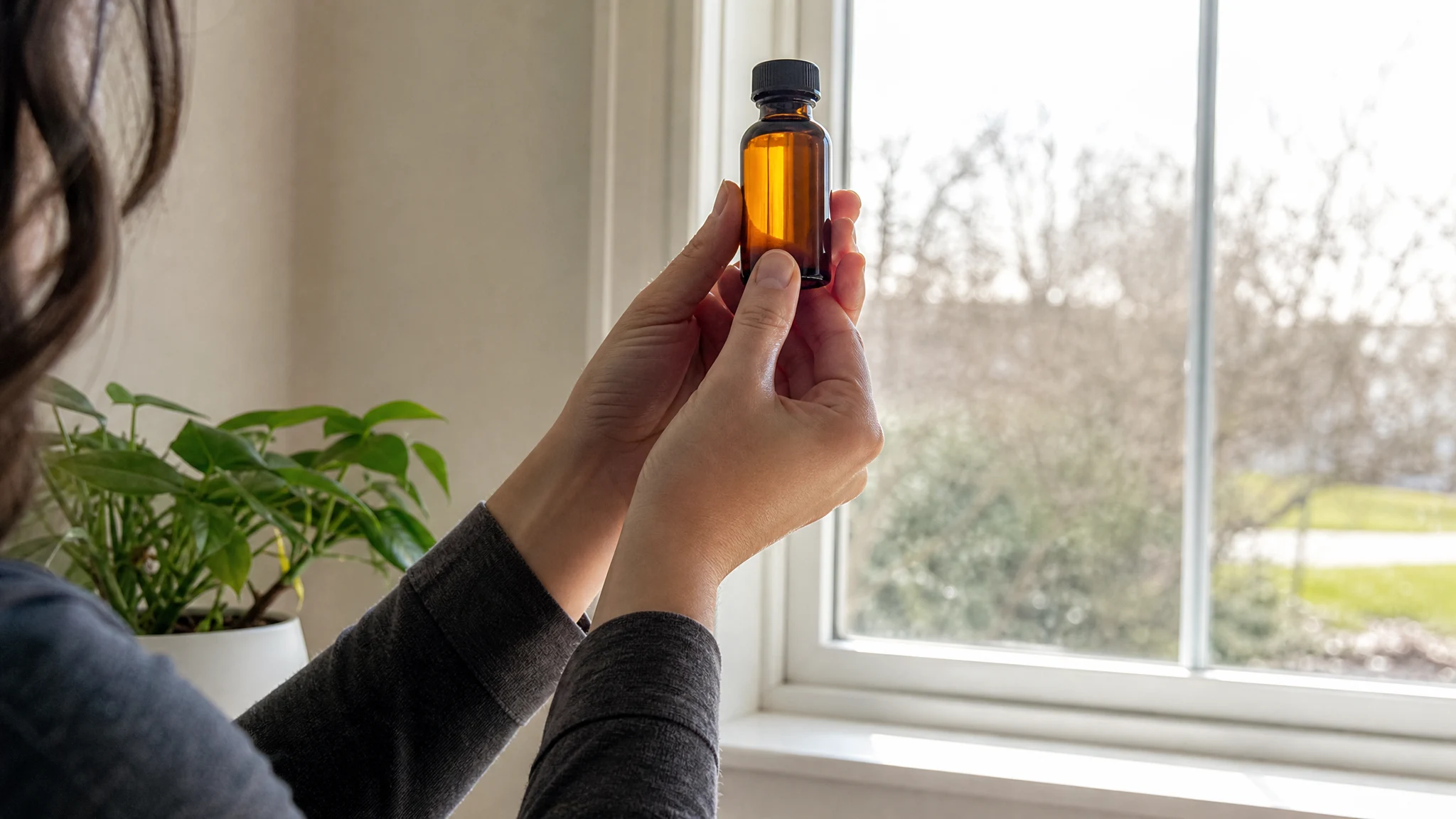
If you are curious how a scent lands for you, you do not need a study. Open the bottle and take one slow sniff before you think about anything else. Notice what comes to mind: a place, a season, a person, or nothing at all. Then put the cap on and try again another day, in a different mood or a different room. You may find the same aroma means different things on different days, and that is exactly the point: the response belongs to you.
Writing a line or two in a notebook turns it into a pleasant habit. There is no right answer, and "I just like it" is a perfectly good one. Scent and memory also work in reverse: a bottle you open only on quiet evenings may start to feel like quiet evenings, which is a habit you have built rather than something the oil does.
Where myrtle sits
Meta-analyses pool trials of aromatherapy and anxiety across many oils and many methods. One of them, covering 32 randomized trials, reports lower anxiety scores on average and notes that the proper dosage of essential oils needs further research. Its abstract names no myrtle trial, and a pooled result cannot be read back onto one oil in particular. A search of Europe PMC on 28 October 2026 for myrtle oil and mood, anxiety or stress turned up animal studies, food work and reviews in the first 30 titles, and no human trial of inhaled myrtle oil. A title screen of one database does not prove nothing exists, but it does mean we have no study to point to.
Other myrtle materials are different products. Berry and leaf extracts in cell and animal work are not inhaled oil, and neither is the standardized myrtol preparation studied in sinus trials.
Before we get to what we say, a small confession from the bottle side of the counter: a fragrance is much easier to love than to explain. Everything in this post comes back to the same simple rule, which is to describe what you can smell and leave the rest to you.
What we say about our oil
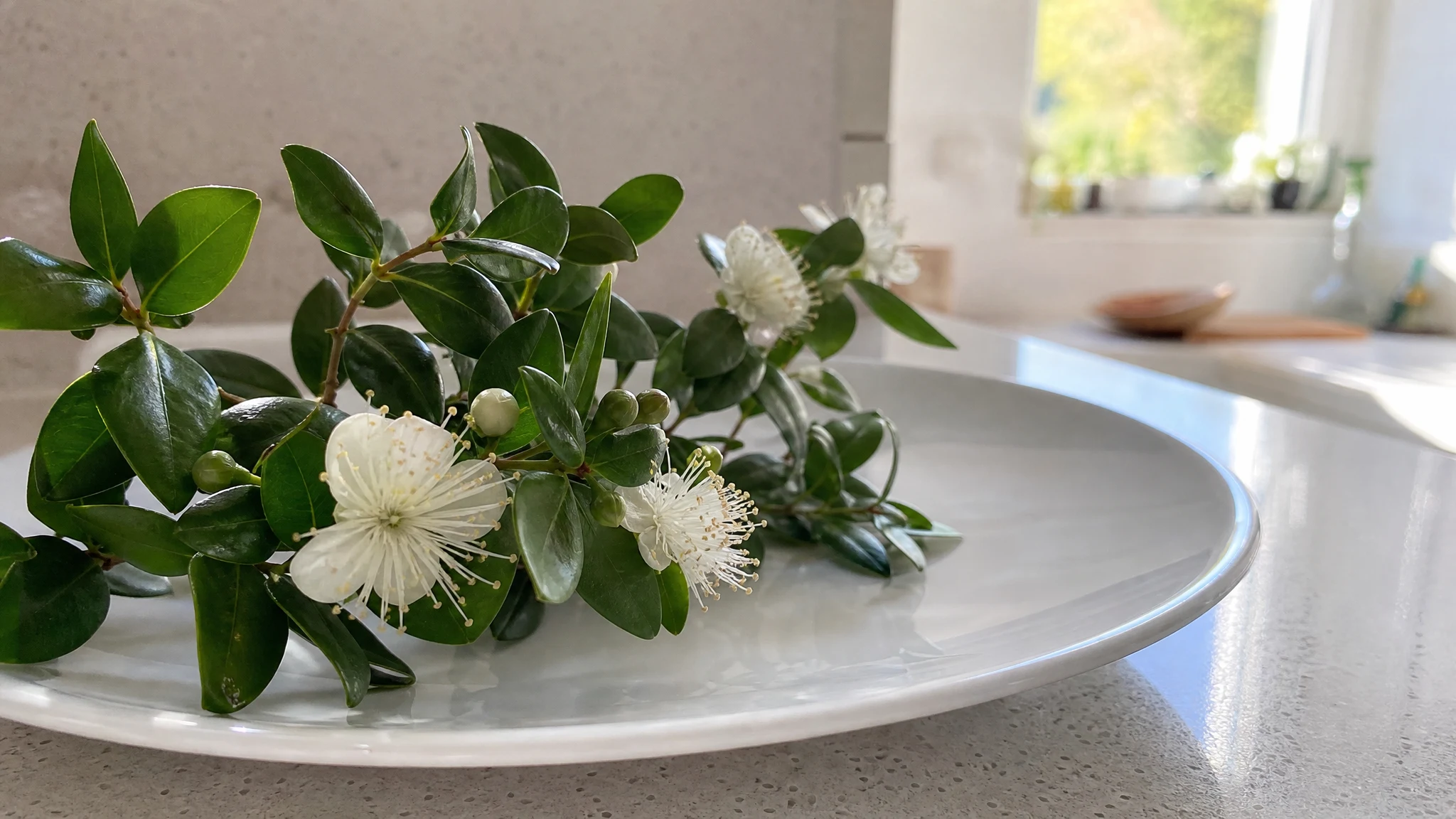
We sell myrtle essential oil as an external cosmetic oil, and we describe it by its aroma: fresh, clear and gently floral, with a soft eucalyptus-like coolness and a faint honeyed sweetness. We list diffuser freshening and layering with other home scents among its uses. FDA decides whether a fragrance product is a cosmetic or a drug by its intended use, and its aromatherapy page lists claims about depression, anxiety or sleep as drug claims. We keep to the aroma, which is where an essential oil can honestly be judged. If you like how it smells, that is a good reason to use it.
If low mood or anxiety is weighing on you, a physician or licensed therapist is the right person to talk to, and a scent is no substitute for that conversation.
Why we talk about aroma and nothing else
We love these oils, and it would be easy to say more. But a small business that sells an aroma should talk about the aroma. When you ask us about myrtle, what we can tell you is how it smells: fresh and clear on top, soft and faintly honeyed underneath, with a cool edge you may think of as eucalyptus-like. What it means to you is yours to find out.
Enjoying it in a room
If you diffuse it for the pleasure of the aroma, a few habits keep it pleasant. The Tisserand Institute suggests running a diffuser 30 to 60 minutes on and 30 to 60 minutes off, and we keep our oil away from eyes, children and pets. Drop counts and ventilation are in our home-use guide, the scent itself is described in our scent profile, and our posts on sleep and meditation spaces look at neighboring questions. The research roundup gives the wider picture.
Smell can shape how a room feels, and the room is where we leave myrtle.
Myrtle Essential Oil
Myrtle Essential Oil from our own shop, in sizes from 0.5 oz to bulk.
From $16.99
Shop Now →Sources & Further Reading
- Herz, The Role of Odor-Evoked Memory in Psychological and Physiological Health, Brain Sciences, 2016. Europe PMC 27447673
- Herz, Aromatherapy facts and fictions: a scientific analysis of olfactory effects on mood, physiology and behavior, International Journal of Neuroscience, 2009. Europe PMC 19125379
- Gong et al., Effects of aromatherapy on anxiety: A meta-analysis of randomized controlled trials, Journal of Affective Disorders, 2020. Europe PMC 32663929
- FDA, Aromatherapy. fda.gov/cosmetics/cosmetic-products/aromatherapy
- Tisserand Institute, How to Use Essential Oils Safely. tisserandinstitute.org/safety/safety-guidelines