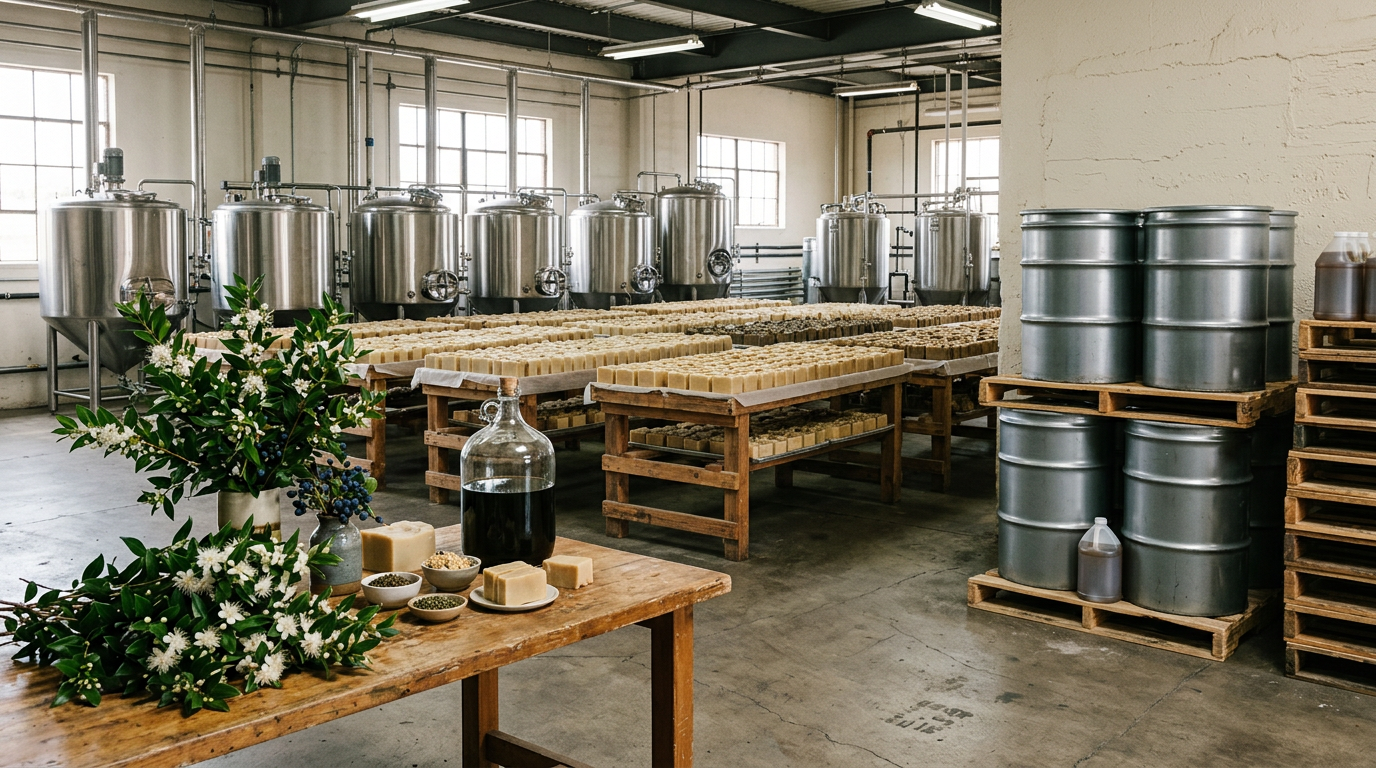
Cold process soap is one of the most demanding tests for any essential oil, since lye, cure time, and superfat all pull at a fragrance before a bar ever reaches a shelf. This page is part of our Guide to Buying Myrtle Essential Oil in Bulk.
Start with a trial size and check our cold process notes before you scale.
Myrtle's fresh, clear top note reads as green and clean in a bar without the harsh, camphoraceous edge that straight eucalyptus or rosemary can carry into a finished soap. That softer register comes from the sweet floral, faintly honeyed undertone underneath the eucalyptus-like coolness, a combination our full scent profile breaks down top to base.
Our own cold process trial tracked how the scent held through saponification and cure, and found the floral facets fade slower than the sharper top note, which matters for how a soap maker times their usage rate against expected shelf life.
Soap makers generally work in low usage rates against total oil weight, adjusting upward for bars meant to be sold quickly and downward for bars with a long expected shelf life, since any fragrance fades over cure regardless of the carrier.
Treat scent fade as a formulation variable, not a defect. A soap line that plans its usage rate around the fade curve in our cold process trial will match customer expectations far better than one that assumes the unmolded bar's scent is the final scent.
A small-batch soap maker testing a new bar can start with an 8 oz or 16 oz bottle, while a production line running regular pours typically settles into 5 lbs or 25 lbs case lots.
Move to 5 lbs or 25 lbs case lots once your usage rate is dialed in.